


Donald Trump’s Election as President: Israel’s Additional Focus | INSS
go to header go to content go to footer go to search
INSS logo The Institute for National Security Studies, Strategic, Innovative, Policy-Oriented Research, go to the home page
INSS
Tel Aviv University logo - beyond an external website, opens on a new page
  • Campus
  • Contact
  • עברית
  • Support Us
  • Research
    • Topics
      • Israel and the Global Powers
        • Israel-United States Relations
        • Glazer Israel-China Policy Center
        • Russia
        • Europe
      • Iran and the Shi'ite Axis
        • Iran
        • The Israel–Iran War
        • Lebanon and Hezbollah
        • Syria
        • Yemen and the Houthi Movement
        • Iraq and the Iraqi Shiite Militias
      • Conflict to Agreements
        • Israeli-Palestinian Relations
        • Hamas and the Gaza Strip
        • Peace Agreements and Normalization in the Middle East
        • Saudi Arabia and the Gulf States
        • Turkey
        • Egypt
        • Jordan
      • Israel’s National Security Policy
        • Military and Strategic Affairs
        • Societal Resilience and the Israeli Society
        • Jewish-Arab Relations in Israel
        • Climate, Infrastructure and Energy
        • Terrorism and Low Intensity Conflict
      • Cross-Arena Research
        • Data Analytics Center
        • Law and National Security
        • Advanced Technologies and National Security
        • Cognitive Warfare
        • Economics and National Security
    • Projects
      • Preventing the Slide into a One-State Reality
      • Contemporary Antisemitism in the United States
      • Perceptions about Jews and Israel in the Arab-Muslim World and Their Impact on the West
  • Publications
    • -
      • All Publications
      • INSS Insight
      • Policy Papers
      • Special Publication
      • Strategic Assessment
      • Technology Platform
      • Memoranda
      • Posts
      • Books
      • Archive
  • Database
    • Surveys
    • Spotlight
    • Maps
    • Dashboards
  • Events
  • Team
  • About
    • Vision and Mission
    • History
    • Research Disciplines
    • Board of Directors
    • Fellowship and Prizes
    • Internships
  • Media
    • Communications
    • Video gallery
    • Press Releases
  • Podcast
  • Newsletter
  • campus
Search in site
  • Research
    • Topics
    • Israel and the Global Powers
    • Israel-United States Relations
    • Glazer Israel-China Policy Center
    • Russia
    • Europe
    • Iran and the Shi'ite Axis
    • Iran
    • The Israel–Iran War
    • Lebanon and Hezbollah
    • Syria
    • Yemen and the Houthi Movement
    • Iraq and the Iraqi Shiite Militias
    • Conflict to Agreements
    • Israeli-Palestinian Relations
    • Hamas and the Gaza Strip
    • Peace Agreements and Normalization in the Middle East
    • Saudi Arabia and the Gulf States
    • Turkey
    • Egypt
    • Jordan
    • Israel’s National Security Policy
    • Military and Strategic Affairs
    • Societal Resilience and the Israeli Society
    • Jewish-Arab Relations in Israel
    • Climate, Infrastructure and Energy
    • Terrorism and Low Intensity Conflict
    • Cross-Arena Research
    • Data Analytics Center
    • Law and National Security
    • Advanced Technologies and National Security
    • Cognitive Warfare
    • Economics and National Security
    • Projects
    • Preventing the Slide into a One-State Reality
    • Contemporary Antisemitism in the United States
    • Perceptions about Jews and Israel in the Arab-Muslim World and Their Impact on the West
  • Publications
    • All Publications
    • INSS Insight
    • Policy Papers
    • Special Publication
    • Strategic Assessment
    • Technology Platform
    • Memoranda
    • Posts
    • Books
    • Archive
  • Database
    • Surveys
    • Spotlight
    • Maps
    • Dashboards
  • Events
  • Team
  • About
    • Vision and Mission
    • History
    • Research Disciplines
    • Board of Directors
    • Fellowship and Prizes
    • Internships
    • Privacy Policy and Terms of Use
  • Media
    • Communications
    • Video gallery
    • Press Releases
  • Podcast
  • Newsletter
  • Campus
  • Contact
  • עברית
  • Support Us
bool(false)

Publications

Home Publications INSS Insight Donald Trump’s Election as President: Israel’s Additional Focus

Donald Trump’s Election as President: Israel’s Additional Focus

INSS Insight No.872, November 30, 2016
עברית
Kobi Michael
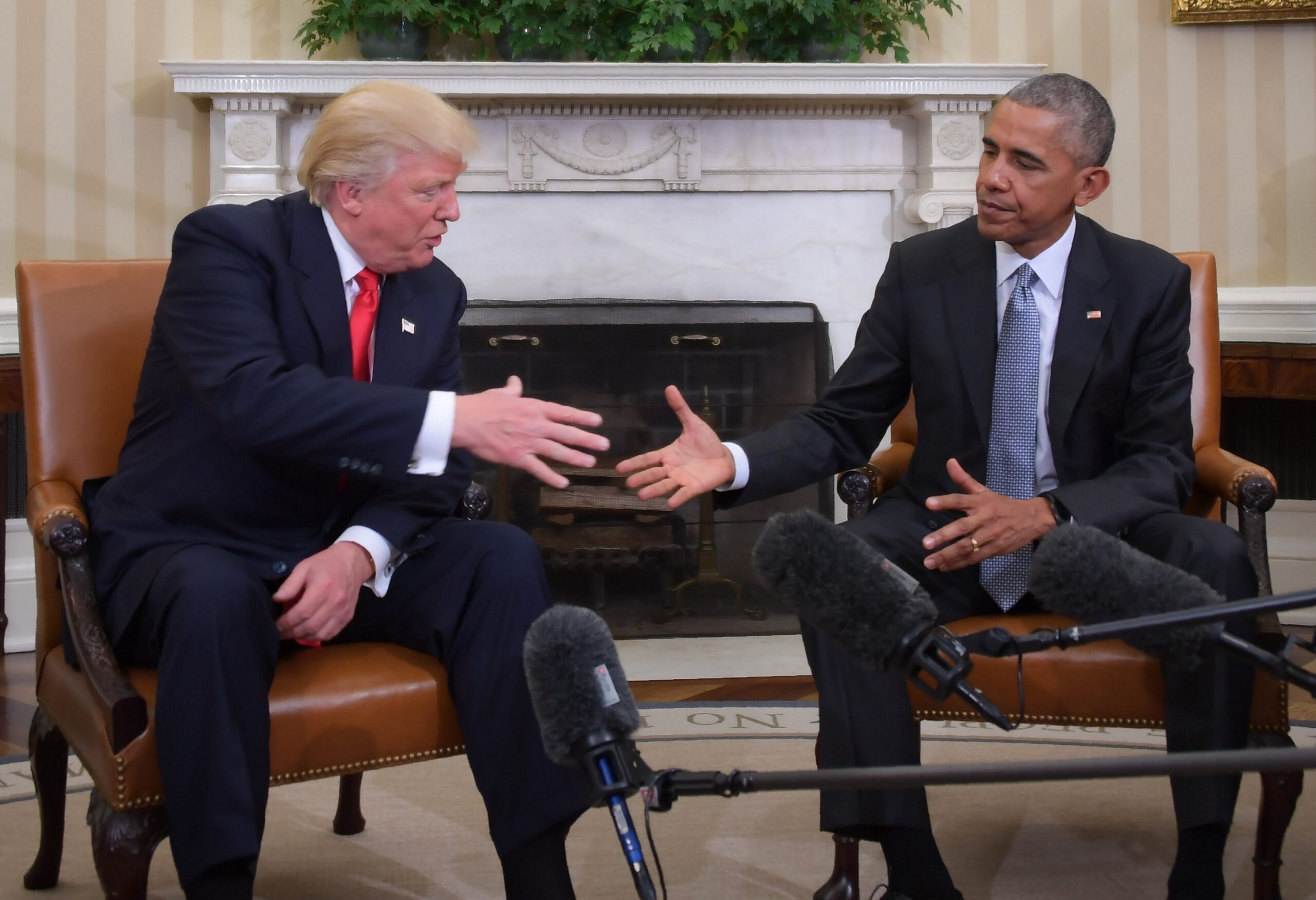
President-elect Donald Trump with President Barack Obama at the White House, November 10, 2016. Photo: Jim Watson / AFP
The election of Donald Trump may well prove to be a strategic opportunity for Israel to improve its relations with the United States and expand coordination with it on all matters pertaining to Israel’s essential strategic interests. Yet despite the strategic opportunity to improve its relations with the United States, excessive enthusiasm and identification with the election of Trump is liable to lead to a series of negative developments. The Israeli leadership should leverage the opportunity that Trump’s victory may provide, but without emotional declarations or exaggerated enthusiasm. Questionable legislation, construction outside the settlement blocs in a manner that can be interpreted as backing those seeking to thwart any possibility of a settlement with the Palestinians, and policy that can be interpreted as support for those striving to weaken particular elite or social circles, the media, and Supreme Court rulings should be avoided.

The election of Donald Trump as President of the United States has prompted many in Israel to issue recommendations to the President-elect and the administration-in-formation regarding policy on Israel. One of the repeated objectives is to repair the relations between the two countries and bring them closer to each other, particularly on the Palestinian issue, the nuclear agreement with Iran, the crisis in Syria, the stabilization of Egypt, and military aid. Indeed, Trump’s election may well prove to be a strategic opportunity for Israel to improve its relations with the US and expand coordination with it on all matters pertaining to Israel’s essential strategic interests. At the same time, it would be wise for Israel to proceed cautiously to ensure that while it makes the most of this opportunity, its essential interests in important areas directly affected by Trump’s election victory – including the Palestinian arena, the American political arena, and the Israeli internal arena – are not damaged as a result.

Trump’s election has been met with expressions of despair, anxiety, or alternatively, great hope. In the Palestinian arena, many may see Trump’s election as the end of the hope for a political settlement, and in the absence of any hope, encouragement for militant groups to lead the Palestinian street into an armed struggle along the lines of the third intifada. An Israeli policy of accelerated construction in the West Bank outside the large settlement blocs and legalization of illegal outposts is liable to be interpreted as a sign of Israel’s intention to take advantage of Trump’s election to change the situation on the ground irreversibly. Such a development will weaken those in the Palestinian arena supporting an agreement with Israel and increase frustration and despair. Even before the new administration is formed, and especially after it takes office, Israel should act discretely to solidify the understandings on the Palestinian issue, including the possibility of changing the existing paradigm.

The American political system is marked by stark polarization, and many supporters of the Democratic Party find it hard to accept Trump’s election, which they regard as a threat to American values. Demonstrations against his victory have featured anger and violence not seen in American politics for many years. Israel’s interest, however, requires solid bipartisan support based on appreciation of Israel as a strategic asset for the United States. Israel should therefore carefully consider its policy and relations with the outgoing President as part of an effort to avoid losing the support of the Democratic Party.

Indeed, the Democratic Party’s constituents and their political positions are changing, with increasing opposition to the Israeli government’s policy on the Jewish settlements. These trends have resulted in growing criticism of Israel among the party’s ranks. Democrats feel growing identification with the Palestinians, and regard settlement of the conflict in the spirit of President Obama’s vision as part of the party’s wider agenda. They consider the Israeli government’s policy as the principal obstacle to a solution, and many Democrats are therefore increasingly alienated from Israel. It will be difficult to reverse or substantially moderate this trend, given the current stalemate in the Israeli-Palestinian arena, but it is important to take measures to prevent its exacerbation. The Israeli government would therefore do well to show sensitivity to the Democratic Party agenda and demonstrate its solidarity with what members of that party regard as the fundamental values of the United States.

The effort to ensure the Democratic Party’s continued support for Israel is all the more crucial given the large majority of Jews in the United States that affiliate with the party and the opposition to Trump’s election among many Jewish community leaders. Israel has a strong interest in preserving its connection with American Jewry. This is an important element in Israel’s soft power and a crucial feature of Israel’s national resilience. The younger generation of Jews in the United States in particular is critical of Israeli government policy, especially with respect to the Palestinian issue, and is rebuffed by the strengthened Orthodox establishment and its harassment of the Reform and Conservative groups, which constitute a majority of Jews in the United States.

Israel’s policy toward the new administration will necessarily affect its relations with these communities, and it is therefore advisable for the Israeli government to invest in maintaining its connections with Jews of all streams in the United States. These efforts should include an effort to moderate statements by prominent Orthodox rabbis against the Reform and Conservative Jewish movements, while underscoring that these groups are an integral part of the Jewish people. Excessive expressions of celebration and sympathy for Trump’s election should be avoided, as should explicit support for any particular appointment in the new administration that might rile American Jews. At the same time, the Israeli government should protest vocally against acrimonious expressions of vilification and anti-Semitism among groups calling themselves Trump supporters. The effort to preserve and foster the connection with American Jewry should also take care to maintain Israel’s strong security interests.

In the Israeli arena, political groups opposing the two-state solution and supporting expansion of the Jewish communities in Judea and Samaria, or even the annexation of portions of the West Bank, seek to accelerate Jewish construction in the territories and legalize illegal outposts. Under the influence of these groups, the Israeli prime minister and government may be pushed to embark on a political path leading to legislation that challenges Israeli law, Supreme Court rulings, and international law, or to decisions liable to expose Israel to international criticism, and perhaps also to lack of consent and tension with the new American administration. The assumption among these groups is that the President-elect, based on campaign rhetoric that might imply that his support for Israel is unqualified, would back new right wing measures. In actuality, however, it is still unclear what policy the president-elect will adopt, and which of his commitments made during the election campaign he will fulfill.

Another aspect relating to the internal arena is the failure among the media and commentators. Their inability to understand the profound trends in American society has aggravated public estrangement, and both the media and the elites are perceived as alienated, arrogant, and representing a different agenda from what is important to most ordinary people. The negative reaction to these elements, which stood out in the context of the presidential campaign, is a phenomenon that is not confined to the United States. The election results also gave a boost to political movements in other countries that share these attitudes. Encouragement of this phenomenon in the Israeli arena is liable to aggravate political polarization and reinforce elements seeking to weaken and silence the media and legal system in Israel, as distinguished from justified criticism and a demand for fairer media coverage and a less activist Supreme Court.

Israel finds itself in a difficult situation. Together with a strategic opportunity to improve its relations with the United States, excessive enthusiasm and identification with the election of Trump is liable to lead to a series of negative developments in all three arenas. The Israeli leadership should leverage the opportunity that Trump’s victory may provide, but without emotional declarations or exaggerated enthusiasm. Questionable legislation, construction outside the settlement blocs in a manner that can be interpreted as backing those seeking to thwart any possibility of a settlement with the Palestinians, and policy that can be interpreted as support for those striving to weaken, if not do away with, any of the elite circles, the media, and the Supreme Court rulings should be avoided.

Israel’s strategic interests require continued quiet in the Palestinian arena and means to prevent the strengthening of militant groups among the Palestinians; guaranteed bipartisan American support for Israel; tightened connections between Israel and American Jewry; and unequivocal adherence to the democratic and pluralistic nature of Israel. All of these are important elements of national security, and should not be neglected, even for the sake of what appears to be a historic opportunity to improve relations with the United States following the election of a president perceived as friendly to Israel.

The opinions expressed in INSS publications are the authors’ alone.
Publication Series INSS Insight
TopicsIsrael-United States Relations
עברית

Events

All events
Iran in Africa: Global Reach Regional Impact and Israeli Implications
26 October, 2025
14:00 - 17:00

Related Publications

All publications
Darla Khazei/INSTARimages
Muslim Leaders in the United States Since October 7: From Criticism of Zionism to Intensified Anti-Israel Messaging
How has anti-Israel discourse among Muslim leaders in the United States changed since the start of the war in Gaza?
02/11/25
Trump’s Initiative for the Gaza Strip: Risks and Opportunities
How does Trump’s initiative for the Gaza Strip create new opportunities for Israel to change the security and political reality, and what challenges might stand in its way?
30/09/25
Shutterstock
A Strategic Threat: Israel’s Deteriorating Standing in the United States
How is the damage to Israel’s standing among the American public—on both the right and the left—manifested, and can the deterioration still be stopped?
03/09/25

Stay up to date

Registration was successful! Thanks.
  • Research

    • Topics
      • Israel and the Global Powers
      • Israel-United States Relations
      • Glazer Israel-China Policy Center
      • Russia
      • Europe
      • Iran and the Shi'ite Axis
      • Iran
      • The Israel–Iran War
      • Lebanon and Hezbollah
      • Syria
      • Yemen and the Houthi Movement
      • Iraq and the Iraqi Shiite Militias
      • Conflict to Agreements
      • Israeli-Palestinian Relations
      • Hamas and the Gaza Strip
      • Peace Agreements and Normalization in the Middle East
      • Saudi Arabia and the Gulf States
      • Turkey
      • Egypt
      • Jordan
      • Israel’s National Security Policy
      • Military and Strategic Affairs
      • Societal Resilience and the Israeli Society
      • Jewish-Arab Relations in Israel
      • Climate, Infrastructure and Energy
      • Terrorism and Low Intensity Conflict
      • Cross-Arena Research
      • Data Analytics Center
      • Law and National Security
      • Advanced Technologies and National Security
      • Cognitive Warfare
      • Economics and National Security
    • Projects
      • Preventing the Slide into a One-State Reality
      • Contemporary Antisemitism in the United States
      • Perceptions about Jews and Israel in the Arab-Muslim World and Their Impact on the West
  • Publications

    • All Publications
    • INSS Insight
    • Policy Papers
    • Special Publication
    • Strategic Assessment
    • Technology Platform
    • Memoranda
    • Database
    • Posts
    • Books
    • Archive
  • About

    • Vision and Mission
    • History
    • Research Disciplines
    • Board of Directors
    • Fellowship and Prizes
    • Internships
    • Support
    • Privacy Policy and Terms of Use
  • Media

    • Communications
    • Video Gallery
    • Press Release
    • Podcast
  • Home

  • Events

  • Database

  • Team

  • Contact

  • Newsletter

  • עברית

INSS logo The Institute for National Security Studies, Strategic, Innovative, Policy-Oriented Research, go to the home page
40 Haim Levanon St. Tel Aviv, 6997556 Israel | Tel: 03-640-0400 | Fax: 03-744-7590 | Email: info@inss.org.il
Developed by Daat A Realcommerce company.
Accessibility Statement
This site is protected by reCAPTCHA and the Google Privacy Policy and Terms of Service apply.
No audio version available for this podcast