


Strategic Assessment
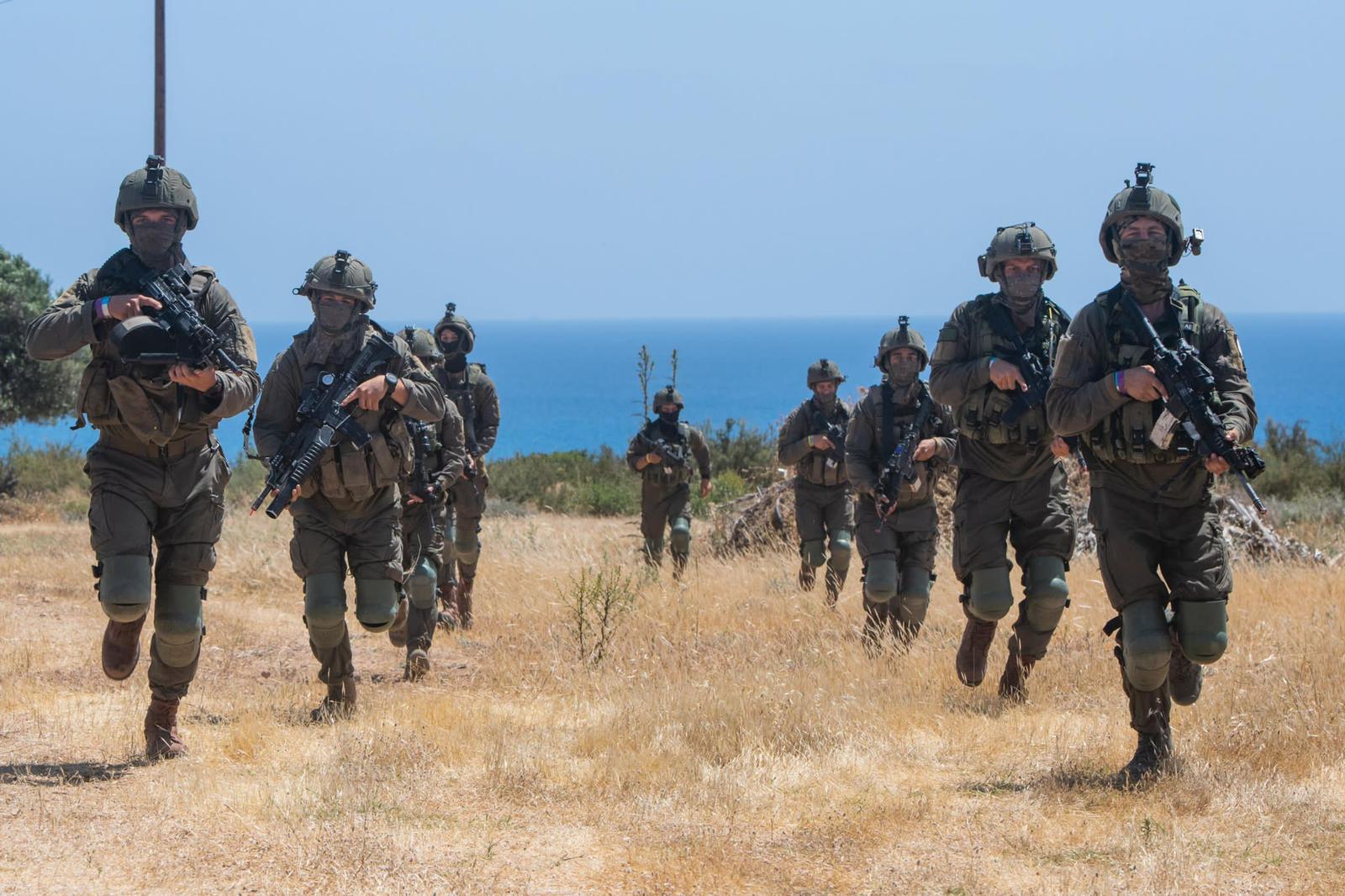
October 7 exposed not only a tactical failure but a deeper erosion of Israel’s strategic “conceptzia” (governing assumption): a force posture optimized for static monitoring, containment, and defensive reassurance rather than operational initiative. As adversaries adapt through the use of missiles, drones, cyber, legal warfare, and maritime pressure, Israel’s freedom of action is increasingly constrained across multiple vectors—especially along the maritime chokepoints that sustain trade, energy, and strategic depth. This paper argues that Israel lacks an operational-scale instrument capable of translating initiative into sustained advantage under these conditions. It proposes the creation of a Tzahal Expeditionary Command (TEC): a regional, maritime-enabled maneuver force designed to operate between special operations and full divisional mobilization. TEC’s purpose is not territorial control, but reversible, time-bound operations that generate systemic disruption—targeting adversary logistics, command nodes, and economic arteries—by shifting risk away from the home front and restoring decision-space to Israeli leadership. This paper outlines an illustrative TEC architecture built around modular task-force brigades, composable “pods,” and a distributed learning engine (Ma’arekhet Or) that enables rapid adaptation under persistent surveillance. It concludes with requirements for statutory anchoring, fiscal phasing, industrial platformization, and alliance design to sustain a decade-long build-up notwithstanding political upheavals.
Key words: Strategic compression, Expeditionary warfare, IDF, Eastern Mediterranean, military doctrine, Hybrid Warfare, Red Sea, Drone, AI learning, Maritime Economy, deterrence, sea power, force structure, unmanned systems
Introduction
Israel’s national security doctrine has long rested on an enduring assumption: that tactical superiority, rapid mobilization, and technological edge can compensate for geographic limitations and strategic exposure. For decades, that assumption held. But war is not static. It is a learning system—one in which adversaries observe, absorb, and adapt. Over time, Israel’s methods of deterrence, escalation control, and force employment have become increasingly legible not only to its planners, but to those who seek to constrain or defeat it.
October 7 did not occur in a vacuum. It marked the collision between a force posture optimized for monitoring and containment and an adversary that had spent years studying Israel’s patterns—where it was fast, where it hesitated, and where defense substituted for maneuver. The shock was not only operational but temporal: a reminder that tactical excellence does not automatically yield strategic success when adversaries learn faster than doctrine evolves.
Looking ahead, Israel confronts a threat environment defined less by isolated enemies than by strategic convergence. This strategic alignment does not seek decisive war in its early and intermediate phases. Instead, state adversaries pursue endurance, attrition, and constraint; leveraging proxies, precision strikes, legal and informational pressure, and maritime disruption to narrow Israel’s freedom of action while remaining below thresholds that would trigger full-scale confrontation. As the battlespace shifts from static borders to the fluid corridors of the littoral and the maritime depths, Israel risks becoming trapped in cycles of reactive success without strategic closure—each inconclusive round further constricting future freedom of maneuver.
To date, Israeli strategic approaches have addressed this challenge in fragments. Post-Second Lebanon War thinking emphasized firepower, intelligence dominance, and air-ground integration, while maritime power was treated largely as a defensive domain. International approaches to expeditionary warfare, largely shaped by global power projection and stabilization missions, offer limited guidance for states under persistent regional compression. What is missing is an integrated framework that links maritime maneuver, force design, adaptive learning, and statecraft into a single instrument suited to short, reversible operations.
This paper examines the implications of that lacuna. It asks whether Israel’s existing force structure and doctrinal inheritance remain suited to a conflict environment defined by adaptation, compression and time pressure—or whether a structural gap has emerged between tactical capability and strategic effect. The sections that follow explore how that gap formed, why it matters, what it implies for force design and economic sustainability and what kind of operational logic may be required to close it.
PART I: Strategic Compression and the Collapse of the “Conceptzia”
1.1 End of Static Defense
October 7 forced Israel into a reckoning over the structural failures that left the nation exposed. The events of that day revealed not merely tactical surprise, but a deeper breakdown in the assumptions—the conceptzia—that had guided Israel’s force posture and strategic planning. The collapse of this conceptzia revealed a defense doctrine degraded from its earlier incarnations: too static, slow to adapt, and reliant on foreign support. What had once been a maneuver-centric doctrine optimized for initiative has, over time, ossified into a reactive system suited for monitoring and containment.
With the war now on pause and regional balances hardening, Israel will be compelled to innovate its strategy to confront enemies who have studied and absorbed its tactics over the past two years. These adversaries are no longer merely reacting to Israeli methods, they are internalizing them and designing around them. Most acute are the threats of a resurgent Turkey flexing its considerable muscle, and an Iranian regime, wounded but already plotting its next assault. These actors differ in ideology and geography, but converge in their ability to impose persistent, multidomain pressure on Israel at relatively low cost. The sense of historical inevitability that once favored Israeli maneuver has inverted: Adversaries have adapted, precision strike capabilities have proliferated, and the margin for error has narrowed.
Historically, Israel’s strategic doctrine stood on four pillars: defensibility, pre-emption, limited war, and decisive victory. Those pillars enabled survival in a bygone era but now underwrite a posture that is no longer suited to the present threat environment. What once produced short wars and rapid decisive outcomes, increasingly produces extended campaigns without strategic closure. The classic playbook—the lightning attacks that delivered initiative in ’56 and ’67, the daring crossing that re-established momentum in ’73, the rapid operations that kept conflicts short—has been diluted by the rise of hybrid warfare, long-range fire, politics and the theatre of information that extends wars in time, while denying decision.
Israel’s military and political leadership have yet to conduct a thorough accounting of the glaring and hidden failures that led to this two-year war. The absence of structured reflection has translated into policy inertia—an inability to adapt or to articulate a new strategic framework, force structure, and operational doctrine calibrated to emerging threats. While no singular policy has yet surfaced, there is growing consensus on several critical observations that must shape any subsequent doctrine.
First, Israel’s national security strategy requires structural overhaul. The IDF, shaped by decades of withdrawals—from Sinai, Lebanon, Gaza, Judea, and Samaria—has gradually become a reactive, garrisoned force, suited more to static defense than to strategic initiative. The cumulative effect of these withdrawals was not merely territorial contraction, but doctrinal adaptation toward containment. The shift from maneuver to monitoring, from operational daring to technological reassurance, created a subtle but consequential drift: sensors replaced scouts, fences substituted for forward presence, and missile defense began to masquerade as grand strategy. What was designed to reduce risk instead generated strategic passivity. This framework also increased reliance on foreign allies, especially Western powers, for arms and political cover, a dependency that this current war exposed as increasingly untenable.
Second, Israel’s next doctrine will rise or fall on whether it can convert movement and sustainment into tempo. Churchill once warned that victory may appear as a brilliant flower, but its stem is transport—a truth military students often overlook in their fascination with tactics. Logistics is not a supporting function but a strategic enabler, the hidden discipline of tempo, reach and endurance. Israel must dramatically improve its logistical capabilities—the ability to move, sustain troops and reconstitute forces under persistent attack. Hybrid and grey-zone warfare deliberately target these functions and have proven effective in countering Israeli power. Quick victories, once Israel’s hallmark, can no longer be assumed. The tempo of contemporary conflict imposes a different scaling logic: instead of a single decisive blow, Israel must develop serial operational advantages stitched together by logistics that are agile, redundant, and resistant to attack; such advantages require intentional and long-term planning.
Third, the proliferation of drones and missiles demands a redefinition of how Israel projects power beyond its borders. The ability to displace the battlefield away from the home front is no longer optional. The war demonstrated that missile defense, while tactically indispensable, cannot substitute for a strategy. For much of the conflict it was treated as such—a costly lesson underscored by barrages from Hezbollah, the Houthis, and Iran. Missile defense is a tactic; it cannot remain the spine of national strategy. Passive shield without active maneuver becomes attrition by another name. A viable doctrine must therefore pair layered defense with outward action that compels adversaries to defend their own centers of gravity— ports, logistical corridors, training hubs, financial arteries, and the maritime choke points.
The task, then, is not to abandon Israel’s heritage of maneuver but to translate it into forms survivable under persistent surveillance, precision strike, and global narrative contests. That translation, rather restoration of past models, is the central doctrinal challenge of the coming decade. It demands a doctrine that converts Israel’s geographic limitations into operational reach, transforms vulnerability into organizational adaptability, and reconsiders the role of the maritime domain not as a defensive boundary but as an operational medium.
1.2 Mapping the Multi-Vector Encirclement
Strategic compression describes the gradual narrowing of Israel’s freedom of maneuver—not through conventional invasion but through coordinated, multi-vector encirclement, driven by evolving patterns of cooperation that coalesce around the goal of constraining Israel militarily, politically, and economically. It is cumulative rather than climactic, uses time to its advantage, exploits pre-October 7 operating assumptions, and—as a phenomenon of a complex adaptive system—is more than the sum of its parts. Under this dynamic, Israel is the center of gravity around which proxy forces, its regional partners, and distant great powers align. In contrast, Israel's center of gravity is dynamic and highly dependent on the prevailing, however short-term, strategic ordering of alliances. Given this asymmetry, the burden of initiative falls on Israel to shape the operational geometry rather than react to it.
The geography of strategic compression resembles Halford Mackinder’s “Heartland dilemma” inverted for a small trade-dependent state. Landlocked powers are constrained by access; maritime powers thrive on reach. Israel’s paradox is that it is neither fully continental nor fully maritime in its posture: Chokepoints from the Red Sea to the Eastern Mediterranean act as levers adversaries can exploit at low cost, while Israeli doctrine has historically under-weighted sea control relative to air dominance. Alfred Thayer Mahan’s insight regarding maritime primacy for trading states applies with particular force: A state whose economic lifelines run on water must treat sea lanes, energy terminals, and ports as strategic organs, rather than civilian infrastructure. In such an environment, strategic design must internalize friction, learning, and uncertainty (Clausewitz, 1976), while force is employed not merely for punishment but as an instrument of coercion and bargaining (Schelling, 1966).
Today’s encirclement is not one of massed armies; it is a weave of proxy networks, cyber intrusions, missile-and-drone saturation, maritime posturing, legal warfare, and information operations—calibrated to constrain Israel’s options, complicate alliance calculus, and impose economic pain while avoiding thresholds that would trigger decisive escalation.
Iran’s “Octopus Doctrine” synchronizes militia and drone activity across Iraq, Syria, Lebanon, Yemen and Gaza. In the south, the Houthis strike commercial shipping at Bab el-Mandeb, directly disrupting Israeli trade and imposing disproportionate economic costs. To the west and north, Turkey advances its Blue Homeland doctrine and asserts claims in the Eastern Mediterranean—edging closer to Israel’s northern borders via local proxies and sympathizers—while Egypt retains leverage through control of Suez and Red Sea access. These pressures are not coordinated formally, but their cumulative effect is constrictive.
Recent movement sharpens the trend. In late September 2025, Turkey and Egypt staged their first joint naval drill in over a decade (“Friendship Sea”) (Egyptian Ministry of Defense, 2025), signaling a potential alignment between two of the largest navies in the Eastern Mediterranean. If normalized, such cooperation would further constrict Israel’s maritime maneuver space around critical chokepoints. Other powers layer additional complexity: China through port infrastructure and investment, Russia through arms transfers and sustained naval presence. In this environment, the net effect of presence itself becomes power.
The symptoms of compression are not theoretical. Eilat’s trade flows cratered under Houthi pressure (Marine Insight, 2024); Turkish naval activity increased (Yaylali, 2025); Egyptian deployments expanded into zones once demilitarized (Oron, 2025). Israel’s reliance on maritime trade and offshore energy magnifies these pressures. Historical precedents—from the closure of the Straits of Tiran in 1967, to Turkish interference with Cypriot offshore drilling since 2018, to contemporary Red Sea interdictions and increasing activity on the Horn of Africa—demonstrate how cheaply chokepoints can be weaponized. Unlike on land—where Israel’s classic answer relied on speed, surprise, and maneuver, at sea the IDF’s posture lacks the comparable breadth and depth.
Compression operates by denial: of access, legitimacy and agency. It saturates defenses, erodes diplomatic space and constrains coalition partners. To preserve deterrence and strategic autonomy in this environment, Israel requires the ability to project force outward—breaking siege logic, widening the front, and creating strategic oxygen. That outward turn must be deliberate and disciplined, not episodic raids, nor a default to occupation, but maneuver calibrated for reversibility, politically sustainability, and operational impact.
The strategic challenge becomes clear: Israel lacks an operational-scale instrument capable of translating initiative and maneuver into sustained advantages under conditions of strategic compression. Identifying and addressing that gap is the necessary starting point for doctrinal renewal.
PART II: The Tzahal Expeditionary Command (TEC): A Conceptual Shift
The strategic diagnosis outlined above points to a structural gap rather than a failure of will or resources. Israel retains tactical excellence, technological depth, and deterrent credibility, yet lacks an operational instrument capable of translating initiative into sustained advantage under conditions of strategic compression. Tzahal Expeditionary Command (TEC) is proposed as a response to this gap, not as a replacement for existing capabilities, but the enabling layer between them.
Conceptually, TEC is intended to function as an operational-scale, maritime-enabled maneuver force positioned between surgical special operations and full divisional mobilization. It is designed to supply Israel with a middle tier of action that is currently missing: Large enough to impose system-level disruption yet limited enough to remain reversible and politically legible. Its purpose is not territorial control or attrition, but the restoration of initiative—to shift risk from the homeland to hostile terrain and disrupt the fortress logic of siege, saturation, and endurance which its adversaries’ strategies rely upon.
2.1 Restoring Initiative through Maritime Maneuver
At its core, TEC reflects a doctrinal transition from reactive, garrisoned force posture to one oriented around strategic initiative. Rather than absorbing pressure at the center, TEC’s logic is to widen the battlespace, forcing adversaries to defend exposed peripheries, logistical arteries, command control nodes, and economic hubs. This outward orientation is intended to collapse the logic of strategic compression by denying adversaries the ability to concentrate pressure cheaply and persistently against Israel’s narrow front. When met by a force that refuses to defend the center and maneuvers through the edges, siege architecture dissolves.
The maritime domain is central to this logic, not as a supporting theater, but as a maneuver system in its own right. For a trade-dependent state whose vulnerabilities are concentrated at ports, sea lanes, and energy infrastructure, the sea offers both exposure and opportunity. TEC treats maritime space as an operational medium that enables access, ambiguity and tempo, rather than a boundary to be defended. In doing so, it rebalances Israel’s historically air-centric doctrine by adding an axis of maneuver that is less predictable and harder to saturate. Early signs of this shift are already visible. Recently trilateral security coordination with Cyprus and Greece—that is centered on rapid-response mechanisms in the Eastern Mediterranean—suggests growing recognition that maritime-enabled, short-notice forces are essential for crisis management in the region. These efforts remain limited and ad hoc, but they point toward the same operational logic TEC seeks to consolidate at scale.
TEC’s conceptual utility lies in its ability to operate decisively in the early phase of crises, before political escalation can fully mature. By acting quickly and autonomously it can blunt adversary preparations, disrupt command-and-control, and fracture logistical networks, while preserving escalation control. Its operating logic draws on the asymmetric cunning of special forces—distributed cells, surprise, exploitation of terrain and sea corridors—integrated with organic logistics, amphibious insertion, and cyber-kinetic effects. It can act alone, pre-emptively, or as the operational hinge of larger campaigns.
2.2 The Doctrine of Systemic Disruption
Importantly, TEC is not conceived as a standing expeditionary force in the mold of global power projection. Its scope is regional, its mission limited in duration, and its employment selective. The emphasis is on repeated, calibrated operations that impose cumulative strain on the adversaries’ systems, generating decision dilemmas disproportionate to footprint and shaping battlefields before enemy planning can cohere. The aim is repeated, system-level shocks that outpace adaptation—not death by a thousand cuts, but by a hundred, imposing costs far beyond its footprint.
Ultimately, the TEC evolves Israel’s historical preference for maneuver into a form appropriate for modern precision conflict. By dispersing to survive and concentrating only for decisive blows, the command restores tempo superiority and persistent ambiguity. The objective is not linear escalation, but a cumulative cognitive strain that overloads adversary decision cycles into systemic paralysis (Boyd, 2007).
To operationalize this rhythm, the TEC is architected for “operational pulses” rather than permanent stationing. Each task force is designed for short-duration, high-intensity missions with autonomous endurance measured in days—typically 3-10-day mission cycles—before planned extraction and rotation. This temporal discipline ensures the force remains a catalyst for disruption while strictly avoiding the mission creep and logistical hollowing inherent in traditional attrition.
This structure directly addresses strategic compression. It is an attempt to reintroduce operational depth into a strategic environment that increasingly punishes passivity. By projecting power from the sea, enabling outward maneuver that is short in duration but wide in effect, TEC seeks to restore decision-space to Israeli leadership, expanding the menu of options beyond limited strikes and full mobilization.
In conceptual terms, TEC can be summarized by these guiding principles:
- Initiative over reaction: shaping contact rather than absorbing it.
- Maritime as maneuver: treating the sea as an operational medium.
- Reversibility: keeping operations time-bound
- Systemic Disruption: targeting the scaffolding of adversary power rather than territory alone.
- Integration, not substitution: complementing airpower, special operations, and mobilized ground forces rather than replacing them.
These principles define what TEC is intended to do, not how it is built or funded. The question of implementation, force architecture, and resourcing follows from this conceptual framework and should be evaluated against it.
PART III. The Architecture of an Adaptive Force
Design follows purpose. What follows is not a definitive force design, but an illustrative architecture—one plausible configuration that demonstrates how the TEC concept could be operationalized within Israel’s constraints and strategic requirements.
3.1 Modular Brigades and Distributed Combat Power
The organizing principle of TEC’s architecture is modularity. Rather than a fixed linear order of battle, TEC is conceived as a distribution system composed of interoperable units that can be recombined to meet specific mission requirements. This approach is intended to support escalation control, rapid re-tasking, and survivability under persistent surveillance and precision strike.
Distribution serves two functions. First, it reduces vulnerability by denying adversaries concentrated targets. Second, it enables simultaneous pressure across multiple points of friction with tailored force packages—coastal, maritime, logistical, and informational—forcing adversaries to disperse defenses and dilute effort. Tempo emerges from the ability to assemble, deploy, and withdraw, on multiple fronts, faster than adversaries can adapt.
One illustrative architecture for TEC would be to organize its combat power into a small number of mission-oriented task force brigades, each optimized for a distinct operational problem set.
- The Amphibious Strike Brigade conducts offensive coastal raids and littoral maneuver, combining stealth boats, autonomous surface/under-surface craft, and precision rotor-lift to insert, shock, and extract under the umbrella of electronic deception and cyber-enabled confusion. Its task is to make coastlines porous where the enemy believes them sealed, to find and shatter launch corridors, and seize key nodes that enable follow-on disruption that can generate adversary dilemmas.
- The Littoral Warfare Brigade imposes coastal denial and control: AI-directed minefields, mobile SHORAD and counter-UAS batteries, sensor-linked kill webs that can be placed quickly, masked, and abandoned without entanglement. It turns shallow waters and nearshore approaches into ambush geometry favorable to Israel, creating temporary zones of advantage that constrain enemy movement and protect maneuver elsewhere.
- The Red Sea and Chokepoint Brigade secures critical maritime corridors with drone assisted patrols, agile response flotillas, and convoy escort capability that can pre-empt Houthi launch zones and stabilize choke points without permanent stationing. It treats the Red Sea as a living artery— one that requires continuous but low-footprint presence to deter interdiction and restore trade oxygen.
- The Logistics and Combat Engineering Brigade would provide the connective tissue that enables autonomy and endurance. Rather than traditional rear end support, it would specialize in rapidly establishing and dismantling autonomous forward nodes—pre-fabricated fuel, ammunition, power, repair, and medical support—while sculpting temporary terrain effects, under contested conditions. It allows deliberate pauses without sliding into occupation and creates positional disruption when pure maneuver is insufficient.
- The Aerial Assault and Vertical Mobility Wing provides vertical lift, deep reconnaissance, air assault, precision resupply, CASEVAC, and rapid extraction under contested electromagnetic conditions. It is the tempo engine linking sea to shore, shore to inland maneuver, and inland back to sea.
- The Unmanned Warfare Brigade, in this architecture, would integrate maritime and aerial ISR swarms, loitering munitions, subsurface sabotage teams, and deception drones to shape the battlespace before, during, and after manned operations—extending reach while reducing exposure.
In this architectural illustration, manned submarines and surface ships serve as drone motherships while guarding the outer ring with strike and screening capabilities. Expendable swarms contest the shallows; blue-water assets secure the deep—turning the sea from barrier to maneuver system. Unmanned systems magnify Israel’s ability to impose pressure at lower cost and with fewer risks to personnel. For a state facing long wars of attrition, this autonomy and persistence is decisive.
TEC is intentionally structured to resist overextension. While agility often tempts dispersal across too many fronts, it risks tempo overreach, collapsing into exhaustion. Consequently, command authority must be empowered to refuse mission sets that fragment the force, stretching it too thin to manage contingency scenarios and ensure that strategic concentration is never sacrificed for opportunistic reach.
At the tactical-operational level, TEC’s architecture relies on modular “pods” as the basic unit of employment. Pods are designed to be self-contained, rapidly deployable, and may comprise forces from a number of TEC brigades. Not to be confused with special forces, pod size is designed to generate sufficient combat mass at the point of contact while remaining agile enough to deploy, extract and reconfigure quickly.
Personnel strength, while variable by mission, is best treated as a flexible parameter rather than its defining characteristic. The analytical importance of pods lies not in numbers, but in their function: enabling commanders to assemble tailored force packages, surge or withdraw elements dynamically, and maintain reversibility.
Pods operate under mission command, with clear intent and decentralized execution, while remaining connected to a broader operational design that coordinates effects across domains. Forward logistical hubs, when established, are temporary by design and built with embedded protocols for rapid abandonment and expendable systems. If compromised, pods are expected not merely to withdraw, but to weaponize withdrawal, triggering denial protocols, false data trails and misdirection that degrade enemy situational awareness. Feigned withdrawals lure pursuit into prepared ambushes or mass casualty traps. Captured kits seeds trojan data—false coordinated, baited signals, decoy movements, so that enemy analysis become ambush vectors. This approach updates classical maskirovka for the multi-domain era.
3.2 Ma'arekhet Or: Real-Time Learning and Tempo
A distributed force operating under persistent surveillance and rapid adaptation cannot rely solely on pre-scripted doctrine or episodic innovation. What sustains such a force beyond initial surprise is not mass but real-time learning. For this reason, TEC’s notional architecture should embed across the force as a continuous adaptive learning and decision-support capacity across units, referred to here as—Ma'arekhet Or (the “System of Light”).
Functionally, Ma’arkhot Or is best understood not as a singular AI platform, but as distributed cognitive infrastructure. Each modular unit integrates hardened edge-compute kits that process battlefield inputs for rapid feedback loops — thermal signatures, drone behavior, signal anomalies—in real time. Micro updates propagate within seconds across the force, recalibrating and updating targeting logic, strike package, movement patterns, and force composition to maintain tempo and deny predictability. Maneuver, in this model, is not reactive repositioning but rhythmic evolution.
This approach reflects an insight into modern conflict: smaller technologically advanced actors can offset disadvantages, not by matching mass, but by manipulating time, information and adaptation cycles. By continuously altering how and where force is applied, TEC remains inside adversary decision loops forcing opponents to defend against patterns that no longer hold (Krepinevich, 1994). In practice, Ma’arakhot Or supports deliberate unpredictability. By shifting attack vectors, electronic profiles, and insertion sequences across engagements, TEC ensures operations do not repeat; enemy countermeasures are invalidated before they cohere and decision cycles are overloaded into systemic paralysis rather than mere delay. The result is not linear escalation, but cumulative cognitive strain (Keohane & Nye, 1977). Where most militaries refine doctrine over years, TEC adjusts in days.
In this sense, Ma’arkhat Or compensates for narrow geography with temporal and cognitive depth. Where Israel cannot absorb prolonged pressure in space, it can outpace in time, maintaining freedom of maneuver by preventing enemies from achieving a stable understanding of TEC’s methods or intentions.
PART IV: Requirements of Statecraft and Implementation
This is an act of statecraft, industrial policy, and alliance design, not merely an ORBAT (order of battle) tweak. Politically, the project must be anchored in law, bipartisan oversight, and multi-year budget instruments so doctrine and procurement survive coalition churn. That requires statutory guardrails, independent audit mechanisms, and cross-party compacts that protect procurement timelines and training cycles from electoral turbulence. A dedicated statutory framework—such as a Maritime Sovereignty Act paired with a standing implementation authority—is the most direct mechanism for imposing continuity.
Structurally, this creates a paradox. Implementing TEC incrementally, through modular capabilities, phased brigades, and distributed industrial efforts, may be more politically digestible and technically achievable, but risks diluting the coherence that gives the concept its strategic force. Treating TEC as a single, transformative program offers greater integration yet carries higher political and fiscal fragility in a system shaped by coalition turnover and fragmented authority. Resolving this tension requires an ability by the state to impose continuity: multi-year financial commitments, statutory insulation from electoral churn, and incentive structures that align dispersed political and industrial actors behind the designated horizon. Without such discipline and coherence, TEC risks devolving into an assemblage of impressive capabilities without the strategic integration required to change outcomes.
Fiscally, Israel faces a choice not of affordability but of direction. With pre-war GDP near $540billion and defense outlays already steady at roughly 6–6.5% without destabilizing the macroeconomy, a credible TEC force structure would imply a ten-year expenditure of NIS312–424billion ($84B–115billion) (WorldBank, 2024; SIPRI, 2024; IMF, 2023). This estimate derives from comparative analysis of Israel’s historical defense-to-GDP ratios, current outlays and analogous expeditionary procurement programs by midsized powers such as Italy, Japan, France, South Korea and Taiwan (French Ministry of the Armed Forces, 2023;
Italian Ministry of Defence, 2024; Japan Ministry of Defense, 2024; Republic of Korea Ministry of National Defense, 2022). Benchmarks from NATO naval acquisitions and OECD industrial multipliers provide the scaling logic. OECD and academic analysis of the maritime sector indicate a global average output multiplier of approximately 1.82, meaning that every shekel generated by direct maritime industrial activity produces an additional 82 agorot across associated sectors such as robotics, propulsion, and cyber security (OECD, 2016). When spread over the course of a decade, the burden is significant but within precedent for sustained modernization drives (SIPRI, 2023).
The cost is best phased: higher earlier on and tapering over time. For the wider economy, this trajectory would raise spending by roughly 1.5–2% of GDP—significant, but not unprecedented in Israel’s history (Oron, 2025). By comparison, the ongoing war has already cost in terms of total impact, some NIS 540billion ($150billion) (Bank of Israel, 2024; Schanzer, 2025).
The real question is not whether Israel can finance innovation, but whether it can continue to pay the compound costs of attrition without acquiring the instruments that shorten wars. This fiscal logic is increasingly reflected at the policy level. In a recent address, Prime Minister Netanyahu outlined a proposed $110 billion investment to expand Israel’s independent defense industrial base over the coming decade. While not specific to TEC, the scale and intent of this commitment signal a shift from episodic procurement toward sustained industrial capacity as a core element of sovereignty. In that context, TEC’s projected ten-year cost envelope does not represent an outlier, but a structured subset of an already emerging national trajectory (Netanyahu, 2025).
Economically, TEC is best understood as risk mitigation: It reduces attritional drains, secures factors of production (trade arteries, energy lifelines, logistics flows), and converts defense shekels into industrial leverage (Kennedy, 1987; Buzan & Hansen, 2009). In this sense, TEC functions as a “Maritime Iron Dome”: a capability whose long-term value derives not only from operational protection, but from the exportability and economic compounding of the technology it generates.
4.1 A Phased Roadmap for Force Build-Up Durability
To manage a projected NIS 312-424billion investment over a ten-year horizon, TEC should be built through a disciplined “crawl-walk-run” approach that prioritizes institutional learning, industrial absorption, and political sustainability over early mass. Historical experience suggests that large defense transformations fail not from a lack of resources, but from premature scaling before governance, human capital and industrial ecosystems mature.
Phase I: Incubation (Years 1-3)
The initial phase should prioritize institutional anchoring rather than visible force expansion. A TEC program executive at the Major General (Aluf) rank should be appointed at the outset, overseeing acquisition, operations and alliances in order to prevent bureaucratic drift across existing service boundaries.
Statutory foundations are essential at this stage. Passage of a “Maritime Sovereignty Act” would secure non-partisan, multi-year budget lines and establish a National Maritime Industrial Base Authority, insulating the program from coalition dysfunction while aligning procurement with long-term industrial objectives.
Human capital formation must begin at the earliest stage. The launch of civil-military “Blue Academy” vocational educational pipelines in Haifa, Ashdod, Ashqelon and Eilat—pairing technical military service with accredited degrees in maritime robotics, autonomy, hydrodynamics, synthetic and functional materials engineering—which would address the chronic skill shortages while increasing national absorptive capacity (The country’s collective ability to identify and effectively utilize the advanced external knowledge to drive domestic growth). (Becker, 1993).
Alliance management should evolve in parallel. During this phase, U.S. security assistance would begin transitioning from subsidy toward co-industrial partnership, with aid tied to co-production contracts and localization requirements rather than stand-alone procurement.
Phase II: Prototype and integration (Years 4-7)
The second phase emphasizes operational validation and industrial integration. Rather than fielding the full force structure, TEC should initially launch a limited number of interoperable task forces—most plausibly the Amphibious Strike Brigade and the Unmanned Warfare Brigade—to test doctrine, logistics and command concepts under operational conditions.Cognitive integration becomes critical at this stage. Deployment of the Ma'arekhet Or (“System of Light”) learning architecture across these units would enable real-time processing of operational inputs and establish the iterative rhythm of continuous adaptation envisioned in the concept.Industrial scale-up should proceed selectively. Domestic production of stealth fast attack craft and autonomous surface and subsurface systems should begin during this phase, using export-oriented industrialization to offset costs and validate platforms in external markets.Regionally, joint exercises with Greece, Cyprus, UAE, and potentially Egypt would embed TEC within a cooperative maritime security framework, reinforcing its role as a stabilizing rather than unilateral force.
Phase III: Full Operational Capability (Years 8-10)
Only after doctrine, industry and governance mature should TEC approach full operational capacity. This phase would complete the notional six-brigade architecture.Alliance “graduation” would be finalized here. Procurement subsidies would be phased out entirely, replaced by alliance integration funding focused on joint R&D, interoperability and combined exercises rather than platform acquisition. Finally, sovereignty and independence become the benchmark of success. By this stage, TEC platforms should be maintained and upgraded entirely within Israel, ensuring operational independence during prolonged, multi-front conflicts.
4.2 Industrial Sovereignty and the New Alliance Paradigm
Macroeconomically, the imperative is to platformize Israeli technology— migrating from siloed boutique innovation to interoperable national platforms that scale. Shared standards, open architectures, and common interfaces would let small firms plug into national systems without producing one-off prototypes that die after demonstration. Haifa, Ashdod, and Eilat could evolve into hubs for modular naval production, catalyzing sectors from robotics and propulsion to AI and cyber security. OECD benchmarks suggest each billion invested in advanced maritime infrastructure yields thousands of high-skill jobs and second-order growth in aerospace and manufacturing (OECD, 2016, 2021; Rodrik, 2011). Supply chains must also be diversified and hardened: subterranean facilities for production, dispersed logistics, and hardened storage nodes reduce the vulnerability of a visible industrial base to precision strikes or sabotage.
Sweden offers a relevant example for Israel’s circumstances as a technologically advanced but demographically constrained state. Through long-term investment in dual-use defense platforms—notably the Gripen jet fighter and A26 submarine—Sweden treated major procurements as anchor projects for national innovation rather than isolated military buys. Open architectures, modular payloads and export-oriented design were embedded from inception, enabling continuous upgrades while preserving domestic systems integration and sovereignty. Crucially, offsets were used not as compensation but as learning ladders: co-development, licensed production, and incremental design authority raised domestic absorptive capacity over time. The implication for Israel is that TEC procurement should convert foreign partnerships into compounding industrial competence, enabling exportable subsystems and long-term strategic autonomy without pursuing full self-sufficiency.
Historical precedent offers both warnings and opportunities. After the Yom Kippur War, Israel’s rushed reliance on external procurement triggered inflationary spirals and dependency. Defense spending soared from 20% to 30.5% of GDP without sustainable returns (Israel Central Bureau of Statistics, 2023). Heavy borrowing and the absence of domestic industrial capacity deepened economic vulnerability. Smaller nations have shown alternative paths: South Korea turned shipbuilding into a growth engine; Taiwan pursued an indigenous submarine program despite immense pressure; the Netherlands sustained a maritime industrial base long after its empire. In each case, success was not the product of free markets alone, but of sustained state-led strategic nurturing that was explicit in linking national security requirements to industrial development. The best example is South Korea’s transformation of defense-led shipbuilding into a globally competitive maritime industry through state industrial steerage that channels military demand into designated sectors (Amsden, 1989).
Israel, often dismissed as too small or resource-poor for such ambitions, could follow a similar trajectory by marrying high-tech innovation with industrial sweat-tech to overcome manpower shortages. Israel need not build every platform alone; it can focus on drones, stealth fast-attack craft, and missile and mine systems, while sourcing large surface vessels and submarines from trusted partners. Yet even in such external procurements, taking a page from India’s procurement strategy, Israel’s long-term resilience depends on embedding co-production and technology-transfer provisions into strategic naval contracts. Incremental localization—beginning with modular sections, propulsion systems, and combat suites, then expanding toward hull integration and systems sustainment—would gradually increase Israel’s industrial share while preserving interoperability. Such arrangements ensure that every procurement deal also strengthens the domestic maritime base and reduces future dependency.
Domestically, incentives must align to foster co-development between prime contractors and start-ups. Intellectual property frameworks should encourage licensing rather than hoarding; test ranges and maritime proving grounds must compress iteration cycles; workforce policy should integrate naval engineering, data science, electronic warfare, additive manufacturing and autonomy into new professional pipelines. This logic closely tracks the Swedish “Triple Helix” model, in which defense platforms function as shared national projects—anchored by state demand, executed by industry and continuously refreshed by academic research (Etzkowitz, 2008). Here education policy meets defense policy: vocational academies for composite hull fabrication, battery systems, and maritime robotics; graduate programs pairing hydrodynamics with operations research and cyber-physical security.
At the same time, TEC’s industrialization must contend with Israel’s most important external partner: the United States. For decades, American aid has been both a lifeline and a leash—underwriting survival while constraining maneuver. If TEC is to mark a national pivot, the alliance must be reframed— not abandoned but evolved—from subsidy into co-industrial partnership. This shift can be framed as “graduation”: from dependency to mutual capacity, from subsidy to co-development and co-export. Aid would not disappear overnight, but be restructured to seed joint industrial projects, export pipelines, and shared deterrence architectures that strengthen both parties.
The U.S. as export guarantor for co-produced platforms, provides certification and political cover for Israeli systems in NATO, EU, Gulf, and Asian markets. In return, Israel can commit to STANAG (standardized agreements) and open-architecture standards that guarantee interoperability. Reciprocity clauses should be built in: Once systems are codeveloped, Washington cannot veto Israeli third-party sales that meet agreed export criteria. Such terms preserve U.S. credibility as a strategic ally while ensuring Israel retains freedom to scale, sell, and adapt TEC platforms without waiting on political clearance.
Alliance-building beyond Washington remains essential. TEC enables coalition security in the Eastern Mediterranean and Red Sea. Partnerships with Greece, Cyprus, Egypt, Gulf states, India, and selectively S. Korea and Japan—joint drills, shared ISR, interoperability protocols, and port access—position Israel as a guarantor of regional maritime order. A TEC force that projects stability into these corridors could form the backbone of new regional coalitions. U.S. participation adds legitimacy and market weight but without a disproportionate role that becomes leverage. The diplomatic dividend is twofold: partners gain from Israel’s disruptive agility, and Israel embeds its presence within a shared commercial-security narrative.
Finally, governance structures must hedge against drift. Monthly acquisition boards, quarterly operational tests, and annual mixed public–classified reports can sustain rhythm and accountability. This requires a dedicated cadre of program officers fluent in both engineering and operations, translators who align design intent with battlefield use and prevent scope creep from drowning capability. These mechanisms reflect lessons from successful long-horizon defense and industrial programs, where continuity and evidence-based adjustment mattered more than early technical perfection. Public–private partnerships, if structured around export pipelines and multi-year roadmaps, can shift TEC from boutique innovation to national industrial policy in uniform. Whether Israeli defense culture—long accustomed to improvisation—can absorb the discipline of shipyards remains the deepest cultural test. If it can, TEC will not merely be another corps but a civilizational pivot: sovereignty, industry, and strategy fused into a single national instrument.
Conclusion
Israel’s longest war has exposed not a failure of resolve, but a crisis of attrition. Across Gaza, Lebanon, the Red Sea, and the Iranian periphery, the pattern has repeated: tactical brilliance without strategic closure. Leadership decapitation disrupts but does not dismantle. Precision strikes buy time but do not compel decision. The doctrine of “mowing the lawn” inflicts damage yet preserves adversaries’ capacity to regenerate, prolonging conflict rather than resolving it. Time, once Israel’s ally, has become a liability.
The war has clarified a structural truth: Israel’s current way of fighting no longer converts battlefield success into political decision. Tactical victories accumulate. without strategic closure. TEC is not a promise of frictionless success, but a response to that imbalance, an attempt to restore initiative by changing where, when and how force is applied. The central question isn’t whether such a shift carries risk, but whether Israel can continue to absorb the compounding costs of war fought reactively, episodically and on increasingly unfavorable terms.
TEC is conceived not as the tip of the spear, nor as a replacement for Israel’s reliance on air assets or special forces, but as the sword that follows—widening the breaches those instruments create; the connective tissue in Israel’s force structure. It is designed to shape the opening phase of conflict, fracturing enemy cohesion and disrupting deployment before IDF large-scale formations, which only mobilize after several days, can arrive.
This is not a repudiation of Israel’s traditional strengths but their adaptation to a world of multidomain, time-sensitive pressure. TEC represents maneuver reborn under conditions of surveillance, precision fire, and political constraint. Its execution will be contested. Adversaries will accuse Israel of expansionism, competitors will label it escalation; allies may prefer dependency to autonomy, and offer inducements—early access, discounted platforms, political cover today in exchange for leverage tomorrow. TEC does not reject alliances, it seeks to rebalance them.
Critics will question investment in TEC when missile defense, civil resilience, and airpower already strain resources. But this framing misses the economic logic of modern war. Missile defense is an operating expense— essential, but finite. Each interceptor fired vanishes. TEC is a capital investment: a durable asset that builds sovereign capacity, shortens conflicts, displaces violence away from population centers, and generates industrial and deterrent equity over time. A shekel spent on consumables amortizes; a shekel spent on maritime autonomy compounds.
The strategic logic ultimately turns on geography. Israel today is a geopolitical island on the nexus point of the two major oceans in the world. Its land borders function as siege lines, depth on land is finite. The sea, therefore, is not an auxiliary theater but a critical axis for strategic oxygen. TEC operationalizes that reality. It shifts Israel from fortress to maritime maneuver, from reactive attrition to systemic disruption, from dependency to sovereign capability. By securing lifelines, shaping escalation, and widening Israel’s decision-space, TEC would alter the geometry of conflict itself.
At the highest level, TEC is not only about combat—it reflects a deeper civilizational turn. A state long-defined by borders, sieges, and short wars must now recognize the sea as the foundation of sovereignty, resilience, and depth. In doing so, Israel joins the lineage of maritime powers that understood the ocean not merely as a battlespace but as the infrastructure of independence and prosperity. TEC is the bridge to that tradition, and through it, Israel can convert deterrence into durable strategic choice.
Sources
Amsden, A. H. (1989). Asia’s next giant: South Korea and late industrialization. Oxford University Press
Bank of Israel. (2024). The economy and economic policy during social crisis and war. https://tinyurl.com/4udf9477
Becker, G. S. (1993). Human capital: A theoretical and empirical analysis (3rd ed.). University of Chicago Press.
Boyd, J.R. (2007) Patterns of conflict (C. Richards & C. Spinney, Eds.). Project on Government Oversight.
Buzan, B., & Hansen, L. (2009). The evolution of international security studies. Cambridge University Press, pp. 181–190.
Clausewitz, C. Von. (1976). On war (M. Howard & P. Paret, Trans.). Princeton University Press. (Original work published 1832)
Egyptian Ministry of Defense. (2025, September 30). Conclusion of the Egyptian–Turkish Joint Naval Exercise “Sea of Friendship – 2025”. https://tinyurl.com/mtnd6fm5
Etzkowitz, H. (2008). The triple helix: University–industry–government innovation in action. Routledge.
French Ministry of the Armed Forces. (2023). Loi de programmation militaire 2024–2030 (annexes on amphibious forces, Mistral-class LHDs, and OPEX). https://tinyurl.com/2unhxznp
IMF (International Monetary Fund). (2023). Israel: 2023 Article IV Consultation—Staff Report (public debt projected below 60% of GDP). https://tinyurl.com/427h6d43
Israel Central Bureau of Statistics. (2023). National accounts: Defense expenditure historical series. (Table 10.1) https://tinyurl.com/3xpu3p8h
Italian Ministry of Defence. (2024). Documento Programmatico Pluriennale / NADEF 2024 (Brigata Marina “San Marco,” LHD/LHA platforms Trieste and Cavour). https://tinyurl.com/nz8uhkkb
Japan Ministry of Defense. (2024). Defense of Japan 2024. Tokyo: JMOD. See specifically Part II,Chap.1, section 2. https://tinyurl.com/m6zpsu8w
Kennedy, P. (1987). The rise and fall of the great powers: Economic change and military conflict from 1500 to 2000 (pp. 67–107). Vintage Books.
Keohane, R.O., & Nye, J.S. (1977). Power and interdependence: World politics in transition. Little, Brown.
Krepinevich, A.F. (1994). The military-technical revolution: A preliminary assessment. Center for Strategic and Budgetary Assessments.
Marine Insight, (2024, January 10). “Israel’s transport ministry seeking to clarify COSCO’s position on shipping to Israel.” https://tinyurl.com/35huhm46
Netanyahu, B. (2025, December 25). PM Netanyahu speaks at the Conference for Senior Security and Foreign Affairs Officials. Prime Minister’s Office. https://tinyurl.com/333x9n8n
OECD (Organisation for Economic Co-operation and Development). (2016). The ocean economy in 2030. https://tinyurl.com/mracprma
OECD. (2021). Maritime transport and economic development (pp. 56–72). https://tinyurl.com/n84zteux
Oron, A. (2025, March 26). “Egyptian Military Buildup and its Expanded Presence in Sinai – Implications for Israel,” INSS Insight No. 1845. https://www.inss.org.il/publication/egypt-israel-2025/
Republic of Korea Ministry of National Defense. (2022). Defense White Paper (ROKN/ROKMC amphibious forces, Dokdo/Marado LPHs, ISR/MCM and co-production sustainment). https://tinyurl.com/mr23mr5f
Rodrik, D. (2011). The globalization paradox: Democracy and the future of the world economy (pp. 178–186). Oxford University Press.
Schanzer, J. (2025, November 11). The (calculable) costs of Israel’s wars: Can Israel afford its fights? Sapir 19. https://tinyurl.com/59p8apz4
Schelling, T.C. (1966). Arms and influence. Yale University Press.
SIPRI (Stockholm International Peace Research Institute). (2023). Military expenditure database. https://tinyurl.com/4ebsnkja
SIPRI. (2024). Fact Sheet April 20205. (Military Expenditure (% of GDP): Israel. showing ~6-6.5% in early 2010s; 5.3% in 2023). https://tinyurl.com/22brbcmw
World Bank. (2024). GDP (current US$): Israel (2023: $513.6B; 2024: $540.38B). World Development Indicators. https://tinyurl.com/u5zca2c9
Yaylali, C.D. (2025, January 16). Turkey launches large-scale “Mavi Vatan 2025” naval exercise across three seas. Defense News. https://tinyurl.com/y36xjx9d