


Publications
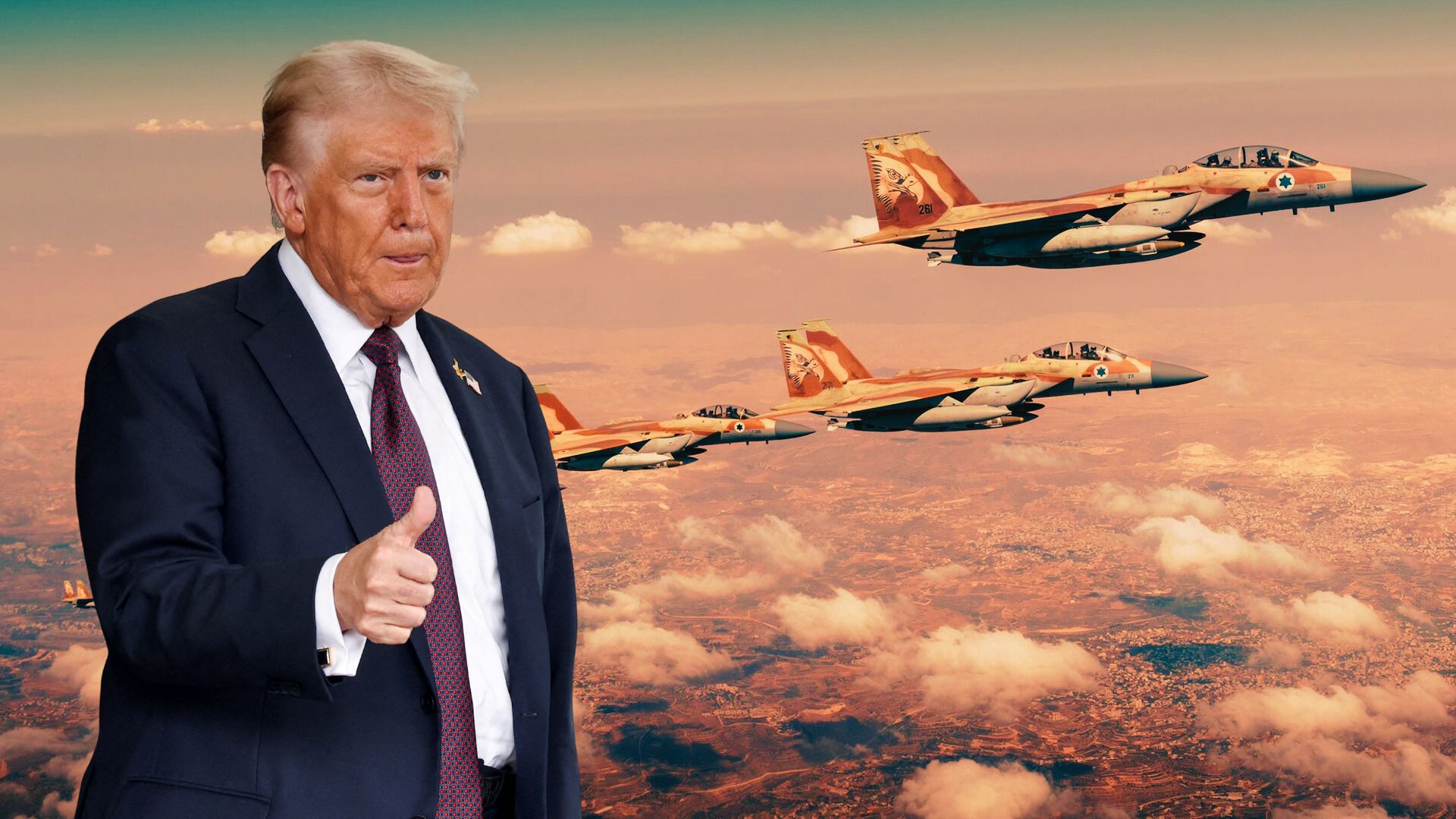
A protracted war or a freeze in the campaign: What options are available to the US president in the Iranian arena, what might influence his decision—and how should Israel prepare?
INSS Insight No. 2106, March 5, 2026
The US–Israeli military campaign against Iran presents President Trump with the challenge of achieving a rapid, easily marketable success without becoming mired in a prolonged war. The president has adopted an especially hawkish public stance and has called on the Iranian public to “seize the moment”; yet ambiguity remains regarding whether there is an organized plan for regime change and for the “day after” the war. Within the Trump administration, the tension is likely to sharpen between maintaining maximal military pressure—aimed at damaging the nuclear program, missiles, and proxy organizations—and limiting the economic and political costs of the war and the risks of escalation. Key variables include the results on the ground (battle damage assessment; BDA); American casualties; the economic repercussions, including developments relating to disruptions in the Strait of Hormuz; pressure from Gulf states; the depletion of stocks of precision munitions and interceptors; and internal criticism within the MAGA coalition. Scenarios include declaring success and freezing the campaign; coercing Iran into a diplomatic framework; and a regional escalation. Israel should maintain the close strategic coordination with Washington, based on a shared vision of what victory looks like and an acceptable “stopping point.” It should also frame the campaign publicly in terms of its service of American interests, all while preparing for the possibility of a sudden US halt to the campaign.
Since the beginning of the joint US–Israeli military campaign against Iran, President Trump has adopted a particularly hawkish public position, defining the objectives of the campaign as the necessary defense of US interests and the removal of direct threats emanating from Tehran. His direct appeal to the Iranian public to “seize the moment” and act to bring about change in the internal political system after the intensive bombing ends signals an escalation in psychological warfare against the regime. However, analysis of statements made by senior officials in the Trump administration regarding the campaign’s objectives reveals contradictions concerning the administration’s intentions and raises doubts as to whether, beyond the rhetoric, there is an organized operational plan for regime change. Moreover, it appears that the military move is not accompanied by a diplomatic plan to put in place an alternative leadership, similar to the preparations that apparently preceded the US operation to remove the president of Venezuela.
Indeed, the Trump administration is operating in a space of conflicting messages: on the one hand, a determination to continue “heavy and precise” strikes without time limitations; on the other hand, signals of openness to diplomatic contacts and statements about “rapid progress,” which prepare the ground for an early conclusion. Furthermore, in media interviews, Trump has displayed inconsistency when addressing the question of the possible duration of the war. This lack of clarity is not accidental and is likely intended to preserve deterrence vis-à-vis Iran while maintaining political maneuvering room, especially given that US public opinion has not been prepared for a prolonged military campaign. At the same time, however, it may reflect doubts within the administration—and by the president himself—regarding the level of achievement required and certainly regarding the price he will be willing to pay to attain the objectives that have been publicly set.
The Strategic Dilemma: Defining a Realistic Objective
Trump’s decision in the short and medium term will not be determined solely by tactical developments vis-à-vis Iran but by how the administration defines the optimal “stopping point” from its perspective. It appears that the internal discussion taking place in Washington reflects tension between two objectives:
Maximal military pressure—pushing to continue the campaign until achieving deep and irreversible damage to Iran’s core capabilities—foremost among them the missile program, the nuclear project, the Iranian navy, and the mechanisms through which Iran projects power across the region (its proxies). This objective is viewed as essential for securing a victory that can be presented as a historic decision. Evidence of this goal can be seen in statements by Trump himself, as well as by Secretary of War Pete Hegseth and Chairman of the Joint Chiefs of Staff General Dan Caine.
Risk containment—emphasizing the prevention of broad escalation that could raise economic and political costs. This approach rests on a deep aversion to long wars—a legacy of US entanglements in Iraq and Afghanistan—and fears of becoming bogged down in the Middle East, which could erode Trump’s legitimacy among his support base in the Republican Party. This view has been reflected in repeated statements by Vice President Vance, closely associated with America First circles, emphasizing that the president has no intention of becoming embroiled in a prolonged war.
In practice, the debate within the Trump administration will center on the question of definition: What constitutes the realistic objective that justifies continuing the campaign, and what is the stopping point that would allow Trump to present an achievement without appearing to have been drawn into an open-ended war? Is substantial degradation of Iran’s core capabilities sufficient to declare victory, or should the campaign continue until a more unequivocal outcome is achieved—one that demonstrates that the goal of regime change has become more feasible, even at the cost of prolonged fighting and sustained regional disruption? In this context, every development on the ground will translate into a political–strategic question of whether it strengthens the “image of victory” or, alternatively, spurs further strikes to avoid the perception of indecisiveness.
The following key variables will affect the length of the campaign:
The operational effectiveness metric (the BDA factor). Trump will measure success in terms of degrading the elements of Iranian power he had marked out. If assessments indicate critical damage to Iran’s launch capabilities and the command-and-control capacity of the Islamic Revolutionary Guard Corps, the incentive to stop and declare victory will increase. Failure to neutralize the threats or a severe Iranian counter-response would present Trump with a dilemma between continuing the campaign until success can be demonstrated on the ground and acknowledging the limits of force.
The American casualty cost. Despite the combative rhetoric, the administration is highly sensitive to American casualties. Significant harm to US forces or bases would likely generate a two-stage dynamic: an immediate impulse to respond with forceful strikes (Trump has already promised revenge for the deaths of six US soldiers thus far) to “restore deterrence,” followed by the possibility of heavy public and political pressure to exit the campaign to avoid another “forever war.”
The global economy and the Strait of Hormuz. The economic variable is a major pressure multiplier. Reports of severe disruptions to oil and gas tanker traffic in the Gulf are already affecting maritime insurance rates and supply chains. As such disruptions translate over time into higher fuel prices in the United States, Trump’s incentive to shift from a campaign to a negotiated arrangement will grow.
The regional variable and pressure from Gulf states. As Iranian attacks continue against energy infrastructure, economic assets, and civilian targets in other countries in the region—on the pretext that they host US bases and assets—pressure (both quiet and public) from US Gulf partners to move toward a limited war format and seek a “victory image” may intensify, out of concern for damage to their stability and economies. Over the past year, the administration has demonstrated sensitivity to the interests of these states and will therefore be attentive to their messages. At the same time, Washington has objectives of its own and may attempt to convey to the Gulf states that the fall of the current Iranian regime—or at least its dramatic weakening—would contribute to their security.
Depletion of precision munitions and interceptor stocks. Another consideration that may weigh against continuing high-intensity operations is the depletion of stocks of precision munitions and air defense interceptors, particularly if repeated waves of strikes are required alongside the continuous defense of bases and other assets. This will depend, however, on the extent to which damage to Iranian capabilities reduces the pressure on the air defense systems of the United States and its partners in the region.
The domestic political front and the MAGA coalition. At this stage, although most of the US public opposes the campaign, support for it within Trump’s political camp remains high, and Trump himself has previously expressed confidence in his ability to shape the agenda of his political base. Nevertheless, critical voices are growing among opinion leaders in the more extreme wings of the MAGA movement against military involvement, which they believe serves the interests of Israel and the Iranian people but not the principle of America First. Trump, aware that his “legitimacy coalition” rests on acting in the name of American interests and on the promise to end wars rather than start them, may therefore attempt to preempt the expansion of these pressures by presenting a tangible and rapid achievement that would enable a withdrawal from a position of strength.
Possible End-State Scenarios
Declaring success and freezing the situation. The administration could at any moment declare the achievements thus far as a victory: significant damage to the Iranian regime’s leadership (including the death of Supreme Leader Ali Khamenei), neutralization of Iran’s air defense systems, damage to the nuclear program, and strikes against the Iranian navy and missile arsenal. However, in the absence of a prepared alternative leadership in Iran (unlike the experience in Venezuela), Trump may prefer to freeze the situation and issue a warning that fighting could resume in the future should Iran return to its previous course. Without Iranian agreement to a framework for ending the conflict, the president might accompany such a move with a call for the Iranian public to rise up and a warning to the regime in Tehran not to suppress protests violently. Trump has sought to project a willingness to reengage in major operations and has referred to the possibility of conducting the campaign over several weeks; at the same time, he has boasted about the results achieved thus far and the fact that they have come ahead of schedule.
A diplomatic framework under fire. Trump may seek to exploit the military pressure to compel Tehran (or more moderate elements within the regime, if they survive) to return to the negotiating table on American terms. Opening a covert or public mediation channel would allow the president to present himself as a “deal maker” who achieved through military pressure what his predecessors failed to accomplish through diplomatic means. This appears to be the president’s preferred course.
Comprehensive regional escalation; that is, deterioration following a severe strike on US assets, a complete blockade of maritime trade routes, and/or a broad conflict between Iran and the Gulf states. In such a case, pressures would grow to intensify the campaign, including congressional approval for the prolonged use of forces and possibly the deployment of ground forces on a significant scale.
Implications for Israel
Israel faces an opportunity to translate US–Israeli pressure into a cumulative, long-term achievement regarding Iran: tangible erosion of core capabilities (missiles, command and control, nuclear components, and the projection of power through proxies), strengthening deterrence, and constraining Iran’s ability to rebuild. At the same time, the campaign could enable deeper regional coordination, especially with Gulf states, around freedom of navigation and defense against missiles and UAVs, framed as part of regional stability and a direct US interest. If weakening the regime were to lead to its collapse, this would constitute an achievement for Israel—even if a more moderate alternative regime does not emerge. This stands in contrast to the United States, for which a vacuum in governance could create regional challenges in the immediate term.
Conversely, the main risk stems from the possibility of a rapid US withdrawal for political and economic reasons. The longer the campaign continues—even if, from Israel’s perspective, the achievements remain partial or reversible—the greater the risk that responsibility for its continuation will be attributed to Israel as “dragging the United States along” for an ill-defined strategic adventure. This, in turn, will lead to further erosion in the international legitimacy of the campaign and of Israel’s standing in the United States.
Against this backdrop, policymakers in Jerusalem are advised to observe to the following principles:
Maintain close strategic coordination. It is essential to ensure that Washington and Jerusalem continue to operate based on shared definitions of victory and an acceptable stopping point. Israel should seek to ensure that the United States does not declare victory unilaterally while leaving Israel exposed to an Iranian counterresponse.
Frame the US interest. In discussions with the administration, the Democrats, and the American public, Israel should emphasize that the campaign serves direct US interests (freedom of navigation, force protection, energy stability) and avoid creating the impression that Israel is dictating the course of the campaign.
Prepare for a sudden halt. Israel and the United States operate in close coordination and from shared—though not identical—interests. Israel should therefore prepare operationally and politically for a scenario in which the United States shifts to a rapid diplomatic track. The aim is to prevent a “strategic vacuum” that would allow Iran to restore its deterrence and capabilities under the cover of negotiations and to ensure that Israel retains the tools and guarantees needed to present Iran with a credible threat should it resume developing its nuclear and ballistic capabilities and continue supporting destabilizing actors across the Middle East.
Preserve international legitimacy. As the campaign continues, Israel will need to justify the necessity of its actions not only in military terms but also as part of creating a more stable regional order while mobilizing support from the Gulf states for this effort.
In conclusion, Trump’s decision on whether to continue or halt the campaign will depend on the balance between his image as a victor and the political and economic pressures he faces domestically. Israel must navigate this uncertainty carefully, maximizing the damage inflicted on Iran while maintaining maximum flexibility vis-à-vis the United States, its largest and most important ally.