


Publications
INSS Insight No. 923, May 4, 2017
Follow us on Google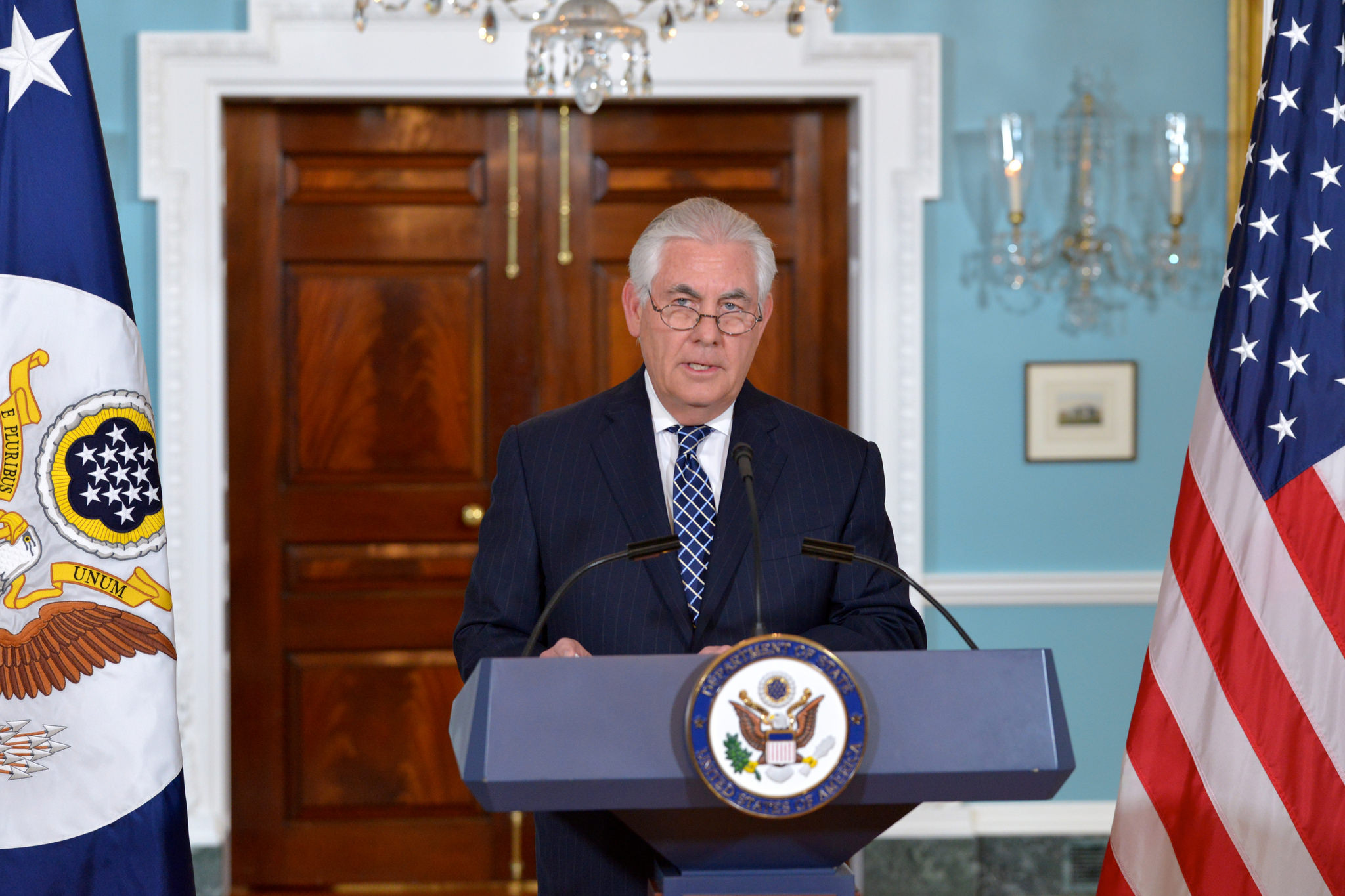
The United States is currently reviewing its policy on Iran. The administration has allowed the continued suspension of sanctions, after notifying Congress, as required by law, that Iran is complying with the JCPOA. At the same time, its public criticism of Iran’s activities in the Middle East has become harsher, with the goal of sharpening the link between the nuclear agreement and Iran’s regional activity. However, while the administration can choose from several ways of restricting Iran’s moves in the Middle East, it knows its hands are tied where the JCPOA is concerned. It must take into account the expected opposition of the other countries involved in the agreement, as well as Iran’s capacity and motivation to prove that it does not intend to bend. For Israel, the US review of its policy on Iran is a good opportunity to influence decision makers in the United States. It is important to ensure that US policy extends to Syria, includes Hezbollah, and is not limited to the Gulf. It is likewise important to focus on the tools required for close supervision of the Iranian nuclear program and the prevention of breaches of the agreement, as well as on preparations for the day after the JCPOA.
The United States administration announced recently that as per the directive of President Trump, the National Security Council is preparing a general assessment of US policy towards Iran, and will review whether the removal of sanctions resulting from the agreement actually serves America’s national interest. Meanwhile, as required by legislation, the State Department confirmed (April 18, 2017) that Iran is complying with the nuclear treaty. This notification to Congress is a condition for extending the decision to suspend the sanctions imposed on Iran, which was taken after the nuclear agreement was signed.
In parallel, the administration's public criticism of Iran has become harsher. President Trump stated (without elaborating) that Iran is "not living up to the spirit" of the agreement, and on April 19, Secretary of State Rex Tillerson devoted a special, comprehensive press briefing to details of Iran's "provocative" regional conduct. This involved a broad description of Iran’s actions in recent years, its contribution to the export of terror and violence, and to its undermining of stability in several Middle East states.
In the context of the nuclear deal, Tillerson stressed that the goal of a non-nuclear Iran has not been met. He stated that the agreement has only delayed the time when Iran will achieve its goal of becoming a nuclear state, and this reflects the same failed policy that has led to the current situation where the international community is now faces an immediate threat from North Korea. Tillerson averred that the Trump administration does not intend to continue the policy of "strategic patience" (referring to the policy of the previous administration toward North Korea), nor is there an intention to pass on the problem to the next administration. However, Tillerson (like other US spokespeople, including Trump) avoided any commitment to change or terminate the agreement, simply continuing to state that the government is examining its policy toward Iran.
In order to maintain pressure on Iran, the administration still occasionally makes use of "designations" – indicating elements with whom no business should be done. Last month the State Department imposed sanctions on 30 people and companies from China, North Korea, and the United Arab Emirates (UAE) that transferred sensitive technology to Iran for its missile program and thus breached the export ban. Within the framework of legislation that allows the designation of individuals in Iran involved in violations of human rights, the US Treasury recently imposed sanctions on Qasem Soleimani, the brother of the commander of the Quds Force, for his role in the abuse of Iranian prisoners. However, there is still no progress in Congress toward an additional package of sanctions, following the joint proposal of Republican and Democrat senators presented in late March.
The US is focusing its regular dialogue with its allies in the Middle East, particularly the Gulf states, on Iranian threats and the steps required to handle them. It appears that the administration considers Saudi Arabia very important in this context. Moreover, it seems that the administration sees the campaign in Yemen as a convenient platform for expanding its help to the Saudis in their conflict with the Iran-allied Houthis, and the administration is reportedly considering increasing its military support of the Saudi efforts in Yemen. This does not mean active involvement of American forces in the fighting, but could mean more transfer of information and even, as was mentioned in the past, transfer of precision air to surface missiles.
For its part, Iran continues to examine emerging US policy and so far has not been moved to take unusual steps that could aggravate relations between the two countries. At present it has sufficed with a relatively muted response to American declarations, while highlighting its compliance with the nuclear agreement. Moreover, editorials in Iran's leading media have interpreted the State Department's notice to Congress and Tillerson's remarks as a retreat by President Trump from his hard approach to the nuclear agreement and as evidence of an understanding that the agreement is a fait accompli that cannot easily be changed by the US. This Iranian approach reflects a desire to avoid playing into the hands of the US administration, as well as the clear interest of Iranian President Hassan Rouhani to prevent the issue from becoming the central topic of Iran’s presidential elections, scheduled for May 19. Moreover, for Tehran, the success of Rouhani's recent visit to Moscow is strong proof that the US has not succeeded in driving a wedge between Russia and Iran, and that Moscow continues its strong support for the nuclear agreement.
The Trump's administration approach to the Iranian issue to date, moving between State Department confirmation to Congress that Iran is complying with the agreement and fiery rhetoric regarding Iran's regional activity, reflects the dilemma underlying the current reassessment of policy regarding Iran. The administration doubts Iran's long term intentions to uphold the deal, and sees Iran as a powerful rival that works vigorously to damage the regional interests of the US and its allies. Moreover, unlike the previous government, Trump is interested in an overall Iranian policy and is therefore sharpening the link between Iran's conduct on the nuclear issue and US responses to Iranian actions in the Middle East. The tension with North Korea will likely strengthen the administration's motivation to show determination regarding Iran.
It appears that the current guidelines are to increase pressure on Iran by public declarations that clarify the seriousness of the administration's intentions, first and foremost as a message to Iran, but also to US allies, that are pushing it to limit Iran's freedom to maneuver. The assumption is that the US administration will be prepared, in the framework of the current assessment led by people with a military background who are familiar with the Middle East, to take steps that will enable it, directly or through its allies, to work on changing the regional balance and limiting Iran's influence in the main areas of tension. Possible actions in this context include expanding sanctions on the Revolutionary Guards, lowering the threshold of caution in conflicts with Iranian ships in the Gulf, and increasing intelligence and military aid to Saudi Arabia and other countries pitted against Iran. There may also be greater pressure on Hezbollah, as hinted by US Ambassador to the UN Nikki Haley.
However, the administration will probably take into account that Iran's regional status and capabilities grant it a variety of ways to harm the interests of the US and/or its regional adversaries. If Iran estimates that the searing American rhetoric may turn into concrete steps, it presumably will want to demonstrate that it does not intend to give up its regional status and influence and that escalation will exact a price of the US and its allies. The administration must also weigh how much a tough attitude toward Iran suits its central goal of defeating the Islamic State. The US and Iran are engaged in a war against the Islamic State in Iraq, and even if there is no direct dialogue between them, there is probably cooperation at some level (in fact, no clashes between them have been recorded so far). Increasing the tension with the US could therefore also affect the Iraqi front and damage the continued focus on the Islamic State. In addition, the US must also consider the possible consequences for relations with Russia, which is working closely with Iran in Syria and in Afghanistan where they are developing relations with the Taliban, which opposes American interests there.
The reassessment of US policy regarding the nuclear agreement will likely be complex, since even if the administration retains its position that the JCPOA is a bad deal, it is limited by the commitment of the international community and the opposition to any breach of the agreement. Also, it is doubtful if the messages coming from Middle East states, including Saudi Arabia, include a demand to cancel or harm the agreement. Like other countries in the region, the US knows that any attempt to upset the agreement plays into the hands of Iranian extremists, who could respond with steps such as breaching Iran's obligations in the nuclear realm. It therefore appears that the administration, which at this stage has confirmed that Iran is complying with the agreement, will choose to focus on strengthening inspection of Iranian nuclear activity and observance of the agreement. The question of reinforcing sanctions will remain on the agenda of the administration and Congress, but decisions on this issue will take into account the possible effects on Iran's conduct and the fact that the US could be accused of breaching the agreement.
For Israel, the coming months, when the US will review its policy towards Iran, offer the potential opportunity to influence American decision makers at various levels. Israel's main interest is to ensure that American efforts to contain Iran in the Middle East do not stop at the Gulf (as Saudi Arabia and other states have probably requested) but will also include Syria and Hezbollah. As for the nuclear agreement, it is important to focus on the tools required for close monitoring of Iran's compliance and prevention of violations, as well as on preparations for the day after.