


Publications
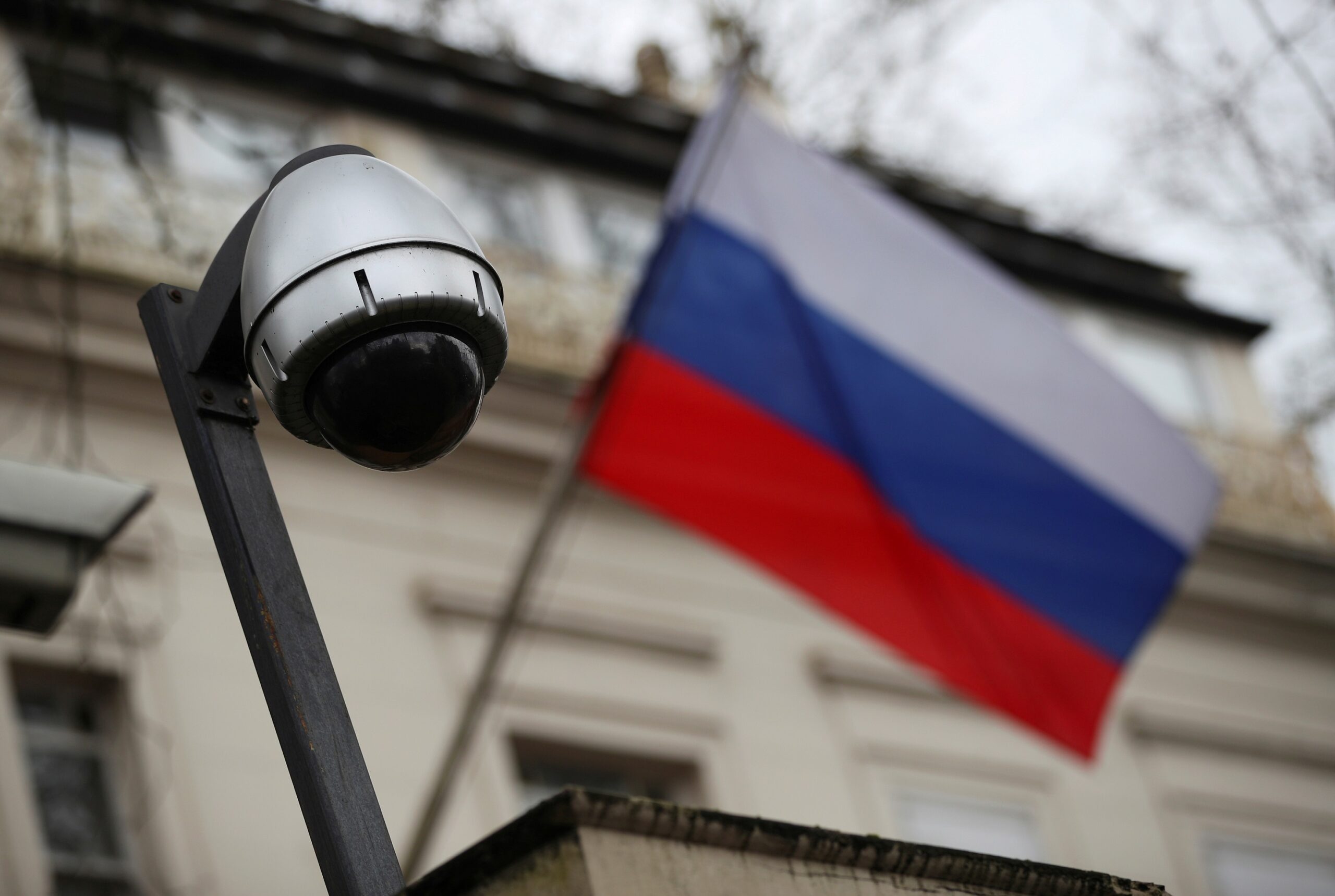
Government lapses, inappropriate ties to oligarchs, and Russia influence on political processes – a report made public in part sharply criticizes Britain’s intelligence conduct vis-à-vis Russian attempts at intervention. Israel should look at this report closely, and consider adopting some of its recommendations
INSS Insight No. 1361, August 12, 2020
A report by the Intelligence and Security Committee of Parliament sheds light on Britain’s efforts to resist Russian attempts to weaken Britain, part of Russia’s goal to undermine the status of Western democracies and widen social rifts within them. According to the report, Britain has not handled the threat well, due to lapses in the strategy it adopted when confronting the challenge and problems with its implementation. These can be attributed to gaps in the regulation of relations between the various responsible bodies, the low priority given to the threat, and the fear of tackling such an explosive issue. The report recommends the regulation of areas of responsibility and legislative changes in order to promote international cooperation in this field. This article contends that some of the gaps in Britain and the recommendations for narrowing them are, with adjustments, relevant to Israeli intelligence and security organizations. The Knesset subcommittee on intelligence is advised to examine the situation in Israel in this context.
On July 21, 2020, Britain’s Intelligence and Security Committee of Parliament published a report discussing the threat to British democracy from Russia, and how intelligence organizations have dealt with it. The report, which is partly censored, sheds light on the British response (with an emphasis on its weaknesses) to Russian influence, which is manifested in covert activities. The report speaks to the difficulties encountered by a liberal and strong Western state when faced with Russian activities that, in the eyes of the report, constitute a strategic threat. The lessons of the report are relevant to other Western countries, including Israel. Publication of the report was delayed for over a year, officially for bureaucratic reasons, but most likely for political reasons: it hints at lapses for which the present and previous (Conservative) governments are responsible as well as inappropriate links between the House of Lords and oligarchs closely tied to the Russian regime, and even suggests that Brexit, the flagship project of the Conservative party in the last five years, was tainted by Russian influence.
Experts in Britain have criticized the report and its generalized approach, with respect to both the increased severity in the perception of the threat, and to the response, which in certain cases has improved or is not required. Nonetheless, a thorough reading of the report is important because Britain can serve as a reference point for Israel, which could find itself facing a similar threat, and whose intelligence community also suffers from gaps in its ability to handle foreign influence in general, and Russian influence in particular.
The Threat of Russian Influence on Britain
According to the report, Russia wishes to position itself as a world power, to promote an anti-Western stance in the international arena, and weaken Western democracies by fomenting tensions and widening rifts, as was revealed by the actions attributed to Russia in the 2016 US presidential elections. Britain in particular is a target for Russian influence because it is an important member of NATO, has close ties to the United States, and is a leader of the firm stance against Russia in the international arena. The report identifies the threat of Russian influence in three main areas:
- Cyberattacks, mainly of the “hack and leak” type (breaking into a secured database and exposing its contents in order to harm particular individuals or institutions), in which the Russians have shown impressive capabilities.
- Disinformation and political influence: although Russia is unable to affect election results directly where paper ballots are used (as in Britain and Israel), it can certainly reveal embarrassing information about candidates, exploit Russian media in English (the RT and Sputnik networks), make use of “bots” and “trolls” on social media, and finance political activities.
- The use of Russian citizens living in Britain: the report alleges that business people with close ties to the Russian regime have created a network of influence in the British business and political environment, including an array of lobbyists, PR people, and lawyers, who promote Russian interests in Britain.
Lack of a Suitable Strategy
In 2016 a comprehensive strategy for dealing with Russian influence was drafted, the Cross-Whitehall Russia Strategy, covering 14 different bodies. The attempt to offer a complete response to the threat was correct, but as assessed by the report, the ability to take integrated action is far higher in the Kremlin than in Britain. This is because the Russians are able to channel private market and media companies, as well as their security services and espionage organizations, to the efforts to influence. Moreover, the report shows that it is not always clear which element is responsible for protection against Russian actions, either because of too many entities engaged in the same field – for example, the report defines cyber as a “crowded area” – or their complete absence.
In addition, the report claims that the strategy does not match the threat, and points out that the attempt to build a system of positive relations with Russia, part of the British strategy, is destined to fail. Thus, the report stresses that existing laws have not been updated – for example, the law against espionage does not provide a response to foreign attempts to exert influence, while the British law against money laundering does not permit the imposition of financial sanctions based on involvement in serious and organized crime.
Problems with Implementing the Strategy
In fact, the British intelligence community has focused on localized threats (which remain confidential in the report) and not on a broad, systemic response. This asymmetry played into Russia’s hands, which was able to respond swiftly and more comprehensively, thanks to strong central control, readiness to take action, and even escalate against any Western intelligence activity. The report indicates two models for a Western state to deal with the threat of foreign influence – the United States model, which notwithstanding criticism includes relevant findings that were tested and made public, and the British intelligence community model, which has refrained from tackling the problem almost completely.
Prominent among the issues that the intelligence agencies avoid addressing is the protection of democratic processes, defined in the report as a “hot potato.” There is even concern that any attempt to determine which aspects of the social and political discourse are the result of Russian intervention could be seen as an improper attack on freedom of expression and the imposition of a definition of “truth.” It is not surprising, therefore, that British intelligence organizations, which are interested in confidentiality and the support of the government and the people, avoid engaging in such explosive issues, even at the cost of a certain risk to democratic processes.
One result of intelligence agencies avoiding defense of democratic processes is that responsibility for dealing with the threat falls on unsuitable entities. For example, the British Ministry of Culture and Sport has been assigned responsibility for dealing with disinformation, which has no relevance to its activities.

How Can Russian Influence be Countered?
The report recommends regulating the spheres of responsibility of various organizations, while charging MI5 (the British internal security service) with the defense of democracy by defining policy for the Ministry of Security and War on Terror. It notes that the threat from Russia requires closer supervision by the Minister of Defense, the Foreign Minister, and the Minister of the Home Office. It also stresses the need for cooperation between the various agencies and other security entities, and if necessary, more aggressive action (for example in the cyber field) and more aggressive response (such as assigning blame).
The report recommends legislative changes to give the relevant agencies greater powers for dealing with Russian activity on British soil. These changes include the introduction of a law similar to the American FARA (Foreign Agents Registration Act), which states that anyone who is not a diplomat and acts on behalf of foreign forces must reveal his contacts with these elements. Updates are also proposed for the law against money laundering, making it harder for businesspeople with ties to the Russian government to operate freely in Britain.
Finally, the report recommends strengthening international cooperation in the area of intelligence regarding Russia, to allow coordination of efforts and the creation of a joint front to combat Russia’s ability to act. It stresses the need to reinforce understanding of the Russian threat as a strategic threat to Italy, Austria, France, and also Israel, and praises the work of the United States and NATO, and the diplomatic effort to expel 153 diplomats and intelligence officers from 29 countries following the attack in Salisbury (in which Russian agents poisoned Sergei and Yulia Skripal).
Significance and Recommendations for Israel
Some of the report’s conclusions are also relevant for Israel, subject to necessary adjustments. While it is hard to maintain that Russia is a danger to Israel in the way it is to Britain, there is still concern over the threat of similar influence, particularly if relations between the two countries deteriorate. Tensions have arisen – for example, around the Naama Issachar affair, and the downing of a Russian plane over Syria. Like Britain, Israel is a liberal Western democracy and an ally of the United States, while Russia has interests in the Middle East that do not necessarily match those of Israel. In addition, Israel is mentioned in the British report as allowing Russian-supporting oligarchs to live there without examining the possible risks. Israel is also home to a large population from the former Soviet Union, who could be the target or the means of exerting influence.
Unlike Britain, Israel, as far as is known, has no strategy for dealing with foreign influence, although in 2019 the head of the Israel Security Agency warned that he believed that a foreign country was trying to interfere in the elections. It is likely that the ISA engaged in some measure in finding a response to this threat (based on the ISA/GSS Law which states that the organization is responsible for thwarting subversion), but it is not clear whether other elements in the intelligence community define the task as a strategic threat. In addition, Israel is wary about giving a political tinge to the activity of espionage organizations, and there is a fear that insufficiently cautious action by the intelligence community would affect election results. Israel – like the United States that has already been burned in attempts to exert influence – is a polarized society, and when engaging with the threat, intelligence personnel may be affected by tensions in the society of which they are a part. Moreover, the use of “bots” and “trolls” in the recent election campaigns in Israel received wide media coverage, even though no significant impact was identified.
The threat embodied by Russian influence on policy and politics in Israel has already been on the public agenda and discussed in the Knesset in the framework of the Science Committee in 2017. Pursuant to this, it is proposed that the Subcommittee on Intelligence, which is subordinate to the Foreign Affairs and Defense Committee and conducts secret discussions, should examine this subject in depth, with the emphasis on the Russian threat and with reference to other sources of threats of foreign influence (such as China or Iran). The first stage should be an examination of how to deal with the issue of outside influence – what have the relevant entities done so far, which threats is Israel currently facing and how are they perceived, and what tools are available to Israel to handle the challenge. In the second stage, organizations in the intelligence community must regulate how they propose to deal with the threat of Russian influence, both during election campaigns and at other times, and formulate a suitable response strategy.