


Publications
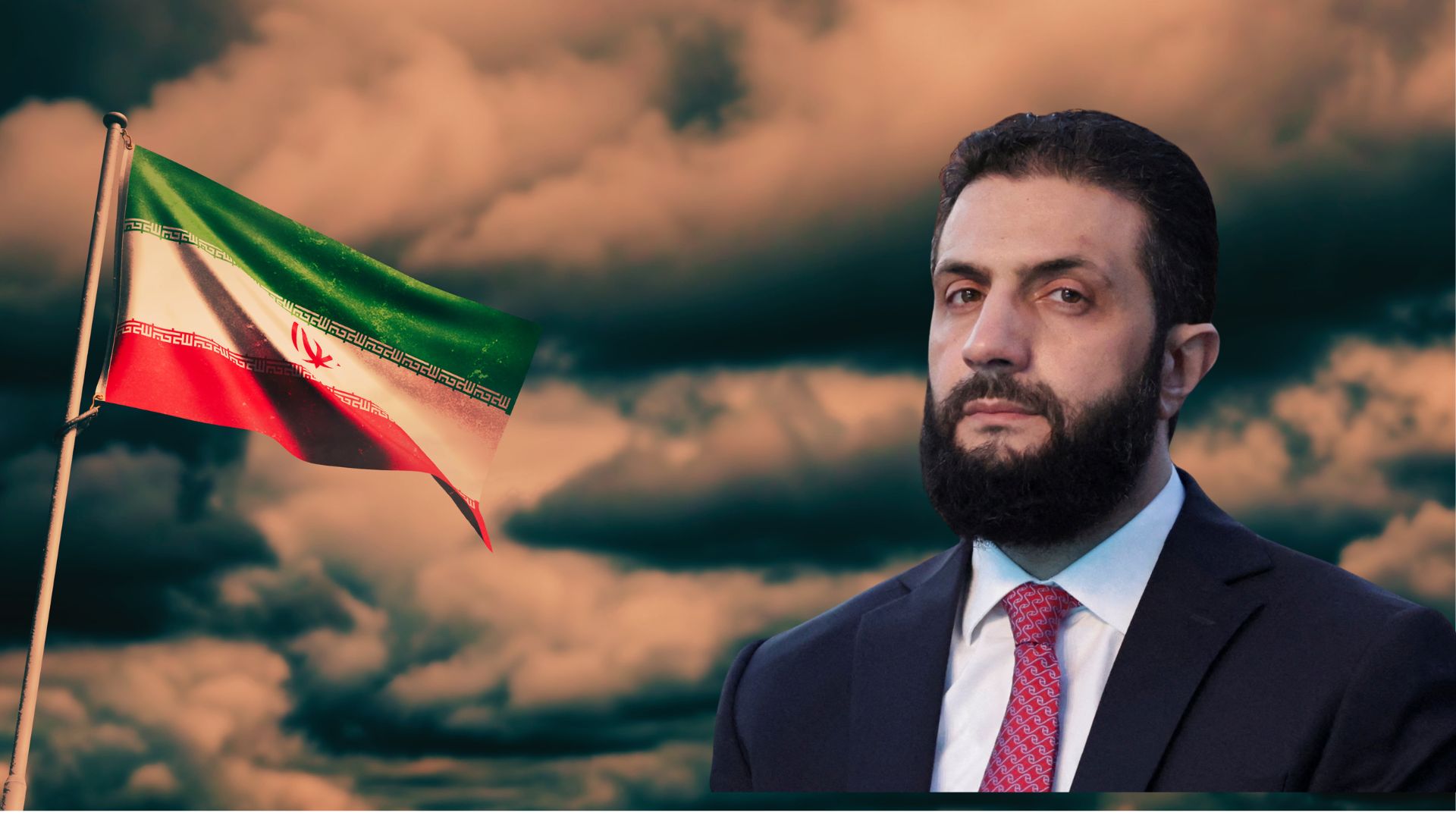
What are the implications of the campaign in Iran for Damascus, how is the al-Sharaa regime working to exploit new opportunities, and what should Israel be paying attention to?
INSS Insight No. 2126, March 31, 2026
Syria, under Ahmed al-Sharaa’s leadership, is not a direct party to the war between the United States and Israel on the one hand and Iran on the other. At the same time, it is neither neutral nor passive. Although Syria is not directly involved in the fighting, Damascus has demonstrated extensive diplomatic activity as it seeks to exploit the regional crisis to distance itself from the Iranian axis, reintegrate into the regional system, and present itself as a constructive and valuable actor. At the same time, Syria is reinforcing its forces and increasing its activity along its borders, especially vis-à-vis Hezbollah in Lebanon and along its border with Iraq. Still, it faces significant constraints—state weakness, threats from external actors, and risks of escalation with Israel. Recent incidents in southern Syria have illustrated the potential for friction and the complex relations between Damascus and Jerusalem. From Israel’s perspective, a balance is required between deterrence and examining opportunities for cooperation and the promotion of regional stability.
As the war with Iran escalates and spills over into additional arenas in the region, Syria is not a direct party to the fighting, but it is, nonetheless, affected by its consequences. In practice, Syria is not standing idly by. Under al-Sharaa’s leadership, it has adopted what can be defined as a policy of active neutrality—that is, avoiding direct involvement in the fighting while maintaining diplomatic and security activity that allows Damascus to exploit the regional crisis to consolidate its standing and reposition itself in the region.
The clearest shift in this context is reflected in Syria’s attitude toward the Iranian axis. Under Assad, Syria served as a central link in the Iranian-led “Axis of Resistance” and functioned as a logistical and territorial hub for the transfer of weapons, the deployment of Iranian forces, and Hezbollah activity. After Assad’s fall in December 2024, Iran was forced to evacuate most of its assets and forces from Syria and has since increasingly been viewed as a major threat to the Syrian state. From its earliest days in power, the al-Sharaa regime has confronted Hezbollah and acted to thwart the smuggling of weapons from its territory. Therefore, the US–Israeli effort to contain and weaken Iran is consistent with Syrian interests.
As in the 12-day war (Operation Rising Lion) with Iran in the summer of 2025, Syria is once again serving as a strategic corridor, enabling Israeli and American aerial freedom of action over its territory, primarily for the interception of Iranian threats. Whereas in June 2025 this was more a matter of turning a blind eye to Israeli activity, and perhaps also reflected Damascus’s lack of ability to choose otherwise, in the current war there appears to be a degree of coordination and cooperation on Syria’s part, given its closer relations with the United States.
A Calculated Diplomatic Effort
Syria’s avoidance of direct military action does not indicate passivity. The intensified diplomatic campaign pursued by al-Sharaa since the start of the war—through direct and ongoing dialogue with a wide range of regional leaders, condemnation of Iranian aggression, and emphasis on the threat it poses to regional stability—suggests an effort to leverage the war to present Syria as a constructive and valuable actor.
Toward the United States, al-Sharaa’s decision to permit the use of Syrian airspace for strikes on Iran (despite the resulting damage to life and property) is intended to reinforce Syria’s image as a responsible partner deserving of continued political and economic support. In this context, al-Sharaa’s expected visits to London and Berlin, which carry diplomatic significance, also signal the continuation of active Syrian diplomatic outreach to Europe.
In the regional arena, Damascus is signaling its desire to integrate into the Sunni camp, which it views as its natural place, while underscoring its complete break from the Iranian axis. A series of diplomatic contacts with Saudi Arabia, the United Arab Emirates, Qatar, Lebanon, Jordan, and Azerbaijan reflects a coordinated effort not only to generate legitimacy but also to demonstrate Syria’s potential strategic value. Against the background of threats to shipping routes in the Red Sea, al-Sharaa is presenting Syria as an alternative overland corridor that can connect the Gulf to the Mediterranean. He is also promoting proposals for the establishment of regional security coordination mechanisms and even ideas for a joint operations room with the Gulf states.
Vis-à-vis Israel, although relations between the countries are more complex, Syria may be seeking to highlight the advantages of a security arrangement in the struggle against Iran and its proxies, even in the post-war period.
Security Activity Along the Borders
The Syria–Lebanon border
Against the backdrop of reports of Hezbollah activity near the Syrian border—including artillery fire and the transfer of reinforcements—the Syrian army has begun strengthening its presence in the area. Recently, there have been signs of possible Syrian offensive intentions against Hezbollah, including an incursion into Lebanon and consideration of creating a buffer zone along the border. If such a move were to materialize, it could mark a significant change, indicating Syrian willingness to open a front against Hezbollah and limit its freedom of action and influence. According to a Reuters report published on March 17, the United States encouraged Syria to consider action against Hezbollah, including the possible deployment of forces in eastern Lebanon, as part of a broader effort to curb Iranian influence. However, Damascus is hesitant to take such a step, out of concern that it could be drawn into a broad regional confrontation and exacerbate internal and sectarian tensions. Shortly after the report was published, the US special envoy for Syria, Tom Barrack, declared the report to be false and inaccurate.
In any case, from al-Sharaa’s perspective, this is a complex and highly risky move. The Syrian army is still undergoing reconstruction; its capabilities are limited; and it continues to face internal challenges, including the integration of Kurdish forces in the northeast and the need to assert control in peripheral areas. In addition, Turkey’s opposition to Syrian involvement in Lebanon is a central component in his calculations. Finally, al-Sharaa cannot afford to be perceived as acting in the service of Israeli interests—a narrative already circulating on Syrian social media. From an Israeli perspective, it is doubtful that such a move would be viewed positively. A Syrian struggle against Hezbollah and the opening of another front could help weaken the organization. Conversely, given Israeli suspicions regarding al-Sharaa’s character and intentions, such a move could, in fact, raise concerns regarding the new president’s assertiveness and signal possible offensive intentions in the future—perhaps even against Israel. Therefore, even if Syria initially considered offensive action against Hezbollah, it seems that the costs—including the risk of heightening Israeli suspicion—outweighed the potential benefits.
Indeed, in his conversations with regional leaders, al-Sharaa clarified that the reinforcement of Syrian forces was intended solely for defensive purposes. In a trilateral phone call with the presidents of France and Lebanon, al-Sharaa expressed Syria’s full support for Lebanon’s stability and security, as well as for the efforts of the Lebanese government to establish sovereignty and disarm Hezbollah. During the conversation, al-Sharaa also called for opening a new chapter in Syria–Lebanon relations, based on cooperation and coordination between the two states in a way that would serve the interests of both.
The Syria–Israel border
The situation in southern Syria and relations with Israel is even more complex. On the one hand, Damascus appears to be taking positive steps. Beyond granting freedom of action in its airspace, Syrian security forces have reinforced their presence to create what they describe as a security buffer zone in the Quneitra area. The aim is to prevent activity by actors affiliated with Iran and its proxies against Israel and to reduce provocations that could trigger an Israeli response. On the other hand, Israel has viewed this move as an attempt by al-Sharaa to exploit the campaign against Iran and Hezbollah to increase his forces and harm the Druze, which led to warning messages being conveyed to Damascus not to take advantage of the situation.
About two weeks later, tensions between the sides intensified, and for the first time since July 2025, Israel struck targets belonging to the Syrian army (March 20). The strike followed a violent clash between armed Druze groups and regime forces. Sources in Suwayda reported exchanges of fire in the western countryside between Syrian Internal Security forces and units of the “National Guard,” an armed force affiliated with Druze leader Sheikh Hikmat al-Hijri. In a statement, the group accused the Damascus government of carrying out a series of systematic attacks against local residents, from kidnappings to missile and drone attacks. It claimed that seven people had been killed and others had been abducted and detained by security forces.
The Syrian Interior Ministry, for its part, stated that this had been a special operation aimed at thwarting an attempt to smuggle weapons and ammunition to outlaw groups. Local sources further reported that Bedouin actors had provided intelligence that enabled the Syrian forces to carry out a planned and deadly ambush against the Druze. In response, Israel attacked bases and weapons depots used by the 40th Division of the new Syrian army. Friction between Syrian forces and Druze groups has been ongoing in recent months, and the timing of both the Syrian move and the Israeli response in the shadow of a regional war therefore raises questions.
From the Syrian perspective, it can be assessed that the regime sought to exploit Israeli and regional distraction to advance an internal move: settling accounts with the “National Guard,” which has initiated confrontations with regime forces, taken control of humanitarian aid, and engaged in criminal activity as well as in arms and drug trafficking. As in his approach to the Kurds in the northeast, al-Sharaa appears to be seeking to establish sovereignty and gradually consolidate control over southern Syria.
From the Israeli side, although this was a local clash between armed actors without harm to Druze civilians (which raises questions about the need to intervene in Syria’s internal affairs), Israel may have sought to stop al-Sharaa’s forces before the incident turned into a broad confrontation culminating in mass violence, as occurred in July 2025. Others argue that the fact that Israel had not struck until now suggests that it is the one exploiting regional and international attention on Iran to reassert its deterrent posture in Syria and signal red lines to al-Sharaa, particularly regarding the Druze. Syrian actors claim that Israel sought to heighten tensions with Damascus in order to distance itself from a US-backed security agreement that could lead to an Israeli withdrawal from Syrian territory. Meanwhile, the strike drew a wave of condemnations from Turkey, Qatar, Egypt, Jordan, Saudi Arabia, Kuwait, and the Arab League, all of which denounced what they described as a “violation of Syria’s sovereignty.” It should be noted, however, that beyond the Syrian government’s expected condemnation of Israel, Interior Ministry officials were sent to brief internal security personnel in western Suwayda, possibly to restrain them in the future.
Socioeconomic Implications
Alongside its security implications, the war between Israel and Iran is also having significant socioeconomic effects on Syria. First and foremost, disruptions in energy supply—especially in the flow of gas—have worsened the country’s electricity crisis, leading to a sharp decline in energy availability after a brief period of improvement. The halt in supplies from Egypt via Jordan caused about a 50% drop in the number of hours of electricity available in Syria, reversing the improvement seen at the beginning of the year.
At the same time, regional instability is delaying Syria’s fragile process of economic recovery, harming trade and the ability to attract investment and generate growth. The civilian population is experiencing deteriorating living conditions, a decline in basic services, and growing social pressures, especially amid the return of thousands of Syrian refugees from Lebanon and the additional strain on already limited infrastructure. All these factors may exacerbate Syria’s internal instability and broaden expressions of civilian opposition.
Against this backdrop, al-Sharaa’s Eid al-Fitr speech at the People’s Palace in Damascus was clearly intended to stem the pressures surrounding the economic crisis and restore public confidence. In the speech, delivered before senior regime officials and representatives of various communities, al-Sharaa chose to emphasize his government’s achievements in an effort to frame the economic situation as one of gradual improvement rather than a continuing crisis. He acknowledged the existence of major challenges but stressed that the country was in a “transitional phase” and warned against attempts to undermine stability from within during this sensitive period.
Implications
Ahmed al-Sharaa is a sophisticated and opportunistic leader operating within a limited room for maneuvering, shaped by ideological considerations and pressures from his base of support. As a result, he must balance diplomatic pragmatism with the need to preserve internal legitimacy. Against the background of the war and the changes it has produced in the regional balance of power, he appears to identify a strategic opportunity to enhance Syria’s strength, influence, and standing, distance it from the Iranian axis, restore his country to the Arab fold, and even reposition it as a central regional actor with both security and economic relevance.
For Israel, this reality presents a complex dilemma. On the one hand, distrust of the new regime remains deep and justified, especially given al-Sharaa’s past and the jihadist ideological base from which he emerged. On the other hand, there is an emerging possibility—albeit limited and fragile—of viewing Syria as an actor whose interests partially overlap with Israel’s, especially in terms of curbing Iranian influence and restraining Hezbollah. There may even be room to explore whether, with American backing, Syria can be drawn into channels of action that would contribute to regional stability.
In these circumstances, effective Israeli policy will need to combine caution with a willingness to seize opportunities. On the one hand, Israel should continue to preserve its military freedom of action and the ability to respond quickly to any threat, as has been clearly demonstrated in recent years. On the other hand, there is room to examine ways of steering Syria, even if indirectly and gradually, in directions that would serve Israeli interests. Preserving channels of communication, preventing unnecessary escalation, and encouraging pragmatic trends in Damascus could contribute to broader regional stability. If Syria does indeed remain on a pragmatic path, Israel may gain strategic benefits from it. If it deviates from that course, Israel has already demonstrated that it knows very well how to identify a threat and respond with force.