


Publications
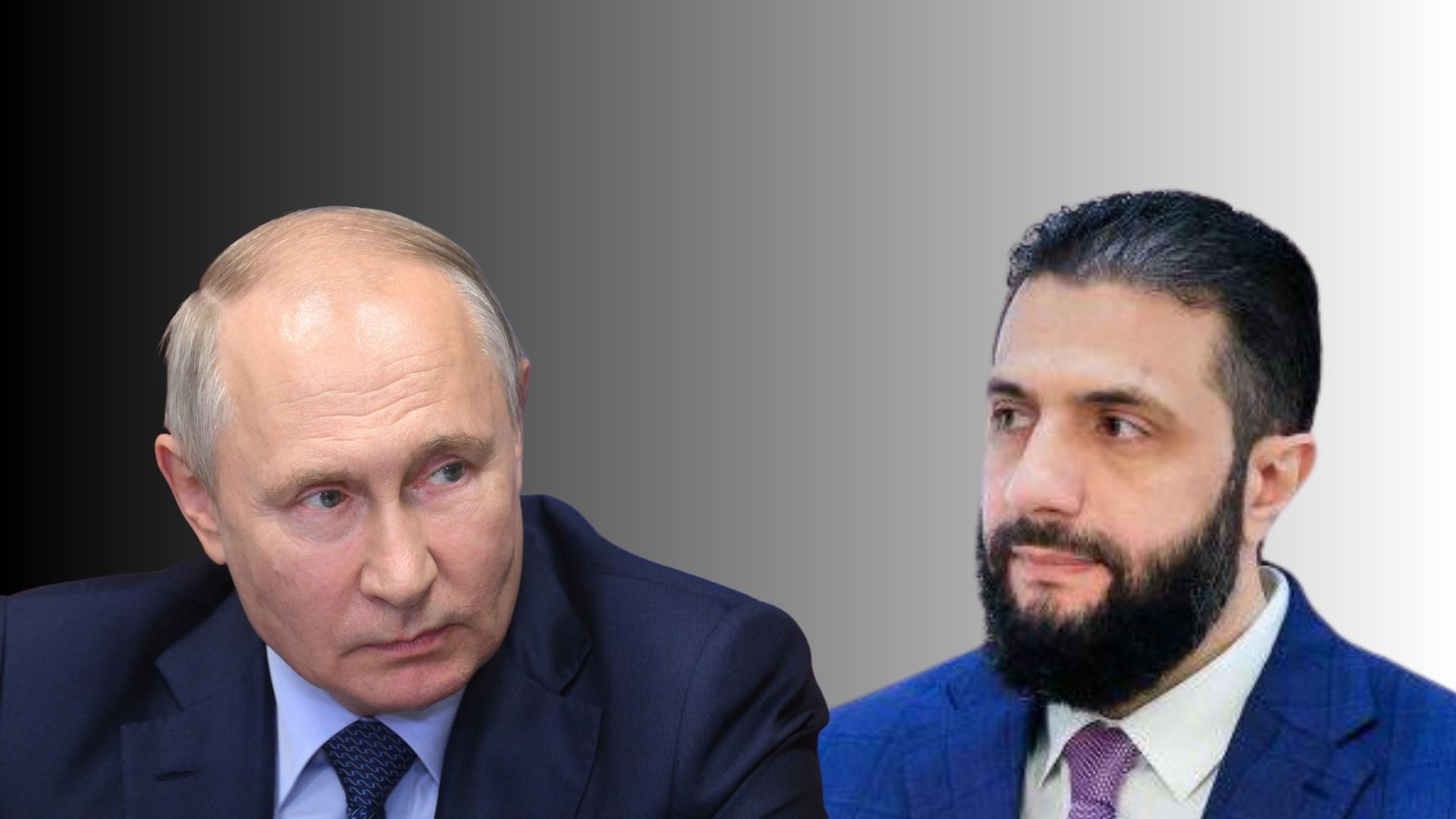
A year after the fall of Assad—Russia’s client—the security relationship between Moscow and Damascus is being renewed, a development that does not serve Israel’s interests and may even generate risks for its operations
INSS Insight No. 2077, January 19, 2026
About a year after Ahmed al-Sharaa rose to power, a renewed rapprochement between Russia and Syria—particularly in the security sphere—has become apparent. This follows an initial period of suspicion and caution, reflecting a combination of diplomatic appeasement efforts by Moscow and Damascus’s recognition of the security threats facing Syria. In recent months, intensive dialogue has taken place between the two countries’ defense ministries and armed forces, including discussions on assistance to rehabilitate the Syrian army and on expanding Russia’s deployment on Syrian territory. Although no concrete implementation of these plans has yet been identified on the ground, the consolidation of this security partnership does not serve Israel’s interests and may generate risks to its freedom of action.
In the first months following Assad’s fall little more than a year ago, relations between Syria’s new leadership and Russia—which had supported Assad until the final days before Damascus was captured—remained cool. While the Russians were not forcibly expelled (a significant achievement, considering the fate of Iranian and Hezbollah forces that fought alongside Russia against Hayat Tahrir al-Sham [HTS]), their military presence in Syria shrank dramatically. This, among other things, reduced the Russian factor constraining Israel’s freedom of action in the Syrian arena, especially in light of the marked increase in the IDF’s kinetic activity in late 2024 against the potential capabilities of the Syrian army.
With al-Sharaa’s takeover, the Russians had to withdraw their forces from deployment sites across Syria to their permanent bases and dismantle most of their military capabilities. The remaining forces suffered for months from severe restrictions on movement beyond the gates of their coastal outposts; vessels were prevented from entering the port of Tartus; Russian companies quickly lost management and development contracts; and, more broadly, the Russians encountered widespread suspicion.
Syrian mistrust of Russia intensified during clashes in March 2025 between Alawite residents of Syria’s coast and militias supporting al-Sharaa. Following mass killings in Alawite towns, the Russians chose to open the gates of the Khmeimim base to thousands of local residents fleeing for their lives, thereby likely preventing another massacre. This incident was one of the few public—although not the only—manifestations of Russia’s continued cooperation with minority groups in Syria over which Damascus does not exercise full control.
In this reality, Russia found itself in a sensitive position: after years of direct investment in saving the Assad regime, it had to adapt its policy to the disappearance of its protégé from the scene. Most of its assets in Syria were lost, and only its permanent bases remained as footholds under a new and unfriendly regime. To improve this fragile situation, Moscow began signaling as early as the start of 2025 its desire for stability in Syria and for cooperation with the new authorities in Damascus. The real breakthrough, however, occurred only from the summer months onward, following several moves by Moscow that prepared the ground, as well as developments within Syria itself—particularly in southern Syria—that pushed the new leadership toward a more pragmatic approach to Russia.
On the Russian side, confidence-building steps were taken from the early months of al-Sharaa’s rule, including shipments of wheat and fuel; diplomatic outreach and high-level delegations (including a senior delegation from the Foreign Ministry, letters, and phone calls from President Vladimir Putin). These overtures included proposals for economic and humanitarian cooperation, such as rehabilitating Syrian energy infrastructure, increasing material and food assistance, and even the idea of turning Khmeimim and Tartus into humanitarian aid “hubs.” Moscow emphasized its understanding of the new political reality, its intention to move toward more balanced relations, and its acceptance of the Syrian demand to reexamine agreements signed between Moscow and the Assad government. These messages paved the way for expanding dialogue into more sensitive areas—chief among them security cooperation.
At the same time, following an escalation in the south of the country, an understanding took shape in Damascus that Russia could play a useful role in stabilizing Syria. In July, in response to another wave of violence against minorities (clashes between regime-supporting Bedouins and the Druze community), Israel carried out a demonstrative, daylight strike in the heart of Damascus, while conveying a message of readiness to intervene in support of the Druze. This appears to have been the event that led the Syrians to recognize Russia’s potential utility as an external security partner. About two weeks later, on July 31, Syria’s foreign and defense ministers visited Russia for the first time and met with Putin. Subsequently, it emerged that Damascus was interested in returning Russian forces to southern Syria next to the Israeli border—similar to the configuration in which Russian military police were deployed during the Assad era—as a means of constraining Israel.
Since then, the security component has become an integral part of meetings between the two sides. While the Syrians sought ways to enlist Russian assistance, Moscow used cooperation proposals mainly as leverage to improve its position on issues important to it—foremost among them the status of its military bases. Security coordination issues, including a review of the status of Russian bases, assistance in rehabilitating the Syrian army, and redeployment of forces, were discussed in September during an inter-agency delegation to Damascus led by Russian Deputy Prime Minister Alexander Novak. In early October, a delegation from Russia’s Ministry of Defense discussed issues including raising the Syrian army’s readiness and maintaining military equipment. At the same time, the Syrian chief of staff visited Moscow to examine arms procurement and coordination options between the two militaries.
The highlight of the deepening ties was al-Sharaa’s visit to Moscow on October 15 and the lavish reception he received from President Putin. During the meeting, the Syrian president stated that existing agreements between the two countries would be honored—signaling an intention to preserve the status of Russia’s coastal bases, in line with Russian interests. It is clear that al-Sharaa does not wish to grant Russia the degree of influence it enjoyed during the Assad era, as part of efforts to diversify external supports alongside ties he is building with other states, including the United States, Turkey, and the Gulf countries. Nevertheless, the summit strengthened the trend toward closer political-diplomatic and security dialogue, and was followed by continued contacts among security agencies. In particular, in late October the Syrian defense minister visited Moscow, where bilateral military cooperation was discussed. Then, in mid-November, Russia’s deputy defense minister traveled to Damascus, and a joint Russian-Syrian military delegation toured Quneitra Province in southern Syria—evidence of progress toward redeploying Russian forces in the area. In late December, another delegation headed by Syria’s foreign and defense ministers, including representatives of Syrian military intelligence, visited Moscow. Reports indicated that discussions with Putin included upgrading Syrian military systems and expanding cooperation in research and development.
As of the beginning of 2026, the Russian side appears to have paused efforts to advance a potential deployment in southern Syria without Israeli cooperation, following reported Israeli objections raised in bilateral consultations. This suggests limitations on Moscow’s ability and will to act as a security provider for Damascus amid complex regional considerations.
Alongside security cooperation, Russia has sought to position itself as a diplomatic actor in Syrian–Israeli dialogue. Reports in late December suggested possible Russian–American “understandings” on this issue; however, subsequent developments indicate that the dialogue has proceeded under US mediation, without an acknowledged Russian role. The US administration appears to be deepening its bilateral engagement with Damascus, which apparently views Washington as a preferred partner over Moscow, and has not publicly clarified whether Moscow is envisaged as a participant in this track. As a result, Russia’s ability to shape Washington’s approach appears constrained, while Israel retains the option of engaging the administration directly to clarify Russia’s interests and steps—and how these differ from Israel’s.
Insights and Implications for Israel
Russia’s operational logic vis-à-vis al-Sharaa is to stabilize its regional standing under the new conditions. In exchange for re-anchoring presence agreements—first and foremost at its permanent coastal bases, and likely also through economic projects—Moscow appears to offer Damascus solutions to its military distress. These include support services for the army (repairs, training, arms procurement), security coordination, and further support measures that could indirectly affect Israel’s freedom of action against Syria, whether through nominal force deployment or by other means.
While there is as yet no indication that agreements have been signed, the scope of assistance remains unclear, and Russia’s war in Ukraine must be considered a constraint on its resources. It is therefore reasonable to assume that—regarding army rehabilitation—Russia can improve Syrian capabilities in areas that do not require massive investment. These include communications, doctrine, and technological skills. More significantly, this assistance could also include the provision of basic capabilities in air defense, aviation, and naval domains. Syria’s interest in deploying a Russian force in southern Syria aligns with an interest in creating an additional friction point with Israel, although, for now, it appears that after negotiating with Jerusalem, Russia decided not to escalate the situation yet.
Russia time after time emphasizes that its military presence in Syria is welcomed by regional states, thereby building justification for its continued—and potentially expanded—stay. There are reports that Jerusalem itself expressed a desire to preserve Russia’s base in Syria as a counterweight to Turkish influence—assisting Russia in justifying its redeployment plan. Yet Turkey helped Russia maintain dialogue with Damascus in the early months of al-Sharaa’s rule, and now Russia is exploiting Israeli (and Turkish) concerns over the regional balance of influence to strengthen its own position. Moreover, Ankara can, if necessary, mobilize its military resources for activity in Syria, whereas Moscow’s military resources in the arena are limited; Russia therefore has no interest in confrontation. Given the disparity in available military potential that would prevent Russia from imposing its will by force, it can be inferred that blocking Turkish expansion in Syria—if it occurs—is not a Russian interest.
Russia’s limited military presence in Syria over the past year enabled almost full Israeli freedom of action in the Syrian arena. In recent months, however, the political trend has shifted; if the Russians begin translating it into realities on the ground, Israel’s freedom of action could be curtailed—though not to the levels seen during the Assad era. In particular, if Russia’s expectation of re-regulating the status of its permanent bases materializes, the likelihood will increase of restoring some Russian capabilities to operational deployment. Chief among these are long-range air defense (and detection), air and naval capabilities, electronic warfare systems, and—more gravely—intelligence collection (SIGINT).
Accordingly, from Israel’s perspective, direct dialogue—or Western-mediated dialogue—with Syria constitutes the preferred path toward advancing a security arrangement. This approach presupposes prior clarification of Israel’s guiding principles for negotiations, including red lines and areas of compromise, and should proceed alongside closer political coordination with the United States and Europe. At the same time, issues related to Syria should be de-emphasized in dialogue with Russia, and Israel should “forgo” Russia’s services as a balancing or mediating force in the area. This is necessary to reduce Russian leverage over Israel from the Syrian arena, so long as progress toward an arrangement can be pursued with more aligned external accompaniment—namely, the United States.