


Publications
The Significance and Implications of a Container Ship Transit through the Northern Sea Route – An Important Milestone in the History of Arctic Navigation
INSS Insight No. 2091, January 26, 2026
The recent transit of the Istanbul Bridge, a China-linked container ship, through the Russian-controlled Northern Sea Route (NSR) marks an important milestone in the history of Arctic navigation. The vessel departed from the Port of Ningbo on September 22, 2025, and arrived at Felixstowe, United Kingdom, on October 13, 2025. It was the first liner service to traverse the Northern Sea Route (NSR). It demonstrated that the NSR could potentially become part of global container shipping networks, linking Asian manufacturing centers to European markets via the Arctic. But the journey was not without controversy. Environmentalists, maritime safety experts, and Arctic policymakers raised several concerns regarding the Istanbul Bridge’s lack of proper ice-class certification and likely its use of heavy fuel oil—both of which carry serious environmental and safety implications.
The recent transit of the Istanbul Bridge, a China-linked container ship, through the Russian-controlled Northern Sea Route (NSR) marks an important milestone in the history of Arctic navigation. The vessel departed from the Port of Ningbo on September 22, 2025, and arrived at Felixstowe, United Kingdom, on October 13, 2025—completing a journey of 20 days. Though this voyage was two days longer than expected due to adverse weather conditions along the route, it still represented a landmark achievement. The Istanbul Bridge carried nearly five thousand containers, including cargoes of new energy technologies such as batteries.
What made this voyage particularly significant is that it was the first liner service—a multi-port shipping operation—to traverse the NSR. Previous voyages through the route were typically one-off transits conducted by specialized vessels heading to a single destination. In contrast, the Istanbul Bridge’s voyage demonstrated that the NSR could potentially become part of global container shipping networks, linking Asian manufacturing centers to European markets via the Arctic.
However, the journey was not without controversy and criticism. Environmentalists, maritime safety experts, and Arctic policymakers raised several concerns regarding the Istanbul Bridge’s lack of proper ice-class certification and its likely use of heavy fuel oil—both of which carry serious environmental and safety implications.
What Is the Northern Sea Route (NSR)?
The Northern Sea Route is a major Arctic shipping corridor that runs along Russia’s northern coastline, connecting the Barents Sea in the west (bordering Norway and Russia) with the Bering Sea in the east (between Russia and Alaska). Along its length, the route passes through the Kara Sea, Laptev Sea, East Siberian Sea, and Chukchi Sea. It forms part of the larger Northeast Passage, which extends westward along the Norwegian coast and provides an alternative maritime link between East Asia and Europe.
Russia claims the NSR as part of its internal waters and administers the route accordingly. Foreign vessels are required to pay high fees for usually mandatory icebreaker escorts and navigation permits. However, the United States and several other Arctic nations dispute Russia’s claim, asserting that the NSR constitutes an international strait open to all maritime traffic under international law.
The growing navigability of the NSR is a direct consequence of climate change. Rapid warming in the Arctic—occurring at nearly four times the global average—has caused sea ice to retreat dramatically in recent decades. Each year, the summer and autumn months now bring longer ice-free periods, allowing ships to traverse the route that was once impassable. Scientists project that by the 2030s, the NSR could be virtually ice-free during summer, potentially making it a viable alternative to the Suez Canal or Cape routes for global trade.
Historical Development of the NSR
The concept of the Northern Sea Route dates back to the age of exploration. During the Tsarist era, European explorers such as Vitus Bering and Willem Barents—after whom the Bering and Barents Seas are named—were among the first to chart parts of the Arctic coastline. However, the technological limitations of the time prevented sustained navigation through the ice-covered route.
It was not until the Soviet period that the NSR became a fully realized project. Using vast resources, including forced labor from the Gulag system, the Soviet Union constructed Arctic ports, built fleets of icebreakers, and established settlements to support Arctic operations. The NSR served both strategic and economic purposes: it allowed the Soviet state to supply remote northern communities, transport raw materials, and demonstrate technological prowess.
After the fall of the Soviet Union, the NSR fell into decline. Many Arctic settlements depopulated, infrastructure deteriorated, and funding dried up. For a time, the route survived primarily as a domestic lifeline for coastal communities rather than as an international shipping corridor. However, the Russian government continued to view the NSR as a strategic asset—both for asserting sovereignty in the Arctic and for future exploitation of the region’s vast natural resources.
Revival in the 21st Century
The early 2000s brought a resurgence of interest in the NSR. Rising oil and gas prices, combined with the effects of global warming, renewed Russia’s ambitions in the Arctic. Massive energy projects such as Yamal LNG on the Yamal Peninsula and Arctic LNG 2 on the neighboring Gydan Peninsula were designed to export liquefied natural gas (LNG) via the NSR to both European and Asian markets. However, Western sanctions following Russia’s annexation of Crimea in 2014 disrupted these plans. Russian energy firms lost access to Western financing and technology, forcing Moscow to seek alternative partners—chiefly in China. Chinese investment became crucial for completing and operating the LNG projects that relied on the NSR for exports.
The situation intensified after Russia’s full-scale invasion of Ukraine in 2022. Facing expanded Western sanctions and isolation, Russia increasingly turned to the NSR not only for resource exports but also as a symbol of its pivot toward Asia. The route became a logistical artery linking Russia with China and other non-Western markets. Yet, this rapid expansion also introduced new risks: substandard vessels, inadequate environmental protections, and geopolitical tensions over control of Arctic infrastructure.
Advantages of the Northern Sea Route
Despite these limitations, the NSR offers several compelling advantages that make it attractive to certain shipowners and governments.
First, the route is much shorter than traditional shipping lanes. A voyage from East Asia to Northern Europe via the NSR can be up to 40% shorter than a comparable journey through the Suez Canal. In theory, this translates to significant savings in both time and fuel consumption—factors that are particularly appealing amid high fuel prices or global disruptions to other trade corridors.
Second, the NSR offers geopolitical advantages. The Suez Canal, for example, has repeatedly been the site of crises that disrupted global shipping—from the Ever Given incident in 2021 to recent security threats in the Red Sea caused by Houthi attacks. In contrast, the NSR is relatively insulated from such conflicts. The route’s remoteness makes it less susceptible to geopolitical instability or acts of piracy.
Third, the NSR provides greater navigational redundancy. While the Suez Canal is a narrow waterway where a single grounded vessel can halt global trade for days, the Arctic route offers broader expanses where ships can potentially maneuver around accidents or obstacles.
Of course, these advantages come with caveats. The route’s cost savings can be offset by high Russian escort fees, insurance premiums, and icebreaker expenses. Still, for some operators, particularly those tied to Russian or Chinese interests, the NSR represents a promising alternative to increasingly congested or unstable southern routes.
Challenges of the Route
Despite its promise, the NSR poses significant navigational and economic challenges. Certain stretches of the route are relatively deep, but several chokepoints are shallower than either the Suez or Panama Canals. As a result, vessels using the NSR must typically have a shallower draft and smaller overall dimensions than those transiting the Suez or Panama routes.
In addition, because even during summer and fall there remain unpredictable patches of floating ice, ships navigating the NSR must be able to maneuver within narrow, icebreaker-cleared channels. This restriction further limits the size of ships that can safely use the route. Consequently, NSR vessels are generally smaller by an order of magnitude compared to the ultra-large container ships and supertankers that dominate global trade routes.
Moreover, the NSR is only navigable for a limited window each year. During the long winter and spring months, thick sea ice makes the route impassable to all but the most powerful nuclear icebreakers. This seasonality restricts the route’s utility for global shipping schedules, which rely on consistency and year-round predictability.
China’s Expanding Role in the NSR
China’s involvement in the Northern Sea Route predates the 2022 invasion but has grown substantially since then. As early as 2013, China’s COSCO Shipping Corporation began experimental voyages through the Arctic. These early expeditions demonstrated Beijing’s long-term interest in what it calls the Polar Silk Road—a northern extension of its Belt and Road Initiative designed to integrate Arctic shipping routes into global trade networks.
In 2014, Chinese firms became major foreign investors in Russia’s Arctic LNG projects, securing access to vital energy resources and shipping opportunities. Following the 2022 escalation of the Ukraine conflict, this cooperation deepened. While Western shipping companies withdrew from the NSR, Chinese operators such as Newnew Shipping Line stepped in to fill the vacuum. One of these vessels, the Newnew Polar Bear, made headlines when it damaged undersea infrastructure connecting Estonia and Finland—an incident that underscored the growing risks associated with increased NSR traffic. Nevertheless, shipping activity along the route surged again in 2024–2025, largely driven by Sino-Russian trade in hydrocarbons and manufactured goods. China views the NSR as strategically valuable because it provides a shorter and potentially safer alternative to the Malacca Strait and Suez Canal, reducing dependence on maritime chokepoints vulnerable to geopolitical conflict.
To support this agenda, China and Russia have established a joint committee on NSR development. Beijing has pledged investments in Russian Arctic ports. President Xi Jinping has repeatedly emphasized cooperation with Moscow to develop the route into a practical, year-round shipping corridor rather than a seasonal curiosity.
Russia’s Strategic Dilemma
Despite welcoming Chinese investment, Russia’s dependence on Beijing is a source of deep unease within the Kremlin. The failure of the Ukraine war to produce quick victories has left Russia economically weakened and diplomatically isolated. In this context, China has emerged as Moscow’s indispensable partner—both economically and technologically.
Yet, the historical relationship between the two powers is marked by mistrust. Russian officials are well aware of Chinese intelligence activities within Russia, and the Federal Security Service (FSB) monitors them closely. Likewise, Chinese policymakers remember periods when Moscow exploited its position as the senior partner in the bilateral relationship. Additionally, while Presidents Vladimir Putin and Xi Jinping maintain a personal rapport, their bureaucracies are less trusting. As a result, Russia is attempting to diversify its partnerships in the Arctic. The Kremlin has sought Indian investment in NSR infrastructure, encouraged Japanese firms to remain involved in the Arctic LNG 2 project, and courted participation from other BRICS+ nations.
Risks and Criticisms of the Istanbul Bridge’s Voyage
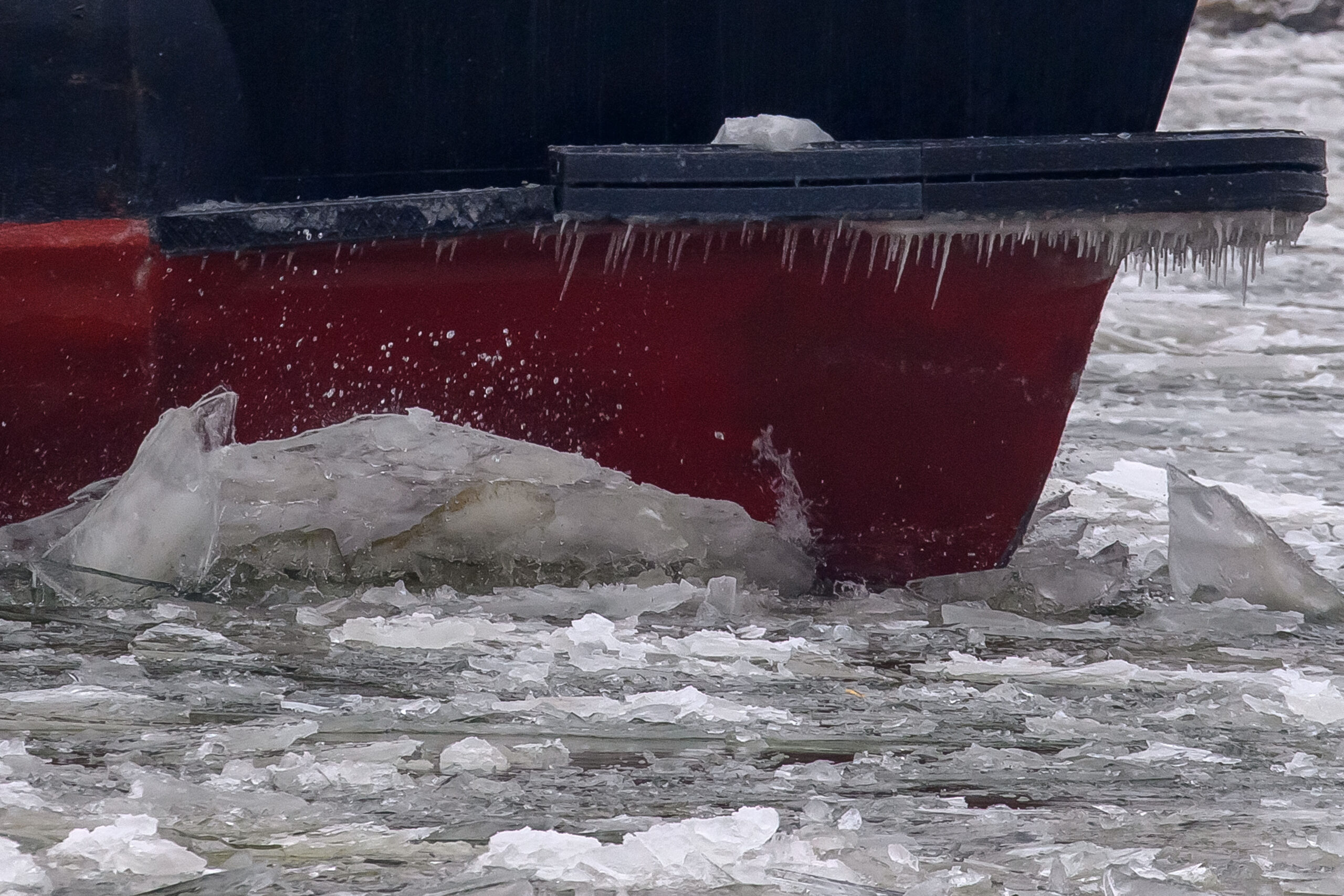
One of the most notable issues surrounding the Istanbul Bridge’s voyage was that the vessel did not have a proper ice-class rating. This means it was not designed to operate safely in Arctic waters. Unlike ice-class ships, which have strengthened hulls and reinforced bows capable of withstanding collisions with sea ice, standard vessels like the Istanbul Bridge are far more vulnerable to ice damage. Sailing without an ice-class hull in Arctic waters poses significant risks. If the vessel were to strike even relatively thin ice floes, it could suffer hull breaches that might lead to catastrophic fuel spills. In the Arctic, such an accident would be doubly disastrous. Cleanup operations in the region are extraordinarily difficult due to limited infrastructure, severe weather, and the persistent presence of sea ice, which can trap and conceal spilled oil. The paucity of NSR-based disaster response facilities and equipment only compounds the problem. A spill in this fragile ecosystem could have long-lasting effects on Arctic marine life and the global climate.
In addition to its lack of ice-class certification, the Istanbul Bridge was also criticized for likely using heavy fuel oil (HFO)—the cheap but highly polluting fuel used by most commercial vessels—as the company failed to mention that it used the preferred fuel for traveling in the Arctic. HFO is notorious for emitting soot, or black carbon, during combustion. When this soot settles on ice and snow, it darkens the surface, reducing its albedo (reflectivity) and causing it to absorb more solar radiation. This accelerates melting and further contributes to global warming.
Recognizing this danger, the International Maritime Organization (IMO) reached an agreement to gradually phase out and ban the use of heavy fuel oil in the Arctic. However, that agreement contained multiple loopholes—such as exemptions for certain vessel types and delays in enforcement for specific nations—that companies have been able to exploit. The Istanbul Bridge appears to have taken advantage of these exemptions, allowing it to continue using heavy fuel oil while traveling through Arctic waters. Critics argue that this undermines international environmental efforts and exposes the Arctic to unnecessary risk.
Thus, the Istanbul Bridge’s voyage underscores both the promise and the peril of Arctic shipping. On one hand, it demonstrates that the NSR can function as a commercial route capable of connecting Asian and European ports on a regular basis. On the other, it highlights the environmental and safety risks of accelerating maritime traffic in one of the world’s most fragile ecosystems.
Arctic warming may open new trade corridors, but it also threatens to destabilize global climate systems. Increased shipping activity amplifies this feedback loop through black carbon emissions, potential oil spills, and disturbances to marine habitats. Furthermore, as the NSR becomes busier, competition for control over Arctic resources and sea lanes is likely to intensify—raising the risk of geopolitical friction between Russia, China, Western powers, and other Arctic nations.
Conclusion
The Istanbul Bridge’s journey through the Northern Sea Route represents a historic milestone in the evolution of Arctic maritime trade. It signals that the NSR, long dominated by Russian and Chinese state interests, may be transitioning into a viable corridor for international liner shipping. Yet, this achievement is tempered by significant concerns: inadequate vessel safety standards, environmental vulnerabilities, and geopolitical tensions surrounding control of the Arctic.
While Russia remains the formal custodian of the NSR, its growing reliance on Chinese investment and technology has transformed the route into a joint Russo-Chinese enterprise—one that Moscow views with apprehension. The future of the NSR will depend on how these two powers manage their uneasy partnership and how the international community responds to the environmental and legal challenges that Arctic shipping presents.
As global warming continues to reshape the world’s oceans and geopolitical hotspots remain volatile, the Northern Sea Route’s importance to global trade will likely continue to grow. The Istanbul Bridge may thus be remembered not only as a ship but as a symbol of a changing world—one in which the Arctic, once the planet’s frozen frontier, becomes an active crossroads of global commerce and competition.