The Second “Imposed War”: The Israel–Iran War and Its Implications for Iran’s National Security | INSS
go to header go to content go to footer go to search
INSS logo The Institute for National Security Studies, Strategic, Innovative, Policy-Oriented Research, go to the home page
INSS
Tel Aviv University logo - beyond an external website, opens on a new page
  • Campus
  • Contact
  • עברית
  • Support Us
  • Research
    • Topics
      • Israel and the Global Powers
        • Israel-United States Relations
        • Glazer Israel-China Policy Center
        • Russia
        • Europe
      • Iran and the Shi'ite Axis
        • Iran
        • The Israel–Iran War
        • Lebanon and Hezbollah
        • Syria
        • Yemen and the Houthi Movement
        • Iraq and the Iraqi Shiite Militias
      • Conflict to Agreements
        • Israeli-Palestinian Relations
        • Hamas and the Gaza Strip
        • Peace Agreements and Normalization in the Middle East
        • Saudi Arabia and the Gulf States
        • Turkey
        • Egypt
        • Jordan
      • Israel’s National Security Policy
        • Military and Strategic Affairs
        • Societal Resilience and the Israeli Society
        • Jewish-Arab Relations in Israel
        • Climate, Infrastructure and Energy
        • Terrorism and Low Intensity Conflict
      • Cross-Arena Research
        • Data Analytics Center
        • Law and National Security
        • Advanced Technologies and National Security
        • Cognitive Warfare
        • Economics and National Security
    • Projects
      • Preventing the Slide into a One-State Reality
      • Contemporary Antisemitism in the United States
      • Perceptions about Jews and Israel in the Arab-Muslim World and Their Impact on the West
  • Publications
    • -
      • All Publications
      • INSS Insight
      • Policy Papers
      • Special Publication
      • Strategic Assessment
      • Technology Platform
      • Memoranda
      • Posts
      • Books
      • Archive
  • Database
    • Surveys
    • Spotlight
    • Maps
    • Dashboards
  • Events
  • Team
  • About
    • Vision and Mission
    • History
    • Research Disciplines
    • Chairman of the Board
    • Board of Directors
    • Fellowship and Prizes
    • Internships
  • Media
    • Communications
    • Video gallery
    • Press Releases
  • Podcast
  • Newsletter
  • Campus
Search in site
  • Research
    • Topics
    • Israel and the Global Powers
    • Israel-United States Relations
    • Glazer Israel-China Policy Center
    • Russia
    • Europe
    • Iran and the Shi'ite Axis
    • Iran
    • The Israel–Iran War
    • Lebanon and Hezbollah
    • Syria
    • Yemen and the Houthi Movement
    • Iraq and the Iraqi Shiite Militias
    • Conflict to Agreements
    • Israeli-Palestinian Relations
    • Hamas and the Gaza Strip
    • Peace Agreements and Normalization in the Middle East
    • Saudi Arabia and the Gulf States
    • Turkey
    • Egypt
    • Jordan
    • Israel’s National Security Policy
    • Military and Strategic Affairs
    • Societal Resilience and the Israeli Society
    • Jewish-Arab Relations in Israel
    • Climate, Infrastructure and Energy
    • Terrorism and Low Intensity Conflict
    • Cross-Arena Research
    • Data Analytics Center
    • Law and National Security
    • Advanced Technologies and National Security
    • Cognitive Warfare
    • Economics and National Security
    • Projects
    • Preventing the Slide into a One-State Reality
    • Contemporary Antisemitism in the United States
    • Perceptions about Jews and Israel in the Arab-Muslim World and Their Impact on the West
  • Publications
    • All Publications
    • INSS Insight
    • Policy Papers
    • Special Publication
    • Strategic Assessment
    • Technology Platform
    • Memoranda
    • Posts
    • Books
    • Archive
  • Database
    • Surveys
    • Spotlight
    • Maps
    • Dashboards
  • Events
  • Team
  • About
    • Vision and Mission
    • History
    • Research Disciplines
    • Chairman of the Board
    • Board of Directors
    • Fellowship and Prizes
    • Internships
    • Privacy Policy and Terms of Use
  • Media
    • Communications
    • Video gallery
    • Press Releases
  • Podcast
  • Newsletter
  • Campus
  • Contact
  • עברית
  • Support Us
bool(false)

Publications

Home Publications Memoranda The Second “Imposed War”: The Israel–Iran War and Its Implications for Iran’s National Security

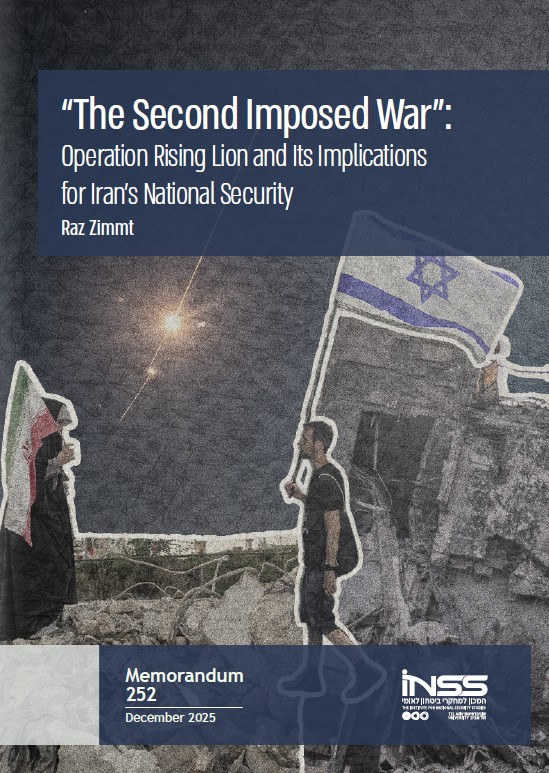
The Second “Imposed War”: The Israel–Iran War and Its Implications for Iran’s National Security

Memorandum 252, December 2025

עברית
Raz Zimmt

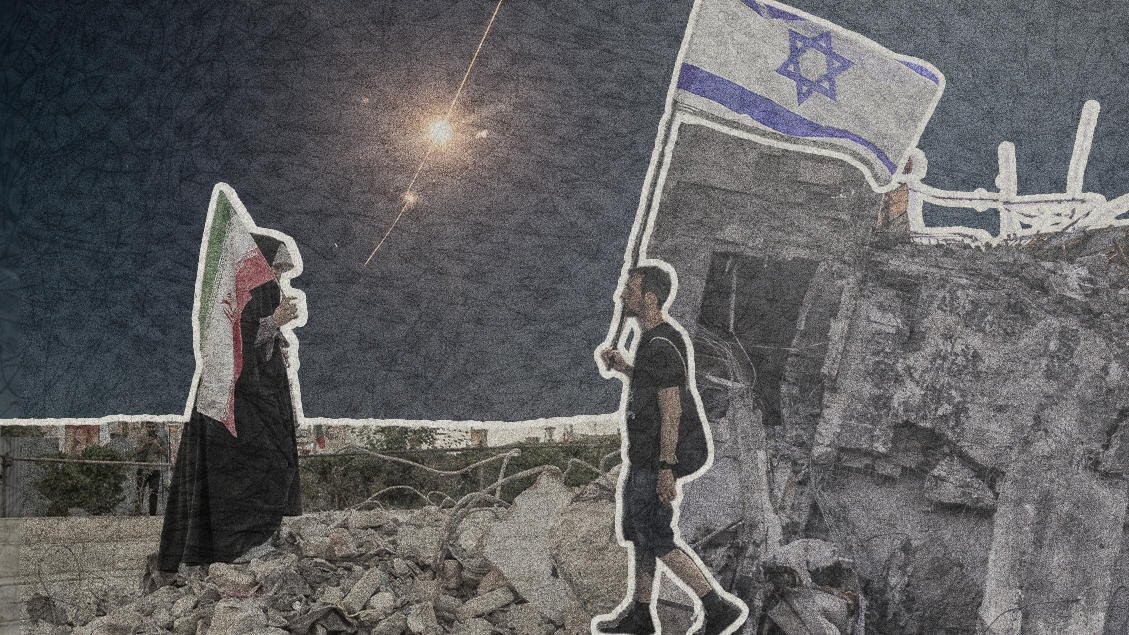
The 12-day war between Iran and Israel in June 2025 marked the sharpest escalation to date in the ongoing confrontation between the two states. Despite its relatively short duration, the war had a destabilizing effect on the Islamic Republic due to the success of Israel’s opening strike, the decision of the United States to join the campaign, and the damage sustained by Iran’s critical strategic systems—notably its nuclear program and long-range missile arsenal. Since the end of the war, Iran has engaged in an ongoing process of drawing lessons from the serious gaps revealed in the Islamic Republic’s deterrence and defense capabilities.


The Iranian leadership is certainly aware of the need for improvements and adjustments to its national security doctrine; yet for now, this does not appear sufficient to produce a fundamental shift in Iranian strategy. It seems that Iran prefers to make adjustments within the existing framework by finding acceptable solutions to the gaps exposed rather than introducing major changes to its overall strategy. In any event, the new reality in Iran created by the war is characterized by instability, and it is doubtful whether the current status quo can endure for long. This is exacerbated by the growing possibility of a miscalculation between Iran and Israel that would lead to renewed clashes, or high-risk decisions by Iran on both the nuclear issue and on the regional front.


This memorandum seeks to examine the lessons that Iran is drawing from the war and its implications in four main areas: the nuclear program, strategic military systems, the regional arena, and the domestic arena—and to assess how the war has influenced Iran’s national security concept. In addition, it includes a set of policy recommendations intended to block, or at least delay, Iran’s efforts to rebuild its strategic capabilities, foremost among them the nuclear program, and the pro-Iranian axis in the region, and to reduce as much as possible the risk of renewed fighting.


Click here to download the full Memorandum

Table of Contents:

The 12-day war between Iran and Israel in June 2025 marked the sharpest escalation to date in the ongoing confrontation between the two states. Despite its relatively short duration, the war had a destabilizing effect on the Islamic Republic due to the success of Israel’s opening strike, the decision of the United States to join the campaign, and the damage sustained by Iran’s critical strategic systems—notably its nuclear program and long-range missile arsenal. The shock in Iran has been reflected in the name given to the war—“the Imposed War”—a term previously used to describe the eightyear conflict between Iran and Iraq in the 1980s. Just as the Iran–Iraq War shaped Iran’s security doctrine and national psyche, this recent war is also likely to leave a lasting imprint on Iran’s military-security posture, as well as its political, regional, and domestic arenas...
Read more

It is difficult to overstate the significance of the 12-day war between Iran and Israel. The war marked not only the most severe peak so far in the ongoing confrontation between the two states, but also the most traumatic event for Iran since the end of the Iran–Iraq War in 1988. The war, and especially the heavy salvos of missiles launched from Iran toward Israel, also heightened fear and anxiety within Israel—already traumatized by the October 7 massacre and the ongoing campaign on seven fronts. Following the war, a debate emerged regarding its results. Prime Minister Benjamin Netanyahu described the outcome of the war with Iran as “a historic victory that will stand for generations.” He declared that Israel had succeeded in removing two immediate existential threats: the threat of annihilation by nuclear bombs and the threat of annihilation by 20,000 ballistic missiles, and that Israel had dealt “crushing blows to the evil regime” in Tehran...
Read more

The Am Kalavi (Rising lion) War between Israel and Iran, which lasted from June 13 to June 24, 2025, was the first full-scale direct confrontation between the two countries. It was initiated by Israel against the backdrop of the failed negotiations between Tehran and Washington to reach an improved nuclear agreement; alarming developments in the weaponization domain within Iran’s nuclear program, which raised concerns that Tehran might shorten the time required to produce its first nuclear explosive device; rapid progress in Iran’s missile program force-building; and a historic window of opportunity that opened following Hezbollah’s defeat in the summer of 2024, the collapse of the Assad regime, the destruction of Iran’s air defense systems in an Israeli strike at the end of October 2025, and other operational circumstances...
Read more

On the eve of the war, Iran was a nuclear-threshold state with the ability to complete the enrichment of its existing uranium stockpile to 90%—fissileweapon- grade material—within less than two weeks of a decision, and likely only a few months away from achieving an initial military nuclear capability. This capability was intended to provide deterrence against its enemies and serve as an insurance policy for regime survival. Nonetheless, Iran’s Leader refrained from ordering the breakout to nuclear weapons, apparently out of concern that such a move would drag Iran into a military confrontation with Israel and—worse—with the United States. For years, Iran preferred gradual and safer progress on the nuclear track over the fastest possible route...
Read more

Israel’s and the United States repeated declarations of their readiness to strike Iran again have reinforced, in Tehran’s view, the need to strengthen preparations for the possibility of future attacks. Since the end of the war, Iran has intensified efforts to rebuild and upgrade its military systems— particularly its missile forces and air-defense capabilities—as part of preparing for a potential renewal of hostilities. Over recent decades, Iran’s buildup of strategic military capabilities, including ballistic missiles and UAVs, alongside its proxy network, its use of terrorism, and its cyber capabilities, has enabled it to compensate for its conventional military weaknesses. Iran’s diverse ballistic-missile program is a direct outgrowth of the Iran–Iraq War, which underscored the need for improved deterrence and self-reliance. From Iran’s perspective, ballistic missiles offer an accessible, rapid, and effective means of deterrence, power projection, and punishment...
Read more

Although the limits of Iran’s power in activating the regional network it had woven over years were already evident in the months preceding the 12-Day War—above all since Hezbollah’s defeat by Israel and the collapse of the Assad regime in Syria—the war further underscored the breakdown of the proxy doctrine. The concept of “forward defense,” designed to neutralize threats to Iran’s national security as far from its borders as possible through the use of proxies, ultimately did not prevent Israel and the United States from striking Iran directly...
Read more

The desire to ensure the regime’s survival in the face of internal and external threats is a top priority for the Islamic Republic and a central driver of its security doctrine. Accordingly, even though developments in Iran’s domestic arena during and after the war are not directly tied to changes in its strategy, they cannot be ignored in any discussion of the Islamic Republic’s national security concept. Israel did not set the overthrow of the regime in Iran as an objective of the war, which was primarily intended to inflict serious and significant damage on the nuclear program and ballistic missile arsenal...
Read more

On the eve of the Sukkot holiday in 2025, former Defense Minister Avigdor Lieberman managed to stir a minor storm when he warned of Iranian intentions to attack Israel. In a post on his X account, Lieberman wrote that anyone who thinks the episode with Iran is over is “wrong and misleading,” and that the Iranians are already working vigorously to strengthen their military capabilities. He called on Israeli citizens to exercise extra caution over the holiday and to remain close to protected spaces.177 Following his remarks, which sparked public alarm, a security official clarified that there had been no change in directives and that no unusual event involving the Iranians was expected in the near future. Another Israeli official accused Lieberman of baseless fear-mongering intended only to attract headlines...
Read more
The opinions expressed in INSS publications are the authors’ alone.
Raz Zimmt
Dr. Raz Zimmt is the Director of the Iran and the Shiite Axis research program at the Institute for National Security Studies (INSS). He is also the co-editor of the institute’s journal, Strategic Assessment. He holds a master's degree and a Ph.D. in Middle Eastern history from Tel Aviv University. His Ph.D. dissertation focused on Iranian policy towards Nasserism and Arab radicalism between 1954 and 1967. Additionally, he is a research fellow at the Alliance Center for Iranian Studies at Tel-Aviv University.

Publication Series Memoranda
TopicsIran
עברית

Events

All events
Israel–U.S. Relations: An Alliance in Transition?
22 December, 2025
13:00 - 16:00

Related Publications

All publications
Aircraft Under the Radar: Mechanisms of Evading Sanctions in Iran’s Aviation Sector
Despite being subjected to one of the harshest sanctions regimes in the world, Iran has succeeded in building a sophisticated, law-evading mechanism to support its aviation industry, which reflects the broader principles of the shadow economy it has developed. This article maps the operational architecture of that mechanism, based on using front and shell companies in countries with little transparency, layered ownership registries, bursts of activity designed to complete transfers within short timeframes, and flight-path planning that includes fictitious emergency landings to allow aircraft to quietly enter Iran. The article describes how Iran’s aviation sector—significantly harmed by sanctions—has shifted from a civilian transportation tool to a core component of the regime’s economic and security strategy, enabling it to continue functioning, finance its regional proxies, and project resilience in the face of international pressure. The aviation industry represents only one link in a much larger apparatus designed to evade sanctions in the trade of oil, gold, and dual-use technologies; yet the aviation sector clearly demonstrates the method: a sophisticated integration of state, market, and underground networks that operate in regulatory gray zones and disrupt efforts to globally enforce the sanctions.
17/12/25
Iranian Supreme Leader'S Office via ZUMA Press Wire
The Deadlock Surrounding Iran’s Nuclear Program
The solution to the crisis surrounding the Iranian nuclear program is nowhere in sight, and the ticking clock is forcing Tehran to make fateful decisions
09/12/25
Morteza Nikoubazl/NurPhoto via REUTERS
From Islamic Republic to Iranian Republic
Young Iranians celebrate Halloween, while the regime erects a statue of an ancient Persian king: What explains these trends, which do not align with Iran’s Islamic identity, and how do they affect the future of the Islamic Republic?
02/12/25

Stay up to date

Registration was successful! Thanks.
  • Research

    • Topics
      • Israel and the Global Powers
      • Israel-United States Relations
      • Glazer Israel-China Policy Center
      • Russia
      • Europe
      • Iran and the Shi'ite Axis
      • Iran
      • The Israel–Iran War
      • Lebanon and Hezbollah
      • Syria
      • Yemen and the Houthi Movement
      • Iraq and the Iraqi Shiite Militias
      • Conflict to Agreements
      • Israeli-Palestinian Relations
      • Hamas and the Gaza Strip
      • Peace Agreements and Normalization in the Middle East
      • Saudi Arabia and the Gulf States
      • Turkey
      • Egypt
      • Jordan
      • Israel’s National Security Policy
      • Military and Strategic Affairs
      • Societal Resilience and the Israeli Society
      • Jewish-Arab Relations in Israel
      • Climate, Infrastructure and Energy
      • Terrorism and Low Intensity Conflict
      • Cross-Arena Research
      • Data Analytics Center
      • Law and National Security
      • Advanced Technologies and National Security
      • Cognitive Warfare
      • Economics and National Security
    • Projects
      • Preventing the Slide into a One-State Reality
      • Contemporary Antisemitism in the United States
      • Perceptions about Jews and Israel in the Arab-Muslim World and Their Impact on the West
  • Publications

    • All Publications
    • INSS Insight
    • Policy Papers
    • Special Publication
    • Strategic Assessment
    • Technology Platform
    • Memoranda
    • Database
    • Posts
    • Books
    • Archive
  • About

    • Vision and Mission
    • History
    • Research Disciplines
    • Chairman of the Board
    • Board of Directors
    • Fellowship and Prizes
    • Internships
    • Support
    • Privacy Policy and Terms of Use
  • Media

    • Communications
    • Video Gallery
    • Press Release
    • Podcast
  • Home

  • Events

  • Database

  • Team

  • Contact

  • Newsletter

  • עברית

INSS logo The Institute for National Security Studies, Strategic, Innovative, Policy-Oriented Research, go to the home page
40 Haim Levanon St. Tel Aviv, 6997556 Israel | Tel: 03-640-0400 | Fax: 03-744-7590 | Email: info@inss.org.il
Developed by Daat A Realcommerce company.
Accessibility Statement
This site is protected by reCAPTCHA and the Google Privacy Policy and Terms of Service apply.
No audio version available for this podcast