


Publications
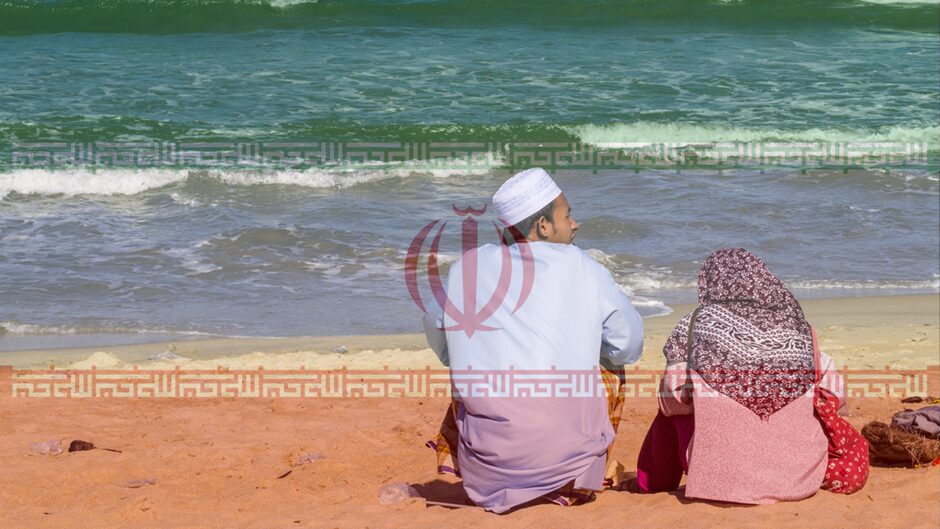
The Islamic Republic has intensified its efforts to expand its influence among the Shiites in Thailand. How is this expressed, and how does it affect Israel?
INSS Insight No. 2067, December 2, 2025
The 70-year diplomatic relationship between Iran and Thailand has seen ups and downs in recent years. However, Iran’s desire to expand its influence over Thailand’s Shiite population and exploit it for its own interests had not changed over time. In the past year, these efforts have intensified significantly. This paper examines the mechanisms Iran employs to entrench its control over Shiite religious and educational institutions in Thailand, among them sending religious scholars from Iran to ensure that these institutions follow directives from Tehran.
Iran and Thailand have marked 70 years since the establishment of diplomatic ties, which are grounded in a deep history between the two countries. The roots of their relations go back as far back as the journey of the Persian merchant and cleric Ahmad Gumi, who arrived in Siam some 420 years ago and created an early link between the Persian population and the population in Siam at the time. Over the years, relations between the countries have fluctuated, reaching a low point in 2012, when Iran sent terrorist cells to attack Israeli targets in Bangkok. Following the 2015 nuclear agreement (Joint Comprehensive Plan of Action; JCPOA) and in the context of Iran’s commitment to the authorities in Bangkok that it would not carry out attacks on Thai soil, relations warmed considerably, as reflected in deeper economic ties. In February 2025, the countries concluded a new economic agreement that has led to a 25% rise in trade between them. Iran’s role as mediator between Thailand and Hamas to secure the release of Thai workers who had been taken hostage in the October 7, 2023 terrorist attack also strengthened relations between the two states.
Part of Tehran’s desire to deepen political ties with Bangkok may stem from its aspiration to expand its influence over Thailand’s Shiite population. Twelve percent of Thailand’s population is Muslim, and about 1% is Shiite, with the vast majority concentrated in the Bangkok area. In recent years, and especially over the past year, Iran has strengthened the varied mechanisms it has established in Thailand, in an effort to increase its hold on this minority and subordinate it to its objectives.
One indication of this trend was the visit to Thailand of Meysam Motiee, a lecturer at Imam Sadiq University in Tehran who is considered one of Iran’s most important preachers and is close to the Supreme Leader, Khamenei. Motiee arrived in Thailand in September 2024, reportedly sent by Khamenei with the explicit aim of exporting the ideology of the Islamic regime. Motiee’s visit was exceptional not only because of the publicity it received, but also because he sought to promote Al-Mustafa University, which has an active branch in Bangkok. This university is regarded as the Iranian regime’s spearhead for advancing and disseminating the ideology of the Islamic Revolution. Each year, some 50,000 foreign students study at the university’s main campus in Qom and at branches worldwide (online), where they absorb primarily pro-regime and anti-Western content. The university itself is under US government sanctions because the Quds Force recruited activists there for operations abroad. Only in the past year, German authorities closed the university’s branch in Berlin on the grounds that it constituted an Iranian “espionage center” in the German capital.
Motiee’s support for Al-Mustafa University’s activity in Thailand is not surprising given the central role it has played in Iran’s religious proselytizing within the country. His visit also aligns with the activity of Sayyid Hibatullah Sadrussadat, Al-Mustafa University’s representative in Thailand, who recently visited Phuket, apparently to expand its operations there. In general, the university’s main branch in Thailand invests primarily in teaching the philosophy of the founder of the Islamic Revolution, Ayatollah Khomeini, and of Iran’s current leader, Ali Khamenei, especially their opposition to the West and their anti-Zionist policy. In addition, the university’s representatives support religious studies in Shiite centers throughout Thailand, focusing on education for children and early childhood.
Motiee was not the only Iranian cleric to recently visit Thailand. Jawad Marvi—an Iranian cleric who is a member of both the Supreme Council of the Qom Seminary and the Qom Seminary Teachers’ Association and who teaches jurisprudence at the Qom Seminary—also visited Thailand in August 2024. During his visit, he inaugurated a branch of “Ahl al-Bayt” in Bangkok, another institution used by the Iranian regime to export the Islamic Revolution. At the inauguration ceremony, Marvi praised the Hamas terrorist Yahya Sinwar and compared him to Imam Husayn ibn Ali, one of the heroes of Shiite religion.
In this context, the Islamic Republic of Iran Broadcasting (IRIB), a key tool for disseminating regime messages to Shiite communities worldwide, has also expanded its activity in Thailand over the past year. Senior officials of the authority have even come to Bangkok to promote joint productions with their Thai counterparts.
Another important channel for Iranian influence efforts in Thailand is the Iranian cultural center in the capital. Operated by the Iranian embassy under the leadership of the diplomat Mehdi Zare Bieyb, the cultural center seeks primarily to expand Persian-language studies in the country and to increase academic ties between universities in Thailand and Iran. Yet these cultural centers also serve a political function. This was exposed, for example, in Rome where the Iranian cultural center works to promote Iran’s image and encourages anti-imperialist policy—showing that its purpose is not merely cultural or social. In Thailand, for instance, the Iranian cultural center hosted a conference on the “Israeli occupation” in Jerusalem and Palestine, in an attempt to increase resentment toward the Israeli government’s policies.
Similarly, the Shiite religious centers, mainly in Bangkok, play a significant role in Iran’s outreach. As in other countries where it operates, Iran seeks to take control of Shiite religious centers by appointing clerics who studied in its institutions, particularly Al-Mustafa University. These clerics then guide the daily lives of the Shiite population in the country in accordance with the “commander’s spirit” emanating from Tehran. Religious centers led by clerics appointed by Tehran, some of whom previously served in the high ranks of Iran’s Revolutionary Guards, have also been responsible for at least some of the demonstrations against the Israeli embassy in Thailand since October 7 (similar to the Shiite religious centers in Australia that led anti-Israeli demonstrations there). These demonstrations have included carrying Hezbollah flags and pictures of Qasem Soleimani, the former commander of the Quds Force, and even the burning of Israeli flags. Their goal is to harm cooperation between Thailand and Israel, serving Iran’s interest in driving a wedge into relations between Jerusalem and Bangkok. These same centers also commemorate Iran’s Jerusalem Day, held on the last Friday of Ramadan, during which demonstrations are held in Iran and elsewhere against Zionism and specifically against Israeli rule in Jerusalem, and in praise of the Islamic Republic of Iran.
These Iranian efforts are accompanied by “pilgrimage trips” of Thais to Shiite holy sites such as Karbala, which may have contributed to the significant rise in the number of Muslims in Thailand in general. Among the visits of Shiite clerics of Thai origin to Iran itself was that of Hujjat al-Islam Shaykh Ghulam Ali Abazar. In general, and apparently as a direct continuation of this Iranian activity, it should be noted that all Muslim employees at the Iranian embassy in Bangkok have converted to Shiism.
Possible Implications for Israel
- Recruiting the local population in Thailand for activity against Israeli or Western interests. In 2024, the exposure of a foiled attack targeting Israeli interests in Brazil by operatives recruited by Iran or Hezbollah demonstrated that proper diplomatic relations with Tehran do not guarantee immunity from Iranian-sponsored terrorism. If Iran believes that operational conditions are favorable to carry out an attack, it will do so regardless of the price.
- Applying pressure through Shiite actors on the Thai government to damage relations between Thailand and Israel. This is done while fueling hostility toward Israel in the Thai street and encouraging demonstrations against the Israeli embassy.
- Encouraging Thai citizens to prioritize Iranian interests. This is apparent, for example, by the fact that the Al-Mustafa University branch displays pictures of Khomeini and Khamenei—but not of the Thai king.
- Broadening the framing of the Iranian threat to Asian states beyond the nuclear issue by highlighting Iran’s “soft power” influence efforts. Israel tends to focus on Iran’s nuclear threat, but Thailand’s leadership does not necessarily see this as a direct threat to its own security interests. Iran’s growing activism in Thailand, however, as well as its record worldwide of “soft power” activities undermining the host countries where this well-oiled mechanism operates, may resonate more strongly. What is happening today in Thailand is also evident in India and elsewhere in Asia, particularly wherever there are Shiite communities, large or small. Therefore, when presenting the Iranian threat to Asian states, Israel should not only stress Iran’s nuclear ambitions but also its efforts to influence the local populations through “soft” religious and cultural means.