


Publications
INSS Insight No. 1142, February 26, 2019
Follow us on Google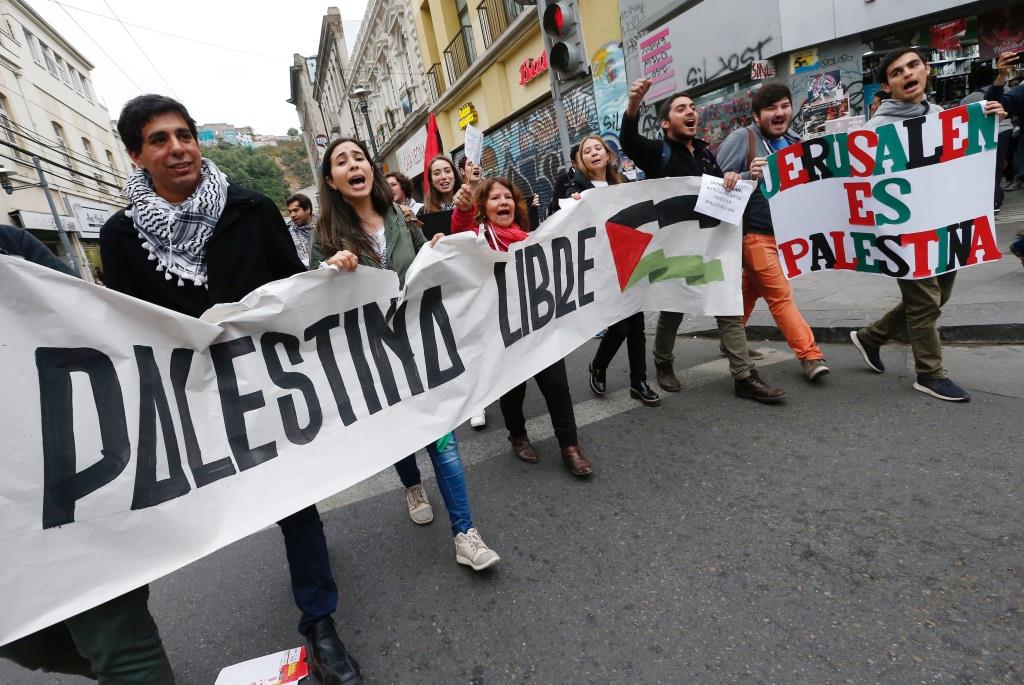
In recent months, the parliaments in Ireland and in Chile took unprecedented measures that place severe limitations on economic trade with the settlements in the West Bank. Although at this stage these decisions are not binding and their direct impact is limited, their acceptance reflects the illegitimacy many international actors attribute to the settlements and their willingness to take concrete action against them. These decisions, alongside the possibility that the UN Human Rights Council will soon publish a blacklist of Israeli and international companies active in the settlements, may lead to additional steps that could impact negatively on Israel’s global public and political standing, its political freedom of action, and even its economy. Accordingly, proactive steps should be taken to lessen the impact of decisions already taken and to prevent the adoption of additional such measures.
On January 24, 2019, the lower house of the Irish parliament approved, by a vote of 78 to 45, proposed legislation that bans trade of goods and services from the settlements. According to the proposed legislation, the import and export of goods, services, and natural resources from settlements will be considered illegal, and such activity, as well as attempts to pursue or to assist these activities, could incur a punishment of fines or even incarceration. The proposal departs from the current policy of the European Union, whereby agreements with Israel do not include territories occupied in 1967 and products exported from the settlements are marked as such. The proposal was confirmed last November by the Irish Senate, and in order to become law must go through additional review and votes in the lower house of parliament.
On November 28, 2018 the lower house of the Chilean parliament, 99 to 7, approved a decision calling on the government to review past agreements with Israel and specify the 1967 borders in future agreements. In addition, the decision calls upon the Chilean government to establish guidelines for its citizens visiting the region so that they avoid supporting the settlements or cooperating with significant violation of international humanitarian law. Finally, the decision asks to review processes designed to prevent the import into Chile of products from Israeli settlements.
Ireland and Chile have long been a platform for global anti-Israeli activity, including for the BDS movement. Last October, 50 Irish lawmakers, including a lower ranking government minister, called for an arms embargo on Israel. In April 2018 the Union of Students in Ireland and the Dublin City Council expressed their support of BDS, and the latter even adopted a campaign against HP. In July 2017 Irish President Michael Higgins met with Omar Barghouti, one of the leaders of the BDS movement, and expressed support for his activity. The Ireland Palestine Solidarity Campaign (ISPC) is considered one of the most prominent Israeli delegitimization organizations in the international arena.
Chile is home to the largest community of Palestinian expatriates outside of the Middle East. The Los Rios province, in the south of the country, announced in April 2018 that Israel is responsible for war crimes and maintaining an apartheid regime, and called on the Chilean government to condemn Israel’s actions and reevaluate existing collaboration with the Israeli military. Last June, the city council of Valdivia, capital of the province, expressed its support for boycotting Israel and announced the city a “no apartheid zone.” Between 2016 and 2018 student organizations in a number of universities called for support of BDS, and in June 2017, following BDS pressure, lectures by an Israeli professor were cancelled.
Although both proposals address Israeli activity only in the territories occupied in 1967 and by doing so do not accept the official BDS stance calling for a complete boycott of Israel, the movement nevertheless welcomed the proposals and even included them in their list of notable achievements in 2018. Initiatives for boycotting settlements, which often stem from criticism of Israel’s policies in the West Bank, express solidarity with the Palestinian struggle and are accepted among many audiences around the world, but they also enable the BDS movement, which aims to delegitimize Israel, to recruit those who criticize Israel’s policies. In this vague reality Israel too, intentionally or not, often does not distinguish between those who criticize its policies and those who deny its right to exist and act to delegitimize it.
At this point, the direct impact of both proposals is not significant. The Chilean proposal is not binding. The Irish proposal, while detailed and binding, requires additional steps to become legislation, and might actually run into procedural and political hurdles that may neutralize it altogether or remove its obligating aspects. The minority government in Ireland previously expressed its disapproval of the proposal, and the Irish Foreign Minister said that the issue of trade falls under the European Union and that Ireland will not act on it unilaterally. Even if the proposal becomes law, its potential direct impact on Israeli export is very limited. The total value of export from Israel to Ireland is negligible ($105.6 million out of over $62 billion in 2018), and beyond that, the proposal only focuses on products from the settlements, while most products manufactured by Israelis in the West Bank are intended for the Israeli market and not for export.
Nevertheless, in the medium and long terms the impact of both proposals could become significant. The proposals highlight the illegitimacy that different countries ascribe to Israeli activities in the West Bank and the growing willingness to take substantive action against it and even provide moral support for organizations that delegitimize the State of Israel. Confirming the proposals against the backdrop of reports that a blacklist of companies operating in the settlements is about to be published by the UN Human Rights Council might motivate anti-Israel organizations and activists to promote similar campaigns in other countries and forums, some of which might be more important to Israel and could also lead to the adoption of more severe decisions. In addition, there is growing concern that an official decision about boycotting settlement products could encourage additional formal or informal boycotts on Israeli companies associated with the settlements, for example, through the activity of Israeli banks that provide loans and mortgages for residential and commercial purposes in the settlements. Accepting such decisions could also support other proposals (some of which have already been raised), for example, changing the policies of the European Union and some of its member states regarding the settlements, additional blacklists, diversion of foreign investments away from Israeli companies, avoidance of business activities in Israel, and even sanctions and limitations on Israeli and other entities operating in Israel.
In order to avoid the potential negative impact of the Irish and Chilean proposals and others like them, if they arise, several steps must be taken.
Renewing political discussions with the Palestinians or at least expressing significant interest in doing so could limit support of calls to boycott settlement products and various activities against Israel, and could enable international decision makers and organizations to oppose such measures. Israel’s response to President Trump’s “deal of the century” is also expected to affect global attitudes.
Whether as part of a broad political process or independent of it, promoting joint economic activities for Israelis and Palestinians could enable various global actors additional avenues for participation, influence, and collaboration. These can serve as an attractive alternative to boycotts and a way to offset the impact of boycotts, as part of a public diplomacy effort to prevent them altogether.
In addition, more focused activities must take place with regard to the proposed bills. In Ireland, discussions should ensure that the government is indeed against the proposal and that it is committed to take action to remove or significantly stall the legal proceedings, to soften its wording, or to avoid its implementation. Relying on the European Union’s policy regarding trade with Israel could help neutralize the binding aspects of the proposal. In parallel, the validity of the proposal should be examined in light of the various global trade agreements Ireland and Israel are party to (for example within the framework of the WTO) and also in accordance with third party rules (for example, bills accepted by 26 US states opposing specific boycotts of settlement products). While it is non-binding, the Chilean proposal could become a starting point for more severe decisions, and therefore it is important to urge the Chilean government not to follow through with action in accordance with the proposal; in parallel discussion should take place with elements within the parliament. This may not neutralize the Palestinian influence, but could at least reduce its sweeping impact.
Furthermore, focused effort in identifying the targets and arenas for future activities of delegitimization organizations and activists could prevent or reduce the impact of future proposals early on, prior to their receiving widespread support. In this context, European Union institutions should be targeted in an effort to prevent any possible change in their policies and the potential approval of decisions that match the proposed Irish bill. This can occur through discussion with the European Commission, and the recruitment of countries supportive of Israel to take action on influencing EU policies in this regard.