



CV
Orna Mizrahi, a senior researcher at the Institute for National Security Studies, joined INSS in December 2018, after a long career in the Israeli security establishment: 26 years in the IDF (ret. Lt. Col.) and 12 years in the National Security Council (NSC) in the Prime Minister's Office (she served under 8 heads of the NSC). In her last position (2015-2018) as Deputy National Security Adviser for Foreign Policy, she led strategic planning on regional and international policy on behalf of the NSC for the Prime Minister and the Israeli Cabinet, and was responsible for preparing the papers for the Prime Minister's meetings with leaders in the international arena. During her service in the IDF she served as an intelligence analyst in the Military Intelligence Research Division and as a senior officer in the Strategic Planning Division. She specialized mainly in research and strategic planning on regional issues, with an emphasis on the countries of the first circle and the Israeli-Palestinian conflict. Ms. Mizrahi holds an M.A. (cum laude) in History of the Middle East from Tel Aviv University and two B.A. degrees from Tel Aviv University: one in History of the Middle East and the other in General History and the Bible (summa cum laude). She is active in Forum Dvorah, which promotes the inclusion of women in the political-security establishment.
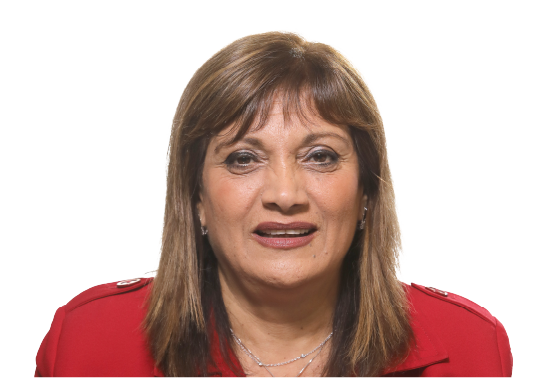
Orna Mizrahi
Senior Researcher
ornam@inss.org.il
03-6400471
Publications
All PublicationsThe Framework Agreement Between Lebanon and Israel: A Positive First Step on a Long Road to Change
What are the strengths and weaknesses of the historic framework agreement signed between Israel and Lebanon, and what are its implications for Israel?
2 July, 2026Between Lebanon and Iran: The Efforts to Prevent Escalation and Separate the Arenas
The test of the Lebanese arena from the perspectives of the United States, Iran, Lebanon, Hezbollah, and Israel
11 June, 2026The Price of the War in Lebanon: Cracks in Shiite Support for Hezbollah
How is Hezbollah's standing among the Shiite community being eroded, and what opportunities does this create?
10 June, 2026Hezbollah’s Global Financial Network as a Target in the War Against the Organization
How can Hezbollah’s financial resilience—based on a complex and sprawling global system that enables it to withstand IDF infrastructure strikes in Lebanon—be undermined?
3 May, 2026The Long Road to Disarming Hezbollah—A DDR Model for Lebanon
Assuming that Operation Roaring Lion does not end in the complete defeat of Hezbollah, the issue of disarming Hezbollah will remain on the agenda at its conclusion—an interest shared by both Israel and the Lebanese state. This article proposes adopting the DDR model—Disarmament, Demobilization, and Reintegration—and advancing an L(ebanon)DDR process as an orderly framework for disarming Hezbollah and integrating it into Lebanon, alongside repairing, rebuilding, and strengthening the Lebanese state.
This framework offers an alternative to disarming Hezbollah through military force, which would require Israel to occupy all of Lebanon. Although it is clear that Hezbollah will not relinquish its weapons easily, the current circumstances present an opportunity to force this outcome through combined Lebanese–Israeli, regional, and international efforts. These circumstances include the willingness of Israel and Lebanon to enter into direct political negotiations; the military weakening of Hezbollah (and Iran) following the war; the IDF’s presence in southern Lebanon; and the growing support within Lebanon for disarming Hezbollah.
On April 9, Israel agreed to President Aoun’s proposal to open direct negotiations with Lebanon to promote a peace arrangement and disarm Hezbollah. This objective is the central challenge on the path to an agreement between the two states, which would establish the Lebanese government’s monopoly over the use of military force. Experience from DDR processes suggests that this model can help, as it offers a long-term, supervised, and gradual process that combines disarmament with civil, social, and economic rehabilitation, alongside international support and reciprocal incentives for all parties involved.
15 April, 2026Asymmetric Deterrence Between Israel and the Shiite Axis Led by Iran
2025-12-11 All magazine articles