


In reaction to the 1973 Yom Kippur War, Tel Aviv University decided to establish a Center for Security Studies. It was posited that one possible reason for Israel being caught by surprise on October 6, 1973, was that no institution outside the Israeli establishment had assumed the responsibility for evaluating the premises on which government policy was based. These premises guided the planning and conduct of Israel’s defense establishment. Had such a research institute existed, it might have questioned the assumptions leading to the intelligence assessment that war was unlikely.

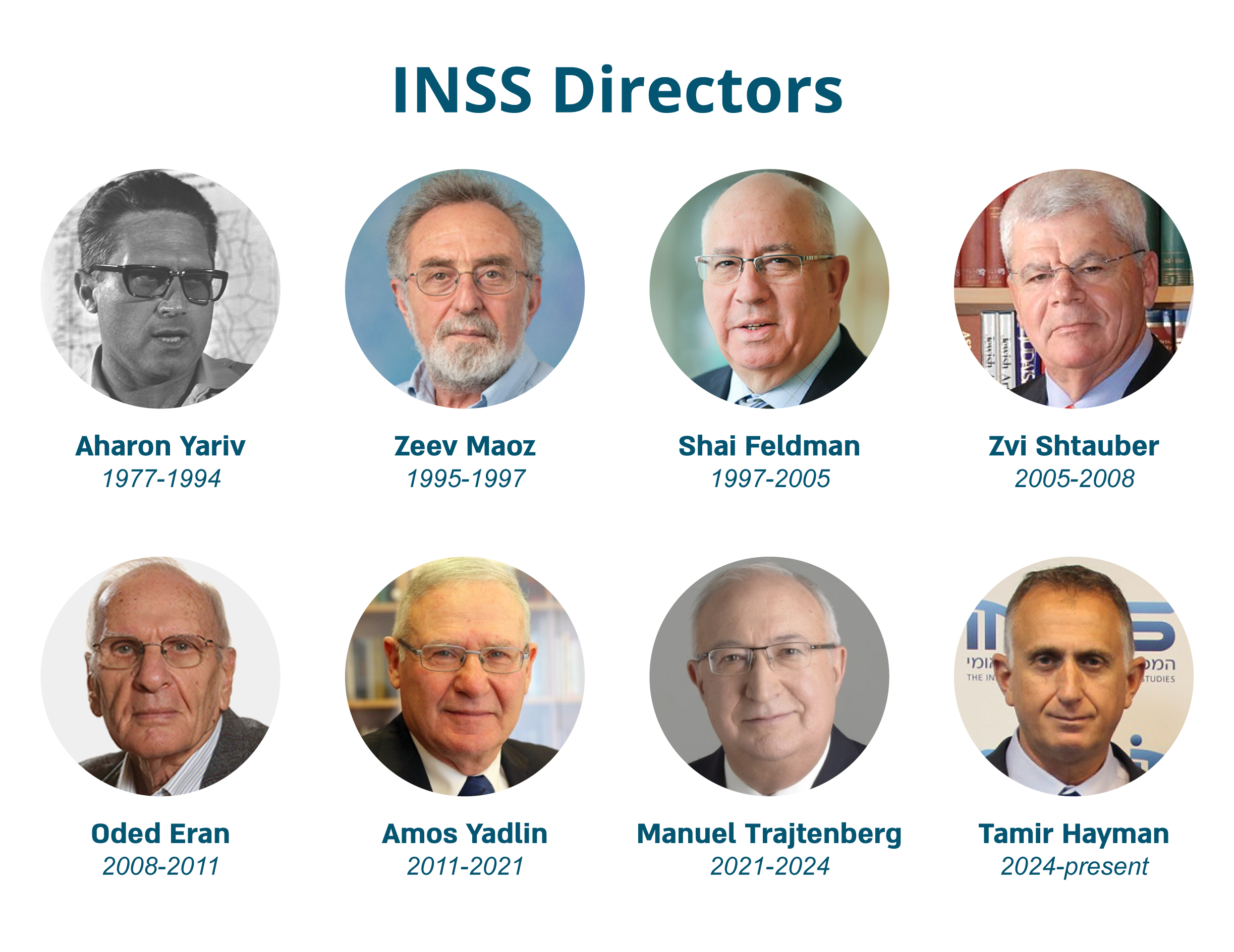
Maj. Gen. (ret.) Aharon (Ahrale) Yariv, who had served as head of Israel’s Military Intelligence and briefly as a member of Knesset, was tapped for the job. Yariv insisted that the newly established institute be completely independent, and on that basis the Center for Strategic Studies was launched in early 1978.

In 1983, it was renamed the Jaffee Center for Strategic Studies, in recognition of a major financial pledge by Mr. Melvin (Mel) Jaffee of Orange County, California.
Initially, the Jaffee struggled to obtain serious recognition in Israeli military and academic circles. Within a few years, however, it began to acquire a reputation for groundbreaking and taboo-breaching studies. The Jaffee focussed on key aspects of Israel’s national security, including the Arab Israeli conflict; the Palestinian issue; US-Israel relations; arms control and regional security; terrorism and low intensity conflict; civil-military relations, and the regional military balance.

Gradually, the Government’s resistance to the Jaffee’s involvement in security-related deliberations diminished, as this happened, so it was increasingly perceived as “neutral ground” by the Israeli security establishment. The Jaffee’s staff engaged in additional activities, such as Track-II talks and strategic dialogues with counterpart institutions in key countries.

By the late 1990s, the Jaffee supplemented its books, monographs, conferences, and brainstorming sessions with additional forums for analysis and evaluation. Its quarterly journal, Strategic Assessment was launched in 1998, and additional publications and research activities joined the list.

However, by 2006, the Jaffee found itself in a critical predicament. To survive, it urgently needed an infusion of capital and new direction. Professor Itamar Rabinovich, then president of the University of Tel Aviv, approached Frank Lowy, an international businessman known for his steadfast attachment to Israel. Lowy had the distinction of having established a successful think tank in Australia. He was interested, as he explained:

 “Israel’s legitimacy was always being questioned and its security constantly challenged. By invigorating this think tank, perhaps it could enrich public discourse on national security and contribute to decision making. If one fresh insight led to policy that protected Israeli’s security, it would be worth it.”

That year, 2006, Lowy took over the reins, injected fresh capital, changed the Board of Directors, assumed the chairmanship and renamed the center. He called it the Institute for National Security Studies (INSS) signalling its involvement in broad strategic and defense matters relating to Israel and its international context. Lowy also consolidated the independence of the INSS by making it an external institute of Tel Aviv University and remains chairman of the INSS to this day.

With greater financial and administrative independence, the INSS moved to new premises in the grounds of the university and embarked on a rapid rise to new professional renown. Existing research programs were expanded and new ones launched, including those on China, Russia and the Gulf states.

In addition, INSS broadened its understanding of “national security” to include the softer aspects of the field, such as societal resilience, lawfare, cyber and energy. It also widened its reach by engaging heavily in social media activity, stretching out to new audiences through different channels, platforms, and forums.

Both in Israel and abroad, the INSS’s assessment of unfolding events and regional developments became almost a standard requirement for domestic and international media, and for Israeli and international strategic thinkers and policymakers. This voice also became a critical component in closed forums with leading policymakers and in public debate.

Zvi Shtauber (2005-2008) led INSS during its first years as an external Institute. As part of Lowy’s reorganization, Oded Eran (2008-2011) took over the leadership until 2011, when Maj. Gen. (ret.) Amos Yadlin was appointed its new head. On his watch, the institute was recognized in the index that ranks think tanks around the world. Prepared annually by the University of Pennsylvania, the index placed the INSS as the leading think tank in Israel and in the Middle East and ranked it twelfth in the world in the fields of defense and national security.

In May 2021, Prof. Manuel Trajtenberg became the new head of INSS. His appointment signalled a greater emphasis on socio-economic issues as a central layer of Israel’s national security. This new interest joined the ongoing work in traditional core research areas.

Three years later, in May 2024, Major General (Res.) Tamir Hayman, who had served in the IDF for 34 years, took over the leadership. In his last post he served as head of the Intelligence Directorate, and before that served as commander of the National Defense College and commander of the Northern Corps.

Upon assuming the position, Hayman said: “The events of October 7 have defined anew the need for a change in priorities in every area and have underscored above all that national security, personal security, societal cohesion, and resilience are critical elements in our ability to confront the intensifying security challenges before us. These and other issues will be at the core of INSS research activity in the coming years.”