The United States and the Nuclear Deal with Iran | INSS
go to header go to content go to footer go to search
INSS logo The Institute for National Security Studies, Strategic, Innovative, Policy-Oriented Research, go to the home page
INSS
Tel Aviv University logo - beyond an external website, opens on a new page
  • Campus
  • Contact
  • עברית
  • Support Us
  • Research
    • Topics
      • Israel and the Global Powers
        • Israel-United States Relations
        • Glazer Israel-China Policy Center
        • Russia
        • Europe
        • Antisemitism and Delegitimization
      • Iran and the Shi'ite Axis
        • Operation Roaring Lion
        • Iran
        • Lebanon and Hezbollah
        • Syria
        • Yemen and the Houthi Movement
        • Iraq and the Iraqi Shiite Militias
      • Conflict to Agreements
        • Israeli-Palestinian Relations
        • Hamas and the Gaza Strip
        • Peace Agreements and Normalization in the Middle East
        • Saudi Arabia and the Gulf States
        • Turkey
        • Egypt
        • Jordan
      • Israel’s National Security Policy
        • Military and Strategic Affairs
        • Societal Resilience and the Israeli Society
        • Jewish-Arab Relations in Israel
        • Climate, Infrastructure and Energy
        • Terrorism and Low Intensity Conflict
      • Cross-Arena Research
        • Data Analytics Center
        • Law and National Security
        • Advanced Technologies and National Security
        • Foreign Information Manipulation and Interference
        • Economics and National Security
    • Projects
      • Preventing the Slide into a One-State Reality
  • Publications
    • -
      • All Publications
      • INSS Insight
      • Policy Papers
      • Special Publication
      • Strategic Assessment
      • Technology Platform
      • Memoranda
      • Posts
      • Books
      • Archive
  • Database
    • Surveys
    • Spotlight
    • Maps
    • Dashboards
  • Events
  • Team
  • About
    • Vision and Mission
    • History
    • Research Disciplines
    • Chairman of the Board
    • Board of Directors
    • Fellowship and Prizes
    • Internships
  • Media
    • Communications
    • Video gallery
    • Press Releases
  • Podcast
  • Newsletter
  • Campus
Search in site
  • Research
    • Topics
    • Israel and the Global Powers
    • Israel-United States Relations
    • Glazer Israel-China Policy Center
    • Russia
    • Europe
    • Antisemitism and Delegitimization
    • Iran and the Shi'ite Axis
    • Operation Roaring Lion
    • Iran
    • Lebanon and Hezbollah
    • Syria
    • Yemen and the Houthi Movement
    • Iraq and the Iraqi Shiite Militias
    • Conflict to Agreements
    • Israeli-Palestinian Relations
    • Hamas and the Gaza Strip
    • Peace Agreements and Normalization in the Middle East
    • Saudi Arabia and the Gulf States
    • Turkey
    • Egypt
    • Jordan
    • Israel’s National Security Policy
    • Military and Strategic Affairs
    • Societal Resilience and the Israeli Society
    • Jewish-Arab Relations in Israel
    • Climate, Infrastructure and Energy
    • Terrorism and Low Intensity Conflict
    • Cross-Arena Research
    • Data Analytics Center
    • Law and National Security
    • Advanced Technologies and National Security
    • Foreign Information Manipulation and Interference
    • Economics and National Security
    • Projects
    • Preventing the Slide into a One-State Reality
  • Publications
    • All Publications
    • INSS Insight
    • Policy Papers
    • Special Publication
    • Strategic Assessment
    • Technology Platform
    • Memoranda
    • Posts
    • Books
    • Archive
  • Database
    • Surveys
    • Spotlight
    • Maps
    • Dashboards
  • Events
  • Team
  • About
    • Vision and Mission
    • History
    • Research Disciplines
    • Chairman of the Board
    • Board of Directors
    • Fellowship and Prizes
    • Internships
    • Privacy Policy and Terms of Use
  • Media
    • Communications
    • Video gallery
    • Press Releases
  • Podcast
  • Newsletter
  • Campus
  • Contact
  • עברית
  • Support Us
bool(false)

Publications

Home Publications INSS Insight The United States and the Nuclear Deal with Iran

The United States and the Nuclear Deal with Iran

INSS Insight No. 721, July 16, 2015

עברית
Oded Eran
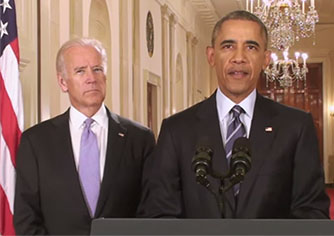
President Obama’s public statements after the announcement of the JCPA in Vienna on July 14, 2015 indicate willingness to enter into a serious discussion with the Israeli government over the implications of the agreement for Israel’s security. This dialogue is vital for Israel, and should not be confined to the military aspects of Iran’s nuclear program and Israel’s qualitative military edge. It is imperative that Israel realize that though the agreement has become a reality, the debate in the US and especially in Congress has just begun, particularly as the legislation calls for the administration to submit periodical reports both on Iran’s implementation of the JCPA and on other issues, such as Iran’s support for terror. Through sophisticated diplomacy, Israel will be able to influence the discussions, staying away from the political domestic rift that will inevitably widen in the US presidential race.

The Joint Comprehensive Plan of Action (JCPA) reached on July 14, 2015 between Iran and the P5+1 and the EU High Representative may ultimately prove to be one of President Obama’s greatest achievements. To attain that status, it will have to overcome serious Congressional hurdles, but even more important, it will have to withstand the test of time and prove that it can successfully resist Iran’s determination to obtain nuclear military capability.

Among the world leaders who negotiated the JCPA with Iran, none will have to face the same political opposition, domestic and external, that will be directed against President Obama long after he retires from the White House. For now, however, the President must overcome opposition by Congress, where both chambers are controlled by the Republicans. According to the legislative compromise reached in May 2015 between the Republicans, Democrats, and the White House, Congress will have 60 days to review the JCPA and either give it bicameral  approval or reject it. As announced by President Obama, rejection will incur a presidential veto. This veto can be overruled by two thirds of the Senate and the House of Representatives, a highly improbable scenario. Thus in all likelihood, the President will prevail and the JCPA will be endorsed officially by the United States.

Moreover, failure by the President to mobilize the support of a third of either the Senate or the House does not necessarily mean the end of the JCPA as far as the US is concerned. While it means the US has not assumed any formal obligation toward Iran as have the other signatories, the President can, for example, waive non-statutory sanctions, i.e., those imposed by Congress. The sanctions imposed by the US government can be revoked, as well as those imposed by the Security Council, which were adopted by the government but not signed into law. President Obama himself signed several Executive Orders that imposed sanctions against the import of certain goods and sanctions dealing with particular Iranian figures. He has the power to waive these sanctions, and in his public statements after the JCPA was announced, Obama left no doubt regarding his determination to see this agreement through, staking his own legacy on the deal and his success in skirting Congressional opposition.

The current confrontation between President and Congress is rooted in two sources. One is the historic constitutional battle between the executive and legislative branches on which holds the power of making war and peace. The second, more recent factor is the growing political polarization in American society. Despite a measure of criticism against the agreement and the failure of the negotiators, and the US in particular, to provide adequate answer to issues relating to the nuclear domain – and certainly to issues relating to Iran's involvement in terrorism, or what amounts to the administration’s abandonment of the military option – President Obama is nonetheless justified in saying that Iran's road to nuclear military capability has, at least for the next 10-15 years, been blocked. The vote in the two houses of Congress, however, will reflect the partisan rivalry more than any critical assessment of the JCPA's merits.

Israel has legitimate concerns and President Obama himself has recognized this, even while asserting that a better alternative to the JCPA was not proposed. Israel and its political leaders have the duty to express their concerns and point to the weaknesses and lapses of both the negotiations process with Iran and the result – the JCPA. But here issues of substance and form assume critical importance. Prime Minister Netanyahu erred when he approached Congress directly, which constituted an affront to the President at the height of the partisan battle between the Democratic President and the Republican-controlled Congress. The Prime Minister would repeat this mistake should he seek to address a joint Congressional session again. The previous attempt to leverage Congressional support, in early March 2015, did not succeed in halting the negotiations with Iran. The legislation (H.R. 1191 of May 2015) did not call upon the President to end the negotiations, and the odds are slim that Congress can override the President's determination to make the JCPA binding on the United States. Prime Minster Netanyahu is already perceived as taking sides in the highly charged domestic partisan contest – his speech to Congress last March was boycotted by dozens of legislators – and further intervention in the Congressional process relating to the JCPA could inflict long term damage on the hitherto bi-partisan support for Israel in US public opinion. There is already some erosion in that support among America’s young, liberal generation, including the Jewish component.

President Obama's public statements after the announcement of the JCPA in Vienna on July 14, 2015 indicate willingness to enter into a serious discussion with the Israeli government over the implications of the agreement for Israel's security. This dialogue is vital for Israel, and should not be confined to the military aspects of Iran's nuclear program and Israel's qualitative military edge. President Obama has acknowledged that the JCPA deals solely with the nuclear aspects, and that Israel has legitimate concerns beyond them. It must be assumed that Iran's agenda in other matters in the Middle East will not change; indeed, Iran might well be encouraged by the agreement and the end of the international sanctions regime to pursue its strategic goals even more actively. It must likewise be assumed that the parallel discussions between the US and Iran at the very high level while the negotiations were underway will not end suddenly.

It is imperative that Israel realize that though the agreement has become a reality, the debate in the US and especially in Congress has just begun, particularly as the legislation calls for the administration to submit periodical reports both on Iran's implementation of the JCPA and on other issues, such as Iran's support for terror. Through sophisticated diplomacy, Israel will be able to influence the discussions, those in Congress and those between the US and Iran, staying away from the political domestic rift that will inevitably widen in the US presidential race. The Iran nuclear file, troubling as it is, is just one of the long term dangers Israel is facing. The more immediate regional threats have to do with the radicalization and fragmentation processes in the region and the proliferation of weapons that are not categorized as WMD but have a significant destructive power. These are the issues that should be on the top of the agenda in a healthier, less acrimonious dialogue that is based a higher degree of trust. The political leaders at the highest echelons in both Israel and the United States are responsible for restoring this dialogue to that level and quality.

The opinions expressed in INSS publications are the authors’ alone.
Publication Series INSS Insight
TopicsIranIsrael-United States Relations
עברית

Events

All events
Iran, US, Israel, and the Global Jewish Community
10 March, 2026
12:00 - 13:00
Shutterstock

Related Publications

All publications
Shutterstock
Principles for an Israeli Strategy to Address the Iranian Nuclear Threat at the End of the War
Although we are currently in the midst of a war and do not yet know how it will end, the US negotiations initiative—which may bring the campaign to an end—requires a clear definition of Israel’s interest regarding the Iranian nuclear project. The conclusion of Operation Roaring Lion will place Israel and the international community before a new strategic reality vis-à-vis Iran. The regime in Tehran, if it survives the war, may—after experiencing systemic trauma and damage to its senior leadership—adopt a national security doctrine that relies on nuclear weapons as its sole existential deterrent capability. Under these circumstances, it is essential to ensure that Iran retains no nuclear capability that could serve as a foundation for a military nuclear program. This paper argues that previous models of “risk management” (such as the JCPOA, the Joint Comprehensive Plan of Action) are no longer relevant. Therefore, Israel must insist on the complete dismantling of Iran’s uranium enrichment infrastructure and relevant technological capabilities as a necessary condition for ending the war, whether by diplomatic or military means.
31/03/26
Shutterstock
From Military Achievement to a Regional Arrangement
To leverage the military success against Iran into a strategic achievement, a mechanism for cooperation with the United States and the moderate Arab states is required
30/03/26
Iranian Army/Handout / Anadolu via REUTERS
The Strait of Hormuz as a Key Theater of War—The Legal Dimension
A legal perspective on Iranian activity in the Strait of Hormuz, which is shaking the global economy
29/03/26

Stay up to date

Registration was successful! Thanks.
  • Research

    • Topics
      • Israel and the Global Powers
      • Israel-United States Relations
      • Glazer Israel-China Policy Center
      • Russia
      • Europe
      • Antisemitism and Delegitimization
      • Iran and the Shi'ite Axis
      • Operation Roaring Lion
      • Iran
      • Lebanon and Hezbollah
      • Syria
      • Yemen and the Houthi Movement
      • Iraq and the Iraqi Shiite Militias
      • Conflict to Agreements
      • Israeli-Palestinian Relations
      • Hamas and the Gaza Strip
      • Peace Agreements and Normalization in the Middle East
      • Saudi Arabia and the Gulf States
      • Turkey
      • Egypt
      • Jordan
      • Israel’s National Security Policy
      • Military and Strategic Affairs
      • Societal Resilience and the Israeli Society
      • Jewish-Arab Relations in Israel
      • Climate, Infrastructure and Energy
      • Terrorism and Low Intensity Conflict
      • Cross-Arena Research
      • Data Analytics Center
      • Law and National Security
      • Advanced Technologies and National Security
      • Foreign Information Manipulation and Interference
      • Economics and National Security
    • Projects
      • Preventing the Slide into a One-State Reality
  • Publications

    • All Publications
    • INSS Insight
    • Policy Papers
    • Special Publication
    • Strategic Assessment
    • Technology Platform
    • Memoranda
    • Database
    • Posts
    • Books
    • Archive
  • About

    • Vision and Mission
    • History
    • Research Disciplines
    • Chairman of the Board
    • Board of Directors
    • Fellowship and Prizes
    • Internships
    • Support
    • Privacy Policy and Terms of Use
  • Media

    • Communications
    • Video Gallery
    • Press Release
    • Podcast
  • Home

  • Events

  • Database

  • Team

  • Contact

  • Newsletter

  • עברית

INSS logo The Institute for National Security Studies, Strategic, Innovative, Policy-Oriented Research, go to the home page
40 Haim Levanon St. Tel Aviv, 6997556 Israel | Tel: 03-640-0400 | Fax: 03-744-7590 | Email: info@inss.org.il
Developed by Daat ,Yael Group.
Accessibility Statement
This site is protected by reCAPTCHA and the Google Privacy Policy and Terms of Service apply.