"Jenin Estates” and a Paradigm Shift in Israeli-Palestinian Discourse: From the Discourse on National Rights to the Discourse on Human Rights | INSS
go to header go to content go to footer go to search
INSS logo The Institute for National Security Studies, Strategic, Innovative, Policy-Oriented Research, go to the home page
INSS
Tel Aviv University logo - beyond an external website, opens on a new page
  • Campus
  • Contact
  • עברית
  • Support Us
  • Research
    • Topics
      • Israel and the Global Powers
        • Israel-United States Relations
        • Glazer Israel-China Policy Center
        • Russia
        • Europe
        • Antisemitism and Delegitimization
      • Iran and the Shi'ite Axis
        • Operation Roaring Lion
        • Iran
        • Lebanon and Hezbollah
        • Syria
        • Yemen and the Houthi Movement
        • Iraq and the Iraqi Shiite Militias
      • Conflict to Agreements
        • Israeli-Palestinian Relations
        • Hamas and the Gaza Strip
        • Peace Agreements and Normalization in the Middle East
        • Saudi Arabia and the Gulf States
        • Turkey
        • Egypt
        • Jordan
      • Israel’s National Security Policy
        • Military and Strategic Affairs
        • Societal Resilience and the Israeli Society
        • Jewish-Arab Relations in Israel
        • Climate, Infrastructure and Energy
        • Terrorism and Low Intensity Conflict
      • Cross-Arena Research
        • Data Analytics Center
        • Law and National Security
        • Advanced Technologies and National Security
        • Foreign Information Manipulation and Interference
        • Economics and National Security
    • Projects
      • Preventing the Slide into a One-State Reality
  • Publications
    • -
      • All Publications
      • INSS Insight
      • Policy Papers
      • Special Publication
      • Strategic Assessment
      • Technology Platform
      • Memoranda
      • Posts
      • Books
      • Archive
  • Database
    • Surveys
    • Spotlight
    • Maps
    • Dashboards
  • Events
  • Team
  • About
    • Vision and Mission
    • History
    • Research Disciplines
    • Chairman of the Board
    • Board of Directors
    • Fellowship and Prizes
    • Internships
  • Media
    • Communications
    • Video gallery
    • Press Releases
  • Podcast
  • Newsletter
  • Campus
Search in site
  • Research
    • Topics
    • Israel and the Global Powers
    • Israel-United States Relations
    • Glazer Israel-China Policy Center
    • Russia
    • Europe
    • Antisemitism and Delegitimization
    • Iran and the Shi'ite Axis
    • Operation Roaring Lion
    • Iran
    • Lebanon and Hezbollah
    • Syria
    • Yemen and the Houthi Movement
    • Iraq and the Iraqi Shiite Militias
    • Conflict to Agreements
    • Israeli-Palestinian Relations
    • Hamas and the Gaza Strip
    • Peace Agreements and Normalization in the Middle East
    • Saudi Arabia and the Gulf States
    • Turkey
    • Egypt
    • Jordan
    • Israel’s National Security Policy
    • Military and Strategic Affairs
    • Societal Resilience and the Israeli Society
    • Jewish-Arab Relations in Israel
    • Climate, Infrastructure and Energy
    • Terrorism and Low Intensity Conflict
    • Cross-Arena Research
    • Data Analytics Center
    • Law and National Security
    • Advanced Technologies and National Security
    • Foreign Information Manipulation and Interference
    • Economics and National Security
    • Projects
    • Preventing the Slide into a One-State Reality
  • Publications
    • All Publications
    • INSS Insight
    • Policy Papers
    • Special Publication
    • Strategic Assessment
    • Technology Platform
    • Memoranda
    • Posts
    • Books
    • Archive
  • Database
    • Surveys
    • Spotlight
    • Maps
    • Dashboards
  • Events
  • Team
  • About
    • Vision and Mission
    • History
    • Research Disciplines
    • Chairman of the Board
    • Board of Directors
    • Fellowship and Prizes
    • Internships
    • Privacy Policy and Terms of Use
  • Media
    • Communications
    • Video gallery
    • Press Releases
  • Podcast
  • Newsletter
  • Campus
  • Contact
  • עברית
  • Support Us
bool(false)

Publications

Home Publications INSS Insight "Jenin Estates” and a Paradigm Shift in Israeli-Palestinian Discourse: From the Discourse on National Rights to the Discourse on Human Rights

"Jenin Estates” and a Paradigm Shift in Israeli-Palestinian Discourse: From the Discourse on National Rights to the Discourse on Human Rights

INSS Insight No. 553, May 27, 2014

עברית
Kobi Michael
A paradigm shift in the Israeli-Palestinian discourse, which will enable a more developed foundation for advanced negotiations toward a future agreement, is now necessary. Specifically, the discourse must shift from national rights to human rights, focusing on the humanitarian rights of the Palestinian refugees in the Palestinian Authority. Israel, with the backing of the United States and the international community, should launch a process built on the humanitarian drive to bring relief to the refugee population in the PA and transfer this obligation to the Palestinian  government, which would receive aid from Israel and the international community for the effort.

As part of his “ripeness theory” and its relation to international conflicts, William Zartman introduces the concept of a “mutually hurting stalemate.” His main contention is that the status of a conflict can evolve in the direction of dialogue and agreement only when the two sides reach the conclusion that continued violence will not lead to fulfillment of their political objectives. This argument can presumably also be applied to a case in which the two parties have yet to realize that continued use of longstanding strategies and ideological tools is not likely to benefit them.

Insofar as the political process with the Palestinians has proven insufficiently ripe for reaching a peace agreement, it is fundamentally futile, and as long as it attempts to achieve an end to the conflict, it has no chance. In other words, any effort to shape the process is futile in terms of the desired political benefit. Any time the US mediation effort attempts to tackle substantive issues, it hits a wall of resistance. Therefore, efforts are currently focused on an attempt to reach agreements concerning the continuation of the negotiations. In this sense, the effort is devoted to the process and not the substance.

The demands of the parties in the negotiations represent a national discussion, a discourse on national rights. The Palestinians seek to focus on the issue of borders and Jerusalem, while Israel’s focus is on security arrangements and the demand to recognize Israel as the nation-state of the Jewish people (a condition for an agreement, not for holding negotiations). However, this demand itself is sufficient to challenge the very process, given the fundamental Palestinian opposition to this condition. This in turn raises the level of Israeli suspicion concerning the true intentions of the Palestinians in the future and the irredentist potential of the future Palestinian state. In tandem, the level of Palestinian suspicion concerning Israel’s willingness to reach an agreement on the establishment of a Palestinian state along the 1967 borders, with minimal land swaps and with East Jerusalem as its capital, is increasing.

The focus on process rather than substance and the distrust, suspicion, and even personal animosity between the leaders of the two parties makes progress toward an agreement well-nigh impossible. Moreover, it increases the chances that relations between both parties and the United States will sour and that the Palestinian entity will be weakened even further. Indeed, it is already a rather failed entity when measured by the performance of its institutions, its economy, its ability to provide for the public good, and especially its ability to ensure a monopoly on the use of force in the territories under its control.

At this point, a paradigm shift is needed that will lead to a focus on substance and to strengthened trust between the two sides to enable a more developed foundation for advanced negotiations toward a future agreement. The paradigm shift must start with a change in discourse. Specifically, the discussion must shift from national rights to human rights, focusing on the humanitarian rights of the Palestinian refugees in the Palestinian Authority (PA). The treatment of these refugees is even worse than the treatment of Palestinian refugees in the Arab countries, and these refugees are in essence being held hostage by the Palestinian leadership, which cynically seeks to perpetuate their misery and refugee status in order to foster the Palestinian national ethos and retain political power in the international arena. In doing so, the Palestinian leadership is violating the basic human rights of the Palestinian refugees, while fostering the destructive demand of “the right of return,” which essentially contravenes Israel’s right to exist as the nation-state of the Jewish people.

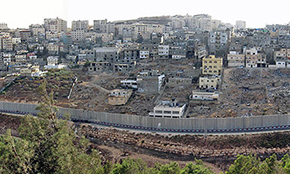
Israel, with the backing of the United States and the international community, should launch a process built on the humanitarian drive to bring relief to the refugee population living in the PA and transfer this obligation to the PA government, which would receive aid from Israel and the international community for this effort. New Palestinian cities can be established in Area C, which, with Israel’s agreement, would be transferred to PA responsibility, and Palestinian refugees can be rehabilitated there. The United Nations Relief and Works Agency (UNRWA), which over the years has evolved from a mechanism to resolve the Palestinian refugee problem to a participant in perpetuating their refugee status, would change its mission and become the international community’s representative for promoting this drive. UN aid and additional aid effort would be used for this purpose. Commercial and employment areas would be built next to the Palestinian cities, with the involvement of Israeli, Jordanian, and international developers, so that refugee rehabilitation would not be limited to housing solutions, but would include a comprehensive employment, education, and welfare package.

There is no question that a “Jenin Estates” or “Bethlehem Heights” project would become an economic and social engine in the PA’s economic, social, and infrastructure development. With appropriate, careful, and close input from the international community, it would also aid in developing the political infrastructure of the future Palestinian state. No less importantly, a move of this type would signal to Israel that there is a Palestinian willingness to soften, if not rescind, the demand for the right of return, without the Palestinian leadership having to declare at this point in time that it is willing to consider recognizing Israel as the nation-state of the Jewish people. Such willingness could surface in due course, once a project of this type advances significantly. At the same time, the Palestinian Authority will gain additional territories in a manner that signals Israeli willingness for real territorial compromise in due course and improves PA territorial contiguity, as well as economic and political recovery.

The Israeli and international effort must focus on the paradigm shift of improving the welfare of the Palestinian refugees. The international community must demand that the PA fulfill its basic obligation to its citizens and cease to exploit their misery. The international effort and international aid will be more effective and contribute far more effectively to the Palestinian Authority, certainly in contrast to the vast amount of money poured into the PA since its establishment in 1994. The extensive but largely uncontrolled aid of the past twenty years has not significantly advanced the PA and has certainly not led to relief of the population.

A move of this kind could swiftly improve the sad state of the Palestinian Authority and bring renewed hope to the refugee population. It would create a dynamic that could in turn lead to strengthened mutual trust, a focus on substance rather than procedure, and development of a foundation for negotiations toward a settlement in due course. If the PA refuses to act to improve the welfare of its people and prefers to perpetuate their status as refugees, this would be an indication of its future intentions and an attempt to challenge Israel in international institutions. In many senses, the PA is perpetrating a kind of humanitarian crime against its own people. Unfortunately, it is relying on the UN aid agency and on the naivete, in some cases deliberate, of the international community. In talking about human rights, the Palestinian leadership would do well to take real action. It is reasonable to assume that Israel and the international community will be there alongside the PA.

The opinions expressed in INSS publications are the authors’ alone.
Publication Series INSS Insight
TopicsIsraeli-Palestinian Relations
עברית

Events

All events
Iran, US, Israel, and the Global Jewish Community
10 March, 2026
12:00 - 13:00
Shutterstock

Related Publications

All publications
Habbou Ramez/ABACA via Reuters Connect and REUTERS (modified by INSS)
De-Hamasification of the Gaza Strip: Learning from Western and Arab Models of Deradicalization
The radicalization of Palestinian society in the Gaza Strip is not a new phenomenon, but the process has accelerated and deepened dramatically since Hamas’ takeover of the territory in 2007. Under its rule, an extremist religious-nationalist ideology has been systematically embedded across all spheres of Gaza life—from education and religious institutions to welfare and the media—producing a profound “Hamasification” of public consciousness. The war that erupted on October 7 brought unprecedented ruin to the Gaza Strip, both physically and institutionally, posing a monumental reconstruction challenge, but also a rare historic opportunity. This memorandum argues that military disarmament and physical rehabilitation alone will not ensure long-term security and stability, and that a far deeper process of “de-Hamasifcation” is required: dismantling Hamas’ ideological and institutional hegemony and replacing it with a more moderate civic and normative infrastructure. The study presents a comparative analysis of Western and Arab deradicalization models and finds that Western approaches—such as those implemented in Germany and Japan—struggle to provide an adequate response to Gaza’s cultural and political context. Instead, we propose adopting operational principles drawn from contemporary Arab models, particularly the “civic-transformative” model applied in the Gulf states, which combines a firm crackdown on extremist actors with re-education toward religious tolerance and broad-based economic rehabilitation. The paper outlines an integrative strategy encompassing sustained security demilitarization, the mobilization of an Arab coalition to provide religious and political legitimacy, and the establishment of a credible political horizon as a counterweight to the ethos of “resistance.” Only the combination of these elements can generate a viable governing and ideological alternative to Hamas and lead to a more stable long-term security environment for the State of Israel.
05/02/26
REUTERS / Jonathan Ernst
Trump’s Board of Peace: An Initiative for the Gaza Strip or an Alternative to the UN?
What is the mission of the international board established by the US president as part of his plan to end the war in the Gaza Strip—and what are the implications of Trump’s move?
04/02/26
Harun Ozalp / Anadolu via REUTERS
The Transition to Phase II in the Gaza Strip—An Unprecedented Challenge for Israel
What challenges and concerns have arisen—both in Jerusalem and in Ramallah—following the announcement of the transition to the second phase of the Trump plan for stabilizing the Gaza Strip, and how should Israel act?
27/01/26

Stay up to date

Registration was successful! Thanks.
  • Research

    • Topics
      • Israel and the Global Powers
      • Israel-United States Relations
      • Glazer Israel-China Policy Center
      • Russia
      • Europe
      • Antisemitism and Delegitimization
      • Iran and the Shi'ite Axis
      • Operation Roaring Lion
      • Iran
      • Lebanon and Hezbollah
      • Syria
      • Yemen and the Houthi Movement
      • Iraq and the Iraqi Shiite Militias
      • Conflict to Agreements
      • Israeli-Palestinian Relations
      • Hamas and the Gaza Strip
      • Peace Agreements and Normalization in the Middle East
      • Saudi Arabia and the Gulf States
      • Turkey
      • Egypt
      • Jordan
      • Israel’s National Security Policy
      • Military and Strategic Affairs
      • Societal Resilience and the Israeli Society
      • Jewish-Arab Relations in Israel
      • Climate, Infrastructure and Energy
      • Terrorism and Low Intensity Conflict
      • Cross-Arena Research
      • Data Analytics Center
      • Law and National Security
      • Advanced Technologies and National Security
      • Foreign Information Manipulation and Interference
      • Economics and National Security
    • Projects
      • Preventing the Slide into a One-State Reality
  • Publications

    • All Publications
    • INSS Insight
    • Policy Papers
    • Special Publication
    • Strategic Assessment
    • Technology Platform
    • Memoranda
    • Database
    • Posts
    • Books
    • Archive
  • About

    • Vision and Mission
    • History
    • Research Disciplines
    • Chairman of the Board
    • Board of Directors
    • Fellowship and Prizes
    • Internships
    • Support
    • Privacy Policy and Terms of Use
  • Media

    • Communications
    • Video Gallery
    • Press Release
    • Podcast
  • Home

  • Events

  • Database

  • Team

  • Contact

  • Newsletter

  • עברית

INSS logo The Institute for National Security Studies, Strategic, Innovative, Policy-Oriented Research, go to the home page
40 Haim Levanon St. Tel Aviv, 6997556 Israel | Tel: 03-640-0400 | Fax: 03-744-7590 | Email: info@inss.org.il
Developed by Daat ,Yael Group.
Accessibility Statement
This site is protected by reCAPTCHA and the Google Privacy Policy and Terms of Service apply.