


Publications
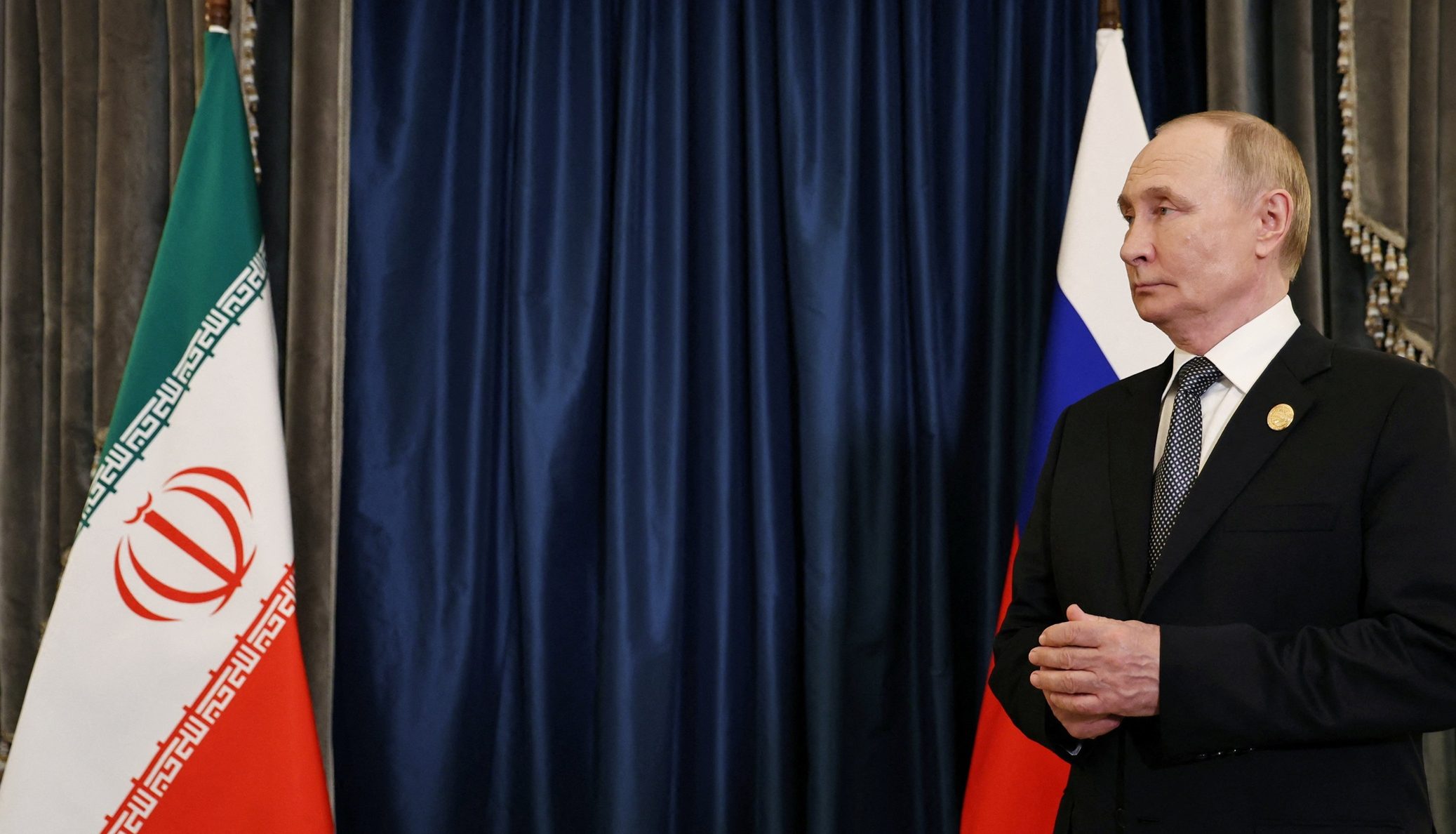
How does the Kremlin interpret developments in the Iranian arena, what lessons does it derive from the course of the war, and what implications do these developments hold for the Russian sphere?
INSS Insight No. 2113, March 17, 2026
Follow us on GoogleThe military campaign launched by the United States and Israel against Iran at the end of February 2026 confronts Moscow with a new strategic reality. Iran constitutes an important partner for Russia, even if it cannot be considered an ally in the full sense of the term. This article examines how Moscow interprets the campaign, what lessons it derives from it, and what consequences Russia is likely to face as an aftermath of the war.
The war in Iran entails significant risks for Russia. From the Kremlin’s perspective, one of the most troubling scenarios is the potential destabilization of the Iranian regime or even its collapse. For Moscow, Iran is not merely a regional partner but part of a broader group of states opposed to Western hegemony, with which Russia seeks to shape an alternative international order. Consequently, the weakening or fall of the Islamic Republic could deal a severe blow to the anti-Western camp and be perceived as a strategic achievement for the United States and its allies. Moreover, the collapse of Iran would generate additional geostrategic pressure on Russia in the South Caucasus, following the United States’ involvement in resolving the conflict between Armenia and Azerbaijan.
With the outbreak of the war, Russia was quick to condemn the United States and Israel. After it became clear that Supreme Leader Ali Khamenei had been killed, senior Russian officials further sharpened their criticism. President Vladimir Putin expressed his condolences and described the event as an assassination “committed in cynical violation of the norms of human morality and international law.” On March 1, the Russian Foreign Ministry issued a statement noting that the news had been received in Moscow with anger and deep sorrow. Vasily Nebenzya, Russia’s Permanent Representative to the United Nations, stated that despite Tehran’s willingness to engage in the diplomatic process, it had suffered “a stab in the back.” By emphasizing the violation of Iran’s sovereignty and of international law, Moscow seeks to frame the events as part of a broader erosion of international norms and to position itself as a defender of the principle of sovereignty in the face of American conduct.
Alongside these public condemnations, Moscow sought to act in the diplomatic arena in an effort to position itself as a party involved in the crisis. In the first days following the outbreak of hostilities, Putin held telephone conversations with regional leaders, including Iranian President Masoud Pezeshkian, as well as the leaders of Gulf states that were struck by Iranian attacks at the time - Saudi Arabia, Qatar, Bahrain, and the United Arab Emirates. In addition, Putin offered Washington assistance in mediating with Iran, but Trump cynically rejected the overture, stating that Putin “could be more helpful by getting the Ukraine-Russian war over with,” as he had similarly remarked in June 2025 during the previous war with Iran. Alongside diplomatic contacts with regional leaders, Moscow also acted within international institutions. At the request of the Russian delegation in Vienna, a special session of the Board of Governors of the International Atomic Energy Agency (IAEA) was convened on March 2 to address the risks arising from strikes on nuclear facilities. On March 11, Russia also attempted to advance a draft resolution in the UN Security Council calling on all parties to cease military activity immediately and refrain from further escalation, but the proposal was not adopted. At the same time, a Bahraini proposal condemning the Iranian strikes was adopted, after Russia and China chose to abstain rather than exercise their veto.
In addition to its concern over the negative geostrategic implications for Russia, Moscow is also apprehensive about potential damage to the Bushehr nuclear power plant. This concern stems primarily from the political and practical ramifications of harm to the flagship project of Russian-Iranian nuclear cooperation. Such damage could not only result in economic losses and undermine one of the central pillars of relations between Moscow and Tehran, but it could also endanger Russian personnel working at the site and weaken one of Russia’s key centers of influence in the energy sphere in the Middle East. Although, during operation “Rising Lion” in June 2025, Putin stated that Netanyahu and Trump had promised that the Russian teams at Bushehr would not be harmed, no similar assurances have been made public on this occasion. Moreover, Russia has approached Israel claiming that strikes had occurred near the Bushehr reactor, thereby placing Russian personnel in tangible danger.
At the same time, despite the challenges imposed on Russia as a result of the war, the conflict may also present a number of opportunities from Moscow’s perspective. It diverts international attention and Western resources away from the front in Ukraine. Moreover, regional instability and concerns over disruptions to oil supplies have already begun to serve Russia’s economic interests. Russia’s revenues are estimated to be increasing by approximately $150 million per day. At a time when Russia faces budgetary strain and significant difficulty financing the war in Ukraine, rising energy prices could prove to be a lifeline. Tensions in the Gulf also strengthen Russia’s position as an important energy supplier to China. Whereas supply routes from the Gulf remain vulnerable to security threats, Russian exports to China rely on more stable infrastructure that does not depend on maritime routes or the Strait of Hormuz. Furthermore, Trump’s attempts to prevent a sharp rise in oil prices may, paradoxically, benefit Russia following his announcement of limited sanctions relief on oil sales intended to stabilize the market.
Alongside the economic opportunities created by the crisis, security cooperation between Russia and Iran has continued during the war. American sources reported that Russia came to Iran’s aid, providing intelligence intended to assist it in attacking US military assets in the Middle East after the United States disrupted Iranian satellite communications. Although no reports have been published regarding the sharing of Russian intelligence concerning Israel, it is reasonable to assume that such intelligence cooperation was not limited solely to the United States. Moreover, Russia is assisting Iran in implementing advanced drone-operating tactics that were tested and developed during the war in Ukraine.
These developments in the campaign were also reflected in Russian media discourse. In the first days following the US-Israeli strike, shock and uncertainty were evident in the media and in the statements of Russian experts, reflecting similar sentiments within the Russian government. The elimination of the country’s supreme leader itself was perceived as an extraordinary precedent, raising questions about the future of the Iranian regime and even the possibility of its rapid collapse. However, as it became clear that the regime continued to function and that Iran was capable of mounting military response, the tone of Russian commentary shifted. Discussion of the regime’s survival gave way to a more familiar narrative emphasizing the limits of American power, Iran’s resilience under military pressure, and the strategic risks such a move could create for the United States itself. This trend was also reflected in official Kremlin messaging. In a congratulatory letter sent by Putin to Mojtaba Khamenei after his election as Iran’s supreme leader, confidence was expressed that the new leader would “honorably continue in his father’s path.” This emphasis reflects Russia’s interest in portraying the leadership transition in Iran as a direct continuation of the existing policy line, rather than as a rupture that might undermine regime stability and cooperation between Moscow and Tehran.
The crisis in Iran also sparked discussion in Moscow regarding its implications for Russia itself. Particularly notable is the analysis by Ivan Timofeev, the CEO of the Russian International Affairs Council (RIAC), a leading think tank close to the Kremlin. The identity of the author, together with the prominent platforms on which his analysis was published, suggests that it reflects how central figures within the Russian government view the events and their consequences. Timofeev applies the logic of the Iranian arena to the Russian case. In his view, the principal lessons for Russia from the campaign against Iran are that sanctions serve merely as a prelude to the use of military force and that the West is pursuing a long-term strategy of attrition that does not end with concessions or temporary “pauses.” Timofeev emphasizes that compromises by the state under attack only invite further pressure and that, in the current era, state leadership and the senior bureaucracy have become direct military targets. In his view, Russia must recognize that internal resilience constitutes a central factor in preventing external intervention, since social cleavages are perceived in the West as points of weakness that invite attack. He stresses that, in a world of unavoidable conflicts, Russia must rely solely on its own strength. While alternative partners help circumvent economic sanctions, they do not provide a military umbrella against direct strikes.
In parallel with the discussion of the strategic lessons for Russia itself, a broad debate also developed in Russia regarding the systemic implications of the war. According to Fyodor Lukyanov, one of Russia’s leading foreign policy experts and a Kremlin-aligned analyst, the war in Iran represents a clear manifestation of the erosion of the institutional international order and the transition to an era in which military force becomes a central instrument in international relations. In his view, the campaign demonstrates that the United States and Israel are acting without any meaningful attempt to obtain legal or international legitimacy, thereby entrenching a norm in which military capability itself serves as justification for action. Lukyanov situates this development within a broader process of dismantling the regional order in the Middle East that began with the first Gulf War and continued through the invasion of Iraq, the events of the Arab Spring, and the wars in Syria and Libya. He emphasizes that the elimination of the Iranian leadership reinforces the perception that nuclear capability constitutes the ultimate guarantee of regime survival. In his view, Trump’s approach, which favors direct bilateral dealings with states over the framework of international institutions, weakens the international system and encourages greater reliance on military force.
An article by Dmitri Trenin, director of the Institute of World Military Economy and Strategy at HSE and a senior researcher at IMEMO, also reflects the shift in Moscow’s perception resulting from the war. In his view, under Trump’s leadership, Washington moved from a relatively passive policy to an offensive geopolitical course aimed at creating managed global chaos that would help preserve US supremacy. In his assessment, this policy positions the United States as Russia’s geopolitical rival and limits the value of dialogue with Trump, who is regarded as an unpredictable and unreliable partner following the developments in Iran. In addition, he argues that the previous system of strategic arms control has collapsed and that global strategic stability has weakened; therefore, Russia must develop new models of deterrence together with China, India, and other actors. He further notes that, given the long-term character of the sanctions imposed on Russia, Moscow should focus on domestic development and on strengthening ties with non-Western partners, led by China, Iran, and North Korea. In this context, Trenin emphasizes that Iran is an important strategic partner for Russia and that the outcome of the current war will affect both the region south of its borders and the Middle East as a whole.
Implications for Israel
At present, Russian foreign policy is based on a cautious strategic equilibrium. While Moscow provides broad diplomatic support to Iran and condemns the actions of the United States and Israel, it is careful to avoid steps that could lead to irreversible escalation in its relations with Washington and Jerusalem. This position was clearly articulated by Kremlin spokesperson Dmitry Peskov, who emphasized that “this war is not our war,” thereby making clear that, despite diplomatic solidarity with Tehran, Moscow does not view itself as an active party to the campaign. This caution stems first and foremost from Russia’s focus on the war in Ukraine and its desire to preserve open channels of communication with the Trump administration, particularly regarding efforts to bring that war to an end.
At the same time, Moscow will continue to view Iran as an important partner and is not expected to act in support of Israeli security interests, although in theory it could serve as a channel of communication with Tehran. Looking ahead, if Iran’s nuclear program is not thwarted within the framework of the current military campaign, Russia is likely to seek involvement in discussions concerning a future arrangement on the nuclear issue. Such a development could complicate matters for Israel, since Moscow is not committed to Israeli interests.