


Publications
Market analysis shows the main pressure to end the war might not come from Western or Asian energy importers, but actually from Middle Eastern energy exporters
INSS Insight No. 2109, March 11, 2026
Follow us on GoogleThe campaign against Iran has expanded to the economic front, centering on Tehran’s attempts to harm the global energy market in order to force the United States to end the fighting. Yet an analysis of market conditions reveals a surprising picture. Although the global economy is showing resilience and can absorb rising prices in the short term, the real point of vulnerability may lie elsewhere. America’s allies in the Gulf could be forced to halt oil and gas production if storage facilities fill up. Should that be the case, the main pressure to stop the war may come not from energy importers in the West or Asia, but rather from energy exporters in the Middle East.
During a press conference held on the fifth day of the US–Israeli campaign against Iran, US Secretary of War Pete Hegseth outlined the achievements of the operation in Iran and stated that “this was never meant to be a fair fight, and it is not a fair fight. We are punching them while they’re down…” His remarks underscored the unequal balance of power between the two sides. As a result, Iran’s efforts are now focused largely on the economic arena, the one sphere in which it can inflict harm on the United States. In Iranian strategic thinking, a shock in the energy market is not merely a means of causing economic damage but also a tool of political pressure on the West and on states in the region. The assumption is that a prolonged energy crisis will increase international pressure to bring the campaign to a swift end. In other words, disrupting the global economy may shorten the duration of the war, reduce the damage to the regime, and improve its chances of survival.
Accordingly, from the outset of the campaign, Iran sought above all to disrupt the global energy markets. In the first week of the war, it struck oil infrastructure in Saudi Arabia and Iraq, targeted oil tankers belonging to Oman and the United Arab Emirates, and attempted to hit the world’s largest liquefied natural gas (LNG) production facility in Qatar, leading to its shutdown. Iran also threatened to attack any tanker passing through the Strait of Hormuz, causing the number of oil and gas tankers on that route to fall to nearly zero. About 20% of all the world’s oil and liquefied gas normally passes through this strait.
A Global Crisis in the Energy Market—Is That Really the Case?
Iran’s attempts to create an energy crisis were reflected in the first trading week since the outbreak of the war. Oil prices posted one of the largest weekly increases since futures trading began in 1983. At the close of trading on Friday, March 6, WTI crude oil was trading at $91 a barrel, the highest price in three and a half years, up about 35% from its price on the eve of the war, which was around $65–$67 a barrel. The price of natural gas in Europe jumped in just one week by about 70% to around €52 per megawatt-hour (compared with €30–€31 per megawatt-hour at the end of February)—the sharpest weekly rise since Russia’s invasion of Ukraine.
These sharp weekly increases suggest that the market is beginning to price in the possibility of a long war and escalating supply disruptions. At the same time, current pricing does not yet reflect an actual shortage. Despite the dramatic closure of the Strait of Hormuz and the sharp rise in prices, it should be noted that energy markets were in relatively good shape on the eve of the war. The current crisis and the consecutive days of rising oil prices are taking place against a backdrop of relatively low energy prices that prevailed before the war and reflected excess supply.
A useful comparison is the energy crisis triggered by Russia’s invasion of Ukraine. On February 23, 2022, the day before the invasion, the price of WTI crude oil stood at $92 per barrel, while the price of natural gas in Europe was about €89 per megawatt-hour. During the first week of the war, the price of oil surged to about $116 per barrel, while the price of gas doubled to around €192. By contrast, in the first trading week since the outbreak of the war with Iran, the price of oil is only now around the level at the beginning of the Russia–Ukraine war. At the same time, the price of gas, even after a rise of about 70%, is still about €35 below its level on the eve of the invasion of Ukraine. This suggests that these energy markets entered the current crisis from a relatively stable starting point. As a result, Iran’s ability to trigger a rapid global energy crisis appears more limited than that of Russia in 2022.
The States Affected by Shocks in the Energy Market
From the perspective of energy-importing states, the main problem appears to lie in Asia, whose countries are more dependent on oil and gas shipments passing through the Strait of Hormuz. However, most of these countries have reserves that are sufficient for at least three months. Japan, for example, which imports about 80% of its oil from the Gulf states, announced that it has reserves for about another nine months. India, which has smaller stockpiles, received US approval to purchase Russian oil in the coming period. As a result, even a more significant increase in the price of oil to around $100–$120 per barrel in the short term can still be absorbed by the global economy. Indeed, it already did so in 2022, when the average price of oil was about $101 per barrel. At this higher price, there will also be beneficiaries beyond the range of the Iranian threat, including oil producers in the United States, which suffered in 2025 from a low-price environment.
At the same time, while American energy producers would benefit from the rise in prices, these increases would be passed directly on to American consumers at the gas pump. High fuel prices have traditionally been a politically sensitive issue in the United States and could cause public dissatisfaction, which in turn might translate into domestic political pressure on the Trump administration to end the war. However, such pressure is not expected in the short term to halt the campaign.
While public discourse has focused mainly on the possible harm to energy-consuming countries in the West, the more significant economic pressure may be accumulating precisely among the region’s energy exporters. For these states, oil and gas production is of enormous economic importance, as reflected in the contribution of this sector to their GDP (see Figure 1).
First, a large and successful Iranian attack on oil and gas tankers or on production facilities could have particularly severe consequences at the present moment. A strike by an Iranian drone, costing only about $20,000, on an oil tanker worth about $200 million could be enough to create a powerful deterrent effect and cause shipping companies and other actors to avoid moving tankers through the Strait of Hormuz—even if the United States were to insure them. Such a scenario could lead to a partial paralysis of export routes from the region, generating economic pressure precisely on the Gulf states themselves. In addition, a significant blow to the region’s oil-production capacity could trigger heavy international pressure to end the war. It should be recalled that the attack on Saudi Aramco’s oil facilities in September 2019 damaged about half of Saudi Arabia’s oil production capacity and led to an increase of about 15% in oil prices in a single day.
Second, pressure to end the war may come from energy exporters in the Middle East that still hold large inventories while running out of storage capacity, which could soon force them to halt production. Despite the threat from Iran, oil production in the region has not yet stopped but has been reduced. However, these states may be approaching the point at which, without the ability to export their oil, they will be forced to suspend production because local storage tanks have reached capacity. Once the strategic storage facilities of Saudi Arabia, Iraq, Kuwait, and the United Arab Emirates are also full, these states will have no choice but to stop oil production altogether. It is estimated that this point could arrive within just a few days. The only countries that can postpone this scenario somewhat are Saudi Arabia and the United Arab Emirates, which have pipelines that bypass the Strait of Hormuz and allow them to export part of their oil production safely. If we do indeed reach the point at which production is effectively halted altogether, the oil market could face upheaval not only in the short term but also in the medium and long term, as the consequences will be felt even after the war ends and would translate into a real shortage of oil supply.
As for natural gas, the main problem lies in Qatar. One in every five liquefied natural gas cargoes in the world originates in the emirate. Following the attacks, Qatar declared force majeure on liquefied natural gas exports, and official sources warned that a return to normal production could take weeks to months. According to these sources, even when routine operations resume, production will not immediately return to previous levels, since restarting the facilities must be done through a gradual and slow process to avoid damage to the equipment. In this situation, the economic pressure is directed not only at consumers but also at the exporters themselves, who face significant revenue losses if the disruptions persist.
Conclusion
Despite the sharp increases recorded in the first trading week since the outbreak of the war, and although attention remains focused on the consumer states out of concern over a global energy crisis, the resilience of the global economy and the flexibility of the energy industry allow both to absorb these shocks in the short term. In recent years, the energy sector has become especially skilled at coping with crises. During the COVID-19 pandemic and the energy crisis following Russia’s invasion of Ukraine, states helped moderate prices through the use of the oil reserves at their disposal, while oil and gas traders developed the ability to quickly reroute tankers between different destinations to reduce supply disruptions.
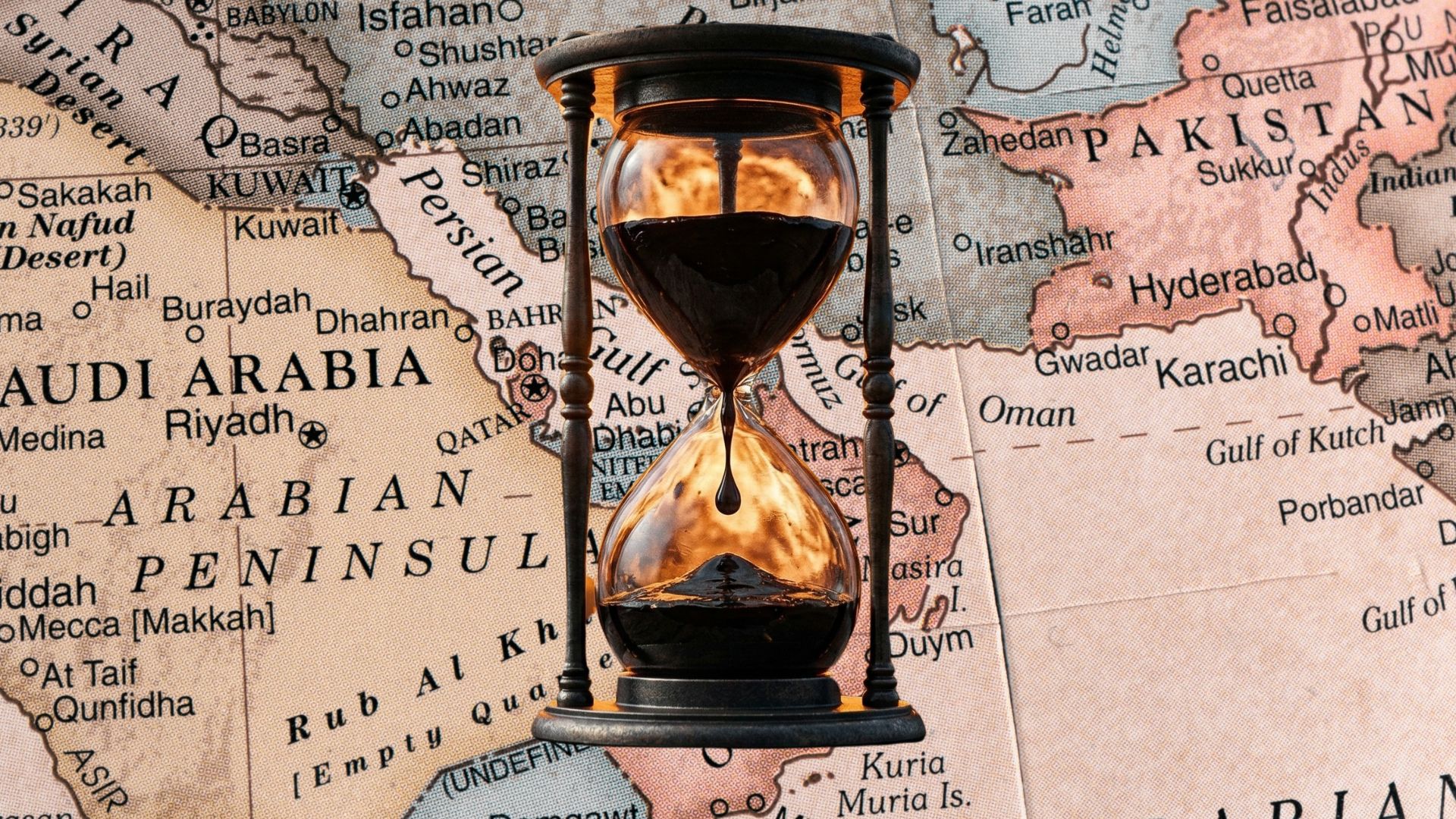
In other words, while the global market can cope with short-term price volatility, the exporting states cannot sustain a prolonged halt in production and exports. Paradoxically, the real economic hourglass of the campaign may not be in the West or in Asia, but rather in the Gulf states. These states, whose economies rely on energy exports, may quickly find themselves in a situation where storage facilities fill up and supply chains collapse. In such a scenario, the energy market itself could become one of the main factors determining the duration of the campaign—not because of a global shortage of energy, but because of the mounting economic pressure on the exporting states in the region. Moreover, a complete halt in oil and gas production in the region as a result of the war would create long-term economic and infrastructural damage, whose effects would be felt long after the fighting subsides.