


Publications
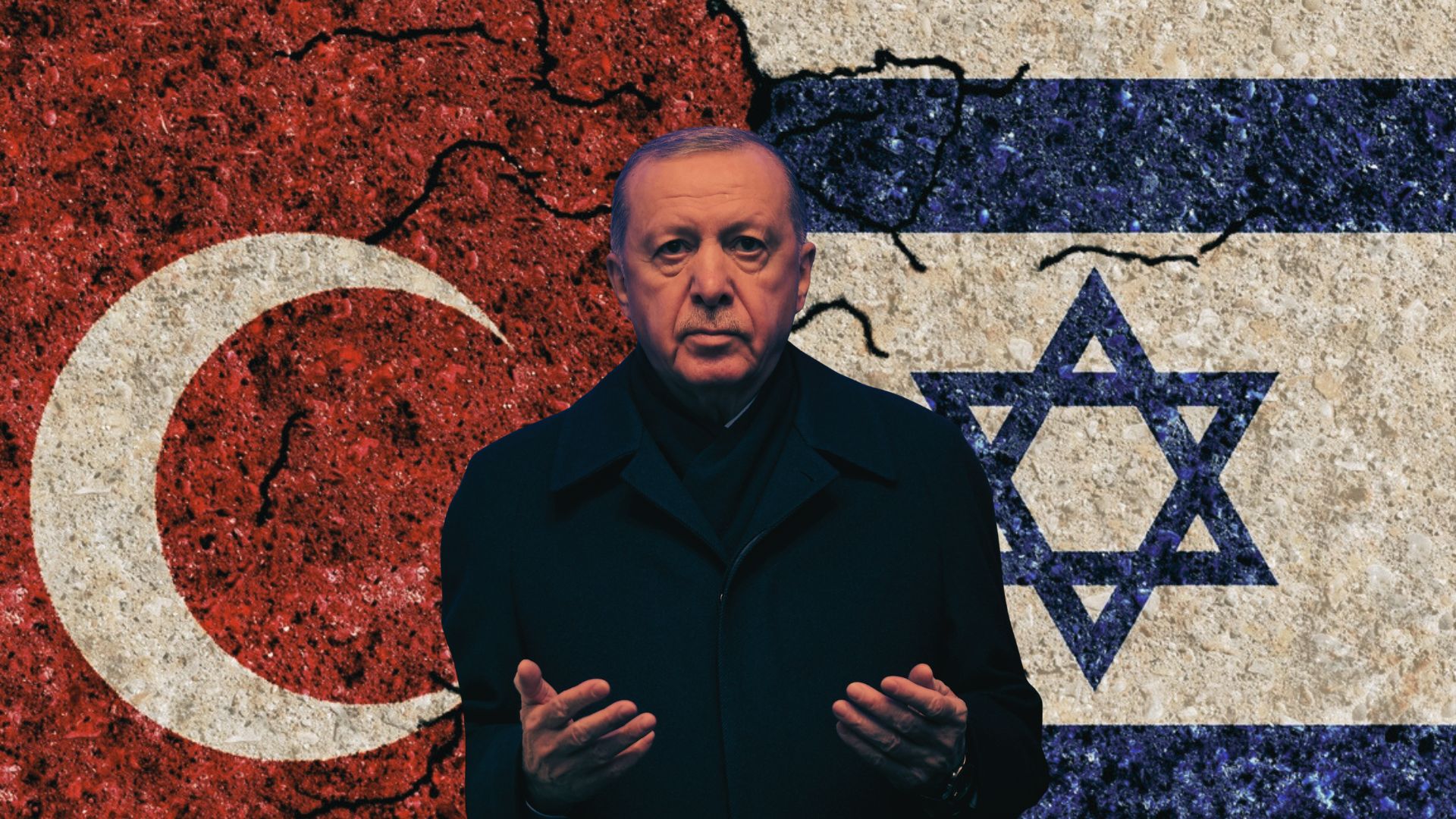
Far beyond straining relations: How Ankara’s legal actions contribute to the deterioration of Israel’s international standing
INSS Insight No. 2101, February 17, 2026
Follow us on GoogleSince the war that erupted on October 7, a profound crisis has unfolded in Turkish–Israeli relations. One of the main manifestations of this crisis is the legal campaign Turkey is waging against Israel. Turkey is operating in this arena to entrench a lasting narrative of Israel’s culpability while refusing to recognize its security needs vis-à-vis a murderous terrorist organization and by portraying Israel as having violated international law, an act that must be punished. The Turkish moves have implications that go beyond the damage to bilateral relations between the two countries, as they knowingly contribute to Israel’s deteriorating standing and its growing diplomatic isolation in the international arena. In addition, this legal campaign will make it extremely difficult for the two countries to improve their relations in the future, as it creates legal obstacles and resentments that will be hard to bridge.
Israeli-Turkish relations have sharply fluctuated in recent decades. However, even in periods of severe tension, such as the Mavi Marmara incident in 2010, it was assumed that these crises could be managed and resolved through diplomatic compromises. That assumption has been undermined since October 7, 2023. Turkey is no longer satisfied with symbolic steps that include harsh rhetoric, public condemnations, and recalling the ambassador for consultations as part of a focused political protest; rather, it is conducting a broad and forceful legal campaign against Israel.
Unlike in the past, when there was a noticeable gap between its extreme discourse and limited institutional action, Turkey is currently running a comprehensive campaign to formalize the accusations against Israel through a series of legal measures and proceedings. The core of the Turkish effort is intended to entrench a narrative of culpability regarding Israel, positioning it not as a state confronting a multi-front security threat and acting within the bounds of state legitimacy but as an international offender whose conduct violates basic norms and international law, posing a regional threat and undermining the global order.
On a practical level, this move is intended in the immediate term to deny Israel room for military and political maneuvering regarding the Gaza Strip; in the longer term, it aims to place Israel in a constant defensive posture and erode its standing as a legitimate actor in the international arena. This is not merely a moral or legal move, nor is it a tactical response solely confined to the war in Gaza; rather, it is a calculated strategic move—embedded in Turkey’s broader ambition to increase its international influence and position itself at the forefront of those calling to reshape the global order.
Establishing the Guilt Narrative
Already in December 2023, Turkey’s President Recep Tayyip Erdoğan compared Israel’s Prime Minister, Benjamin Netanyahu, to Adolf Hitler, and Israel’s actions in the Gaza Strip to those of the Nazis. In March 2024, he referred to Netanyahu and his government as “modern-day Nazis” and called for bringing these “murderers” to justice under international law. He subsequently accused Netanyahu of committing “genocide” in Gaza, claimed that his actions “would make Hitler jealous,” and even described the situation in Gaza as “worse than Nazi camps,” while portraying the West as standing aside and enabling the continuation of the “brutality.”
These accusations systematically fuel the Turkish domestic and international discourse through the extensive activities that Turkey conducts, including through its official media channels, such as the TRT broadcasting corporation and the state news agency Anadolu (whose outputs are also distributed in languages other than Turkish), alongside cultural events, conferences, and public content. The narrative accusing Israel has become a structural component of Turkey’s domestic political discourse, thereby solidifying the state’s position.
What is new is not the use of extreme imagery and Holocaust terminology, elements that accompanied official Turkish discourse in previous rounds of fighting in the Gaza Strip, but the role they play. Unlike in the past, the rhetoric is no longer merely an expression of political anger or protest; it has become a component of Turkish policy, intended to lay a normative foundation through which Ankara seeks to deny Israel the moral legitimacy of its actions. Turkey portrays Israel not as a state confronting a grave security threat from a murderous terrorist organization but as an entity that has crossed the bounds of humanity, committing crimes it equates with those perpetrated by the Nazis against the Jewish people. This framing intentionally downplays the severity of Hamas’s actions and prepares the ground for collective action against Israel, including exceptional punitive measures against it. At the same time, it depicts any Western hesitation or lack of restraint regarding Israel as a moral abandonment of Gaza’s residents, expanding responsibility and blame to the international community beyond Israel itself.
Institutionalizing the Accusations in Courts
Turkey’s shift from rhetorical framing that attributes Israel’s grave international crimes to institutionalizing these accusations is reflected in the legal proceedings that Turkey is pursuing in both international and domestic courts.
In August 2024, Turkey submitted its declaration of intervention to the International Court of Justice (ICJ) in the proceedings filed by South Africa against Israel for violating the Convention on the Prevention of Genocide. In doing so, Turkey moved beyond mere political or declaratory support and positioned itself as an active party in an interstate proceeding against Israel. Simultaneously, Turkey appeared before the ICJ in the advisory opinion proceedings on the “Legal Consequences Arising from the Policies and Practices of Israel in the Occupied Palestinian Territory, including East Jerusalem,” urging the ICJ to declare those policies and practices illegal. It subsequently adopted the ICJ’s determinations regarding the illegality of Israel’s presence in the Palestinian territories as a binding normative basis for public political and legal demands on Israel to end its presence and make reparations to the Palestinians. This is despite the fact that, in principle, the advisory opinion has no binding legal status and constitutes only a recommendation. In addition, Turkey submitted a written statement in the advisory opinion proceedings on the “Obligations of Israel in Relation to the Presence and Activities of the UN, Other International Organizations, and Third States in and in Relation to the Occupied Palestinian Territory,” portraying Israel’s conduct as an ongoing violation of its international humanitarian obligations.
In the context of the International Criminal Court (ICC), Turkey sought to promote personal criminal liability for Israeli decision-makers, despite not being a party to the Rome Statute and not being a member of the ICC. To achieve this, Turkey employed indirect strategies, including the transfer of materials to the ICC, cooperating with the Office of the Prosecutor, publicly supporting the expediting of the ICC’s proceedings and issuing arrest warrants against senior Israeli officials, and framing any delays by the ICC as evidence of institutional failure and Western double standards.
In parallel, Turkey also acted in the domestic legal arena by invoking the principle of universal jurisdiction. On November 7, 2025, the Istanbul Chief Public Prosecutor’s Office announced the issuance of arrest warrants against 37 Israeli figures, including Prime Minister Benjamin Netanyahu and other senior officials, on charges of genocide and crimes against humanity. Although these domestic warrants lack practical enforcement, their significance lies in the ongoing legal threat they create. They limit the movement of senior Israeli officials, discourage other countries and institutions from engaging with Israel, and enhance the criminal framing of Israel in the international arena.
Turkey’s use of the ICJ, the ICC, and domestic law transforms Israel from a target of condemnations and accusations into an actor subject to concrete legal proceedings. This move aims to place Israel and its leadership in the position of a “permanent defendant” in the international arena and to create an accumulating and enduring legal threat, even in the absence of an immediate ruling or actual enforcement, to erode Israel’s legitimacy and constrain its freedom of action.
Activity within the UN and International Forums
At the same time, Turkey is working to expand the pressure on Israel through international and regional institutions and organizations.
Turkey mobilized the Organization of Islamic Cooperation (OIC) to promote a collective stance against Israel and imposed an ongoing veto in NATO on any cooperation with Israel, including meetings, exercises, and coordination mechanisms, conditioning its renewal on ending the war in Gaza. At the NATO summit in July 2024, President Erdoğan presented Israel as a regional and even global destabilizing factor, arguing that as long as Israel does not comply with international law, no country can feel safe, and calling on states to apply further pressure against it.
In the UN, Turkey advanced exceptional and unprecedented measures. It urged the UN General Assembly to recommend the use of force against Israel, in accordance with the 1950 “Uniting for Peace” resolution,[1] in light of the paralysis of the Security Council and the continuation of fighting in the Gaza Strip and Lebanon. Turkey also called for suspending Israel’s membership in the General Assembly and presented Security Council resolutions, as well as the ICJ’s orders and advisory opinions, as a binding legal basis for a ceasefire, placing sole responsibility for the situation in Gaza on Israel while ignoring Hamas’s actions. In the Human Rights Council and related forums, Israel’s policy was labeled as “collective punishment,” “deliberate starvation,” and “genocide,” as part of an institutionalized effort to establish Israel as an international offender.
This effort was also reflected in Turkey’s strong defense of UNRWA. It reinforced its commitment to the agency through an agreement to open an official UNRWA representation in Turkey as early as 2026, while portraying Israel’s cessation of cooperation with the agency as an assault on the international humanitarian system as a whole. In doing so, Turkey shifted the discussion from Hamas’s infiltration of UNRWA’s mechanisms, including the direct involvement of several of its personnel in the October 7 massacre, toward a broader narrative centered on Israel’s alleged non-compliance with the international humanitarian order, as part of a wider strategic objective: to portray Israel as a serial violator of basic international norms.
This strategy was also articulated at the 80th session of the General Assembly in September 2025. In his address to the General Assembly, President Erdoğan called on world leaders to act immediately “in the name of humanity” against what he described as Israel’s ongoing “genocide” in Gaza, presenting it as a systematic pattern of Israel’s violation of basic norms beyond the Palestinian arena. Within this context, Erdoğan described “Israeli aggression” against Syria, Iran, Lebanon, and Yemen as an “expansionist project” that threatens not only the Palestinians but also regional stability and the international order.
This was not incidental. Turkey is systematically working to expand the framework of Israel’s culpability beyond the Palestinian context. In the Lebanese arena, Ankara accused Israel of deliberately escalating and expanding the confrontation, arguing that Israeli strikes in Lebanon demonstrate that Israel’s government does not seek regional stability but rather aims to deepen the conflict. In the Syrian arena, Turkey presented Israel’s actions as a violation of the 1974 Disengagement Agreement and a threat to Syria’s territorial integrity and stability, even warning that further harm to Syria would provoke Turkish opposition. In the Iranian context as well, Ankara has adopted a harsh position. It condemned “Israel’s aggression” against Iran and expressed support for Tehran’s right to self-defense, while simultaneously calling for international pressure on Israel to join the Nuclear Non-Proliferation Treaty (NPT), portraying it as a dangerous outlier that threatens the non-proliferation regime and undermines the norms of global security. Even non-military moves by Israel, such as recognition of Somaliland, were framed by Ankara as “illegal” and “harmful” to regional and global stability.
This track aims to expand the framework of Israel’s culpability beyond Gaza and broaden the perception of the threat it poses to the international order as a whole. Turkey is leveraging UN institutions and international forums to institutionalize a systemic narrative of culpability toward Israel, undermining its standing as a legitimate, equal member of the international community. In doing so, Ankara is seeking to justify collective action against Israel, establish a normative basis for punitive measures, and even its exclusion from the international arena.
Operational Punitive Measures
Turkey has accompanied its legal measures with operational punitive moves, underscoring a significant turning point in Turkish policy toward Israel.
The most significant step has been the suspension of trade with Israel in April–May 2024. Initially, Turkey announced a reduction of exports to Israel by imposing restrictions on 54 categories of goods, including metals, jet fuel, and construction materials. A month later, Ankara declared a comprehensive halt to bilateral trade, both imports and exports. When it became clear that some commercial activity was continuing indirectly through third parties, Turkey tightened its measures and demands regarding Turkish exporters.
In addition, Turkey has restricted its air and maritime space as a diplomatic and commercial-security measure. In November 2024, it did not allow the Wing of Zion aircraft that was intended to fly President Isaac Herzog to the climate conference in Azerbaijan to enter its airspace. Subsequently, limitations were imposed on Israeli airlines, including the refusal to provide services in emergency situations. In August 2025, the measures were intensified: Turkey closed its airspace to official aircraft of the Israeli government and to flights carrying weapons or ammunition to Israel, and imposed restrictions on maritime trade linked to Israel and its ports, including via third countries and third-party companies.
In parallel, the Turkish parliament advanced legislative initiatives and resolutions calling for additional punitive measures. Among other actions, it approved a draft resolution calling for the suspension of Israel’s membership in the UN and urged parliaments worldwide to sever military and commercial ties with Israel. Additionally, an unusual bill was introduced in parliament to revoke citizenship and confiscate property from Turkish citizens who fought in the Israel Defense Forces (IDF) in Gaza. Even if not all initiatives were implemented in practice, advancing them in the parliamentary arena has contributed to normalizing punishment and legitimizing it as a tool in Turkish policy toward Israel.
From Turkey’s perspective, Israel should also finance the full cost of reconstruction in Gaza. President Erdoğan has stated that Gaza could be reconstructed “in a very short time” if the funds were collected from Israel, which bears responsibility for the destruction, an attempt to pave the way for future demands to impose sanctions, seizures, and international legal proceedings even after the fighting ends.
Promoting Non-Institutional Legal Initiatives
Complementary to the official legal initiatives, Turkey has promoted quasi-judicial civil society measures operating outside established institutional frameworks.
The Islamic conference convened in Istanbul in August 2025 is one example. The conference, attended by more than 150 religious scholars and academics from over 50 countries, framed the war in Gaza as “genocide” and as a profound moral crisis requiring a collective response from the Islamic world. It cast humanitarian aid as both a religious and human imperative, thereby mobilizing religious authority as a normative pressure mechanism..
The “Gaza Tribunal,” held in Istanbul in October 2025, is another prominent example. Presented as an independent international civil initiative responding to the alleged “failure” of international justice institutions to halt the “genocide” in Gaza. Over four days, the tribunal heard evidence and testimonies accusing Israel of committing grave international crimes. Ultimately, its “jury” concluded that Israel had committed both “genocide” in Gaza, through systematic violence with intent to exterminate, and grave crimes against humanity, calling on major powers and international institutions to take immediate steps against the state. Although lacking binding legal authority, the tribunal’s evidentiary record and the judgment itself were intended to feed and influence the ongoing proceedings against Israel in international courts.
The choice of Istanbul as the venue for these initiatives is not incidental. This extra-institutional track through which Turkey operates is intended to shape international discourse by supplying an evidentiary foundation and establishing an enduring narrative of Israeli culpability. Beyond influencing the proceedings at international courts, Turkey’s aim is to ensure that pressure on Israel is sustained and potentially intensified, even in the absence of binding legal rulings, when formal institutions delay or refrain from decisive decisions.
Turkish Motivations
Turkey sees itself as having a unique role in the regional and international order and not merely as a state responding to a regional crisis. Its identity as a Muslim state and a NATO member, but critical of the liberal-Western order, has allowed Turkey to position itself as a leading moral voice, strengthening its regional and international standing. In addition to the importance the Turkish government attributes to the Palestinian issue and the broad support for the Palestinian position among the Turkish public in general, and Erdoğan’s electoral base in particular, this issue serves as a platform for positioning Turkey as a voice challenging the West and speaking on behalf of “the oppressed in the world.”
Turkey’s legal and public measures illustrate its willingness to increase pressure on Israel, even at the cost of harming its own economic interests and creating friction with additional actors. Turkey is exploiting Israel’s current diplomatic weakness. The war in Gaza has created an international environment in which harsh criticism of Israel has become normative, multilateral institutions are in partial paralysis, and the diplomatic cost of confronting Israel has decreased. Concurrently, engagement across multiple arenas has reduced Israel’s ability to respond forcefully to external actions.
At the same time, Ankara anticipates that international pressure on it will decline, particularly in the Kurdish context. Turkey, which has faced terrorism threats and for years was subject to international criticism primarily over its conduct toward the Kurds, now permits itself to criticize Israel on the basis of international law. Three influencing factors can be identified in this context: First, the Turkish government may have assessed that it will need fewer harsh measures against the Kurds since the level of violence against them has declined in recent years, and the Kurdish underground announced in May 2025 that it was disbanding and, in particular, disarming. Additionally, the good interpersonal relations between Erdoğan and President Trump provide Turkey with broad diplomatic maneuvering space and also assist it in its struggle against Kurdish-led autonomy in northeastern Syria. Finally, although Turkey points to the hypocrisy of the international system in failing to adhere to principles of international law, in practice, Turkey benefits from the loosening of the international order established after World War II and may assess that no one will take steps against it in the manner it encourages other actors to act against Israel.
Implications Going Forward
The scope and nature of the steps Turkey has taken since October 7 dramatically reduce the space for relations between it and Israel and indicate a shift from managed estrangement to de facto strategic severance, even if not in an official manner. In this context, the possibility of rapidly returning to cooperation, even if limited, appears slim.
Whereas in the past, even during periods of severe tension, “islands” of cooperation were maintained between the two countries, enabling crisis management and even a gradual return to normalization, today Turkey’s legal moves and punitive steps have struck at the core of the relationship. Currently, the erosion of trade ties, together with the personalizing of the confrontation through the issuance of arrest warrants against Prime Minister Netanyahu and other senior officials, precludes the continued routine management of relations. This damage will significantly complicate the reconstruction of relations, even when compared to the period of acute crisis between the countries following the Mavi Marmara incident, which also had legal dimensions.
Turkey’s strategy is closely linked to the debate over the “day after the war” in the Gaza Strip. In fact, it also serves as a tool for shaping future realities. Turkey seeks to position itself as a legitimate and central actor in the political-security arrangement in Gaza. Ankara joined the Board of Peace (BoP), the body responsible for supervising and implementing Trump’s 20-point plan, and also secured official representation at a senior political level with a seat for Foreign Minister Hakan Fidan on the Gaza Executive Board. This involvement gives Turkey an opportunity to influence the mandate and composition of the International Stabilization Force (ISF), potentially affecting Israel’s freedom of action.
In this context, Turkey’s measures play a dual role: They increase pressure on Israel in the international arena and provide Ankara with a future bargaining chip regarding the design of governance and security mechanisms in the Gaza Strip. The more isolated Israel is perceived to be, the greater Turkey’s influence will be in discussions about international arrangements. For Israel, a Turkish military presence in Gaza, even within an international framework, is seen as a red line. Ankara’s ideological stance toward Hamas and its direct confrontation with Israel since October 7 render Turkey a non-neutral and even hostile actor. From Israel’s perspective, the question of the ISF and Turkish involvement is not merely a tactical issue tied solely to the Gaza Strip but rather a strategic juncture reflecting the depth of the change in Turkey–Israel relations.
[1] UN General Assembly Resolution 377(V) of 1950 authorizes the General Assembly to formulate recommendations to UN member states regarding collective and operational measures, including the use of force, in cases where the Security Council reaches a “deadlock” due to a veto imposed by one of the permanent members.