


Publications
At the last minute, a tweet by the United States Embassy in Ankara resolved a diplomatic crisis between Turkey and ten Western countries. Why did the United States decide to offer Erdogan a way out – and why did Turkey’s President agree to take it? What future developments might heighten the tension between Ankara and the West?
INSS Insight No. 1531, November 7, 2021
Follow us on GoogleThe threat by Turkish President Recep Tayyip Erdogan to declare ambassadors from ten Western countries, including seven NATO members, as “personae non gratae” had the potential to become a severe diplomatic crisis between Ankara and the said countries. The diplomatic way out came in a tweet from the United States Embassy, which was retweeted or similarly worded on the Twitter accounts of the other embassies, whereby the United States operates under Article 41 of the Vienna Convention (1961) regarding non-interference of the diplomatic representative in the internal affairs of the host country. The diplomatic exit given to Erdogan is related to the difficulty of clashing head on with Ankara, which in recent years has emerged as a problematic ally within NATO. This incident is not expected to be the last between Ankara and Western capitals; another possible entry by Turkey into northern Syria, and challenges posed by the US Congress to the sale of F-16s to Turkey may well be the next crises. Erdogan’s defiant policy is often directed against Israel as well, so Jerusalem must continue to monitor Ankara’s conduct closely.
The recent crisis between Western embassies and the Turkish government began when a statement was issued on October 18, 2021 by ten ambassadors, marking the fourth anniversary of Osman Kavala's imprisonment and calling for his release. Kavala is a Turkish businessman and philanthropist who used the large fortune he inherited to promote liberal organizations and encouraged, inter alia, discussions on sensitive issues in Turkish society, including recognizing the genocide against Armenians and the Turkish state's attitude toward the Kurdish minority. Over time, his activities clashed more and more directly with the changing policies of the Turkish government and President Recep Tayyip Erdogan. Erdogan and his supporters call Kavala "the Turkish Soros," claiming he uses his fortune to support terrorism, weaken the Turkish state, and undermine its stability and sovereignty. In 2017, the billionaire was charged with organizing the Gezi Park protests in 2013 – the largest protests against Erdogan to date, which are portrayed by the regime as violations of law involving terrorist elements. He was arrested and his detention was extended until he was acquitted by the court in February 2020. Before Kavala was released, however, the prosecution opened another case against him, claiming he was involved in the 2016 coup attempt. The State Attorney's Office also appealed the court's decision in the Gezi Park case, and the hearings on the matter were resumed in 2020. These processes, and the fact that Kavala has been imprisoned for more than four years, have made him a symbol for opponents of Erdogan in Turkey and abroad. Kavala has been portrayed as a philanthropist who only tried to promote liberal values in his country and fell victim to the Turkish government's authoritarian leanings in recent years. This position was reinforced by the European Court of Human Rights, which stated that the purpose of Kavala's detention was to silence him, and in 2019 ruled that Turkey should release him; Turkey is subject to the decisions of the tribunal by virtue of its ratification of the European Convention on Human Rights in 1954.
As of today, Osman Kavala has been detained for four years. His ongoing case has cast a shadow over democracy and rule of law in Turkey.
Today, the United States together with 🇩🇪🇫🇷🇳🇿🇨🇦🇫🇮🇸🇪🇳🇴🇩🇰call for his release! See our full statement here: https://t.co/fCs5Lk5BCW pic.twitter.com/eyOq1loSM3
— U.S. Embassy Turkey (@USEmbassyTurkey) October 18, 2021
Ambassadors of the ten countries who signed the declaration (United States, France, Germany, Canada, New Zealand, Denmark, Netherlands, Norway, Sweden, and Finland) were summoned for reprimand calls at the Foreign Ministry. Erdogan, however, did not content himself with this move and stated on October 23 that he instructed the Foreign Minister to declare the ambassadors as "personae non gratae" – a move that would have led to their deportation from Turkey. On October 25, the United States Embassy in Ankara tweeted that regarding questions raised by the October 18 statement, “the United States notes that it maintains compliance with Article 41 of the Vienna Convention on Diplomatic Relations” (1961), i.e., the adoption of laws in the host country and non-interference in its internal affairs. This message was later retweeted or similarly worded in the accounts of the nine other embassies. The Turkish side satisfied itself with this announcement, and thus the threat of declaring the ambassadors as personae non gratae was removed.
It is difficult not to connect Erdogan's initial decision against Western ambassadors with his political situation at home and abroad. In the international arena, Turkey's situation is delicate. Relations between Ankara and Washington have been sensitive since Turkey's acquisition of the S-400 air defense system from Russia in 2017, and even more so since the election of Joe Biden to the White House. Relations between Turkey and its European neighbors are also strained. In this context, Erdogan's announcement of the expulsion of the ambassadors can be seen as a way of expressing his frustration with the Western countries and increasing Turkish leverage, while Ankara intends to negotiate with both the EU and Washington. At the domestic level, the Turkish President has faced many challenges in recent months. His economic policy, whereby it is important to lower interest rates at all costs, has led to a steady decline of the Turkish lira, severely harming the economic situation of Turkish citizens. This situation and the effective organization of opposition parties have hurt Erdogan's popularity. For several months polls have indicated a drop in public support, and suggest that he might not win the next presidential election, which is scheduled for 2023. In this context, his severe threat against Western ambassadors was a way to divert Turkish public attention from the decision by the Governor of the Turkish Bank to lower interest rates that exacerbated the currency value crisis, by trying to stir up national sentiment.
— U.S. Embassy Turkey (@USEmbassyTurkey) October 25, 2021
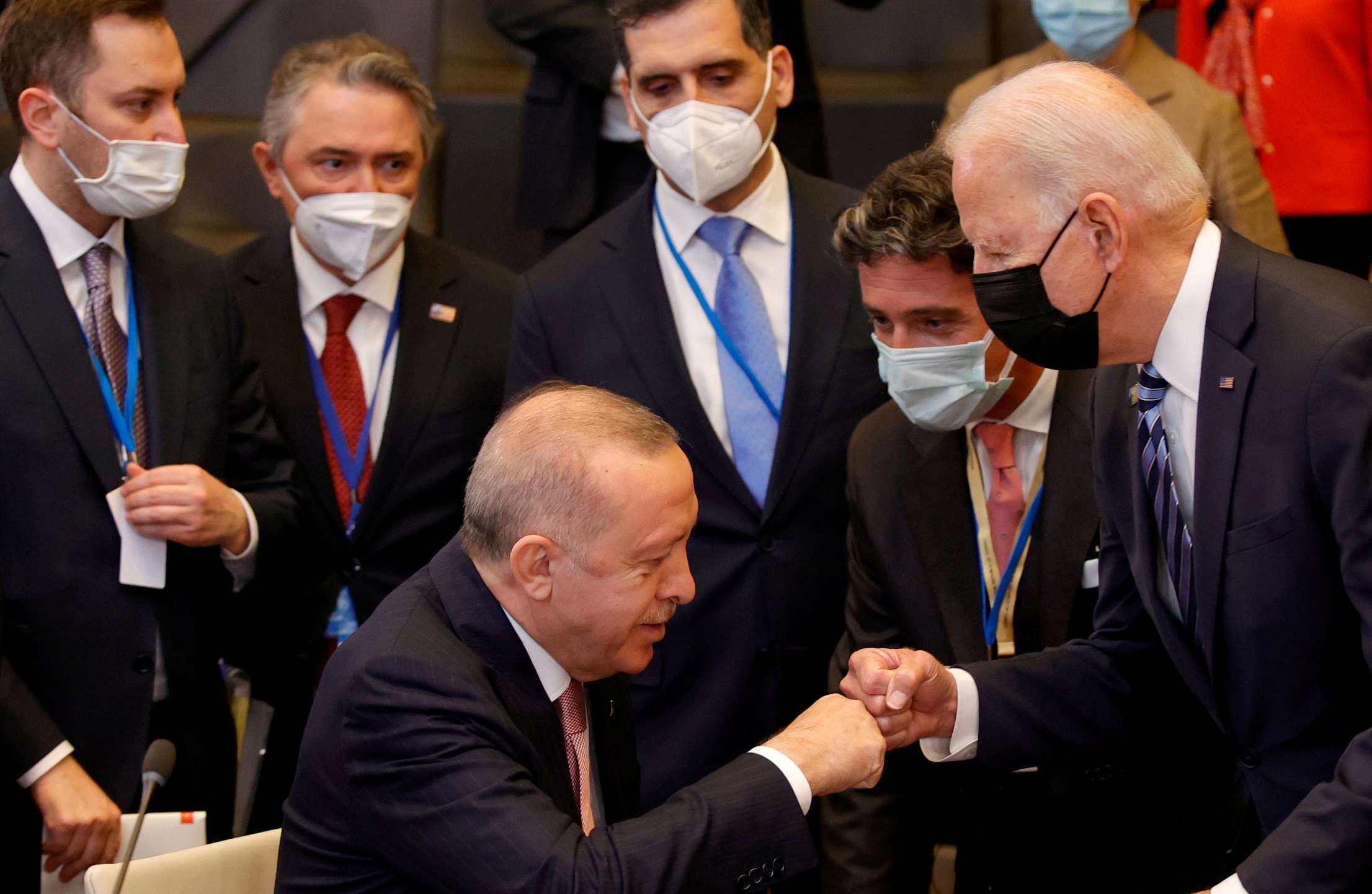
The decision not to expel the ambassadors can be interpreted in different ways. In the West as well as in the Turkish opposition, the way in which the crisis was resolved is seen as a retreat by Erdogan, who feared taking an extreme diplomatic move against countries that are important to Turkey economically and politically. Proponents of this narrative recall the sharp drop in the value of the Turkish lira caused by the diplomatic crisis, which halted after the crisis ended. It also suggests a critical role within Turkey’s decision making system played by Foreign Ministry officials – perhaps it was even the Foreign Minister himself who restrained Erdogan. However, the Turkish president, who said “I am on the offensive” and that “there is no stepping back in my (play)book," claims that it was the ambassadors who cowered under attack. The Turkish leadership presents the US embassy announcement regarding the Vienna Convention as acknowledgment of their mistake, and claims that it stood effectively in defense of Turkish dignity and sovereignty. The Turkish Foreign Minister claimed that some of the ambassadors took Erdogan's first declaration so seriously that they "started packing," noting that they had "learned a lesson" from the incident. Despite the end of the crisis, the ambassadors of the countries were not invited to the President's reception on October 29, Republic Day of Turkey. On the other hand, the Turkish Foreign Minister repeatedly told the local media that the statement by Western ambassadors was not an initiative of a government or leader, and especially not of US President Joe Biden, but of a "group of young diplomats" who initiated the move. The purpose of these remarks was to lower the flames in the face of Western governments and leaders, and in particular Americans, in light of meetings that were expected on the sidelines of the G-20 conference and the climate conference in Glasgow. Erdogan, who ultimately did not travel to Glasgow, met with Biden during the G-20 conference on October 31 and raised a number of sensitive issues, but at the end of the meeting did not announce significant progress toward their resolution.
The desire of Western countries to reach a quick solution to the ambassadorial crisis reflects their difficulty in engaging in a head-on confrontation with Turkey due to its being a NATO member and an important trading partner for some. Moreover, to the EU, the four million refugees (mostly from Syria) who are in Turkey is a deterrent regarding a conflict with Ankara, out of a fear that similar to what happened in 2015, when about a million Syrian refugees arrived in EU countries, and in particular Germany, Turkey will not stop the refugees from moving from its territory toward Europe. In June 2021, the President of the European Commission, Ursula von der Leyen, announced her intention to transfer to Ankara some three billion euros for the care of refugees by 2024, in addition to the six billion euros already transferred since 2016. Furthermore, that Italy, Spain, and the United Kingdom did not join the Kavala statement indicates that there is no complete consensus in the West, NATO, and even in EU ranks regarding behavior toward Turkey, and that there are Western countries that for various reasons seek to cultivate ties with Ankara that are less tense.
It can be estimated that at least until the 2023 Turkish parliamentary and presidential elections, Erdogan's willingness to pursue a defiant policy against Western countries will remain high, and it is not certain that those who restrained Erdogan and found a creative way to resolve this crisis will be able to prevent the next one. Already now it seems that one issue that could spark tensions in the near future is another possible entry of Turkey into northern Syria, which is a threat to the Kurdish autonomous presence that still exists there. Another issue is the continued tension over the Turkish acquisition of the S-400 air defense system from Russia (and the intention to purchase another system of this type), as well as the ouster of Turkey from the F-35 project. Following the US refusal to complete the sale of the F-35s, Turkey is interested in purchasing 40 new F-16s and upgrading another 80 already in its possession. Congress, however, is expected to create difficulties for the purchase. These objections are despite the fact that it is important that Ankara continue to rely on Western weapon systems as a way to strengthen its participation in NATO’s future activities. One of the other arenas where defiant Turkish policy is expected is the Eastern Mediterranean. This arena, which is also of increasing importance to Israel, is anticipated to create further difficulties vis-à-vis the European Union, given that Greece and the Republic of Cyprus are EU members. Because Erdogan's frustration with the West and his defiant policies are often directed against Israel, Jerusalem must closely monitor Ankara's conduct.