Diplomacy or Driving a Hard Bargain? Lessons from the Negotiation that Led to the Iran Nuclear Deal | INSS
go to header go to content go to footer go to search
INSS logo The Institute for National Security Studies, Strategic, Innovative, Policy-Oriented Research, go to the home page
INSS
Tel Aviv University logo - beyond an external website, opens on a new page
  • Campus
  • Contact
  • עברית
  • Support Us
  • Research
    • Topics
      • Israel and the Global Powers
        • Israel-United States Relations
        • Glazer Israel-China Policy Center
        • Russia
        • Europe
      • Iran and the Shi'ite Axis
        • Iran
        • The Israel–Iran War
        • Lebanon and Hezbollah
        • Syria
        • Yemen and the Houthi Movement
        • Iraq and the Iraqi Shiite Militias
      • Conflict to Agreements
        • Israeli-Palestinian Relations
        • Hamas and the Gaza Strip
        • Peace Agreements and Normalization in the Middle East
        • Saudi Arabia and the Gulf States
        • Turkey
        • Egypt
        • Jordan
      • Israel’s National Security Policy
        • Military and Strategic Affairs
        • Societal Resilience and the Israeli Society
        • Jewish-Arab Relations in Israel
        • Climate, Infrastructure and Energy
        • Terrorism and Low Intensity Conflict
      • Cross-Arena Research
        • Data Analytics Center
        • Law and National Security
        • Advanced Technologies and National Security
        • Cognitive Warfare
        • Economics and National Security
    • Projects
      • Preventing the Slide into a One-State Reality
      • Contemporary Antisemitism in the United States
      • Perceptions about Jews and Israel in the Arab-Muslim World and Their Impact on the West
  • Publications
    • -
      • All Publications
      • INSS Insight
      • Policy Papers
      • Special Publication
      • Strategic Assessment
      • Technology Platform
      • Memoranda
      • Posts
      • Books
      • Archive
  • Database
    • Surveys
    • Spotlight
    • Maps
    • Dashboards
  • Events
  • Team
  • About
    • Vision and Mission
    • History
    • Research Disciplines
    • Chairman of the Board
    • Board of Directors
    • Fellowship and Prizes
    • Internships
  • Media
    • Communications
    • Video gallery
    • Press Releases
  • Podcast
  • Newsletter
  • Campus
Search in site
  • Research
    • Topics
    • Israel and the Global Powers
    • Israel-United States Relations
    • Glazer Israel-China Policy Center
    • Russia
    • Europe
    • Iran and the Shi'ite Axis
    • Iran
    • The Israel–Iran War
    • Lebanon and Hezbollah
    • Syria
    • Yemen and the Houthi Movement
    • Iraq and the Iraqi Shiite Militias
    • Conflict to Agreements
    • Israeli-Palestinian Relations
    • Hamas and the Gaza Strip
    • Peace Agreements and Normalization in the Middle East
    • Saudi Arabia and the Gulf States
    • Turkey
    • Egypt
    • Jordan
    • Israel’s National Security Policy
    • Military and Strategic Affairs
    • Societal Resilience and the Israeli Society
    • Jewish-Arab Relations in Israel
    • Climate, Infrastructure and Energy
    • Terrorism and Low Intensity Conflict
    • Cross-Arena Research
    • Data Analytics Center
    • Law and National Security
    • Advanced Technologies and National Security
    • Cognitive Warfare
    • Economics and National Security
    • Projects
    • Preventing the Slide into a One-State Reality
    • Contemporary Antisemitism in the United States
    • Perceptions about Jews and Israel in the Arab-Muslim World and Their Impact on the West
  • Publications
    • All Publications
    • INSS Insight
    • Policy Papers
    • Special Publication
    • Strategic Assessment
    • Technology Platform
    • Memoranda
    • Posts
    • Books
    • Archive
  • Database
    • Surveys
    • Spotlight
    • Maps
    • Dashboards
  • Events
  • Team
  • About
    • Vision and Mission
    • History
    • Research Disciplines
    • Chairman of the Board
    • Board of Directors
    • Fellowship and Prizes
    • Internships
    • Privacy Policy and Terms of Use
  • Media
    • Communications
    • Video gallery
    • Press Releases
  • Podcast
  • Newsletter
  • Campus
  • Contact
  • עברית
  • Support Us
bool(false)

Publications

Home Publications INSS Insight Diplomacy or Driving a Hard Bargain? Lessons from the Negotiation that Led to the Iran Nuclear Deal

Diplomacy or Driving a Hard Bargain? Lessons from the Negotiation that Led to the Iran Nuclear Deal

INSS Insight No. 1004, December 31, 2017

עברית
Emily B. Landau
Gilead Sher
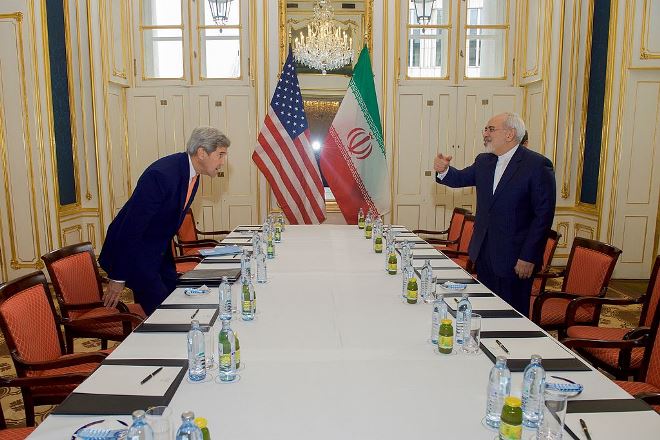
U.S. Secretary of State John Kerry takes his seat across from Iranian Foreign Minister Javad Zarif on January 16, 2016, before a meeting about the implementation of the Joint Comprehensive Plan of Action.

President Trump’s critical stance on the Iran nuclear deal has invited pundits and analysts to take a second look at the P5+1 negotiation process that led to the Joint Comprehensive Plan of Action (JCPOA). In fact, the JCPOA has been the topic of heated debate since its inception, among strong supporters and determined critics alike. But a closer look at the negotiations process itself – rather than an examination solely of the outcome – provides insights and lessons that could affect policy planning and future contacts with both Iran and North Korea.


In presenting the US National Security Strategy document on December 18, 2017, President Trump referred to his predecessors as leaders who “made a disastrous, weak, and incomprehensibly bad deal with Iran,” and determined that Iran has the potential to resume its work on nuclear weapons. These remarks, along with the upcoming mid-January decision benchmark for the President on whether to sign waivers on the sanctions on Iran, make an analysis of the Joint Comprehensive Plan of Action (JCPOA) negotiation process particularly salient at this time.

The Center for Applied Negotiations and the Arms Control and Regional Security program at INSS invited leading experts from academia, media, and security circles for a seminar on the negotiations with Iran. These negotiations - which led to the JCPOA - involved a months-long effort to put a stop to Iran’s NPT-violating military nuclear activities by dismantling its (dual-use) uranium enrichment and heavy water reactor infrastructure. Despite the substantive leverage that the P5+1 possessed at the outset, the resulting JCPOA fell short of that goal.

For senior investigative journalist Jay Solomon, the puzzle was how Iran went from a weak negotiating position to attainment of such a good deal from its perspective. In 2012 Iran faced an economic crisis that threatened the regime, feared a possible Israeli attack, and was concerned about the collapse of the Assad regime. By July 2015 Iran had secured a deal that alleviated all of these concerns (re Assad, in 2013 Obama refrained from attack in Syria against the backdrop of Iranian threats to leave the negotiation if it did), and left it with its nuclear infrastructure intact, seemingly against all odds. How was this possible? Solomon identified five main reasons: Obama’s own fear  of Israeli attack that pushed him to engage diplomatically; the shift in the “DNA” of key personnel from the first Obama administration to the second, with Kerry significantly less hawkish on Iran than Clinton; Kerry’s domination of the negotiations, which was not planned in advance; Obama’s sense that the negotiation was a key to his legacy, which meant that Iran could hear the ticking clock; and the fact that Iran and Russia were working together behind the scenes of the negotiation.

Additional insights emerged in a moderated panel discussion. It was argued that when confronting a determined nuclear proliferator like Iran, the specific negotiations structure requires that the international negotiators compel the state that violated its commitment to remain non-nuclear according to the NPT, to reverse course, and to return to the fold of the treaty. The fact that the P5+1 sought this result through dialogue (without employing military force) did not mean that the effort would not require a forceful approach. However, at the negotiating table, the international negotiators began making concessions to Iran in order to secure a deal, and in the hope that a more cooperative approach on their part would elicit a similar response from Iran. That did not happen, because in contrast to the P5+1, Iran worked with the knowledge that it was engaged in a hard bargaining situation, and that only tough bargaining tactics would enable it to achieve its goal of maximum sanctions relief in return for minimal nuclear concessions. From this bargaining position, concessions from the other side sent only one message: that the bargaining partner had “blinked” first, exposing the extent to which it desired, and indeed was dependent on a deal. The concessions that were offered also signaled to Iran that more concessions could be extracted. In assessing the JCPOA itself, it was noted that while the Obama administration insisted that this deal was better than no deal at all, that assertion was nevertheless contentious, mainly due to the “sunset provisions” that dictated the expiration of key restrictions, beginning in 7-8 years. At that time Iran will be able to build up a vast nuclear infrastructure.

An opposing view contended that Obama actually scored a major success vis-à-vis Iran in his use of soft power. This is the one form of power that the Iranian regime has no effective tools to confront, so Obama was correct to purposely direct messages to the Iranian people, thereby frightening the regime. It is this fear that brought Iran to the table looking for a deal. Moreover, Obama sincerely believed in diplomacy, and in the positive effect of demonstrating to Iran a cooperative American approach. Israel’s threat to employ military force only strengthened Obama’s determination to reach a deal at almost any cost – he knew that if Israel followed through on the threat, the US could easily be pulled into military conflict as well, which Obama sought to avoid.

There was some disagreement among panelists over whether since the deal was implemented Iran has opened its military nuclear facilities to inspections. The inability to make a firm call confirms that since implementation of the nuclear deal, there is (ironically) much less transparency in the public domain regarding Iran’s nuclear activities, due to confidentiality rights that Iran was granted. It was also pointed out that if inspections at military facilities are conducted and a violation is found, the P5+1 will have little political will to actually confront Iran on such a violation.

In the closing keynote address, former Defense Minister Moshe (Bogie) Ya’alon characterized the problem in the negotiation from Israel’s perspective: Iran came to the negotiations on its knees because of the pressure that was applied, but what an outside observer of the negotiation saw is that it was rather the US that looked to be on its knees. This was hardly an auspicious starting point for the P5+1 in conducting such a difficult negotiation. Ya’alon also related to the comparison with North Korea, pointing out that diplomacy has failed in both cases. A nuclear Iran, however, would be much more dangerous than North Korea due to its hegemonic regional ambitions, and once free of sanctions, Iran was in effect granted legitimacy to expand its regional influence across the Middle East. Iran seeks the immunity from attack that nuclear status will in effect grant the regime. Ya’alon’s advice is not to open the deal, but to begin a campaign to restore the level of pressure that the regime faced in 2013, on issues not covered by the deal.

Final remarks were delivered by INSS Executive Director Amos Yadlin who assessed the nuclear deal as positive in the short term but extremely problematic in the long term. He noted that the US and Iran negotiated with different timeframes in mind: whereas the US was looking to the end of Obama's second term, Iran was thinking decades into the future. Secretary Kerry's assumption had been that by the time that sunset clauses come into effect, they will not present a serious threat because the nature of the Iranian regime will have fundamentally changed, but what we have seen since the deal was signed is a more aggressive Iran.  He concluded by stressing the need for greater US-Israel coordination on the Iranian threat, including a parallel deal between the US and Israel that would cover both nuclear and conventional realms.

From Israel’s national security perspective, its absence from the JCPOA negotiation rooms requires that it reach bilateral understandings with the United States on issues such as what would be regarded as a significant violation of the agreement by Iran. Otherwise, Israel will have little or no influence on any future policy planning and negotiation processes.

The opinions expressed in INSS publications are the authors’ alone.
Publication Series INSS Insight
TopicsIran
עברית

Events

All events
Israel–U.S. Relations: An Alliance in Transition?
22 December, 2025
13:00 - 16:00

Related Publications

All publications
The Second “Imposed War”: The Israel–Iran War and Its Implications for Iran’s National Security
The 12-day war between Iran and Israel in June 2025 marked the sharpest escalation to date in the ongoing confrontation between the two states. Despite its relatively short duration, the war had a destabilizing effect on the Islamic Republic due to the success of Israel’s opening strike, the decision of the United States to join the campaign, and the damage sustained by Iran’s critical strategic systems—notably its nuclear program and long-range missile arsenal. Since the end of the war, Iran has engaged in an ongoing process of drawing lessons from the serious gaps revealed in the Islamic Republic’s deterrence and defense capabilities. The Iranian leadership is certainly aware of the need for improvements and adjustments to its national security doctrine; yet for now, this does not appear sufficient to produce a fundamental shift in Iranian strategy. It seems that Iran prefers to make adjustments within the existing framework by finding acceptable solutions to the gaps exposed rather than introducing major changes to its overall strategy. In any event, the new reality in Iran created by the war is characterized by instability, and it is doubtful whether the current status quo can endure for long. This is exacerbated by the growing possibility of a miscalculation between Iran and Israel that would lead to renewed clashes, or high-risk decisions by Iran on both the nuclear issue and on the regional front. This memorandum seeks to examine the lessons that Iran is drawing from the war and its implications in four main areas: the nuclear program, strategic military systems, the regional arena, and the domestic arena—and to assess how the war has influenced Iran’s national security concept. In addition, it includes a set of policy recommendations intended to block, or at least delay, Iran’s efforts to rebuild its strategic capabilities, foremost among them the nuclear program, and the pro-Iranian axis in the region, and to reduce as much as possible the risk of renewed fighting.
20/12/25
Aircraft Under the Radar: Mechanisms of Evading Sanctions in Iran’s Aviation Sector
Despite being subjected to one of the harshest sanctions regimes in the world, Iran has succeeded in building a sophisticated, law-evading mechanism to support its aviation industry, which reflects the broader principles of the shadow economy it has developed. This article maps the operational architecture of that mechanism, based on using front and shell companies in countries with little transparency, layered ownership registries, bursts of activity designed to complete transfers within short timeframes, and flight-path planning that includes fictitious emergency landings to allow aircraft to quietly enter Iran. The article describes how Iran’s aviation sector—significantly harmed by sanctions—has shifted from a civilian transportation tool to a core component of the regime’s economic and security strategy, enabling it to continue functioning, finance its regional proxies, and project resilience in the face of international pressure. The aviation industry represents only one link in a much larger apparatus designed to evade sanctions in the trade of oil, gold, and dual-use technologies; yet the aviation sector clearly demonstrates the method: a sophisticated integration of state, market, and underground networks that operate in regulatory gray zones and disrupt efforts to globally enforce the sanctions.
17/12/25
Iranian Supreme Leader'S Office via ZUMA Press Wire
The Deadlock Surrounding Iran’s Nuclear Program
The solution to the crisis surrounding the Iranian nuclear program is nowhere in sight, and the ticking clock is forcing Tehran to make fateful decisions
09/12/25

Stay up to date

Registration was successful! Thanks.
  • Research

    • Topics
      • Israel and the Global Powers
      • Israel-United States Relations
      • Glazer Israel-China Policy Center
      • Russia
      • Europe
      • Iran and the Shi'ite Axis
      • Iran
      • The Israel–Iran War
      • Lebanon and Hezbollah
      • Syria
      • Yemen and the Houthi Movement
      • Iraq and the Iraqi Shiite Militias
      • Conflict to Agreements
      • Israeli-Palestinian Relations
      • Hamas and the Gaza Strip
      • Peace Agreements and Normalization in the Middle East
      • Saudi Arabia and the Gulf States
      • Turkey
      • Egypt
      • Jordan
      • Israel’s National Security Policy
      • Military and Strategic Affairs
      • Societal Resilience and the Israeli Society
      • Jewish-Arab Relations in Israel
      • Climate, Infrastructure and Energy
      • Terrorism and Low Intensity Conflict
      • Cross-Arena Research
      • Data Analytics Center
      • Law and National Security
      • Advanced Technologies and National Security
      • Cognitive Warfare
      • Economics and National Security
    • Projects
      • Preventing the Slide into a One-State Reality
      • Contemporary Antisemitism in the United States
      • Perceptions about Jews and Israel in the Arab-Muslim World and Their Impact on the West
  • Publications

    • All Publications
    • INSS Insight
    • Policy Papers
    • Special Publication
    • Strategic Assessment
    • Technology Platform
    • Memoranda
    • Database
    • Posts
    • Books
    • Archive
  • About

    • Vision and Mission
    • History
    • Research Disciplines
    • Chairman of the Board
    • Board of Directors
    • Fellowship and Prizes
    • Internships
    • Support
    • Privacy Policy and Terms of Use
  • Media

    • Communications
    • Video Gallery
    • Press Release
    • Podcast
  • Home

  • Events

  • Database

  • Team

  • Contact

  • Newsletter

  • עברית

INSS logo The Institute for National Security Studies, Strategic, Innovative, Policy-Oriented Research, go to the home page
40 Haim Levanon St. Tel Aviv, 6997556 Israel | Tel: 03-640-0400 | Fax: 03-744-7590 | Email: info@inss.org.il
Developed by Daat A Realcommerce company.
Accessibility Statement
This site is protected by reCAPTCHA and the Google Privacy Policy and Terms of Service apply.
No audio version available for this podcast