


Publications
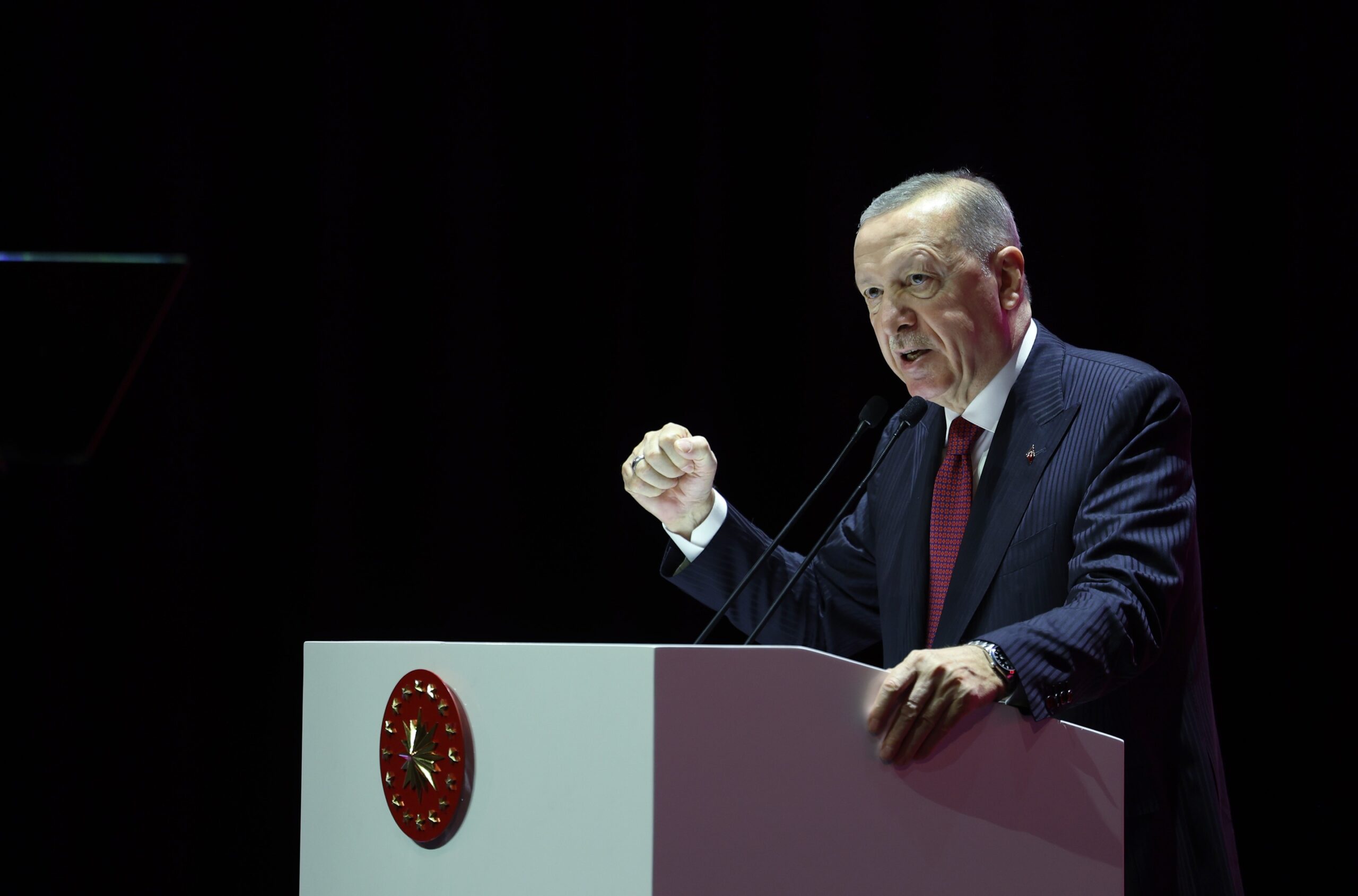
The statements and actions of Erdoğan toward Israel raise concerns that “Turkey is the new Iran”—but is this the correct analogy for the Turkish threat?
INSS Insight No. 2061, November 18, 2025
Over the past year, Turkey has been increasingly described as “the new Iran” in Israeli public discourse. Although this characterization is problematic in several respects—including because it downplays the Iranian threat, which remains in force, and because Turkey is a NATO member—it nonetheless reflects concerns about Ankara. Israel is particularly worried by Turkey’s military presence in Syria, Ankara’s involvement in the Palestinian issue, and the potential for friction in the Eastern Mediterranean. In addition, Turkey is growing militarily stronger, expresses extremely critical positions toward Israel, and even employs a delegitimizing discourse against it. At the same time, American involvement in reducing tensions between Israel and Turkey, which is already underway and will be required in the future, is expected to help both states continue their efforts to avoid a direct military confrontation and perhaps even move toward improving their bilateral relations.
In the past year, statements such as “Turkey is the new Iran” have become increasingly common in Israeli public discourse. This statement is problematic, as it downplays the ongoing Iranian threat and overlooks the fact that diplomatic relations and intelligence cooperation—albeit limited—still exist between Israel and Turkey. Moreover, Turkey is a NATO member, maintains close relations with the West, and shows no indication of attempting to establish a network of proxies against Israel. Nevertheless, such statements reflect Israel’s concerns about Ankara in several areas. Most of these relate to Turkey’s growing presence in Syria following the collapse of the Assad regime, as well as its influence on post–ceasefire arrangements in Gaza, particularly if those arrangements include a military presence within an international stabilization force in the Strip. A less-discussed arena with significant potential for friction is the Eastern Mediterranean, where Turkey has the advantage of the strength of its navy. In addition, Turkey’s military buildup, which is bolstered by Ankara’s increasing standing in Washington and other Western capitals, together with its harsh rhetoric toward Israel, further contributes to Jerusalem’s unease.
In the Gaza Strip, the main tension between Israel and Turkey stems from Ankara’s position that Hamas remains a significant actor in postwar Gaza, even if only behind the scenes. Throughout the war, Israel opposed giving Turkey a significant role in the talks aimed at reaching a ceasefire, based on Israel’s recognition that Turkey, alongside Qatar, is one of Hamas’s supporters and that there was no indication of any reassessment in Ankara regarding its support for the organization following the October 7 massacre. On the contrary, Turkish President Recep Tayyip Erdoğan has declared repeatedly that Hamas is a “resistance” movement and not a terrorist organization.
Turkey’s statements during the war were particularly critical of Israel, even when compared with other states that adopted harsh rhetoric. At the conclusion of Ramadan in March 2025, Erdoğan cursed that “If only Allah would destroy the Zionist Israel”—a statement that delegitimizes Israel’s very existence and is no longer unusual in Turkish discourse. In fact, this tone has only intensified. In August 2024, Turkey joined South Africa’s lawsuit against Israel at the International Court of Justice in The Hague, accusing Israel of genocide. Furthermore, on November 7, 2025, the Istanbul prosecutor’s office issued arrest warrants for 37 senior Israeli officials—including the prime minister, the defense minister, the national security minister, and the IDF chief of staff—on charges of war crimes, crimes against humanity, and genocide.
At the same time, Turkey played an important role in pressuring Hamas to agree to the ceasefire in October and to release the Israeli hostages held by the organization. At the Peace Summit held in Sharm el-Sheikh, US President Donald Trump expressed about Erdoğan that “he’s always there when I need him.” Trump sees Erdoğan as someone capable of resolving regional problems and “ending wars,” and he has credited the successful release of all the living hostages in part to the Turkish president’s efforts.
For its part, Ankara feels a sense of urgency regarding its involvement in Gaza. Erdoğan traveled to the Peace Summit in Sharm el-Sheikh and was one of the four leaders who signed the agreement at its conclusion. A few days after the ceasefire entered into force, Ankara appointed a “Coordinator for Humanitarian Aid to Palestine,” who had previously served as head of Turkey’s rescue agency, AFAD, as well as an ambassador. Turkish aid organizations have already published photographs of their representatives, holding Turkish flags, assisting in clearing rubble, providing medical aid, and distributing food in Gaza. Erdoğan has also emphasized that tents are insufficient and that, ahead of winter, Ankara should send containers previously used by people whose homes in Turkey were damaged by the earthquake in February 2023.
Since the ceasefire, Turkey has also hosted a conference of foreign ministers from Arab and Muslim states focused on implementing the second phase of Trump’s 20-point plan. Public meetings have also taken place between Hamas representatives and Turkey’s foreign minister and Turkey’s director of the national intelligence organization. Despite Israel’s firm opposition to the deployment of Turkish soldiers in the international stabilization force that is expected to be established in Gaza, the idea has not been taken off the table. Press reports indicate that Turkey is actively considering how it could send around 2,000 soldiers to the Strip.
In the Syrian arena, Israel’s main concerns are the Turkish military presence in central and southern Syria and the constraints on the Israeli Air Force in Syrian airspace. Although Turkey’s military presence in northern Syria began with the military operations launched there in 2016, it was only after Assad’s fall in December 2024 that Ankara’s aspirations regarding other parts of Syria became realistic. If it were solely up to Ankara, military bases would already have been established in Syria, but both the conduct of Syrian President al-Sharaa—who is seeking to diversify his external sources of support—as well as preventive actions by Israel have thus far blocked Turkey’s intentions. In terms of the expected economic investments in Syria, there is concern that some of the trade and energy routes Turkey is trying to promote may bypass Israel in ways that could jeopardize projects Israel had hoped to advance, such as those related to the development of the India–Middle East–Europe Corridor (IMEC).
Alongside concerns about Turkey’s conduct, it should be noted that recent developments in the Syrian arena actually underscore that both Turkey and Israel fear an aerial confrontation with each other. The willingness of both sides to operate through a “hotline,” established following talks between Turkish and Israeli officials in Baku (with American encouragement), is a clear sign that both parties still recoil from direct confrontation. Moreover, progress toward a security agreement between Israel and Syria is also expected to help ease tensions in the Syrian arena, including between Israel and Turkey.
In the Eastern Mediterranean, tensions between Israel and Turkey have been particularly apparent over the past year on two issues: Cyprus and the flotillas to the Gaza Strip. Regarding Cyprus, the deployment in September of the Barak MX air defense system, purchased from Israel, sparked negative reactions in Turkey. Some even compared the situation to the crisis in 1997 when Turkey pressured Cyprus to transfer to Greece the S-300 system it had purchased from Russia. As for the flotillas, this issue has been a recurring point of friction between Israel and Turkey since the Mavi Marmara incident in 2010. This past October, Turkish parliament members participated in the “Global Sumud” flotilla, with Erdoğan telling journalists that he closely monitored the footage received from the Turkish drones that escorted the flotilla.
With regard to trade relations between the two states, the economic boycott that Turkey declared on Israel in May 2024 has still not been lifted, with Turkey vigorously enforcing it from time to time, including after the announcement of the ceasefire. Nevertheless, throughout this period, goods have continued to reach Israel through third countries and Palestinian traders. The fact that significant volumes of trade (in some months, it is even about half of the volume of trade that existed before the boycott) persisted, despite the restrictions, underscores the substantial interest among businesspeople in both countries in maintaining commercial links. As for aviation ties, shortly after the war began, the airlines of both states stopped flights to the other country, and service still has not resumed.
In addition to the specific points of tension between Turkey and Israel, Turkey’s military buildup cannot be ignored. Ankara has identified three key weaknesses in the Turkish Armed Forces and is actively working to resolve them, particularly given the lessons learned from the 12-day war between Israel and Iran. A major vulnerability is the aging fleet of fighter jets in the Turkish Air Force and the need for new aircraft. In October, Turkey signed a deal with the United Kingdom to purchase 20 Eurofighter Typhoons, and it is also close to acquiring around 24 used Typhoons from the United Arab Emirates and Oman in order to circumvent the long delivery times associated with acquisition of new jets. Turkey is also advancing in the field of air defense and aims to build a “Steel Dome” system. Furthermore, it has significantly expanded the regulations concerning the construction of shelters in the country. Finally, during the war between Israel and Iran, Erdoğan spoke of Turkey’s need to acquire medium and long-range missiles for deterrence purposes, and the press has reported that Turkey is working to build a missile-testing facility in Somalia.
At the same time, having a broader view of Israel–Turkey relations is essential for fully understanding the overall picture. Such a perspective makes it possible to identify areas in which the two states’ interests not only do not conflict but even complement one another—for example, in the Caucasus region and in Syria with respect to countering an Iranian presence.
Israel also has a clear interest in US involvement in reducing tensions between Israel and Turkey. In fact, it appears that only the involvement of President Trump and senior levels of the American administration can be effective at this stage. In this regard, the remarks made at the Manama Dialogue by Tom Barrack, who serves as the US ambassador to Turkey and as the US special envoy for Syria, are important. He predicted that Israel and Turkey will avoid direct military conflict and that the two states will eventually engage in cooperation from the Caspian Sea to the Mediterranean; nonetheless, voices in Turkey criticized this assessment as a misunderstanding of the situation. At the same time, it is important that the United States also recognize that Israel will not soften its opposition to the deployment of Turkish military forces as part of the international stabilization force being established in Gaza, due to the deep lack of trust between the two states.
Alongside the United States, other NATO members must also act to reduce tensions between Israel and Turkey, whether publicly or discreetly. This is essential because the Turkish veto continues to impede necessary cooperation between Israel and NATO and undermines efforts vis-à-vis Russia in the context of the war in Ukraine. The tensions between Israel and Turkey also affect Turkey’s disputes with Cyprus and Greece, given the tightening of relations among these three states for more than a decade since the Mavi Marmara incident. In any case, Western states should take into account the tensions between Turkey and Israel when considering arms sales and industrial-defense cooperation with Ankara. For its part, Israel should continue nurturing its relations with states that share some of its concerns about Turkey, such as Greece, Cyprus, the United Arab Emirates, and India.
External pressure can also help offset the public demands in both Israel and Turkey to adopt a hardline approach toward each other. For example, there is a clear link between the results of the local elections held in Turkey in March 2024 (which were unfavorable for Erdoğan’s party) and the subsequent imposition of a full trade boycott on Israel shortly thereafter. Lifting the trade boycott on Israel could, for example, serve as a confidence-building measure between Turkey and Israel, but doing so could carry a domestic political cost for Erdoğan. The same is true for Prime Minister Benjamin Netanyahu if he were to allow Turkey to play a central role in Gaza’s reconstruction. Concurrently, Turkey’s drive for broad involvement in Gaza should encourage and prompt Israel to take the initiative—rather than be dragged along—regarding the reconstruction of the Strip and the restoration of normal life there.