


Publications
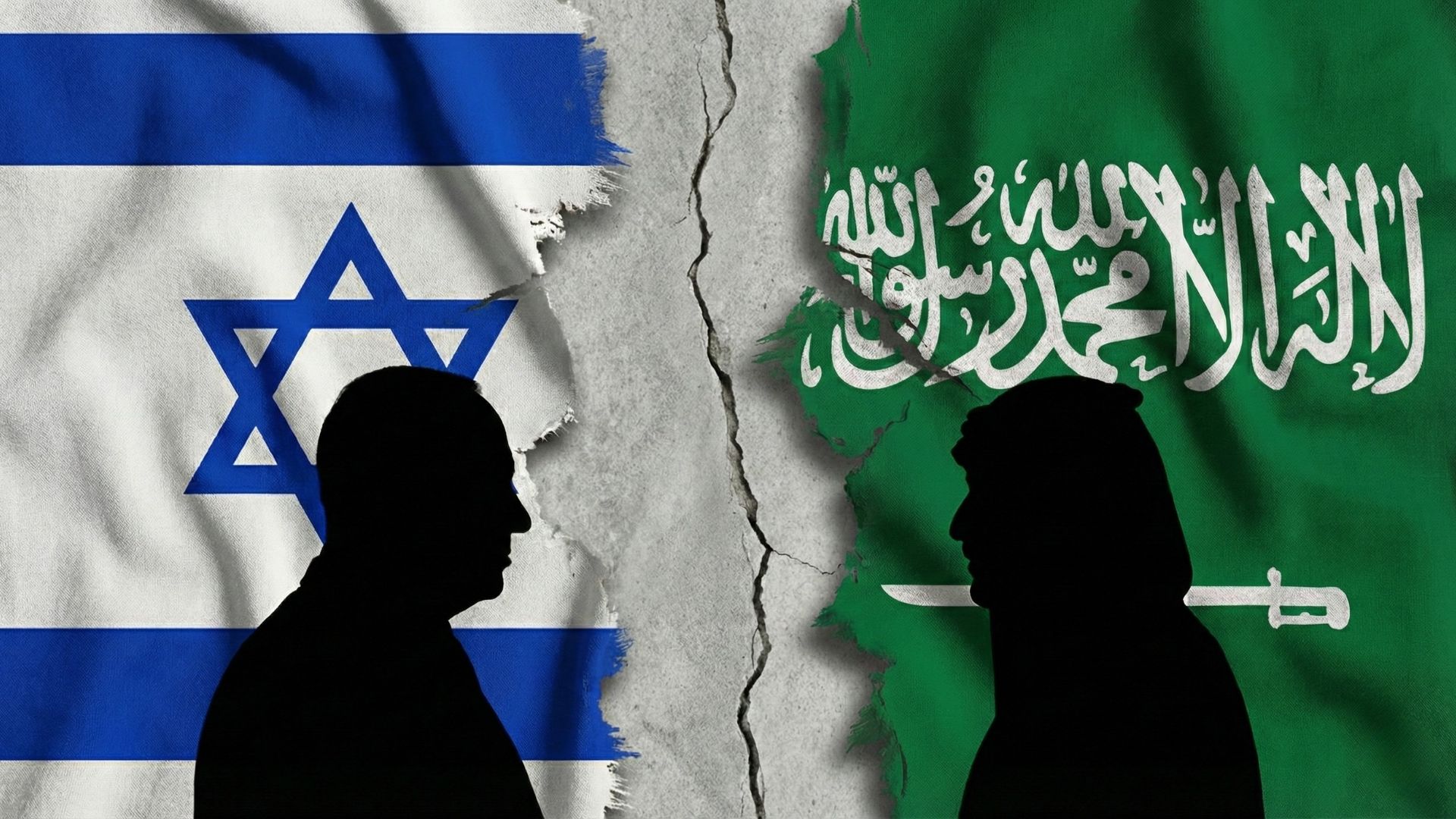
Why the prospect of normalization between Jerusalem and Riyadh is fading—and how it is manifesting within the Saudi Kingdom
INSS Insight No. 2103, February 23, 2026
Evidence of a shift in Saudi Arabia’s approach toward Israel and the normalization process emerges from an analysis of public opinion in the kingdom, the positions of the Saudi leadership, the intellectual discourse within it, and the diplomatic steps it has taken. This reflects a Saudi effort to shape a new agenda in which distancing from Israel serves both the leadership’s domestic legitimacy and its aspiration to consolidate regional leadership. The implication is not only that Saudi–Israeli normalization is currently off the table, but also that any resumption of the process is contingent on developments in the Palestinian arena, as well as on shifts in the regional balance of power and in perceptions of Israel. Riyadh now identifies more risks than opportunities in normalizing relations with Israel, in part considering hostile Saudi public opinion. Although Saudi leadership is not only influenced by public opinion but also shapes it—and until the outbreak of the war led a gradual effort to prepare the ground for normalization—the current deviation from this policy reflects a change of course that, if sustained, will constrain Saudi freedom of action and make a return to the previous trajectory more difficult.
Until the outbreak of the war in Gaza, Saudi Arabia pursued a measured and gradual rapprochement with Israel. The signing of the Abraham Accords, relative calm in the Palestinian arena, and US regional initiatives made it easier for the kingdom to take slow but cautious steps toward rapprochement in the form of “creeping normalization.” These steps included granting Israeli flights permission to use Saudi airspace, quiet security cooperation, positive statements by senior Saudi officials—led by the crown prince—regarding Israel, and even conveyance of moderate messages in the Israeli media. These moves may have reflected the kingdom’s desire to explore the possibility of relations with Israel, even if the issue was not at the top of its agenda. Although the primary motivation was the Saudi interest in securing American dividends, the process also allowed the kingdom to “test the waters” and acclimate the public to possible openness toward Israel. At the same time, Riyadh continued to express rhetorical support for the Palestinian issue and maintained plausible deniability regarding steps taken toward Israel. For example, regarding the permission granted to Israeli flights, Riyadh claimed this was not done in the context of normalization between the two states.
One of Hamas’s objectives on October 7, 2023, was to undermine the Israeli–Saudi normalization process, and it succeeded. Given the scenes of destruction in the Gaza Strip and the public anger across the Arab world, Saudi Arabia was compelled to cool its approach toward Israel and set firmer conditions for normalization. Until October 2023, it had been assessed that the Saudis were prepared to advance normalization even without the immediate realization of the two-state solution.. Since then, the kingdom has perceived support for the Palestinians as critical for preserving its domestic legitimacy and protecting the standing of Crown Prince Mohammed bin Salman. The changes and adjustments in Saudi Arabia’s position toward Israel are examined in this article based on public opinion surveys, statements by senior officials, intellectual discourse in the kingdom, and diplomatic measures undertaken by Riyadh.
The Attitude of the Saudi Public
Public opinion is a central factor offering insight into attitudes toward Israel, even in an absolute monarchy such as Saudi Arabia. Surveys conducted prior to the war in Gaza indicated that the Palestinian issue was not at the top of the kingdom’s agenda. At the same time, normalization with Israel also did not enjoy significant public support before the war. However, surveys conducted since the war began indicated that these attitudes have strengthened—the Saudi public, to the extent it can be measured, now firmly opposes normalization with Israel.
In a comprehensive survey published in August 2025 by the Washington Institute for Near East Policy, Saudi citizens were asked whether establishing “normal relations and peace” with Israel would be a positive or negative step: 99% of Saudi respondents answered that it would be a negative step. For comparison, in a 2020 survey, 41% of Saudi respondents viewed the Abraham Accords as a positive regional development, but this figure declined to 20% in 2023 and to 13% in 2025.
This anti-Israel sentiment has set red lines for the Saudi royal house and has narrowed its freedom of maneuver vis-à-vis Israel. The importance of public opinion for the Saudi leadership and the need for public legitimacy for such a move was evident in remarks attributed to Crown Prince Mohammed bin Salman. In a meeting with American members of Congress in 2024, he reportedly claimed that his efforts to advance normalization with Israel put his life at risk and that he had been threatened because of his support for the process. These threats, he argued, underscored why any such deal must include “a real path” to a Palestinian state, particularly as the war in the Gaza Strip had intensified Arab anger toward Israel.
The Position of the Saudi Leadership
In an interview granted approximately two weeks before the outbreak of the war in Gaza, the Saudi crown prince argued that normalization with Israel would serve Saudi interests and that “every day we get closer.” Khalid bin Bandar, the Saudi ambassador to the United Kingdom, acknowledged that before the war broke out, Jerusalem and Riyadh were indeed close to signing a normalization agreement. However, after the war began, the tone adopted by senior Saudi officials toward Israel grew increasingly harsh, with the crown prince himself leading the shift. About a year after the war’s outbreak, bin Salman delivered an especially sharp and venomous speech toward Israel before the Shura Council.. In part, he claimed that Israel was committing “genocide against the Palestinians.” Bin Salman declared that Saudi Arabia stands alongside the Palestinian (and Lebanese) people and that Israeli actions undermine efforts to enable the Palestinians to realize their legitimate rights and establish peace in the region. He called on the international community to fulfill its duty and immediately halt Israeli actions “against Palestine.” In another speech before the Shura Council in September 2025, the crown prince harshly criticized Israel following the Israeli strike in Qatar: “The brutal aggression against the sisterly state of Qatar requires Arab, Islamic, and international action… [Saudi Arabia] will stand with Qatar in all measures it takes, with no limits,” bin Salman stated.
Alongside the harsher tone toward Israel, as the war persisted, the Saudis clarified the price they demanded in exchange for normalization. Riyadh repeatedly emphasized that it would not establish diplomatic relations with Israel without the creation of an independent Palestinian state along the 1967 borders, with East Jerusalem as its capital, and stressed that this position is unequivocal and non-negotiable. These statements in themselves do not indicate a fundamental change in the kingdom’s official position, but they remove ambiguity and set a clear and absolute condition for any future normalization.
Saudi Foreign Minister Faisal bin Farhan has frequently addressed the issue. According to bin Farhan, normalization with Israel is not on the table so long as a Palestinian state has not been established. His remarks suggest this is a strategic principle, not a bargaining tactic. He has repeatedly leveled sharp criticism at the United States, arguing that it failed to restrain Israel and prevent the escalation of the war in the Gaza Strip and the development of the humanitarian crisis there. He emphasized that the kingdom is not acting out of urgency to reach an agreement with Israel and does not view the incentives offered by Washington—including security guarantees, strategic cooperation, or access to advanced weaponry—as a reason to deviate from its principled position. From the Saudi perspective, without a political solution based on the establishment of a Palestinian state, any normalization deal is premature, lacks regional legitimacy, and contradicts its long-term interests.
Intellectual and Public Discourse
Because the Saudi media is not free and most outlets are directly or indirectly owned by the royal family, commentary and opinion articles offer insight into the Saudi leadership’s position (dozens of articles were examined, including with the assistance of artificial intelligence). Prior to the war, a clear journalistic line could be identified—apparently guided by the authorities—supporting the idea of normalization with Israel. For example, in March 2022, columnist Mashari Althaydi wrote that Israel is an “objective ally” of the Kingdom, given that the Iranian regime is a common enemy of both. In July 2023, Faisal Abbas, editor-in-chief of the popular Saudi daily Arab News (and close to bin Salman), wrote that the possibility of Saudi–Israeli normalization mediated by the United States was “highly likely.”
After the war began, however, the picture changed. Analysis of opinion and commentary articles published since the war’s outbreak indicates a consistent trend of sharp criticism of Israeli actions toward the Palestinians, emphasizing human rights violations and humanitarian consequences. The writers do not reject the idea of normalization per se but express opposition to such a move without the establishment of an independent Palestinian state. Some articles criticize the international media for unbalanced coverage of the conflict and emphasize Saudi policy supporting Palestinian rights and calling for a comprehensive political solution.
Alongside criticism of Israel, there has been some increase in the use of antisemitic motifs in Saudi Arabia. While the kingdom has made significant progress in terms of textbooks and has removed many antisemitic depictions from the curriculum (perhaps to improve its image and demonstrate the tolerant character of the “moderate” Islam promoted by bin Salman), an increase in antisemitic discourse is evident. In January 2026, the Anti-Defamation League (ADL) issued an unusual statement expressing grave concern over the intensification of antisemitic discourse in Saudi Arabia and growing public attacks on the Abraham Accords by prominent Saudi figures. The ADL wrote that it was “alarmed by the increasing frequency and volume of prominent Saudi voices—analysts, journalists, and preachers—using openly antisemitic dog whistles and aggressively pushing anti-Abraham Accords rhetoric, often while peddling conspiracy theories about ‘Zionist plots.’” The organization warned of a marked increase in what it termed “overt antisemitic insinuations” by prominent Saudi opinion leaders. An analysis of cartoons in Saudi-owned newspapers such as Arab News and Asharq al-Awsat indicates that over the past two years “classic” conspiracy motifs have at times appeared, accusing Jews of plotting against Arabs and of treachery.
Criticism of Israel intensified following its strike in Qatar—against the backdrop of Israel’s recognition of Somaliland’s independence and rising tensions between Riyadh and Abu Dhabi—amid perceptions that the United Arab Emirates coordinates its regional policy with Israel. For example, an editorial published by the Saudi daily Al-Riyadh on January 7, 2026, stated that “wherever Israel is present, there is destruction and ruin.” The article further asserted that “Israel acts to exploit crises in the region to deepen divisions [among the Arabs].” Another example is provided by Ahmad bin Othman al-Tuwaijri, a former Shura Council member, who described the UAE as a “Zionist Trojan horse” in the Arab world, enabling harm to regional stability for the sake of “Tel Aviv’s ambitions.” Al-Tuwaijri, whose article appeared on January 22, 2026, on the front page of the Saudi daily Al-Jazirah, argued that the UAE’s strategic alliance with Israel is driven by longstanding hostility toward Saudi Arabia, jealousy of its religious, geopolitical, and economic standing, and Abu Dhabi’s misguided attempt at regional hegemony. He described the Emirati–Israeli partnership as a calculated betrayal of Arab and Islamic unity, claiming that Abu Dhabi “threw itself into the arms of Zionism.”
The Saudis have not been indifferent to Israel’s intentions to annex the West Bank, its violations of the status quo on the Temple Mount, or Inflammatory statements made by Israeli officials. For example, Saudi spokespersons attacked remarks by Minister Itamar Ben-Gvir, who claimed that Israel is “the owner of the Temple Mount,” and rejected any attempt to undermine the historical and legal status of Jerusalem and the holy sites. Likewise, Finance Minister Bezalel Smotrich’s derisive comment that Saudis would “return to riding camels in the desert” if they conditioned normalization on the establishment of a Palestinian state drew sharp condemnations in the Gulf and in the kingdom itself. A source within the royal family firmly rejected the remarks and noted that normalization with Israel is not possible with its current government.
Diplomatic and Political Moves
Alongside intensified criticism of Israel, Saudi Arabia has begun undertaking diplomatic steps, the most prominent being a Saudi–French initiative to recognize a Palestinian state. For the Saudis, the initiative is part of raising their profile on the Palestinian issue—a process that began before the war and accelerated during it. Within the framework of the initiative, the kingdom led a broad international effort, explicitly referencing the “right of return” and granting legitimacy to UNRWA’s activities. As part of the move, a conference was held on the sidelines of the UN General Assembly in September 2025, during which many states declared recognition of a Palestinian state. The US administration, which initially opposed the Saudi–French plan, ultimately referenced it in the “New York Declaration” and even in President Trump’s 20-point plan.
The initiative is a strategic move intended to improve the image of Saudi Arabia in the Arab and Muslim arenas and to signal its commitment to the Palestinian cause. It may also serve as a way to preempt public criticism, which views ties with Israel as betrayal of the Palestinian issue. In addition, there have been adjustments in Saudi regional policy. Rapprochement between Riyadh and Ankara and Doha has accelerated, although these partnerships are not based on ideological alignment. For its part, Saudi Arabia seeks to create strategic anchors to cope with uncertainty in its relations with the United States, concerns over Israel’s growing power, and the need to strengthen its regional standing amid shifts in the balance of power. In response, the kingdom is seeking partners—even those with whom it previously had confrontations—who can provide security capabilities, strategic flexibility, and economic and industrial value, thereby reducing its vulnerability in a complex and competitive regional environment.
Conclusion
The evidence presented above clearly points to deterioration in Saudi attitudes toward Israel and to a further decline in the priority the kingdom assigns to normalization. The observable shift in positions toward Israel stems directly from the war in Gaza, the Israeli government’s policy on the Palestinian issue, and Israel’s regional military activity, which Saudi Arabia perceives as that of an unrestrained actor whose actions endanger regional stability. In this context, the dynamics of Saudi Arabia’s relations with the Emirates have also had a negative impact on the Saudi perception of Israel.
In any case, from Saudi Arabia’s perspective, normalization with Israel is not currently on the agenda. In parallel, the Israeli government also lacks the desire at this time to reach an agreement with Saudi Arabia, given the price Riyadh demands in the Palestinian context—namely, advancing a two-state framework and presenting a clear and binding pathway to a Palestinian state. Two additional developments have reinforced Saudi Arabia’s current inclination to distance itself from Israel. The first is Iran’s relative weakness—previously a shared threat to Israel and Saudi Arabia that contributed to their rapprochement. The second relates to the improvement in Riyadh–Washington relations since President Trump took office, a trend that has led the Saudis to seek significant American “carrots” without paying for them in the currency of normalization.
Riyadh now identifies more risks than opportunities in normalizing relations with Israel, in part due to the hostile Saudi public opinion. Although the royal family not only responds to public opinion but also shapes it—and until the outbreak of the war, had gradually prepared the ground for normalization—the current departure from that policy reflects a substantive change in direction. If this trajectory continues, it will constrain Saudi freedom of action and make it difficult to reverse course. A renewed Saudi reassessment of the issue will be possible only in the event of a fundamental change in circumstances, such as political change in Israel, and in accordance with a broader set of considerations: Washington–Riyadh relations, the regional balance of power, and the degree of internal legitimacy Mohammed bin Salman will require on his path to the throne.