


Publications
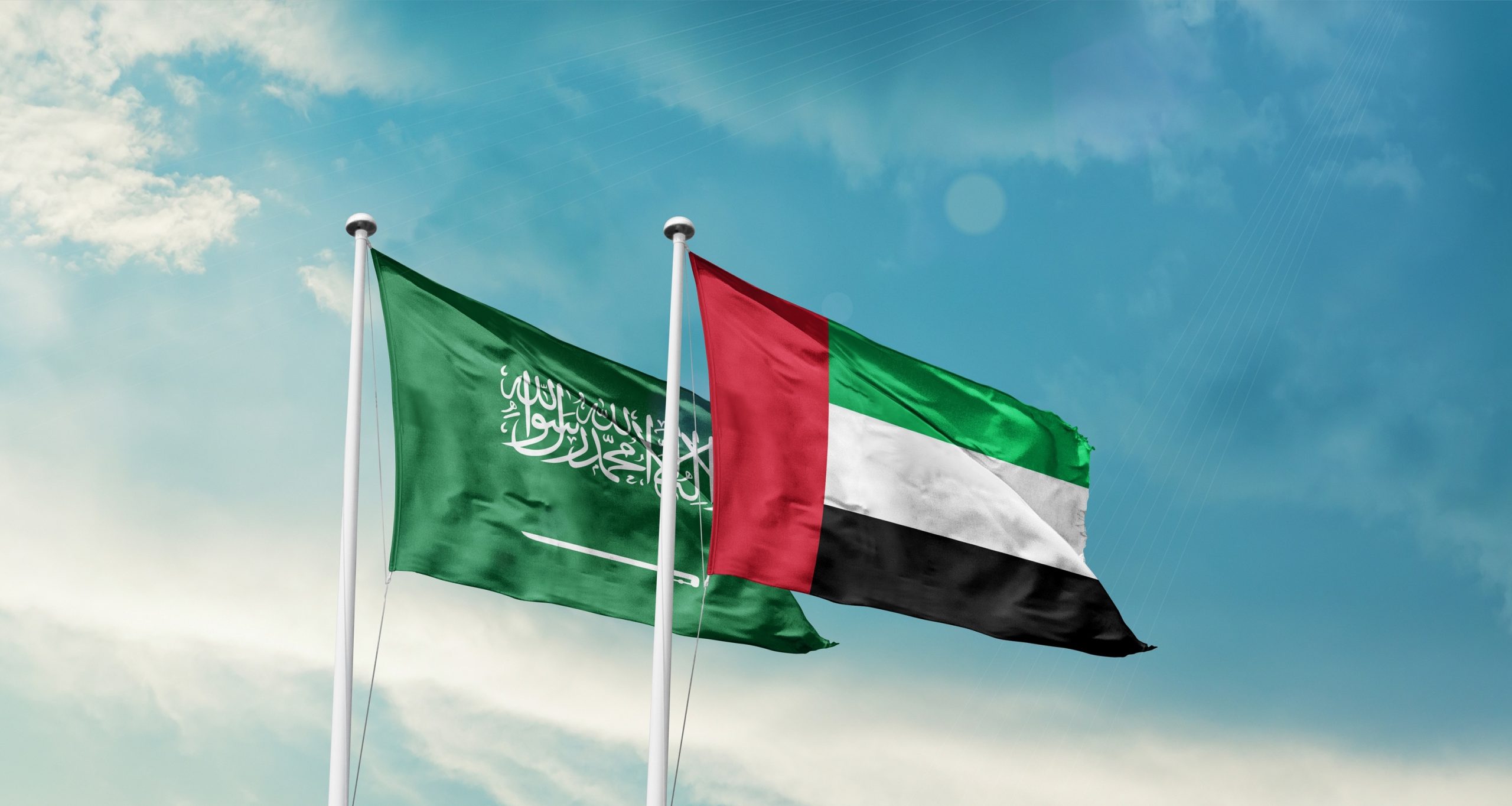
How is the intensifying rivalry between Riyadh and Abu Dhabi manifested, and how does it affect the prospects for normalization between Israel and the Kingdom of Saudi Arabia?
INSS Insight No. 2099, February 11, 2026
Relations between Saudi Arabia and the United Arab Emirates (UAE) have shifted in recent years from a close partnership to open competition over leadership, prestige, and regional influence. Behind the façade of “Gulf unity” lies a deep rift stemming from differing threat perceptions and a struggle for economic and regional primacy. The rise of Mohammed bin Salman and the Saudi aspiration to lead the Arab world clash with Abu Dhabi’s activist foreign policy, which has sought to free itself from Saudi hegemony. This competition is expressed across various arenas of confrontation as well as in the economic sphere, where Emirati dominance challenges Saudi Arabia’s Vision 2030. Given the economic and political power of both states, the rivalry now has implications beyond the Arabian Peninsula. This is not a set of tactical or isolated disputes but rather an ongoing strategic shift that affects Gulf cohesion, regional alliance patterns, and the ability of external actors—including Israel—to rely on the Saudi–Emirati “axis” as a foundation for regional policy. From Riyadh’s perspective, Israel has chosen a side in the dispute—the Emirati one—which could distance the Kingdom from Israel and further complicate future normalization.
Due to shared characteristics of the Arab Gulf states—their status as Sunni monarchies reliant on oil and gas production—there is a tendency, including in academic discourse, to view them as a monolithic bloc. This perception, however, distorts reality. In practice, the Gulf states differ in their natural resources, demographic and sectarian composition, and even in their threat perceptions. These gaps often translate into divergent foreign policies and competition among them. This is also the case with Saudi Arabia and the UAE, the two central economic and political powers in the Gulf. In the decade following the Arab Spring, their cooperation was considered a central “camp” shaping a series of regional moves, from North Africa to the Arabian Peninsula. They coordinated closely to reshape the region according to their interests and to block processes they viewed as threatening the existing political order. At times, they acted as a revisionist force seeking to alter the regional balance of power, and at other times as guardians of the status quo. The UAE played a key role in pushing Saudi Arabia to impose the blockade on Qatar in 2017; in Yemen, the two countries initially fought shoulder to shoulder against the Houthi rebels; and in Libya and Syria, they supported similar camps, each in its own way but in coordination. In Egypt, they worked together to consolidate the rule of Abdel Fattah el-Sisi, and even in their approach toward Turkey and Iran—until 2019—there was a high degree of alignment.
In recent years, however, tensions between the two states have multiplied. These tensions no longer amount merely to policy differences or diplomatic nuances; rather, they reflect open competition over centers of power, economic influence, and regional prestige. This competition is not new. Since the early 1980s, relations between the two have weighed on the cohesion of the Gulf Cooperation Council (GCC) and thwarted integration initiatives, such as the common currency project and the establishment of a Gulf central bank, which was planned to be located in Abu Dhabi and ultimately failed, in part due to Saudi opposition, as Riyadh viewed the move as a threat to its leading economic and political status.
Part of the hostility between the two states is personal. Reports indicated that the 64-year-old Emirati president, Mohammed bin Zayed, initially served as something of a mentor to the Saudi Crown Prince, Mohammed bin Salman, now 40. As bin Salman’s power grew—particularly as his international standing stabilized after difficult years marked by the war in Yemen and the murder of journalist Jamal Khashoggi—he emerged as a player with clear ambitions. Bin Salman’s relationship with the Emirati president deteriorated as he sought to assume regional leadership, not as a protégé but as a leading figure, both within the Kingdom and across the Arab world. Reports indicate that this rift between the two leaders was reflected in harsh statements by bin Salman, who reportedly referred to bin Zayed as a “traitor” and threatened that “what happened to Qatar in 2017–2021 would be nothing” compared to what awaited the UAE.
The roots of the disputes between Riyadh and Abu Dhabi lie in deep-seated issues: longstanding territorial disagreements and, not less importantly, the question of the UAE’s freedom of action and its aspiration to define independent foreign and economic policies. Part of the hostility stems from differing policy goals and approaches to regional engagement, including toward political Islam. The Saudis do not support Islamist political movements—they pose a threat to the monarchy and are illegal in the Kingdom—but they have been willing to work with them when there is no alternative, such as in Yemen, Syria, and even Hamas. This pragmatic approach contrasts with the UAE’s zero-tolerance policy toward the Muslim Brotherhood. For years, the competition was largely confined to the Arabian Peninsula, but today, given the economic and political weight of both countries, it has global ramifications. Tensions between Abu Dhabi and Riyadh might affect the regional economy, dynamics in the global energy market, and even the strategic considerations and interests of external actors—including Israel.
Arenas of Dispute
- Yemen: At the onset of the Yemen war in 2015, Saudi Arabia and the UAE operated under a joint coalition against the Houthis. Over time, however, their priorities diverged. Saudi Arabia seeks Yemen’s unity and stable central control to push back Iranian influence, while the UAE supports local forces in the south—chiefly the Southern Transitional Council—to secure control over strategic ports and curb the influence of the Muslim Brotherhood. Following the takeover of southern Yemeni districts by separatist forces backed by the UAE, Saudi Arabia attacked Emirati arms shipments to the separatists in December 2025 and later issued an ultimatum demanding the withdrawal of all Emirati forces from Yemen. In response, the UAE announced, without mentioning the ultimatum, the withdrawal of all its forces from the country. As a result, the south was taken over by forces loyal to Saudi Arabia. While Riyadh has sought to portray the Emirati withdrawal as a limited and manageable move, Arab media, particularly unofficial commentary, has depicted the UAE as having abandoned the joint campaign, undermined Saudi interests, and cultivated local Yemeni forces acting contrary to coalition objectives. The broad resonance of these claims, even if not always official, underscores the depth of mistrust.
- Sudan: Saudi Arabia and the UAE support rival sides in Sudan’s armed conflict—the worst humanitarian crisis in the world—complicating efforts to advance a political settlement and preventing the implementation of the agreement reached between Sudan and Israel under the Abraham Accords. Saudi Arabia supports Abdel Fattah al-Burhan, commander of the Sudanese Army, to preserve its influence in a key neighboring state and strengthen its dominance in the Red Sea arena. The UAE, for its part, backs Muhammad Hamdan Dagalo (“Hemedti”), commander of the Rapid Support Forces militia.
- Qatar: In 2021, Saudi Arabia led the effort to end the crisis with Qatar as part of bin Salman’s strategy to reduce tensions and support “Vision 2030.” The UAE, which had been a leading supporter of the 2017 blockade of Qatar, was more hesitant about rapid rapprochement and sought to slow steps that could bolster Qatar’s regional standing at its expense. Since 2021, ties between Riyadh and Doha have further improved: Trade has grown, agreements have been signed—including one for a high-speed rail link between the capitals—and the personal relationship between Mohammed bin Salman and Tamim bin Hamad has strengthened.
- Somaliland: The UAE manages most of Somaliland’s major ports, including the port of Berbera, a key export hub. It is also the primary destination for Somaliland’s exports and plays a central role in developing commercial and security infrastructure. Although the UAE has refrained from formally recognizing Somaliland’s independence, it maintains close ties with the local government. Israel’s recognition of Somaliland has intensified tensions between Riyadh and the UAE, as Saudi Arabia views Israel as acting in coordination with the Emirates in this arena as well.
Competition between Riyadh and Abu Dhabi across these arenas underscores the extent to which their relationship has become one of open strategic rivalry. Mediation efforts and quiet diplomacy among Gulf states have so far helped contain the confrontation, but the dispute is structural rather than episodic. It does not stem only from the personal rivalry between two strong leaders; rather, it is an integral part of the new regional order and, at the same time, a product of it. The message emerging from Yemen, Sudan, the Red Sea, and other arenas is clear: Cooperation in the Gulf can no longer be taken for granted. Riyadh’s attempt to project a united front is aimed mainly at preventing public escalation, but it does not obscure the reality that the old alliance is undergoing a fundamental transformation.
Behind the smiles and declarations of stability, a new reality is forming, marked by gaps, conflicting interests, and competition over shaping the regional order. In the economic and commercial realm, competition between Saudi Arabia and the UAE is even more pronounced. Saudi Arabia has demanded that international companies seeking to do business in the Kingdom relocate their regional headquarters to Riyadh—a move clearly aimed at Dubai, the Gulf’s dominant business hub. Saudi Arabia is launching new airlines, developing heavily invested tourist destinations, and implementing broad economic reforms—all part of its very ambitious Vision 2030—placing it in direct competition with its neighbor. The UAE has long been the Gulf’s undisputed economic powerhouse, excelling in medicine, space, tourism, aviation, and civilian nuclear energy—to the point that it has been argued that it is some 20 years ahead of Saudi Arabia in economic development. Saudi Arabia is now seeking to close that gap, and fast.
Implications for Israel
Riyadh and Abu Dhabi share much in common. Both are investing heavily in reshaping the Middle East as an engine of economic opportunity and as global hubs for artificial intelligence, shipping and aviation, tourism, finance, and more. Both seek to reduce their dependence on oil and to strengthen their security partnership with the United States to address their primary threats, led by Iran. Both also believe that Israel should ultimately be an integral part of the region, although their timelines and conditions for advancing such relations differ significantly. The potential for cooperation between them exists and is substantial, yet it is precisely these similarities that create fertile ground for the rivalry evident today.
At the same time as it distances itself from Abu Dhabi, Riyadh appears to be drawing closer to Turkey and Qatar—a move described by some Israeli journalists as nothing less than alignment with Turkish policy and Saudi Arabia’s joining of the Muslim Brotherhood axis. Israeli commentators have even called on Israel to choose a side—the Emirati one. Such statements, combined with Israel’s strategic cooperation with the UAE, may give the impression that Israel has indeed chosen a side in the dispute and is aligned with the Emirati “camp,” at least as the Saudis perceive it. Prime Minister Benjamin Netanyahu also expressed concern about the alleged shift in Saudi policy: “We are following their growing rapprochement with Qatar and Turkey. We expect that anyone who wants to normalize relations with us will not align with an ideology that seeks to do the exact opposite of peace,” he said.
The Kingdom is attentive to this Israeli discourse and has firmly rejected such claims. Turki al-Faisal, former head of Saudi intelligence, wrote in an article published in the Saudi-owned Al-Arabiya channel (recently moved from Dubai to Riyadh) that Israel and its Arab allies (apparently a reference to the UAE) are spreading false claims that Saudi Arabia is moving toward an extremist Islamic axis that includes Qatar and Turkey. Al-Faisal emphasized that the Kingdom opposes the Muslim Brotherhood’s ideology and even designated the Brotherhood a terrorist organization during the reign of King Abdullah.
Key players in the Arab world are realigning themselves in response to shifts in the regional balance of power over the past two years, most notably the weakening of Iran and its proxies and the relative strengthening of Turkey and Israel at Iran’s expense. It is assessed that changes in Saudi foreign policy are linked to these shifts in the regional balance of power, and particularly to Saudi concern over Israel’s growing strength. In other words, this is not an ideologically driven shift. From Riyadh’s perspective, policy adjustments are more about hedging and are guided by a principle of maintaining maximum flexibility amid significant change and high uncertainty.
The rift between Riyadh and Abu Dhabi does not serve Israel’s interests, as Israel has a stake in forging as unified a front as possible among Arab states that hold relatively pragmatic views toward it and share concerns about Iran. The rapprochement between Riyadh, Doha, and Ankara is also uncomfortable for Israel, even if it reflects geopolitical interests rather than ideological affinity, which can be influenced more easily. Moreover, the diminished ability to base regional strategies on a Saudi–Emirati “camp” could complicate Israel’s efforts toward normalization with Saudi Arabia. Israel would therefore err if it were to choose sides, even implicitly, between Saudi Arabia—the largest economy in the Middle East—and Abu Dhabi, with which it enjoys fruitful economic and security cooperation. Israel does have options in this context, including direct or indirect engagement with Saudi Arabia through the US administration to seek clarifications regarding recent policy adjustments in Riyadh. Adopting positive Israeli rhetoric regarding a future political settlement with the Palestinians would also carry significant weight for Saudi Arabia and could help reduce possible tensions between Jerusalem and Riyadh.