


Publications
A comprehensive analysis of public perceptions of security and trust in light of developments in the northern arena since October 7, 2023
INSS Insight No. 2068, December 23, 2025
The events of October 7, 2023, not only shook Israel’s national security but also undermined public trust in state institutions, especially the Israel Defense Forces (IDF), to an unprecedented degree. It was in this context that the northern campaign developed—initially secondary in the strategic agenda but gradually taking a central place in public consciousness. For many, the approach toward fighting Hezbollah—ranging from containment and restraint to significant escalation—was seen as an ongoing test of the system’s ability to learn from the grave failure in the south, to provide tangible security as well as a sense of safety to civilians, and to restore citizens’ trust. This article examines the dynamics between the evolution of fighting in the north and developments in public sentiment regarding security and trust, and the ways in which actions taken by the military and the state reshaped civil–military relations with respect to the northern arena.
The North as a Secondary Arena: Keeping the Arena Below the Threshold of War
Prior to Hamas’s attack on October 7, 2023, it seemed that there was a broad consensus among both the Israeli public and the defense establishment that Israel’s primary security threat came from its northern border—namely Hezbollah—and not from Hamas. While few in Israel were familiar with Hamas’s Nukhba forces, many knew who Hezbollah’s Radwan Force was and why it posed a significant threat. Against the backdrop of this acute sense of threat, criticism was often heard, both in terms of the Israeli government’s policy of containment and restraint toward Hezbollah—such as choosing not to confront it over actions like the placement of tents in Mount Dov, the launching of UAVs toward the gas rigs, or the attack at the Megiddo Junction—and the defense establishment’s limited response to complaints by northern residents regarding tunnel digging or threats by Hezbollah operatives near the border.
In the early days of the war against Hamas, these concerns fueled fears that Hezbollah was preparing a coordinated attack from the north. As a result, Israel immediately deployed forces to the northern front and evacuated communities near the Lebanese border. However, for various reasons, Hezbollah chose not to fully enter the war against Israel. Instead, it limited its actions to rocket and missile fire within a geographically constrained range, along with a few isolated infiltration attempts by terrorist squads. Thus, in the first weeks of the war, the IDF issued a directive designating the northern arena as secondary to Gaza.
The residents of the north initially understood and accepted this directive to keep the northern arena subordinate and to manage it below the threshold of war, thereby allowing maximum attention on the southern arena. This acceptance was due mainly to the magnitude of the massacre and the trauma of the attack on the kibbutzim of the western Negev, alongside the constant concern of a multi-front war erupting.
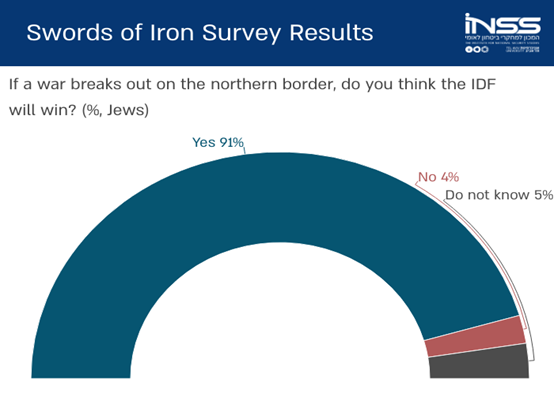
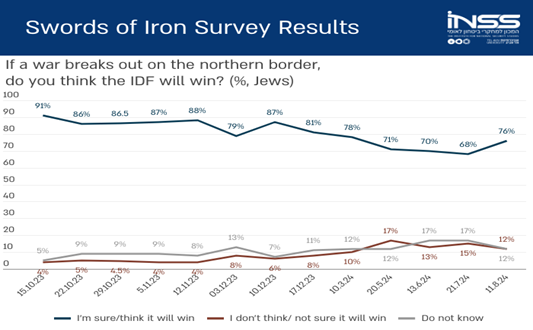
Moreover, the rallying around the flag that characterized the early days of the Swords of Iron war also reinforced the public’s confidence that, if war were to break out on the northern border, the IDF would win it. This was the case despite broad recognition that Hezbollah’s Radwan Force is a trained and skilled force, and that fighting on this front could be difficult. In a survey conducted by INSS a few days after Hamas’s attack, on October 15, 2023, more than 90% of respondents among the Jewish public answered positively when asked whether they thought that the IDF would win if fighting broke out on the northern border (see Figure 1).
Figure 1. Support for the IDF’s Win in the Fighting in the North
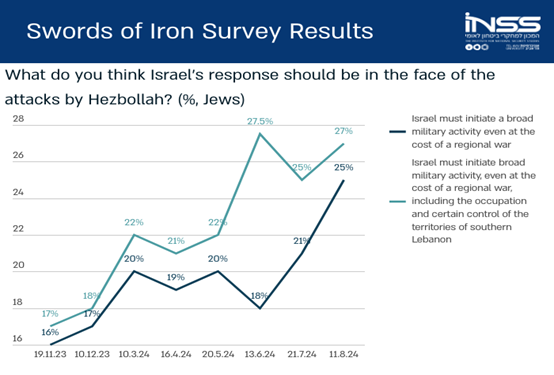
However, even though Hezbollah also adopted an approach referred to as a “policy of equations,” fighting along Israel’s northern border continued throughout, and the “defensive battle” phase against Hezbollah became entrenched. The public perceived this phase through two main lenses. On the one hand, there was the prolonged evacuation of northern residents from their homes and the extensive destruction in the communities caused by Hezbollah’s attacks, alongside the directive to keep the campaign below the threshold of war. Together, these factors fostered a sense that the northern front had been abandoned—and above all, that the residents had been abandoned. Against this backdrop, it should not be surprising that as time passed, an increasing share of respondents in surveys conducted by INSS supported adopting a more forceful response policy toward Hezbollah—even at the price of a regional war (see Figures 2 and 3).
Figure 2. Public Opinion About Israel’s Responses to Hezbollah’s Attacks
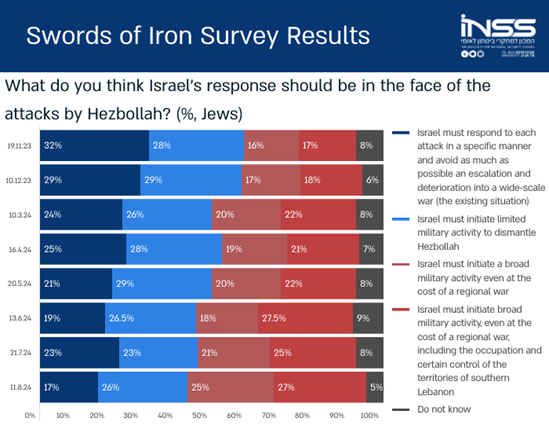
Figure 3. Respondents Who Believed That Israel Should Initiate a Large-Scale Military Operation
The fact that already before the war, the northern region was perceived by many in the Israeli public as a social periphery, provided fertile ground for a sense that Tel Aviv was treated one way and Kiryat Shmona another. This feeling deepened particularly when attacks on Tel Aviv were met with responses seen as forceful, while attacks on northern communities drew what were viewed as more moderate reactions. This sentiment peaked in July 2024, after a UAV strike on Tel Aviv triggered an extensive Israeli response, whereas northern communities had already absorbed dozens of UAV and missile attacks under what was widely perceived as a policy of restraint. Numerous newspaper headlines and social media posts criticized this differential approach (see Figure 4).
Figure 4. Newspaper Headlines Criticizing Differential Approach

Note. Translation: The IDF struck when the center was in Hezbollah’s sights—and in the north, they are furious: ‘Operation Peace for Tel Aviv.’
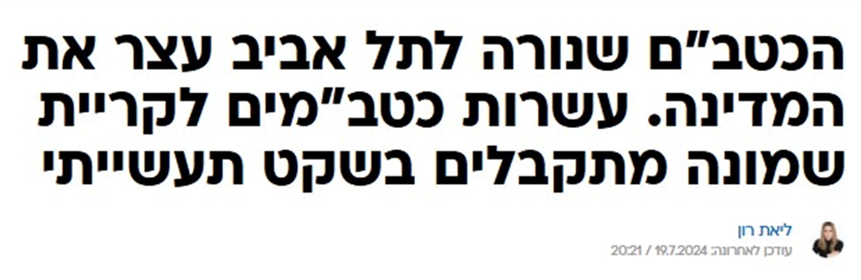
Note. Translation: The UAV that was launched at Tel Aviv brought the country to a halt. Dozens of UAVs aimed at Kiryat Shmona are met with stony silence.
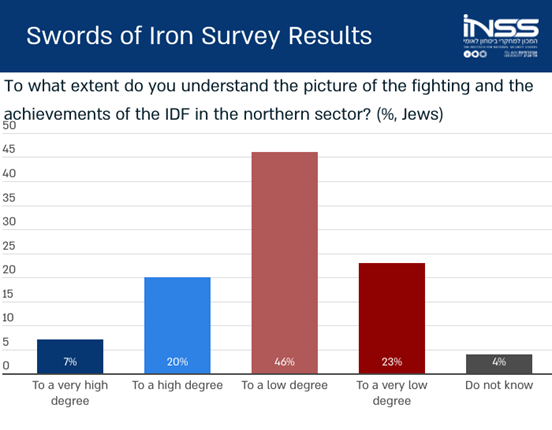
The second dimension of public perceptions of the defensive campaign concerned Israel’s responses to Hezbollah’s attacks. The IDF spokesperson consistently reported achievements, highlighting primarily a long list of targeted killings of senior Hezbollah commanders—the most senior being Wissam Tawil, the commander of the Radwan Force, on January 8, 2024. However, these achievements did not register in public consciousness. In a survey conducted in May 2024, a majority of Jewish respondents (69%) said that the overall picture of the fighting and the IDF’s achievements in the northern arena was only slightly clear or not clear at all to them (see Figure 5).
Figure 5. Clarity Regarding the Fighting and the Achievements in the North
These two dimensions—the perception of the north relative to other regions of the country and the IDF’s actions against Hezbollah—should be viewed in the context of the crisis of trust that emerged after the IDF’s failure to protect Israel’s citizens on the morning of October 7, 2023. Beyond the broader erosion of trust between the IDF and Israeli society, many northern residents felt that only luck had prevented an attack similar to, or even harsher than, the one that struck the south.
In a focus group of northern residents held at INSS on December 12, 2024, this issue arose repeatedly. As Michal, one of the participants, stated, “Ultimately, at the end of the day, there is one thing here—loss of residents’ trust in the state and the army . . . We do not believe, we do not trust, and therefore we don’t know how to decide. We will return because we love this place.” Yahel echoed the same fear: “We know very clearly that this could have happened to us, and by chance it didn’t. We knew there were tunnels. They told us we were imagining things.”
In an in-depth interview conducted with the director of the Regional Knowledge Center of the Eastern Galilee, she said: “There is a lack of trust . . . the main thing people say is that they are not returning because there is no sense of security. Because their suspicions were confirmed . . . Whether the tunnel reached [the area] or did not reach it does not matter. Children in Rosh Pina tell us where they plan to hide when ‘they’ come in.” She added: “Thirteen-year-old children say in a focus group, ‘The government does not count us.’ We also saw how different kinds of rockets were responded to. And the doubts that residents of the confrontation line had about tunnels and so on—this sense of distrust grew because the army discovered everything they had been saying.”
These feelings—especially the protracted nature of the fighting and the fact that, despite intensified attacks on the north, Israel’s response there remained conservative and reactive—gradually fueled criticism and declining trust indicators. For example, at the start of the war, about 90% of the Jewish respondents believed that if war broke out on the northern border, the IDF would win it. By July 2024, that confidence had eroded to only 68%.
Gradual Escalation
A major turning point in the fighting in the north occurred on July 27, 2024, when Hezbollah fired a rocket that struck a soccer field in the town of Majdal Shams, killing 12 boys and girls and injuring many others. The high death toll and the fact that the victims were children sparked fierce public outcry and broad condemnation. For much of the Israeli public, it appeared that the willingness to contain Hezbollah’s attacks had reached its limit, giving way to an expectation of a forceful response—and one soon followed. On July 30, 2024, Israel killed Fuad Shukr, Hezbollah’s chief of staff and a close adviser to Hassan Nasrallah, marking a significant escalation in Israel’s policy toward Hezbollah’s attacks.
It should be noted that, unlike other senior Hezbollah officials, Shukr’s name was not well known to the Israeli public, and some segments did not grasp the significance of the operation (see Figure 6). Accordingly, in the days that followed, extensive informational materials were released to convey to the Israeli public the seniority of the target and the significance of his elimination (see Figure 7).
Figure 6. Joke about Fuad Shukr that Circulated Among Israelis on WhatsApp
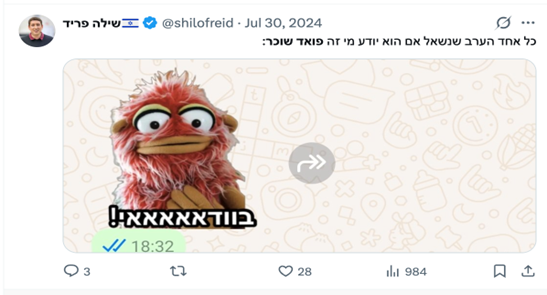
Note. Translation: Everyone this evening, when asked if they know who Fuad Shukr is. Answer: Of course!
Figure 7. Israeli Air Force Announcement About Elimination of Fuad Shukr
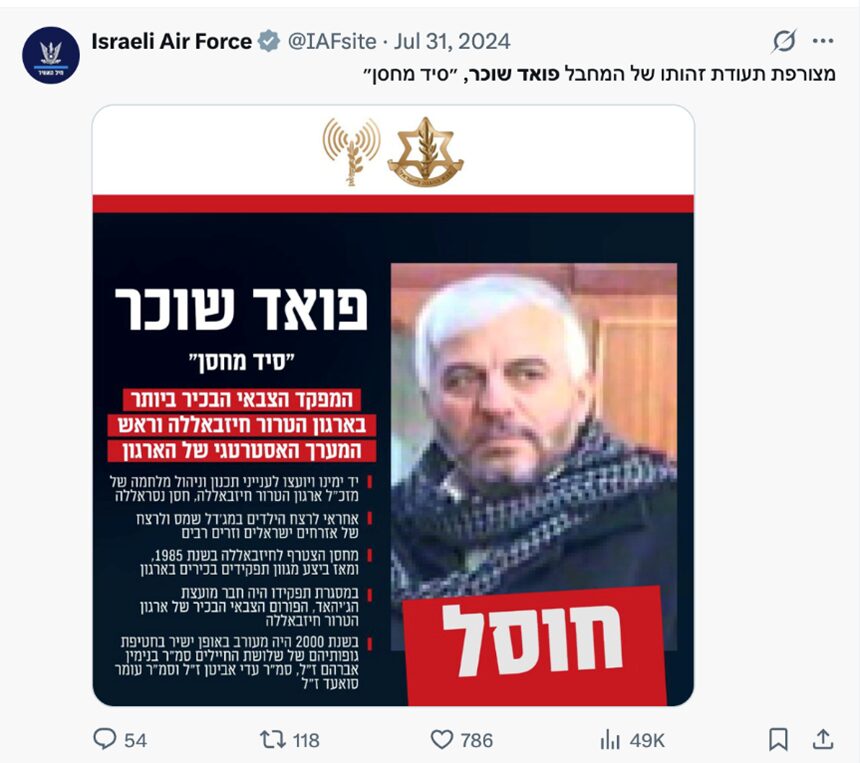
Note. Translation: Attached is the ID card/profile of the terrorist Fuad Shukr, “Sid Mohsen.” The most senior military commander in the Hezbollah terrorist organization and head of the organization’s strategic array [...] Eliminated.
The targeted killing signaled to the public a shift in perceptions of the fighting in the north, including a greater willingness to escalate. This shift was reflected in an INSS survey conducted in August 2024 following the operation. The share of Jewish respondents who believed that if war were to break out in the north, the IDF would win it rose significantly: 76% answered affirmatively, compared to 68% a month earlier, in July 2024 (see Figure 8).
Figure 8. Support for an IDF Win if a War Breaks Out in the North
The fighting continued to intensify. On August 25, 2024, the IDF launched a preemptive strike against Hezbollah, stating that it had identified the organization’s intention to attack strategic facilities, primarily in the north but also in central Israel. In this case as well, the way the decision was presented sparked public and social debate over perceived discrimination between responses to attacks in the north and those targeting the center of the country (see Figure 9). This was because the initial explanation emphasized destroying launchers aimed at cities in central Israel and only later added that the strike was intended to prevent damage to strategic facilities—most of which were, in fact, located in the north. In response, Hezbollah launched hundreds of rockets toward northern communities.
Figure 9. Public Perception of Discrimination Between the North and the Center
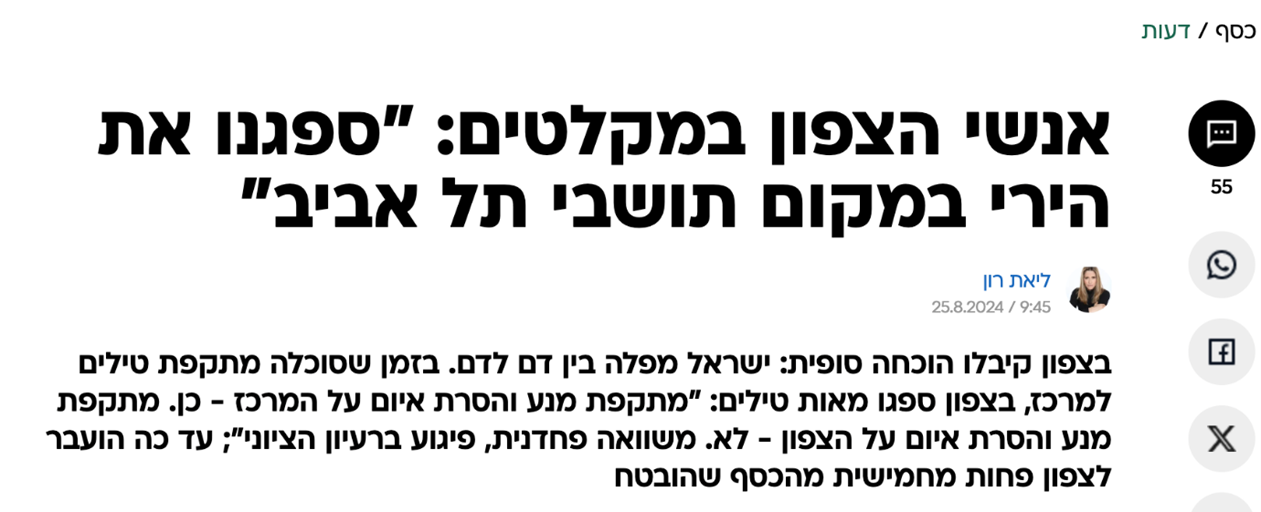
Note. Translation: People in the north in shelters: “We absorbed the fire instead of Tel Aviv residents.” In the north, they received final proof: Israel discriminates between one blood and another. While a large-scale missile attack was being planned against the center, the north absorbed hundreds of rockets. “A preemptive strike and removing the threat to the center?—yes. A preemptive strike and removing the threat to the north?—no. A cowardly equation, a blow to the Zionist idea.” To date, the north has received less than a fifth of the money that was promised.”
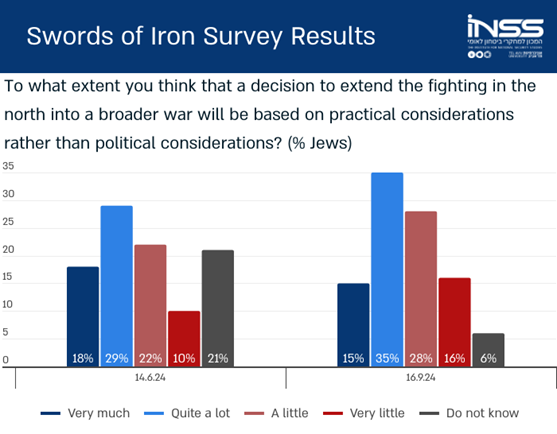
In the days following the strike and Hezbollah’s response, rocket fire toward northern communities continued, and public discourse calling for a more forceful response intensified. A survey conducted in September 2024 showed a nuanced shift: The share of respondents who believed that extending the campaign into a full-scale war would be based on substantive rather than political considerations remained stable, but the proportion who thought political considerations would play only a small or very small role rose significantly (see Figure 10). This may reflect a perception that the escalation resulted from an Israeli initiative and did not necessarily represent an unavoidable response to developments in the confrontation.
Figure 10. Considerations Behind Expanding the Fighting in the North
The Pager and Communications-Device Operations and Operation Northern Arrows
As the fighting intensified, on September 17, 2024, the Security Cabinet updated the war’s objectives, adding “the safe return of northern residents to their homes.” That same afternoon, across Lebanon, pagers carried by Hezbollah operatives exploded in a coordinated action. Within half an hour, more than 3,000 Hezbollah operatives were injured, and dozens were killed. The operation received extensive media coverage in Israel and abroad and generated considerable public appreciation for the capabilities demonstrated by Israel’s security services in executing such a sophisticated and complex action.
The next day, additional explosions occurred across Lebanon—this time involving communications devices used by Hezbollah operatives. Shortly thereafter, the IDF launched a wave of strikes in southern Lebanon. On September 20, Ibrahim Aqil, head of Hezbollah’s operations unit, was targeted and killed, and intensified Israeli strikes in Lebanon continued in parallel. In the days that followed, additional senior Hezbollah officials were eliminated. On September 27, the head of the organization, Hassan Nasrallah, was also eliminated. Hezbollah, for its part, escalated its attacks during this period, including—for the first time in the war—launching missiles toward the Tel Aviv metropolitan area.
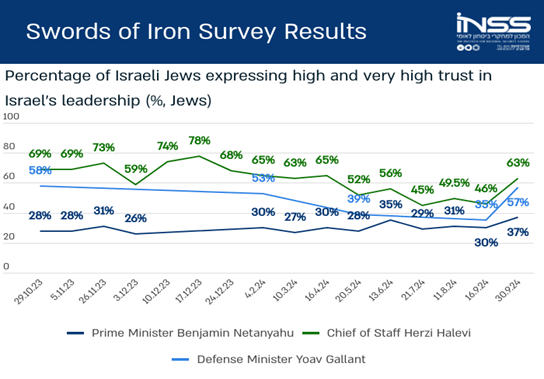
These operational successes led to a significant increase in public trust in the IDF, as well as in the chief of staff and the minister of defense, alongside a more moderate rise in trust in the prime minister (see Figures 11 and 12).
Figure 11. Trust in the IDF and in the Air Force
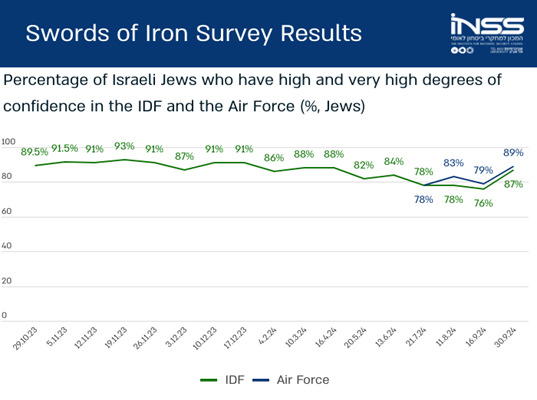
Figure 12. Trust in the Prime Minister, the Chief of Staff, and the Minister of Defense
The Ground Maneuver
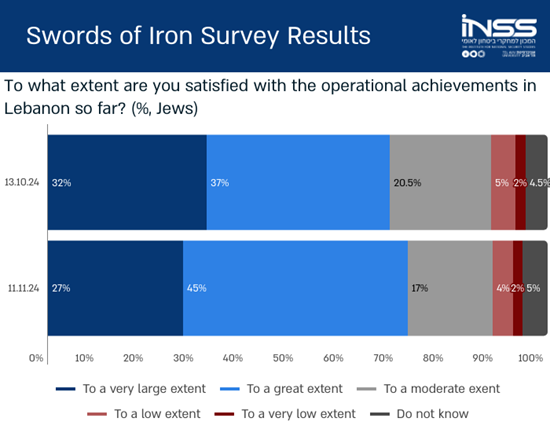
On October 1, 2024, the IDF launched a ground operation in southern Lebanon, alongside continued airstrikes and targeted killings of senior Hezbollah officials. In a survey conducted shortly after the start of the ground offensive, the Jewish public reported high satisfaction with the operation’s achievements. This satisfaction increased as the campaign progressed, as reflected in survey data collected in November 2024 (see Figure 13). The perceived success of the operation also strengthened public trust in the IDF and suggested a partial recovery in assessments of the military’s professional capabilities, which had been severely shaken by the events of October 7. The campaign’s impressive achievements, as well as the relatively low number of casualties—despite earlier warnings and public preparation for a far more difficult operation—also contributed to perceptions of success.
Figure 13. Satisfaction with Operational Achievements in Lebanon
The operational successes and the high levels of satisfaction with the IDF’s achievements nevertheless left the public divided over the desired end state of the campaign. In a survey conducted in November 2024, nearly half of the respondents said that Israel should expand the ground maneuver until Hezbollah is disarmed, while an almost identical share believed that Israel should conclude the ground operation in a focused manner and then pursue an agreement that meets Israel’s security requirements (see Figure 14).
Figure 14. Desired End-State of the Campaign in Lebanon

The Ceasefire
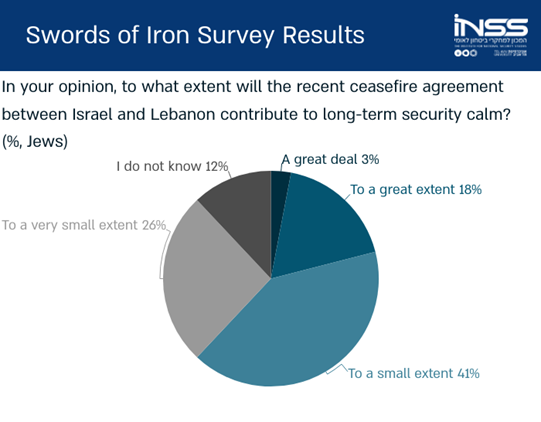
On November 27, 2024, Israel and Lebanon signed a ceasefire agreement. The public had been split over the desired end state; however, once the agreement was signed, support outweighed opposition in an INSS survey conducted in December 2024, even though the full details of the agreement were not published in Hebrew for the wider public (see Figures 15 and 16). It should be noted that a relatively large part of respondents, about one-fifth indicated neither support nor opposition. Despite the relatively wide support, only a small minority believed that the agreement would ensure many years of security quiet. This likely reflected a general skepticism following the events of October 7 about the possibility of sustained calm in any arena.
Figure 15. Support for the Lebanon Ceasefire Agreement
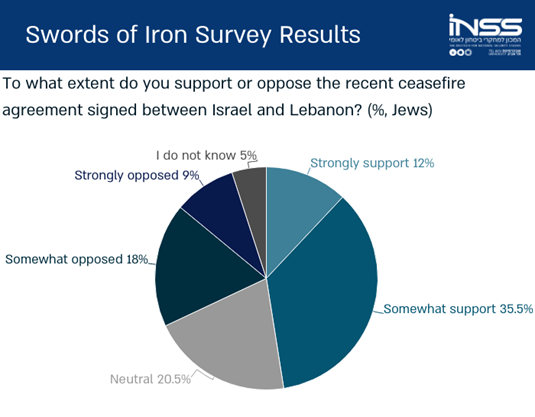
Figure 16. Assessment of the Impact of the Lebanon Ceasefire Agreement
In addition, in the focus group among evacuees held by INSS on December 12, 2024, many participants noted that they did not sufficiently understand or were not familiar with the agreement’s content or its implications. Ori, for example, said, “There is the question of whether people even understand the agreement. Many people simply did not understand what the agreement says. No one knows what the security situation is today.” Michal added, “Most people do not know what the agreement is, so the question is not representative because people did not know in the first days. Every resident needs to be a chief of staff. We are just residents, ordinary people, and the feeling is that each of us is required to analyze the situation. Ultimately, at the end of the day, there is one thing here—loss of residents’ trust in the state and the army, and a very poor sense of security.”
The Days After the Ceasefire Agreement
One of the central concerns among northern residents and the public in general throughout the war, and especially after the signing of the ceasefire, concerned the IDF’s previously restrained policy toward Hezbollah’s provocations. Public discourse increasingly converged on the view that the true test of the ceasefire would be in its enforcement. Focus group participants likewise emphasized this point. For example, Moti noted that “this is part of the trust—how the State of Israel will ultimately be able to convey what it is doing—the army, to the residents and citizens. Enforcement is critical,” while Michal stated, “We do not want a sense of security; we want security.”
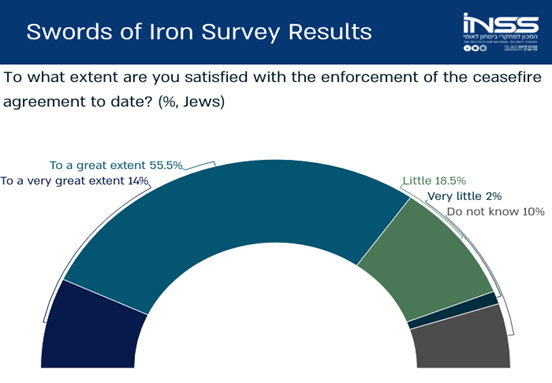
Accordingly, after the agreement was signed, the fact that the IDF not only responded to every violation but was also perceived as proactively striking to prevent Hezbollah’s force buildup or reconstruction contributed to high levels of public satisfaction with the agreement’s enforcement in the north. For example, in a survey conducted in May 2025, a large majority of Jewish respondents (about 70%) said that they were satisfied to a great extent or to a very great extent with how the ceasefire agreement was being enforced in the north at that time (see Figure 17). This policy was accompanied by frequent meetings between senior IDF officers and local authority heads and residents, during which operational achievements and enforcement measures were reviewed. Another factor that strengthened citizens’ sense of security—and contributed to the residents’ willingness to return to their communities—was Hezbollah’s lack of response to the IDF’s frequent strikes.
Figure 17. Satisfaction with Enforcement of the Ceasefire Agreement
Another indication of recovering trust and rising satisfaction was the sharp increase in the share of respondents who believed that the current security situation enabled most residents to return to their homes in the north. In November 2024, prior to the signing of the agreement, only 7% of Jewish respondents held this view. In the months immediately after the agreement, fewer than half said the security situation enabled such a return, but by July 2025, this figure had risen to 70%. This trend was also reflected on the ground: According to a report by the National Digital Authority’s Information and Knowledge Center, approximately 87% of evacuees had returned to their communities by September 2025.
Alongside the high levels of satisfaction and the widespread sense that the war against Hezbollah produced significant and meaningful achievements, the crisis of trust persisted. For example, when the Northern Command presented a captured-weapons exhibition displaying thousands of military items seized during the maneuver in Lebanon, the exhibition was undeniably impressive; yet many reactions focused on the uncomfortable reminder that these weapons had been in Hezbollah’s possession just meters from the communities south of the border—and that what had been collected did not necessarily reflect what the organization might still hold.
Nevertheless, Operation Northern Arrows can be summarized as having yielded significant operational achievements—indeed, achievements seen by some as decisive against Hezbollah. Overall, public satisfaction with its outcomes was high.
Renewed Escalation
The relative quiet in the northern arena—or at least the perception of relative quiet—gradually eroded after the summer months. By November 2025, amid Israeli and American claims that the Lebanese Armed Forces were not fulfilling their obligation under the ceasefire agreement to disarm Hezbollah (a process that, according to the United States, was to be completed by the end of 2025), Israel increased the intensity of its strikes and operations in Lebanon. In the public discourse, the argument also resurfaced that Israel would be required to take further action in Lebanon, given the inability of the Lebanese government and armed forces to neutralize the threat posed by Hezbollah.
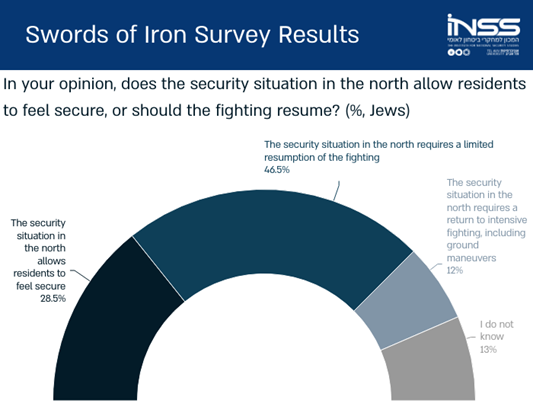
Against this backdrop, in a survey conducted in November 2025, nearly two-thirds of Jewish respondents (64%) said they were concerned about the security situation in the Lebanon arena—a figure nearly identical to the share concerned about Gaza (see Figure 18). At the same time, the share of respondents expressing satisfaction with Israel’s enforcement of the ceasefire agreement declined markedly (see Figure 19), even though Israel intensified its strikes and targeted killings of senior Hezbollah figures during this period. Furthermore, fewer than 30% of Jewish respondents believed that the current security situation in the north allowed for residents’ safety (see Figure 20). By contrast, 46% believed that the situation required a return to limited fighting, and an additional 12% thought that the situation required a return to high-intensity fighting, including a ground maneuver.
Figure 18. Concern about the Security Situation
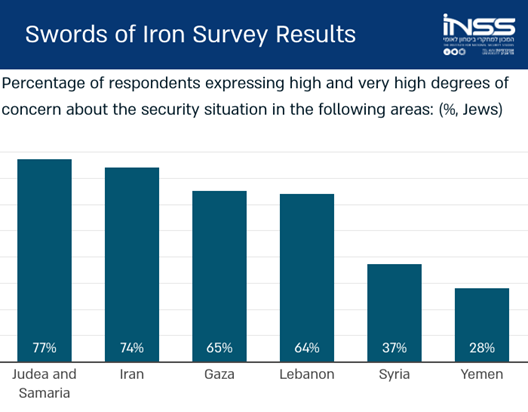
Figure 19. Satisfaction with Enforcement of the Lebanon Ceasefire Agreement
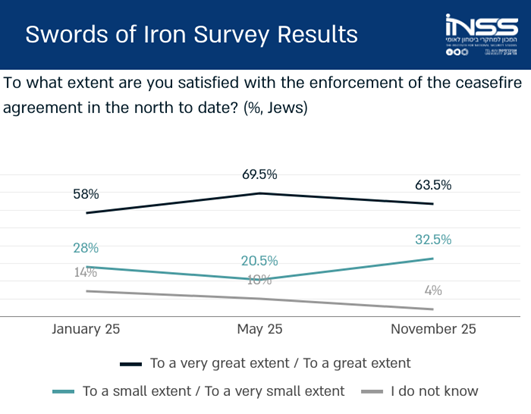
Figure 20. Feelings of Safety Among Northern Residents
Conclusion
The war against Hezbollah ended with a prevailing public perception that even if Hezbollah was not decisively defeated in a way that fully disarmed it, the war nevertheless ended with a clear Israeli victory. The killing of Hezbollah leader Hassan Nasrallah also provided a distinct image of victory. Yet an analysis of Israeli public opinion during and after the Swords of Iron war—including the campaign against Hezbollah—suggests that the post–October 7 period is characterized by a widespread belief that a major security event could occur at any time and in any arena, alongside a constant state of alert regarding the possibility of escalation. Operational successes on the northern front, and the fact that fighting there concluded with a signed agreement, were not sufficient on their own to overcome this deeply embedded skepticism.
However, when operational successes are accompanied by clear enforcement measures and indications of a shift in approach—reflected in initiative and in a refusal to contain enemy force-building—trust indicators rise. This, in turn, strengthens citizens’ ability to rely on the military and other state institutions and increases their willingness to entrust their security to them.
In September 2024, the war’s objectives were expanded to include “the safe return of northern residents to their homes.” This emphasis reflected the understanding among senior defense officials that returning evacuees requires not only security but also a sense of security. That sense is shaped not only by the security reality itself but also—and primarily—by how that reality is perceived.