Israel and the Iran Nuclear Deal: “Chronicle of a Failure Foretold”? | INSS
go to header go to content go to footer go to search
INSS logo The Institute for National Security Studies, Strategic, Innovative, Policy-Oriented Research, go to the home page
INSS
Tel Aviv University logo - beyond an external website, opens on a new page
  • Campus
  • Contact
  • עברית
  • Support Us
  • Research
    • Topics
      • Israel and the Global Powers
        • Israel-United States Relations
        • Glazer Israel-China Policy Center
        • Russia
        • Europe
        • Antisemitism and Delegitimization
      • Iran and the Shi'ite Axis
        • Operation Roaring Lion
        • Iran
        • Lebanon and Hezbollah
        • Syria
        • Yemen and the Houthi Movement
        • Iraq and the Iraqi Shiite Militias
      • Conflict to Agreements
        • Israeli-Palestinian Relations
        • Hamas and the Gaza Strip
        • Peace Agreements and Normalization in the Middle East
        • Saudi Arabia and the Gulf States
        • Turkey
        • Egypt
        • Jordan
      • Israel’s National Security Policy
        • Military and Strategic Affairs
        • Societal Resilience and the Israeli Society
        • Jewish-Arab Relations in Israel
        • Climate, Infrastructure and Energy
        • Terrorism and Low Intensity Conflict
      • Cross-Arena Research
        • Data Analytics Center
        • Law and National Security
        • Advanced Technologies and National Security
        • Foreign Information Manipulation and Interference
        • Economics and National Security
    • Projects
      • Preventing the Slide into a One-State Reality
  • Publications
    • -
      • All Publications
      • INSS Insight
      • Policy Papers
      • Special Publication
      • Strategic Assessment
      • Technology Platform
      • Memoranda
      • Posts
      • Books
      • Archive
  • Database
    • Surveys
    • Spotlight
    • Maps
    • Dashboards
  • Events
  • Team
  • About
    • Vision and Mission
    • History
    • Research Disciplines
    • Chairman of the Board
    • Board of Directors
    • Fellowship and Prizes
    • Internships
  • Media
    • Communications
    • Video gallery
    • Press Releases
  • Podcast
  • Newsletter
  • Campus
Search in site
  • Research
    • Topics
    • Israel and the Global Powers
    • Israel-United States Relations
    • Glazer Israel-China Policy Center
    • Russia
    • Europe
    • Antisemitism and Delegitimization
    • Iran and the Shi'ite Axis
    • Operation Roaring Lion
    • Iran
    • Lebanon and Hezbollah
    • Syria
    • Yemen and the Houthi Movement
    • Iraq and the Iraqi Shiite Militias
    • Conflict to Agreements
    • Israeli-Palestinian Relations
    • Hamas and the Gaza Strip
    • Peace Agreements and Normalization in the Middle East
    • Saudi Arabia and the Gulf States
    • Turkey
    • Egypt
    • Jordan
    • Israel’s National Security Policy
    • Military and Strategic Affairs
    • Societal Resilience and the Israeli Society
    • Jewish-Arab Relations in Israel
    • Climate, Infrastructure and Energy
    • Terrorism and Low Intensity Conflict
    • Cross-Arena Research
    • Data Analytics Center
    • Law and National Security
    • Advanced Technologies and National Security
    • Foreign Information Manipulation and Interference
    • Economics and National Security
    • Projects
    • Preventing the Slide into a One-State Reality
  • Publications
    • All Publications
    • INSS Insight
    • Policy Papers
    • Special Publication
    • Strategic Assessment
    • Technology Platform
    • Memoranda
    • Posts
    • Books
    • Archive
  • Database
    • Surveys
    • Spotlight
    • Maps
    • Dashboards
  • Events
  • Team
  • About
    • Vision and Mission
    • History
    • Research Disciplines
    • Chairman of the Board
    • Board of Directors
    • Fellowship and Prizes
    • Internships
    • Privacy Policy and Terms of Use
  • Media
    • Communications
    • Video gallery
    • Press Releases
  • Podcast
  • Newsletter
  • Campus
  • Contact
  • עברית
  • Support Us
bool(false)

Publications

Home Publications INSS Insight Israel and the Iran Nuclear Deal: “Chronicle of a Failure Foretold”?

Israel and the Iran Nuclear Deal: “Chronicle of a Failure Foretold”?

INSS Insight No. 735, August 18, 2015

עברית
Emily B. Landau
Shimon Stein
While Netanyahu probably had little if any chance of stopping the deal that materialized over the past year, he still has a role to play in trying to mitigate some of its worst implications – and this he should do. For this to happen, there is no substitute for focused discussions with the US administration, now and in the future. In this regard, Netanyahu is not doing himself or Israel any favors by continuing to intervene in the Congressional process that is currently underway. His perceived interference only exacerbates relations with the administration further, and provides a platform for accusations that American detractors of the deal are actually choosing Israel’s interests over America’s. The Prime Minister must understand and appreciate his limitations, allow Congress to do its job, and get to work doing what he can to make the best of what currently looks like a very bad situation.

Irrespective of the political motivations among members of the Israeli opposition for their respective attacks on Prime Minister Benjamin Netanyahu regarding his handling of the Iran nuclear issue and Israel’s diplomatic failure regarding the P5+1-Iran deal, questions have arisen that will likely become more poignant in the Israeli debate if the deal ultimately passes Congress. This is especially the case if the deal becomes widely regarded in Israel as a bad agreement that will not stop Iran from obtaining nuclear weapons. In this case, the Israeli government – which has long been laboring to prevent this very outcome – will be perceived as a firm loser in the wake of the deal.

Questions that emerge in this context hinge on the degree to which Israel could perhaps have altered the outcome of a flawed nuclear deal. Was the failure of Netanyahu's attempt  to achieve a good deal – which would fully prevent Iran from obtaining nuclear weapons –  inevitable, or could he have done things differently in order to obtain a better result? Stated differently, were the hard-nosed tactics Netanyahu employed to stop a bad deal – especially vis-à-vis the US administration – correct, or might other measures have had a better chance of precluding this outcome? Similarly, to what degree was the Obama administration open to consideration of Israel's opposing position, regardless of the approach Netanyahu adopted?

The first step in tackling these questions is to recall the background of the nuclear crisis and the set-up of the ongoing negotiation. While Israel and the current regime in Iran are bitter adversaries, this crisis is not about their relationship. Rather, it is a crisis born of Iran blatantly violating the Nuclear Nonproliferation Treaty that it joined of its own free will, thereby committing itself not to work on a military nuclear capability. The role and responsibility for keeping all non-nuclear weapons state parties to the NPT in line with their commitment is squarely on the shoulders of the P5. Therefore it falls to these strong powers to do what needs to be done to stop a nuclear proliferator, especially a dangerous one like Iran.

Israel clearly had a very strong interest in the success of the P5+1 in the negotiation due to the threats it faces from Iran, but Israel was not and is not part of the structure for directly influencing the outcome. Indeed, the problem Israel and many of its neighbors have faced is that the P5+1 have not perceived a permanent halt to Iran’s nuclear drive as in their interest to the same degree that Israel does; and yet, it is Israel and these other Middle East states that will be the first to suffer the consequences of the P5+1 failure to produce a good deal. Accordingly, the longer term security calculations of the strong powers (even while Iran is working on Intercontinental Ballistic Missiles – ICBM – capabilities) have taken a dangerous backseat to their short term desire to remove this issue from the agenda. Since July 14 the European members of the P5+1 have presented a clear display of their own paramount short term interest, which is resuming business with Iran. The short term and quite concrete security implications for the Middle East – including what Netanyahu views as an existential threat to Israel -- seem to be a price they are willing to pay.

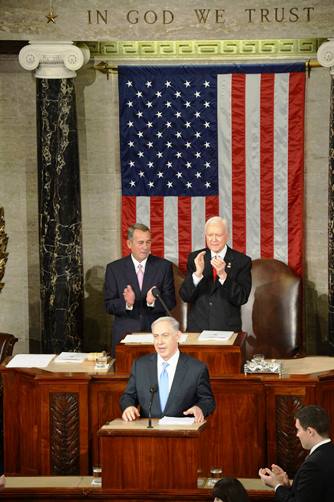
So in this frustrating environment for Israel, in which it does not have a formal role, what were its real options? For Netanyahu, it was always about maintaining awareness of the danger – in policymaking circles, but also in terms of wider public perceptions. In this respect, he probably did more than any one leader to put the Iranian nuclear issue on the global agenda in a manner that could not be ignored and keep it there for a long time. With his earlier threats of possible use of military force, he was even able to incentivize the Europeans to beef up sanctions in 2012 with their oil embargo; the overall effect of the biting sanctions of 2012 were instrumental in getting Iran back to the negotiating table in 2013. Even Netanyahu's highly controversial speech to Congress in March 2015 became a reference point for many in the public debate regarding the dynamics that were unfolding in the talks.

But the question is whether at a certain point additional pressure from Netanyahu began producing diminishing returns. It seems likely that this is exactly what happened, at the point – which is hard to pinpoint exactly, but occurred over the course of 2014-2015 – when the Obama administration's position on the ultimate goal of the negotiation seems to have shifted: from largely dismantling Iran's nuclear program to trying to manage it. It is when previous messages to Israel – such as Wendy Sherman’s emphatic statement in February 2014 that the only measure of success of a negotiated deal is that Iran never obtains a nuclear weapon, or Obama’s speech to an AIPAC gathering promising that his policy is one of prevention, not containment – began to ring hollow. Henry Kissinger and George Shultz hinted at the changed goal in their Wall Street Journal piece of April 2015, when they noted that negotiations that began twelve years earlier as an effort to prevent Iran from developing a nuclear arsenal were ending "with an agreement that concedes this very capability, albeit short of its full capacity in the first 10 years." In fact, the string of concessions that the P5+1 made to Iran over the course of the negotiations in 2014-2015 seemed to go hand in hand with their altered goal.

At this point, there was really not much that could be done to turn the tide, especially as Obama projected an eagerness to close a deal on this new basis, and the divergence in US-Israel positions was quite blatant. Once the objective of the negotiators changed, it was clear that Israel would not endorse the new direction. Moreover, as the gap between the two countries deepened, it also became clear that Israel and the US would be on a collision course, unless Israel agreed to adjust its own objectives and undercut its steadfast position that an Iranian nuclear weapon must be prevented through dismantlement and verification. The acerbic relations that developed between Netanyahu and Obama provided the President with an easy excuse to discount the Prime Minister's growing concerns. But as Netanyahu sensed that Israel's vulnerability was downplayed, if not outright ignored, he became more determined to confront the administration in a manner that would clearly not produce the desired result.

Yet while Netanyahu probably had little if any chance of stopping the deal that materialized over the past year, he still has a role to play in trying to mitigate some of its worst implications – and this he should do. For this to happen, there is no substitute for focused discussions with the US administration, now and in the future. In this regard, Netanyahu is not doing himself or Israel any favors by continuing to intervene in the Congressional process that is currently underway. His perceived interference only exacerbates relations with the administration further, and provides a platform for accusations that American detractors of the deal are actually choosing Israel’s interests over America’s. The Prime Minister must understand and appreciate his limitations, allow Congress to do its job, and get to work doing what he can to make the best of what currently looks like a very bad situation.

The opinions expressed in INSS publications are the authors’ alone.
Publication Series INSS Insight
TopicsEuropeIranIsrael-United States Relations
עברית

Events

All events
Iran, US, Israel, and the Global Jewish Community
10 March, 2026
12:00 - 13:00
Shutterstock

Related Publications

All publications
Shutterstock
Europe as the Last Obstacle on Russia’s Path to Victory in Ukraine?
What is behind Russia’s escalating rhetoric and military actions toward European countries?
29/09/25
Shutterstock
“Israel Is Not Alone”—Iran’s Influence and Interference Campaigns in the United Kingdom
What lessons can be learned from the British response to Iranian influence operations—an issue that similarly affects Israel?
28/07/25
LUDOVIC MARIN/Pool via REUTERS
NATO Summit June 2025—A Victory for Trump and Security Challenges for Europe
The American commitment—and the European price: What are the outcomes of the military alliance summit held in The Hague—and how will they affect Israel?
16/07/25

Stay up to date

Registration was successful! Thanks.
  • Research

    • Topics
      • Israel and the Global Powers
      • Israel-United States Relations
      • Glazer Israel-China Policy Center
      • Russia
      • Europe
      • Antisemitism and Delegitimization
      • Iran and the Shi'ite Axis
      • Operation Roaring Lion
      • Iran
      • Lebanon and Hezbollah
      • Syria
      • Yemen and the Houthi Movement
      • Iraq and the Iraqi Shiite Militias
      • Conflict to Agreements
      • Israeli-Palestinian Relations
      • Hamas and the Gaza Strip
      • Peace Agreements and Normalization in the Middle East
      • Saudi Arabia and the Gulf States
      • Turkey
      • Egypt
      • Jordan
      • Israel’s National Security Policy
      • Military and Strategic Affairs
      • Societal Resilience and the Israeli Society
      • Jewish-Arab Relations in Israel
      • Climate, Infrastructure and Energy
      • Terrorism and Low Intensity Conflict
      • Cross-Arena Research
      • Data Analytics Center
      • Law and National Security
      • Advanced Technologies and National Security
      • Foreign Information Manipulation and Interference
      • Economics and National Security
    • Projects
      • Preventing the Slide into a One-State Reality
  • Publications

    • All Publications
    • INSS Insight
    • Policy Papers
    • Special Publication
    • Strategic Assessment
    • Technology Platform
    • Memoranda
    • Database
    • Posts
    • Books
    • Archive
  • About

    • Vision and Mission
    • History
    • Research Disciplines
    • Chairman of the Board
    • Board of Directors
    • Fellowship and Prizes
    • Internships
    • Support
    • Privacy Policy and Terms of Use
  • Media

    • Communications
    • Video Gallery
    • Press Release
    • Podcast
  • Home

  • Events

  • Database

  • Team

  • Contact

  • Newsletter

  • עברית

INSS logo The Institute for National Security Studies, Strategic, Innovative, Policy-Oriented Research, go to the home page
40 Haim Levanon St. Tel Aviv, 6997556 Israel | Tel: 03-640-0400 | Fax: 03-744-7590 | Email: info@inss.org.il
Developed by Daat ,Yael Group.
Accessibility Statement
This site is protected by reCAPTCHA and the Google Privacy Policy and Terms of Service apply.
No audio version available for this podcast