


Publications
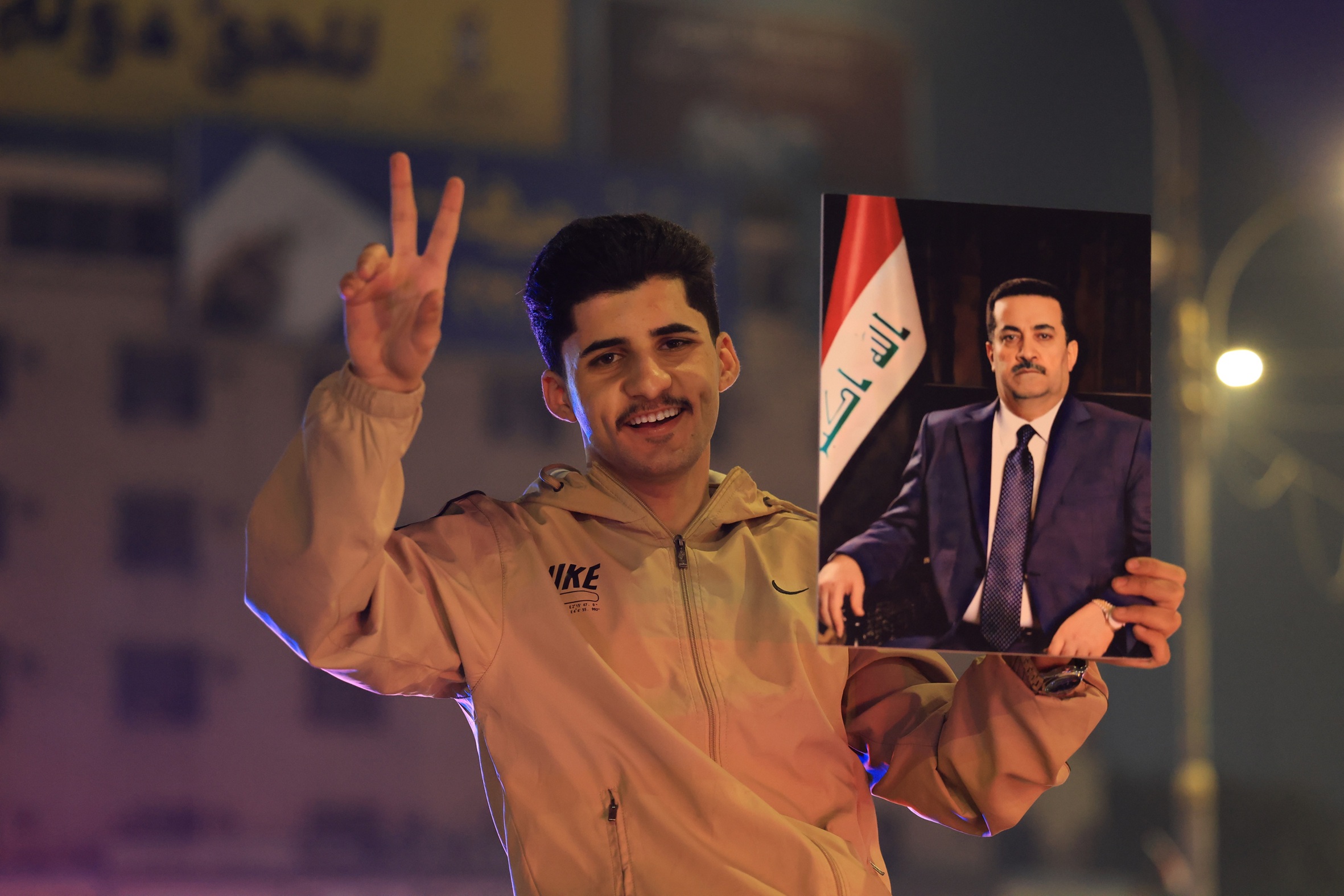
The significance of the results of the Iraqi parliamentary elections and their effects on Iran’s involvement in the country
INSS Insight No. 2065, December 1, 2025
After three years of being ruled by a coalition of pro-Iranian Shiite parties and militias, Iraq has reshuffled its political cards once again. The recent parliamentary elections gave incumbent Prime Minister Mohammed Shia’ al-Sudani leadership of the largest bloc, creating a new challenge for the pro-Iranian governing coalition. Although al-Sudani is seeking another term, some coalition members oppose this.
At the same time, an internal confrontation has emerged within the regime’s top echelon between the core leadership of the pro-Iranian Shiite militias and the prime minister, who wants to impose limits on them. Against this backdrop, Iraq has become an arena for struggle between the United States and Iran over the future of these factions under the patronage of the Iranian regime. The United States is working to disarm them in order to curb Iran’s influence in Iraq and strengthen Iraqi sovereignty. In contrast, Iran seeks to preserve these armed groups as its proxies in Iraq, embedded in the political system, and to arm them with advanced weaponry, anticipating a possible renewed confrontation with Israel and the United States, following the losses suffered by the Iranian-led “Axis of Resistance” in the region over the past two years.
Iraq’s parliamentary elections, held on November 11, was a test of whether the Shiite camp—currently ruling the country under the leadership of pro-Iranian parties and militias—could maintain its internal cohesion while weathering domestic and external pressures over the future of these factions and their relationship to state institutions.
Around 8,000 candidates competed for 329 parliamentary seats, a record number since the previous election cycles held since the overthrow of Saddam Hussein in 2003 and the adoption of a democratic constitution. Official voter turnout reached 56%, compared to only 43% in the previous elections in 2021. At the same time, the 2025 elections also reflected an amendment to the 2023 election law that reduced Iraq to 18 electoral districts instead of more than 80 as in the past. This change gave an advantage to the large parties—such as those in the governing coalition—at the expense of smaller parties. Many parliament members who failed to win reelection were independents or representatives of the protest movement against the regime that emerged after the 2019 demonstrations.
Moreover, even before the election, advocates of democratic reform in Iraq had already expressed disappointment, noting that the elections would not bring meaningful change. Iraq’s method of forming governments, based on allocating political positions according to a sectarian quota among the parties and political blocs that won the most seats in parliament, reinforces a reality of political corruption that limits prospects for genuine democratic reform, in line with the American vision, according to which the political system has been shaped since 2003.
The Shiite “Coordination Framework,” which has ruled Iraq for about three years, was fragmented during the election campaign. In addition to al-Sudani’s decision to run as the head of a new party, his partners in the Shiite governing coalition also chose to compete in separate parties rather than a unified one. Although the leaders of the Coordination Framework rejected a joint run for electoral reasons—seeking to maximize their relative power—and although the factions reunited after the vote to form the largest camp in parliament, this alliance’s future in its current form is far from assured.
Internal tension rooted in political and ideological rivalry has existed within the Coordination Framework since its inception, and it intensified ahead of the elections—especially between Prime Minister al-Sudani, who aims to consolidate his political status as a national leader, and his rival, Nouri al-Maliki, the leader of the al-Da’wa Party and a former prime minister. Both have already announced that they will compete again for the post of prime minister.
The election results gave al-Sudani the lead of the largest bloc in parliament by a wide margin, with 46 seats, followed by al-Maliki’s party with 29 seats. Several leaders of the pro-Iranian Shiite militias also achieved notable successes (for example, the party identified with the Shiite Islamist militia, Asa’ib Ahl al-Haqq, under the leadership of Qais al-Khazali, won 28 seats). Compared to the previous elections, the pro-Iranian Coordination Framework strengthened its power in parliament. However, beyond declaring itself the largest bloc, it is once again required to assemble a broad coalition so that its rivals will not thwart the process of forming a government.
According to reports in the Iraqi media, talks to form the next government began as soon as the election results were announced. Elements within the “Coordination Framework” are not interested in supporting another term for al-Sudani, and they are trying to form a coalition without him. Al-Sudani, for his part, is seeking another term and, according to the reports, aims to bring into his camp coalition partners from within the Coordination Framework who are not political rivals. Potential partners outside the Coordination Framework include the Kurdistan Democratic Party led by Masoud Barzani and the Sunni Taqaddum movement led by former parliament speaker Mohammed al-Halbousi (each with 27 seats).
Beyond the political sparring among Shiite leaders, the tension at the top of the Iraqi regime reflects a clash of interests. The main friction is between Prime Minister al-Sudani—along with the army and security services under his authority—and a “hard core” of Shiite leaders and members of parliament aligned with the pro-Iranian militias and their umbrella organization, the Popular Mobilization Forces (PMF). Serving as prime minister amid a period of regional instability—including the war in Gaza and its spillover to Iran—al-Sudani recognizes how deeply the militia activity, as part of the Shiite axis, endangers Iraq’s sovereignty and stability, especially given their direct involvement in attacks on Iran’s adversaries. Accordingly, over the past two years, al-Sudani has repeatedly demanded that the armed factions cease their independent military operations (such as missile and UAV attacks on American bases and on Israel), carried out without coordination with, or authorization from, the government and the army.
Over the past year, al-Sudani has repeatedly declared Iraq’s desire to remain neutral in regional conflicts and to preserve its ties with the United States, alongside its neighborly relations with Iran. By contrast, leading Shiite militias (for example, Kata’ib Hezbollah) have openly criticized the prime minister and challenged him through kinetic attacks and military threats aimed in part at American and Israeli targets. In doing so, these factions have blatantly violated the law and undermined the authority of the government and the army.
In recent months, escalating tensions have culminated in a violent confrontation in Baghdad between official security forces and Kata’ib Hezbollah operatives, after which government security forces arrested suspects involved in the incident. Iraqi reports also indicate that al-Sudani had been blocking the advancement of bills intended to strengthen the PMF’s status after earlier proposals on the issue failed to gain parliamentary approval.
All this reflects the broader phenomenon of the growing power of Iran-backed militias, which have cast a shadow over the elections and the political game in general. For years, Iran has nurtured these groups, exploiting their grip on the state to deepen their involvement in government ministries and expand the resources at their disposal. A key instrument has been the establishment of a state-owned company intended to provide them with an economic backbone (“al-Muhandis”), mirroring the Iranian regime’s model of financing militias through public projects (Khatam al-Anbiya).
At the same time, a reaction to this creeping takeover by the militias of the state is also evident—not only from Prime Minister al-Sudani and his partners but also internationally, especially from the United States. US policy has shifted under both the Biden administration and the current Trump administration. In line with Iraqi demands and formal understandings between the two countries, the United States is reducing and redeploying its forces in Iraq. Simultaneously, it has imposed new sanctions and has even threatened strikes against pro-Iranian forces. These measures are meant to push the central government and its security arms to restrain militia activity and, ultimately, to disarm them. Since President Trump took office, this demand has become increasingly explicit in official US statements on Iraq.
In light of this, the pro-Iranian camp in the ruling coalition is striving not only to preserve the Coordination Framework but also to increase its political power after the elections and in the next government. This effort is led especially by militia leaders who are “in the crosshairs” of the US administration—and who face a US policy that rejects the participation in government of militia representatives designated as terrorist organizations. One tactic has been to rebrand candidates identified with the camp’s parties in ways that highlight their political activity in Iraq while downplaying their militia affiliation and ties to Iran.
To be sure, the Coordination Framework’s main rival within the Shiite public, Muqtada al-Sadr, did not run this time. The popular leader who defeated them in the previous 2021 elections but failed to form a government and then withdrew his bloc from parliament announced a boycott of the elections; his supporters followed suit, launching protests and calling on others not to vote. Nonetheless, al-Sadr’s absence does not allow the Coordination Framework to rest on its laurels in view of al-Sudani’s meteoric rise. From within the Coordination Framework, he is challenging its policy on the militia issue.
Moreover, among opposition activists in Iraq, the festive election atmosphere and candidates’ billboards promising continued construction and development brought to the surface profound feelings of disgust and disappointment with a system that has produced a corrupt political order that does not serve the citizen. Criticism has focused on the failure of the democratic governance model that the United States sought to implant in Iraq after the toppling of Saddam Hussein’s regime in 2003. The writer Ahmed Saadawi—one of the prominent voices in the large 2019 protest movement that was harshly suppressed by the pro-Iranian militias—wrote that the recent election campaign shows how influential political forces used the Independent High Electoral Commission and the judiciary as tools to eliminate rivals and prevent their participation in the elections. In his view, this resembles the disqualification of candidates in Iran, in which a council arbitrarily and undemocratically determines eligibility and ensures that outcomes align with the regime’s vision. Reflecting on public apathy and the boycott of the elections, Saadawi wrote that there is a general sense that democracy is dead—or at least in intensive care—and when most eligible voters boycott elections, it is hard to view them as expressing the will of the people.
Assuming that the balance of forces in government remains unchanged after the elections—a fairly likely outcome given the current reality—the elections may only deepen feelings of disgust and alienation from the regime among parts of the Iraqi public and rekindle anti-government protest. Still, it is doubtful that such protest could bring about reform, given the militias’ growing power and their aggressive response to previous demonstrations.
The incumbent prime minister, al-Sudani, who is setting his sights on a second term, can be encouraged by the public-opinion polls showing growing confidence in the government among the Iraqi public since he took office in 2022. Since then, stability, development, and investment in public infrastructure have improved compared to previous years. Yet even if his performance and election campaign helped al-Sudani and his party achieve an impressive result at his rivals’ expense, there is no guarantee that he will succeed in forming a coalition and extending his term as prime minister, given opposition within the Coordination Framework to it.
Conversely, even if the Coordination Framework manages to block al-Sudani’s reappointment, it will face a difficult dilemma in dealing with the United States on the road to forming the next government in Baghdad. Under current US policy, Washington is likely to condition continued political, military, and economic cooperation on the next prime minister’s compliance with its declared demands—namely, curbing Iranian involvement in governance and disarming the militias. US restraint from carrying out threatened strikes in Iraq or tightening sanctions is also expected to hinge on this compliance. Accordingly, following the pro-Iranian camp’s electoral gains, the United States is likely to support the establishment of a broad-based government that includes political forces friendly to it. It will also expect a reduction in the influence of the armed factions, both in the government’s composition and in its guiding principles.
The United States is deeply concerned about the future of governance and its interests in Iraq after the elections, and Iran is no less concerned. The blows suffered by the Iranian-led axis—the defeat of Hezbollah in Lebanon, the collapse of the Assad regime in Syria, and the 12-day war between Iran and Israel and the United States in June 2025—have increased Iraq’s geopolitical importance, especially since Iraq was barely harmed by the regional conflict. Accordingly, as part of its preparation for the possibility of renewed confrontation with Israel and the United States, Iran has reportedly transferred advanced missiles and UAVs to loyal militias in Iraq.
Beyond the military necessity, these were the first elections held after the war in one of Iran’s main arenas of influence in the region. That alone gives Tehran reason to strengthen its proxies, support their organization, and advise them on how to respond (and at times how to restrain their response) to US pressure and threats.
Although Israel is not directly involved in Iraq’s political and military processes, it may be affected by them, as demonstrated by the missile and UAV attacks launched by Iraqi militias at Israeli targets during the war in Gaza. This threat persists, especially given reports that these factions in Iraq are being armed with advanced Iranian weapons and that Israel is preparing for possible attempts at ground infiltration into Israel from Iraq, via Syria and Jordan.
Therefore, under the political and military conditions in Iraq—indicating continuing Iranian involvement and even an effort to intensify it—the formation of the next government will carry clear significance for Israel. If al-Sudani’s camp, together with other political forces that may join it (Kurds and Sunnis) and that seek to preserve Iraq’s strategic ties with the United States, succeeds in forming a government that is not purely pro-Iranian and that includes more moderate currents, this could temper Iran’s influence in Baghdad and reduce the pro-Iranian forces’ freedom of action, as coalition partners balance one another’s interests.
By contrast, sidelining al-Sudani by the hawkish wing of the Coordination Framework and forming a coalition dominated by pro-Iranian Shiite control would make it easier for Tehran to intervene in Baghdad’s affairs and would strengthen the power and status of the militias. The dilemma of how to respond to each outcome lies first and foremost with the United States, which remains involved in Iraq and exerts influence through political, economic, and military means. Washington is already signaling—before the next government is formed—that it seeks to end Iran’s interference in Iraq and to dismantle the militia phenomenon. Moreover, the implications of the elections for Iraq’s emerging political order may also affect the regional balance of power between Iran-backed non-state actors, led by Hezbollah, and state institutions and forces working to restrain the influence of Iran and its proxies.