


Publications
INSS Insight No. 1007, January 8, 2018
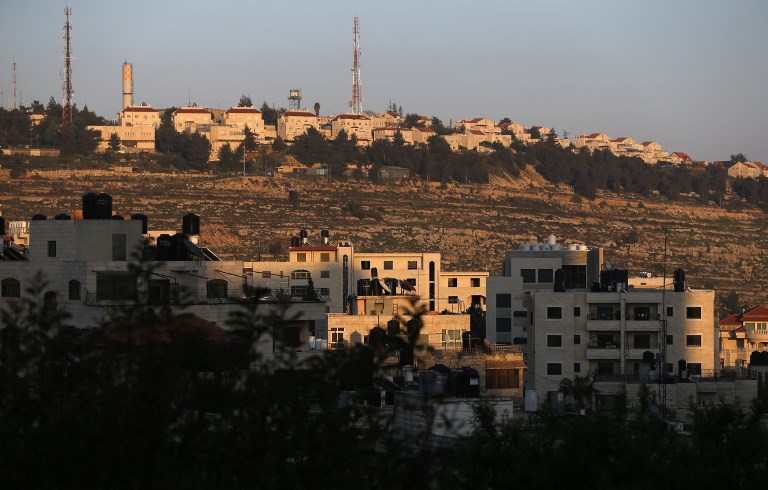
The voices calling for the application of Israeli sovereignty over Judea and Samaria, or parts thereof, have recently grown louder. The main problem with this measure is the disregard of the repercussions of this course of action for the Palestinians in this territory and the future of the Palestinian Authority, and the ensuing ramifications for Israel, both on the domestic and international levels. The Israeli government can decide that despite arguments against the move, it wants to advance courses of action to extend sovereignty as part of fulfilling an ideological vision. However, such a decision should only be reached after serious strategic deliberations that consider all of the expected ramifications and consequences, and as part of a comprehensive policy intended to advance the permanent status that the government deems desirable – and not as a partial tactic deriving from internal political motivations.
The voices calling for the application of Israeli sovereignty over Judea and Samaria have recently grown louder. The proposals vary in scope: some relate to the entire area; others relate to Area C, i.e., the area outside the Palestinian urban areas and villages governed by the Palestinian Authority (Areas A and B); and some propose that sovereignty be extended over a portion or all of the Jewish settlements in Judea and Samaria. The application of the Israeli law over the territory is, in essence, the application of sovereignty, and the application of sovereignty is, in essence, annexation. The difference in terms is a matter of political sensitivity and semantics, but there is no material legal difference between them.
The proposals raised are generally based on ideological arguments about the Jewish people’s right to Greater Israel, but other arguments also focus on the rights of Israelis who live in these territories and find themselves treated as “second-class citizens,” since Israeli law is not fully applied in their communities.
In 1967, Israel gained control over much territory, including Judea and Samaria. Notwithstanding its claims to the territory, Israel did not apply its sovereignty over all of these territories, but rather only on East Jerusalem and the Golan Heights. As far as the international community is concerned, the entire territory, including East Jerusalem, has the status of occupied territory and Israel has no right to annex it. Accordingly, the annexation of East Jerusalem was not recognized, and the world, including the United States, does not relate to East Jerusalem as territory of the State of Israel. Elsewhere in the territories, Israel actually applied the laws of belligerent occupation, since according to international law, this is the relevant system of laws when territory is seized during war, and due to the need to have a legal regime to regulate the Israeli government’s powers and responsibilities vis-à-vis the residents of the territory.
In Judea and Samaria, therefore, there is no applicability of Israeli law. The local law that applies is based on the laws that existed prior to 1967 and security legislation, i.e., orders issued by the IDF GOC in the region. However, the military commander issued municipal orders in relation to all of the Israeli settlements, which adopt many arrangements from Israeli law by way of referral, such as in relation to education, welfare, local government, and so forth, so that there is significant synchronization between the two systems of laws. It was also reported recently that at the request of the Israeli Minister of Justice, directives were issued to improve and shorten the process of adapting the laws applying to the settlements to the amendments to Israeli law. This means that a significant portion of the existing legal gaps relating to Israelis residing in the settlements may be resolved without having to apply Israeli law in its entirety on the territories. The main material gap relative to settlement residents relates to the laws applying to land and infrastructure.
The main problem with applying Israeli sovereignty over Judea and Samaria, or over parts thereof, is the disregard of the repercussions of this course of action for the Palestinians in this territory and vis-à-vis the future of the Palestinian Authority, and the ensuing ramifications for Israel, both on the domestic and international levels.
Steps to apply sovereignty within Judea and Samaria will impact directly on the Palestinians residing in the annexed areas. Between two and three hundred thousand Palestinians live in Area C. If Area C becomes part of Israel, these Palestinians will become permanent residents of Israel, with all the accompanying rights, including freedom of movement and a right to National Insurance. They will also have a right to apply for Israeli citizenship, although presumably they will remain with a status similar to that of residents of East Jerusalem who did not receive citizenship – a status that in and of itself is problematic.
The application of sovereignty over all of Area C will also affect the Palestinians who live outside this area (in Areas A and B). First of all, there are lands, infrastructure, and other property in Area C that belong to these Palestinian residents or that supply their subsistence needs. Moreover, in order to travel from place to place in Areas A and B, there is no other choice but to pass through Area C (which constitutes about 60 percent of the territory). A glance at the map makes this point patent. Furthermore, there are familial and other ties between Palestinian residents of Area C and residents of Areas A and B. Impinging on the Palestinians’ rights in the area and restricting their movement will trigger material allegations that Israel is violating the Palestinians’ basic human rights. The granting of different rights to different populations in the area annexed to Israel will be difficult to align with the basic rights prescribed in Israeli law. An institutionalized regime that differentiates between peoples may be cast as an apartheid regime.
In addition, such a course of action will trigger a major crisis in Israel’s relations with the Palestinian Authority and their cooperation in security and civil realms alike. At issue is a course of action that expressly contravenes the agreements between the parties and indicates that Israel has no intention of arriving at a negotiated solution for the conflict. Another ramification will be the sense of despair created among the Palestinians regarding any prospects of realizing their national aspirations, which is liable to increase the motivation for terrorism and violence.
Complete severance of the ties with the Palestinian Authority will obligate the IDF to expand its activities deep in Palestinian territory. Moreover, such a measure, which would deal a mortal blow to the two-state solution, may well lead to the collapse of the Palestinian Authority, either as a result of the internal pressure on it or as a conscious decision on its part. In such a scenario, Israel might find itself responsible for the entire Palestinian population throughout the territory in all spheres of their lives. There are many repercussions to this, both in terms of increased security threats and the required organization due to the necessity of conducting constant activities throughout the territory, and in terms of the heavy economic burden of providing full solutions for the needs of about 2.5 million Palestinian residents. It is also quite possible, if not probable, that the flow of external contributions and support to the Palestinians will dry up.
On the domestic level, the institution of discriminatory and inequitable arrangements over time vis-à-vis the Palestinian population, both in the annexed territory and beyond, imposes a heavy burden on Israeli democracy and the preservation of the state’s values, and paves the way for clashes within Israeli society. One of the first victims can be expected to be the Israeli Supreme Court, which will have to choose between continuing to protect human rights, at the price of a head-on collision with the political leadership, and waiving its primary judicial review role in relation to these matters, at the price of the collapse of its standing as the gatekeeper of Israeli democracy and justice in general.
The application of the Israeli legislation solely within the bounds of the Israeli communities would to a certain extent reduce the repercussions of the course of action on the Palestinians. However, this could still reinforce the allegations of apartheid, due to the existence of separate systems of laws that discriminate against Palestinian residents in favor of Israeli residents. It can also be expected to have a significant adverse impact on the cooperation with the Palestinian Authority, mainly the security cooperation, and to increase the risk of a significantly debilitating effect on the Palestinian Authority’s performance.
On the international level, any course of action that applies Israeli sovereignty over the territories, even if only in the boundaries of the Israeli settlements, will be perceived as another tactic to thwart the two-state idea and will ascribe the blame to Israel for the ongoing conflict. This course of action will also be perceived as a blatant violation of international law and international resolutions. The Advisory Opinion of 2004 of the International Court of Justice (ICJ) in The Hague with regard to the security fence expressly stated that the annexation of a portion of the territory constitutes a violation of international law and of the Palestinians’ right to self-determination. Security Council Resolution 2334 of December 2016 expressly states that the Security Council will not recognize any changes to the 1967 lines other than those agreed by the parties through negotiations. Such a course of action will likely destabilize the peaceful relations with Egypt and Jordan and severely hamper any attempt to improve relations with other countries in the region.
It is indeed probable that the current US administration will block any operative Security Council decision against Israel; however, measures would be expected in all other international fora and by the European Union and EU member states, even to the point of the imposition of sanctions on Israel. There is also considerable concern that future American administrations, particularly Democratic administrations, would allow operative Security Council decisions against Israel, since the Democrats will not feel obliged to continue the path of the Trump administration relative to Israel and the settlement policy.
There is no doubt that annexation would cause severe damage to international cooperative ventures with Israel, and prompt a demand that no agreement, plan, or enterprise apply to the annexed territory. Memberships in organizations such as FIFA and others can also be expected to be made contingent upon this demand. Israel would have to decide whether it is prepared to forfeit all these agreements, while damaging its economic, scientific, and cultural interests.
A decision to annex territories is also likely to heighten the potential for international criminal proceedings. A preliminary examination is already underway by the prosecutor of the International Criminal Court (ICC), which also relates to the settlements, which are defined in the court’s constitution as a war crime. A decision to annex is certainly liable to influence the decision about opening an investigation, and may also lead to indictments. Such indictments could also be filed against ministers and even against the Prime Minister, because the ICC does not grant immunity to incumbent heads of state.
Clearly, the decision to apply Israeli sovereignty over the territories has grave implications, both on the domestic and the international levels. The Israeli government can decide that despite arguments against the move, it wants to advance courses of action to extend sovereignty as part of fulfilling an ideological vision. However, such a decision should only be reached after serious strategic deliberations that consider all of the expected ramifications and consequences and as part of a comprehensive policy intended to advance the permanent status that the government deems desirable, and not as a partial tactic deriving from internal political motivations.