


Publications
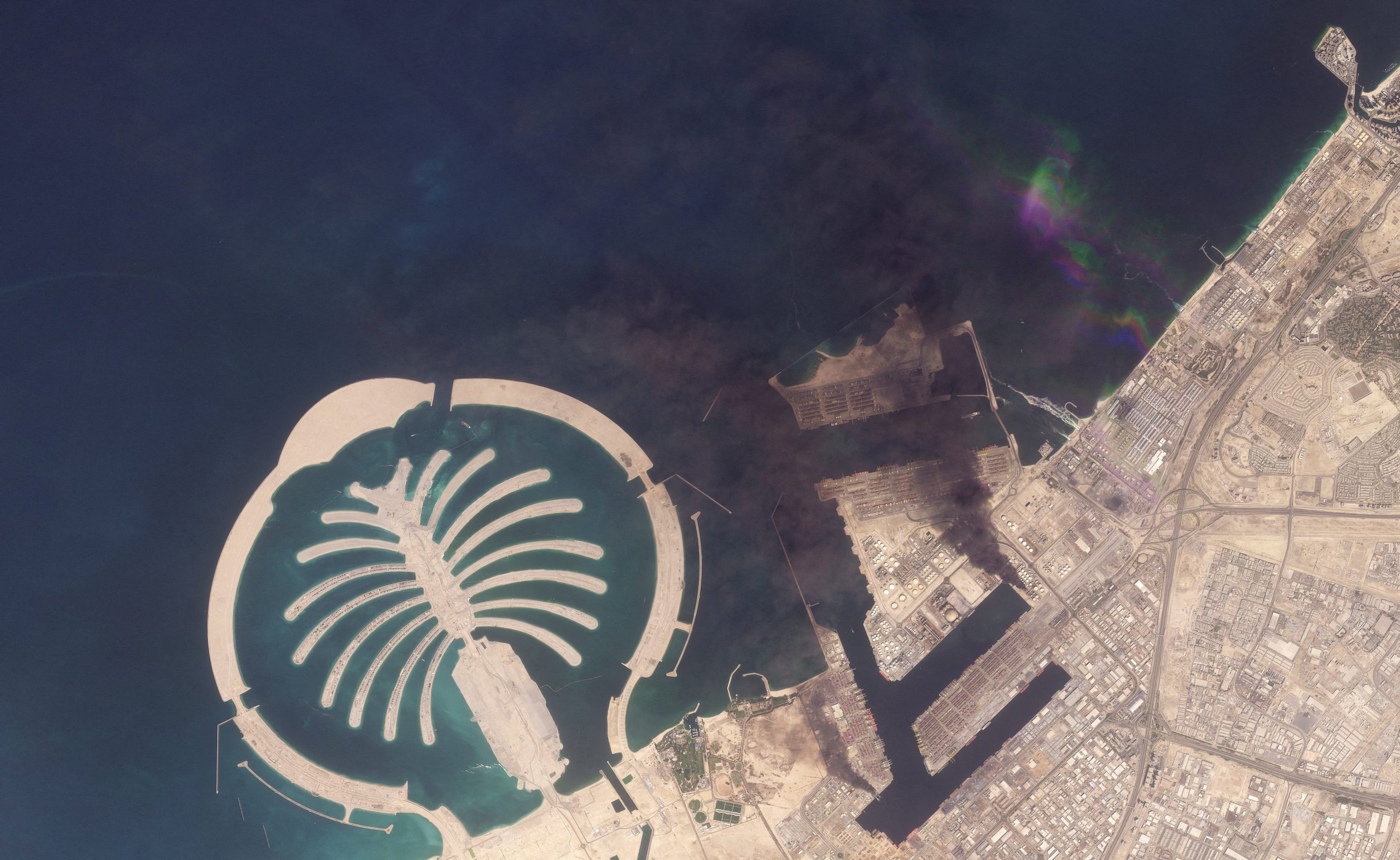
How do the Gulf states view the campaign by Israel and the United States against the ayatollah regime, during which their major cities are being attacked daily by the regime in Tehran?
INSS Insight No. 2115, March 18, 2026
The war with Iran has placed the Gulf states, against their will, at the heart of the confrontation. Iran identified the Gulf states as an “underbelly” and potential lever of pressure on the United States to shorten the duration of the campaign. Nevertheless, despite the Iranian attacks on their territory, they have thus far refrained from openly joining the campaign and have preferred a cautious policy: allowing other forces to operate from their territory while undertaking limited offensive actions with plausible deniability. This policy reflects their concern that Iranian attacks against them will intensify, along with uncertainty regarding the American war objectives. From the perspective of the Gulf states, a key test of the campaign’s outcome is not only the extent of the damage inflicted on Iran, but also, and above all, whether a regional-international framework will emerge that can prevent Iran from rebuilding its capabilities. This article examines the central question of the extent to which the war undermines the logic underlying the hedging strategy that the Gulf states adopted toward Iran or whether it precisely underscores its necessity. It also assesses the implications of the war and the reality that will emerge in its wake for Israel’s relations with the Gulf states while presenting possible opportunities and risks that may limit their realization.
Over the years, the Gulf states have invested considerable resources in establishing advanced defense systems, especially missile defense, improving security ties with the United States, and strengthening regional cooperation. At the same time, they worked to improve their relations with Iran out of an explicit desire to reduce the danger of escalation with it and to lessen Iran’s incentive to strike them. The Gulf states were drawn into the war itself despite their public opposition to an attack on Iran—not because they doubted its justification, but because they anticipated that the war would exact a high price from them. Their opposition may also have been linked to the fear that it would be difficult, and perhaps impossible, to secure the hoped-for achievement of a significant change in Iranian policy—particularly regarding the issues most critical to them: missiles and the proxy network—or a change of regime in Tehran. Therefore, the Gulf states tried to advance an agreement that would impose limits on Iran while at the same time prevent escalation, and they refrained from speaking out on the issue of internal protest in Iran. They also sought to claim neutrality and declared that they would not allow Iran to be attacked from their territory.
However, from the very beginning of the war, Iran chose to attack the Gulf states, including civilian targets. Yet even this fact has not, thus far, led them to openly join in the military campaign against Iran. Instead, they adhered to their hedging strategy: they left the door open to dialogue with Iran and avoided steps that would push them into a more significant confrontation with it. This conduct is the result of their relative military weakness and economic vulnerability, as well as their uncertainty regarding the American war aims and the likelihood of achieving them. The Gulf states prefer that, by the end of the campaign, Iran will be weakened, restrained, and preoccupied with internal problems, without its citizens rallying around the flag.
For this reason, the Gulf states seek to avoid a prolonged war of attrition, which would further harm the region’s economic and energy stability and undermine the conditions for growth on which the ambitious national projects they are promoting depend. The war has already led to a closing of ranks, at least outwardly, among the Gulf states that are members of the Gulf Cooperation Council (GCC). However, this solidarity is not expected to last long; the disputes—especially between the United Arab Emirates (UAE) and Saudi Arabia—are likely to resurface once the war ends, and perhaps even earlier, should the campaign continue.
The case of Saudi Arabia is particularly important for understanding the dynamic between Iran and its neighbors. Viewing Iran as a central strategic challenge, especially after suffering Iranian strikes on its territory, the kingdom has actually accelerated dialogue with Tehran and sought to avoid a slide into direct confrontation. This policy stemmed from fear of a multi-front conflict that would include attacks against it from Yemen, alongside attacks from Iran and Iraq.. In Riyadh’s view, active participation in the attack on Iran entails a far greater risk than the benefits inherent in it. Such a move would not fundamentally alter the face of the confrontation, but it could certainly encourage an escalation in Iranian responses against it. Like its Gulf neighbors, Saudi Arabia, after being attacked, has allowed the United States to use bases on its territory but has thus far sought to avoid overt participation in the fighting. For the smaller Gulf states, this Saudi position was a clear signal: Even in the face of a severe regional confrontation, it is preferable to avoid a direct offensive policy toward Iran and to restrain involvement. Dr. Anwar Gargash, senior adviser to UAE President Mohammed bin Zayed, wrote on X on the 14th day of the war that despite Iranian aggression, his country continues to prioritize judgment and reason, maintain restraint, and seek a way out for Iran and the region as a whole.
Hedging Strategy Put to the Test
The Gulf states perceive the campaign against Iran as a formative event—commentators present the attacks against them as a watershed that will compel them to fundamentally change their security concept. Yet it must be asked whether this will indeed be a substantive change. The war does not expose a new reality but rather sharpens one that has been well known. For many years, it has been clear that Iran enjoys an asymmetric military advantage in the Gulf, especially in the fields of missiles and UAVs. Iran’s arsenal was built precisely for confrontation with rivals equipped with advanced conventional weaponry. Indeed, the war exposed significant gaps in interceptor stocks and in the ability to cope with saturation attacks of missiles and UAVs—gaps that other countries in the Middle East, including the United States and Israel, have also experienced. But this is a structural limitation of the current era of warfare: It is easier and cheaper to produce simple offensive means than defensive systems against them. This gap is expected to continue accompanying the regional arena for the foreseeable future.
Thus far, since the beginning of the campaign, the Gulf states have seen no point in taking public and forceful steps against Iran, out of concern that in the end they would be left alone to face a wounded but vengeful Iranian regime. The cost involved in openly joining the United States and Israel has been perceived as too high, especially at a time when long-term American commitment is viewed as uncertain. Therefore, they seek to support the war effort, including limited offensive actions against Iran, but below the threshold of war and without burning bridges with Iran. Continued hedging, even in wartime, does not stem from illusions regarding Iran’s intentions but rather from a sober understanding of reality. The Iranian attacks against the Gulf states, therefore, do not reflect a failure of their security concept but rather confirmation of the validity of the strategy—while also illustrating its limitations. At the same time, it must be taken into account that restraint over time carries a price, and avoidance of response conveys weakness.
Developments and public sentiment in the UAE are also important for understanding the regional dynamic in the context of the war, given its close relations with Israel and its status as a key state in the region. The number of Iranian attacks on the UAE was the highest relative to its neighbors and even higher than those against Israel (as of March 16, the UAE had intercepted 298 surface-to-surface missiles, 15 cruise missiles, and 1,606 UAVs). One possible explanation is the federation’s close relations with Israel and Iran’s view of these relations as a threat. It is possible that after the war, the perception in the Gulf states will strengthen that ties with Israel carry a price that must be taken into account when considering whether to deepen relations or give them greater public visibility. Voices in the Emirati public discourse called to end the conflict quickly and even voiced implied criticism of Israel: “It is not our war. We did not want this conflict, yet we are paying the price in our security and our economy,” said Ebtesam al-Ketbi, president of the Emirates Policy Center (EPC). A question of even broader significance now confronting the Gulf states is whether Israel and the United States, once perceived as stabilizing actors working to preserve the status quo, have become players challenging it, even in unexpected ways, and therefore are, in fact, risk factors for regional stability. At the same time, other voices in the Gulf emphasize Iran’s military weakening and see in it a historic opportunity to change the region for the better. According to this view, even if the Iranian regime survives, its weakness will reduce the threat it poses to the Gulf states.
In any case, for the Gulf states, the long-term significance of the current war will be measured not only by the scope of military damage to Iran but also by whether that damage is translated into a stable regional-international framework that will prevent Iran from rebuilding its capabilities and resuming its role as a threat to them. Past experience shows that military achievements not backed by an effective political mechanism erode quickly. Therefore, their central interest is that the campaign ends with a process that will create long-term limitations on Iran’s capabilities—especially in the fields of missiles and proxies.
Whether the Gulf states will change their hedging strategy following the war remains a central question. In their view, the survival of the Iranian regime would indicate that the strategic environment in the Gulf has not fundamentally changed. Under such conditions, they are likely to continue pursuing a policy of hedging to avoid another conflict. Fear of Iran may even intensify, and therefore efforts to reduce tensions with it will continue, alongside greater investment in security and the diversification of regional and international partnerships. Some of the Gulf states also believe that the United States entered the conflict despite their reservations and thus far has failed to stop the attacks against them. Therefore, if the Iranian regime remains in place at the end of the war, this may also encourage Gulf states to return to a policy of balancing among the main regional powers (also because they do not want a regional order in which Israel is perceived as a regional hegemon). It is likely that at least some of the Gulf states will seek to balance Israel’s power projection by diversifying their strategic support through greater cooperation with Pakistan and possibly also Turkey.
The following challenges will still stand before them:
- Vulnerability of energy resources. The war with Iran has underscored the vulnerability of the Gulf economies, which depend heavily on energy exports, and has prompted the Gulf states to increase their pressure on the United States to bring the fighting to an end. Disruptions to shipping through the Strait of Hormuz led to a buildup of oil and gas in local storage facilities, to the point that some states were forced to reduce production because of insufficient storage capacity. Saudi Arabia was forced to reduce the rate of oil production by about two million barrels per day following the shutdown of facilities, even though it also began diverting some of its oil through the East–West Pipeline to Red Sea terminals. The Gulf states had prepared for scenarios of this kind, but the military campaign demonstrated that this preparedness is still insufficient to cope with a prolonged and wide-ranging disruption of trade and energy routes in the Gulf.
- Erosion of economic reputation. The Gulf states, especially the UAE, have spent years cultivating a reputation for business and economic stability as a global hub for banking, aviation, trade, and logistics, and even now they are trying to project “business as usual.” However, the war is already harming this image and highlighting the geopolitical risks inherent in the region. As a result, international companies may reassess the location of their operations in the Gulf, seek to diversify risk, and even consider relocating some activity to countries less affected by the fighting, foremost among them Saudi Arabia. If this trend continues, it could give Saudi Arabia a certain advantage in its economic competition with the UAE.
- Vulnerability of digital infrastructure. The cyberattacks on data centers in the UAE and Bahrain illustrate that digital infrastructure has also become a target in the war. These incidents undermine the Gulf states’ aspiration to become global information and technology hubs, as they raise questions regarding the security of cloud systems, data storage, and digital services. Beyond the immediate disruptions, the damage may also affect the confidence of investors and technology companies over the long term. This will require the Gulf states to invest greater resources in protecting and hardening infrastructure, which may strain their budgets and impair some of their ambitious development plans.
Although the Gulf states still see the United States as the only actor capable of guaranteeing their security, they understand very well its limitations, as exposed during the war and its inability thus far to thwart all the threats directed against them. If the war does not end with a substantial change in the Gulf’s security reality, the status of the United States as protector of the Gulf could be undermined. Therefore, an operational recommendation of strategic significance is to strike the Iranian systems currently attacking the Gulf states in order to give them breathing room and reduce the pressure they are exerting to end the war.
Implications for Israel
The future of relations between the Gulf states and Israel will be determined by the way the war ends, as well as by issues not directly related to it. The narrative that Israel was the party that pushed toward war and should be blamed for the harm caused to the Gulf states may also gain strength. Moreover, the states identified an Israeli attempt to heighten tensions between them and Iran: Qatar and the UAE, despite the latter being Israel’s partner, denied claims originating in Israel that they had carried out strikes inside Iranian territory. It is possible that these Israeli leaks were intended to pressure the Gulf states to act openly against Iran, reflecting a certain disappointment that they had not yet done so, a sentiment that also resonated in some circles in the United States. However, these reports were firmly rejected by official sources in Abu Dhabi, which described them as a “false leak,” stated that any military action on their part would be public, and expressed anger over the dissemination of the information. During the war, voices were even heard claiming that the Israeli government was “sabotaging” the process of regional stabilization and generating chaos that harms the security of the Gulf states and their long-term goals.
From Israel’s perspective, the war may create opportunities to improve its relations with the Gulf states, alongside tensions that the war itself and the postwar reality may generate:
- Changes in the regional balance of power. The war has highlighted Israel’s military-technological superiority and tilted the regional balance of power in its favor. At the same time, the depth of the strategic relationship between Israel and the United States stood out, reflected in close coordination and significant cooperation during the fighting. This combination of factors may strengthen the perception of Israel as an actor with unique capabilities—and, accordingly, as an attractive partner.
- Possibility of security cooperation. The war has underscored Israel’s advantage in the fields of, among other things, missile defense, which will certainly arouse great interest in the Gulf states. However, open cooperation with Israel is likely to remain a sensitive issue for them, especially because of disagreements regarding the Palestinian issue. Therefore, the issues that cast a shadow over relations before the war will likely continue afterward as well. Moreover, if Iran is perceived as less threatening at the end of the war, the Gulf states’ motivation to pursue close security ties with Israel may diminish.
- Driving a wedge between Qatar and Hamas. The Iranian attacks on Qatar may encourage it to seek cautious channels of communication with Israel. From Israel’s perspective, this situation may create an opportunity to distance Qatar from Hamas, which still remains loyal to Iran. The likelihood of a major change in Qatari policy is low, but its current situation may perhaps give Israel some leverage and make it possible to link potential Israeli assistance to a necessary change in Qatar’s approach toward Israel.