


Erdogan’s Successful Gamble, and What Lies Ahead | INSS
go to header go to content go to footer go to search
INSS logo The Institute for National Security Studies, Strategic, Innovative, Policy-Oriented Research, go to the home page
INSS
Tel Aviv University logo - beyond an external website, opens on a new page
  • Campus
  • Contact
  • עברית
  • Support Us
  • Research
    • Topics
      • Israel and the Global Powers
        • Israel-United States Relations
        • Glazer Israel-China Policy Center
        • Russia
        • Europe
        • Antisemitism and Delegitimization
      • Iran and the Shi'ite Axis
        • Operation Roaring Lion
        • Iran
        • Lebanon and Hezbollah
        • Syria
        • Yemen and the Houthi Movement
        • Iraq and the Iraqi Shiite Militias
      • Conflict to Agreements
        • Israeli-Palestinian Relations
        • Hamas and the Gaza Strip
        • Peace Agreements and Normalization in the Middle East
        • Saudi Arabia and the Gulf States
        • Turkey
        • Egypt
        • Jordan
      • Israel’s National Security Policy
        • Military and Strategic Affairs
        • Societal Resilience and the Israeli Society
        • Jewish-Arab Relations in Israel
        • Climate, Infrastructure and Energy
        • Terrorism and Low Intensity Conflict
      • Cross-Arena Research
        • Data Analytics Center
        • Law and National Security
        • Advanced Technologies and National Security
        • Foreign Information Manipulation and Interference
        • Economics and National Security
    • Projects
      • Preventing the Slide into a One-State Reality
  • Publications
    • -
      • All Publications
      • INSS Insight
      • Policy Papers
      • Special Publication
      • Strategic Assessment
      • Technology Platform
      • Memoranda
      • Posts
      • Books
      • Archive
  • Database
    • Surveys
    • Spotlight
    • Maps
    • Dashboards
  • Events
  • Team
  • About
    • Vision and Mission
    • History
    • Research Disciplines
    • Chairman of the Board
    • Board of Directors
    • Fellowship and Prizes
    • Internships
  • Media
    • Communications
    • Video gallery
    • Press Releases
  • Podcast
  • Newsletter
  • Campus
Search in site
  • Research
    • Topics
    • Israel and the Global Powers
    • Israel-United States Relations
    • Glazer Israel-China Policy Center
    • Russia
    • Europe
    • Antisemitism and Delegitimization
    • Iran and the Shi'ite Axis
    • Operation Roaring Lion
    • Iran
    • Lebanon and Hezbollah
    • Syria
    • Yemen and the Houthi Movement
    • Iraq and the Iraqi Shiite Militias
    • Conflict to Agreements
    • Israeli-Palestinian Relations
    • Hamas and the Gaza Strip
    • Peace Agreements and Normalization in the Middle East
    • Saudi Arabia and the Gulf States
    • Turkey
    • Egypt
    • Jordan
    • Israel’s National Security Policy
    • Military and Strategic Affairs
    • Societal Resilience and the Israeli Society
    • Jewish-Arab Relations in Israel
    • Climate, Infrastructure and Energy
    • Terrorism and Low Intensity Conflict
    • Cross-Arena Research
    • Data Analytics Center
    • Law and National Security
    • Advanced Technologies and National Security
    • Foreign Information Manipulation and Interference
    • Economics and National Security
    • Projects
    • Preventing the Slide into a One-State Reality
  • Publications
    • All Publications
    • INSS Insight
    • Policy Papers
    • Special Publication
    • Strategic Assessment
    • Technology Platform
    • Memoranda
    • Posts
    • Books
    • Archive
  • Database
    • Surveys
    • Spotlight
    • Maps
    • Dashboards
  • Events
  • Team
  • About
    • Vision and Mission
    • History
    • Research Disciplines
    • Chairman of the Board
    • Board of Directors
    • Fellowship and Prizes
    • Internships
    • Privacy Policy and Terms of Use
  • Media
    • Communications
    • Video gallery
    • Press Releases
  • Podcast
  • Newsletter
  • Campus
  • Contact
  • עברית
  • Support Us
bool(false)

Publications

Home Publications INSS Insight Erdogan’s Successful Gamble, and What Lies Ahead

Erdogan’s Successful Gamble, and What Lies Ahead

INSS Insight No. 763, November 5, 2015
עברית
Gallia Lindenstrauss
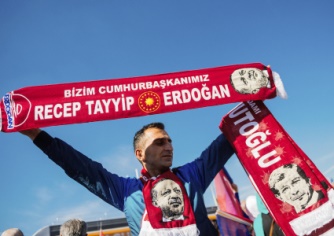
The impressive replay in Turkey’s November 1, 2015 elections of the Justice and Development Party’s achievement in the 2011 elections, when the party won almost 50 percent of the votes, reflects the continuing trend of the party’s electoral success, evident since it was founded. The gamble by Erdogan, who undermined the coalition talks following the June 2015 elections and dragged the country into another election round, was successful, and even surprised his supporters. From an internal perspective, along with the advantages of regained political stability, the negative trends of restrictions on freedom of speech and freedom of the press, persecution of opposition groups, and Erdogan’s growing autocratic tendencies are expected to continue. As to relations with the European Union, for the first time in many years, Turkey has a bargaining chip in its deliberations with the EU, given the EU’s need for Turkish help in stemming the flow of refugees into Europe. As for Israel, political stability in Turkey is an essential condition (though not the only one) for progress in rebuilding the bilateral relations.

The main message in the election campaign conducted by the Justice and Development Party toward the snap parliamentary elections held in Turkey on November 1, 2015 was the need to restore stability to the country. The argument was that one of the main reasons for the lack of tranquility in Turkey and the relative stagnation experienced by the country’s economy recently was the Justice and Development Party’s failure to win a large enough majority in the June 2015 elections to form a government without coalition partners. The issue of governance and the need to jumpstart the economy were also principal factors cited by Turkish President Recep Tayyip Erdogan to justify his effort to turn the governmental system in Turkey from a parliamentary democracy to a presidential regime. The stability argument persuaded many voters who voted in the previous elections for the Nationalist Movement Party or for the pro-Kurdish Peoples’ Democratic Party to change their votes and vote for the Justice and Development Party.

The impressive replay in the recent elections of the achievement attained by the Justice and Development Party in the 2011 elections, when the party won almost 50 percent of the votes, reflects the continuing trend of its electoral success, evident since it was founded. From this perspective, the June 2015 elections, when the party’s support fell for the first time and earned it only 41 percent of the votes, were an exception. The gamble by Erdogan, who undermined the coalition talks following the June elections and dragged the country into another election round, was successful, and even surprised his supporters. The Justice and Development Party was expected to regain the votes of some of its voters who had stayed home in the June elections because they were dissatisfied with the plan to change the political system, but then became alarmed at the weakening of the party. It was also believed that the Justice and Development Party would be able to make inroads among those who voted for the nationalist party, given the tough policy adopted by the government toward the Kurds since the June election, but the drop of more than 4 percent in the support for this party (from 16 percent in June to 12 percent in the November elections) was significant. The more surprising aspect of the election results was the Justice and Development Party’s success in regaining the support of religiously devout Kurdish voters, who had supported Erdogan in the past, but who voted almost unanimously for the pro-Kurdish party in June 2015 (support for this party fell from 13 percent to 11 percent).

From an internal perspective, along with the advantages of regained political stability, the negative trends of restrictions on freedom of speech and freedom of the press, persecution of opposition groups, and Erdogan’s growing autocratic tendencies are expected to continue. Political stability may encourage foreign investment in the country; on the other hand, structural problems and growing government intervention in the economy are liable to continue and in turn deter foreign investors. As for the peace process with the Kurds, which collapsed in July 2015, it appears that as of now, there are a number of factors that could expedite its resumption, even if not immediately. The mandate given by almost 50 percent of the population to the Justice and Development Party could encourage it to adopt a more proactive policy in this context. At the same time, the return of some of the religiously devout Kurds as Justice and Development Party voters, resulting in the weakening of the pro-Kurdish party, could encourage the negotiations that took place in the past between government representatives and Abdullah Ocalan, the leader of the militant Kurdish nationalist organization, the Kurdish Workers Party (PKK). For the PKK, the strengthening of the pro-Kurdish party in the June election was regarded as a questionable development that could be at its expense.

Regarding foreign policy, the picture is complicated by the many challenges facing Turkey, following the upheaval in the Middle East, as well as the crisis in relations between Russia and the West. Even before the elections, the terrorist attacks carried out in Turkish territory by individuals identified with the Islamic State led to closer collaboration between Turkey and the United States and permission by Ankara to the coalition fighting against the Islamic State to operate from bases in Turkish territory. At the same time, the United States and Turkey are divided on the advance of the Syrian Kurds against the Islamic State. While the Americans regard the Syrian Kurds as allies, the Turks perceive them as a threat and affiliated with the PKK.

Where relations with the European Union are concerned, for the first time in many years, Turkey has a bargaining chip in its deliberations with the EU. The EU’s need for Turkish help in stemming the flow of refugees into Europe led to the visit by German Chancellor Angela Merkel to Turkey some two weeks before the elections. Merkel promised 3 billion euros in financial aid for Turkey; she also promised progress in eliminating the visa requirement for Turkish citizens visiting Europe and the start of negotiations on new chapters in the process of Turkey’s accession to the EU. In addition to Merkel’s visit, the postponement until after the elections of the publication of the annual report on progress in the process of Turkey’s accession to the EU, given the critical attitude in the report to the state of the rule of law in Turkey and the politicization of the public sector, was regarded as part of the European efforts to improve relations with the Justice and Development Party and Erdogan.

Political stability in Turkey is an essential condition – though not the only one –  for progress in the rebuilding of relations between Israel and Turkey. One reason is that a possible agreement with Israel will probably require approval from the Turkish parliament, which could have been more difficult to achieve had the Justice and Development Party been weakened. The party’s dizzying success in effect gives it a blank check to pursue any foreign policy issue it wishes. It remains to be seen, for example, whether Israel’s greater openness toward Gaza Strip reconstruction efforts will be regarded by Turkey as sufficient grounds for adopting a slightly more positive attitude toward Israel. At the same time, it also remains to be seen whether the expected governmental stability in Turkey, combined with the domination of the Justice and Development Party until at least 2019, will encourage or deter Israeli Prime Minister Benjamin Netanyahu from making progress toward rebuilding relations with Turkey.

The opinions expressed in INSS publications are the authors’ alone.
Publication Series INSS Insight
TopicsTurkey
עברית

Events

All events
Iran, US, Israel, and the Global Jewish Community
10 March, 2026
12:00 - 13:00
Shutterstock

Related Publications

All publications
Mehmet Ali Ozcan / Anadolu via REUTERS connect
The War Turkey Did Not Want
Missiles, refugees, Kurds, and eroding regional standing: The challenges Ankara faces during the war in Iran, its actions, and the opportunities it may seek to exploit
12/03/26
Anadolu via Reuters Connect and Shutterstock (modified by INSS)
The Turkish Legal Campaign Against Israel
Far beyond straining relations: How Ankara’s legal actions contribute to the deterioration of Israel’s international standing
17/02/26
Protests in support of the Iranian people in western Turkey. Photo: REUTERS/Dilara Senkaya
Iran’s Stability as a Turkish National Security Interest
Anxiety, Apprehension, or Inspiration: How the Upheaval in Iran is Viewed Through Turkish Eyes?
04/02/26

Stay up to date

Registration was successful! Thanks.
  • Research

    • Topics
      • Israel and the Global Powers
      • Israel-United States Relations
      • Glazer Israel-China Policy Center
      • Russia
      • Europe
      • Antisemitism and Delegitimization
      • Iran and the Shi'ite Axis
      • Operation Roaring Lion
      • Iran
      • Lebanon and Hezbollah
      • Syria
      • Yemen and the Houthi Movement
      • Iraq and the Iraqi Shiite Militias
      • Conflict to Agreements
      • Israeli-Palestinian Relations
      • Hamas and the Gaza Strip
      • Peace Agreements and Normalization in the Middle East
      • Saudi Arabia and the Gulf States
      • Turkey
      • Egypt
      • Jordan
      • Israel’s National Security Policy
      • Military and Strategic Affairs
      • Societal Resilience and the Israeli Society
      • Jewish-Arab Relations in Israel
      • Climate, Infrastructure and Energy
      • Terrorism and Low Intensity Conflict
      • Cross-Arena Research
      • Data Analytics Center
      • Law and National Security
      • Advanced Technologies and National Security
      • Foreign Information Manipulation and Interference
      • Economics and National Security
    • Projects
      • Preventing the Slide into a One-State Reality
  • Publications

    • All Publications
    • INSS Insight
    • Policy Papers
    • Special Publication
    • Strategic Assessment
    • Technology Platform
    • Memoranda
    • Database
    • Posts
    • Books
    • Archive
  • About

    • Vision and Mission
    • History
    • Research Disciplines
    • Chairman of the Board
    • Board of Directors
    • Fellowship and Prizes
    • Internships
    • Support
    • Privacy Policy and Terms of Use
  • Media

    • Communications
    • Video Gallery
    • Press Release
    • Podcast
  • Home

  • Events

  • Database

  • Team

  • Contact

  • Newsletter

  • עברית

INSS logo The Institute for National Security Studies, Strategic, Innovative, Policy-Oriented Research, go to the home page
40 Haim Levanon St. Tel Aviv, 6997556 Israel | Tel: 03-640-0400 | Fax: 03-744-7590 | Email: info@inss.org.il
Developed by Daat ,Yael Group.
Accessibility Statement
This site is protected by reCAPTCHA and the Google Privacy Policy and Terms of Service apply.