


Publications
INSS Insight No. 863, October 19, 2016
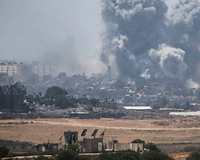
Recent security incidents to Israel’s north and south brought the country’s attention back to its most explosive fronts – against Hezbollah and against Hamas. On October 5 and 6, 2016, rockets and mortar shells were fired from Gaza by an extremist Salafist organization, and Israel responded forcefully, primarily from the air. At the same time, it was reported that a Hezbollah cell of Kafr Rajar residents was caught; the cell had planned to carry out attacks in Israel. These events raise the question of a watershed against the terrorist organizations on both fronts, and whether another round of fighting in the south or north, or perhaps on both fronts, will take place soon. Neither Hezbollah nor Hamas is interested in escalation at present, but there is a chance that tactical events may lead to deterioration. This article analyzes the balance of forces and factors that could disrupt the calm, and highlights the issues that Israel must examine prior to the next confrontation.
Both fronts have similar characteristics, as on both the IDF faces terror organizations that have institutionalized and have taken on characteristics of states. On both fronts, the enemy is currently not interested in fighting with Israel. Israel achieved strong deterrence in previous rounds of fighting against both Hezbollah and Hamas – the Second Lebanon War and Operation Protective Edge, respectively. This deterrence was achieved due to the heavy price paid by the two organizations and their constituencies. However deterrence is a tricky term, and future actions and different calculations may weaken it.
Deterrence against Hezbollah has even passed critical tests, including targeted assassinations of leaders and attacks on convoys of high quality weapons transferred from Syria, both attributed to Israel. Due to Hezbollah's deep involvement in the fighting in Syria, which has caused the organization major losses as well as a budgetary crisis (predictions are that Iran will increase financial aid following the nuclear deal and the end of the sanctions), Hezbollah is even further deterred from war with Israel and reluctant to open a new front.
In the south, Hamas is occupied with internal issues – the reconstruction of Gaza following the previous round of fighting, and military buildup. Like Fatah in the West Bank, Hamas also suffers from significant erosion in public legitimacy, and is a target for severe public criticism for the extensive harm incurred by the population during the last conflict with Israel and poor achievements by Hamas in that campaign. In the political arena, Hamas faces a confrontation with Egypt, due to the organization’s affinity to the Muslim Brotherhood, which the Egyptian regime sees as an enemy and existential threat. Egypt has severely damaged the tunnel smuggling system from the Sinai Peninsula into Gaza; this compounds the damage to Gaza’s smuggling operations following Sudan’s distancing itself from Iran, which makes it more difficult for Hamas to restore its military might to its pre-Operation Protective Edge level. Countries that support Hamas, particularly Turkey and Qatar, do not provide sufficient operational or military support, and are not expected to aid the organization should another round of fighting begin.
Despite the lack of interest in escalation on the part of all relevant parties, deterioration on both fronts could lead to an outbreak of hostilities. Hezbollah seeks a response to the attacks on its weapons convoys, including an operational response with similar characteristics to these attacks, which could include covert operations that obviate the need to take responsibility (in the historic dynamics between Hezbollah and Israel, covert operations are met with covert operations). These are precisely the parameters that the Rajar cell could have provided for Hezbollah: the exposed sabotage attempt was supposed to be carried out with few footprints, without a direct link to Hezbollah and without responsibility taken by the organization. Hezbollah will presumably continue to try to develop operational tools for attacks on Israel in this manner. Moreover, additional attacks against weapons convoys to Hezbollah, especially within Lebanon, are liable to result in a response against Israeli targets by a sleeper cell or Hezbollah's terror infrastructure abroad, alongside border attacks in the Golan Heights and Israel’s border with Lebanon. The danger of escalation increases should the attacks cause loss of life – Israeli or Lebanese – to an extent perceived by both parties as requiring a response.
The southern front is less stable than in the north, where there are two sides in a situation that is therefore more easily controlled. Despite limitations, Israel and Hezbollah can anticipate the other side’s moves and halt deterioration toward fighting with relative ease. Additionally, in the north there are no elements that create continuous friction, which increase the risk of deterioration. On the southern front, however, there is constant friction, including restrictions on entering and exiting, a naval blockade, tunnel digging into Israel, and tension surrounding the humanitarian need to rebuild civilian infrastructure in the Gaza Strip. In addition, the southern front is extremely complex due to its many players. Salafist organizations fire at Israel, more to defy Hamas than to harm Israel. They assume correctly that Israel, which considers Hamas responsible for the situation on the ground, will respond against Hamas. Therefore, the shooting creates a significant dilemma for Israel. Ostensibly, the Israeli government’s policy regarding any fire from the Gaza Strip is well defined: forceful responses against Hamas targets. However, it is clear that this policy has a dangerous aspect, regarding the possibility of miscalculating Hamas’ response. For example, should Hamas feel that it is losing assets too quickly, or should too many lives be lost in the Gaza Strip, the organization may respond with extensive fire on Israel. From there the road to another round of fighting is short.
Policy Recommendations
Israel's supreme interest is security and quiet on its borders. Hezbollah and Hamas have not given up on the cause of destroying Israel, and both organizations regard military conflict as a central path to achieve this goal. Stopping them requires strong deterrence and damaging their respective military buildups. However, another round of fighting in the north or south may be postponed should Israel balance between the desire to maintain quiet and the need to reinforce deterrence and prevent the strengthening of these terrorist organizations.
At present, the tension with Hezbollah is well contained. The quiet has been maintained for over a decade thanks to strong Israeli deterrence (some would argue mutual deterrence), Hezbollah’s involvement in Syria, and the bilateral nature of the dynamic. The buildup issue is addressed carefully, with policy focusing on preventing quality arms supplies to Hezbollah (precision missiles, air defense, drones, surface-to-ship missiles, and chemical weapons), and generally avoiding responsibility for the attacks that are usually carried out in Syria only.
In parallel, the Israeli defense leadership must be sensitive to the fragile quiet in the south. Israel must reconsider its policy of automatic response to any weapons fire from the Gaza Strip. The involvement of a third party – Salafist groups interested in bringing Israel and Hamas into confrontation – is a problematic factor, and ways to address it must be found. It is right to prioritize striking the groups that are responsible for violating the ceasefire, if both operationally and through intelligence, though Hamas must not be relieved of its responsibility. All this must be taken into account knowing that damage to power components dear to Hamas or significant loss of life in Gaza will lead both to changes in the organization’s conduct and to open conflict.
The “every attack will receive a response” policy is too mechanical. One of the most important achievements of the Second Lebanon War was Nasrallah losing his confidence in predicting Israel’s reactions. Uncertainty about Israel's response restrains the enemy, since it is difficult for it to manage risks while walking on the brink. Currently, Israel is too predictable, and rogue organizations (Salafists, Syrian rebels, the Islamic State), can “order” attacks by the Israeli Air Force against the regime they are fighting (Hamas or the Assad regime), whenever they like.
This leads to a fundamental conclusion in addressing the possibility of escalation: for Israel, it is right to enter into a comprehensive confrontation only if the review process of Operation Protective Edge has been completed, with lessons applied and better solutions established to strategic, operational, and tactical issues where Israel and the IDF failed in that campaign. It would not be right to slide again into an unplanned confrontation, as in Operation Protective Edge, which lasted 50 days and ended with no change in the strategic situation, without rules or regulations to prevent future buildup of Hamas and no painful damage inflicted on the organization, especially its military wing. .The IDF must act on a better intelligence about the enemy’s intentions and its capabilities.
Therefore, before entering into military confrontation in the south or in the north, the political leadership and the IDF must study and clarify the following strategic and tactical issues:
1. What strategic purpose does Israel seek to achieve, and what are the implications of each alternative?
2. What is the main leverage for achieving this goal – directly or indirectly? Does it include attacks on the enemy’s national infrastructure supporting its military efforts?
3. How can the operation be shortened, and what are the mechanisms to terminate it?
4. How will the political campaign be conducted at the international and regional level? In this context: will international and regional actors intervene (threats, sanctions, or even military involvement)? When will international and regional actors demand an end to the operation? When and how will negotiations take place about Security Council decisions, if at all? How can international and regional actors be used to shorten the operation and achieve its goals?
5. What is the correct timing of the operation? Can a preemptive strike be conducted, or at least can tactical surprises be created that could lead to significant achievements at the outset?
6. What is the quality and level of Israel's intelligence about the capabilities and intentions of the enemy? In this context, what is different now from the previous campaign? Where and how will Israel be surprised? On what issues could planning reflect incorrect intelligence, or operational or political conceptions?
7. Does the operation include ground maneuvers, and if so, to what purpose? What is the proper timing and depth? Should Israel prepare for occupation or a temporary presence?
8. How will Israel conduct targeted attacks of the organization’s leaders? What capabilities are required and what will be the impact of these actions?
9. How should the Israeli civilian arena be prepared for the campaign? Can the public’s expectations be managed? How? What is the level of resilience level of the home front?
10. What are the risks that a second front could be opened simultaneously, and how can this possibility be prepared for?
Each of these topics requires in-depth cabinet deliberations that should be conducted before and not during or after the fighting in front of a commission of inquiry. A responsible leadership will choose correct and appropriate timing for the operation, and not let uncontrolled escalation dictate the timing and conduct of the operation. If Israel is fated to be dragged into another confrontation in the north or the south, it must prepare wisely and diligently, in contrast to the last rounds of fighting in Lebanon and the Gaza Strip.