


Publications
INSS Insight No. 777, December 9, 2015
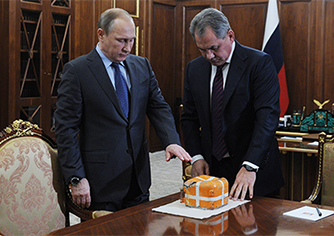
The downing of the Russian jet by the Turkish air force on November 24, 2015 sparked a rapid deterioration of relations between the two nations. In fact, the incident has created a new international reality with ramifications for bilateral Turkish-Russian issues, regional dynamics, and the international community.
According to Turkey, the Russian fighter jet, whose identity was unknown at the time of the incident, entered Turkish airspace, and attempts to warn it to stay clear of Turkish airspace were ignored. Russia denied these explanations and claimed that the Turks could have used existing Russian-NATO coordination mechanisms to prevent the incident, in particular the hotline connecting Ankara and Moscow (which Russia has since disconnected). In fact, the Russian version is that the downing of the plane was an intentional Turkish ambush designed to position Turkey as an influential actor in the regional arena and damage Russia directly by embroiling it in a conflict with NATO members.
Turkey has thus far refused to apologize for the incident, but on several occasions Turkish spokespeople have expressed regret that it happened. Turkish President Recep Tayyip Erdogan even stated that were it known that this was a Russian jet Turkey might have acted differently. In any case, the United States and NATO expressed their support for the Turkish assertions on the incident’s circumstances and backed Turkey’s right to self-defense, while also trying to defuse the tension. US President Barack Obama called on both sides to concentrate on the important objective of defeating the Islamic State. The Foreign Ministers of Turkey and Russia met in Belgrade on December 3, 2015, but the meeting did not produce any progress toward an understanding between the nations.
The downing of the Russian jet was not emblematic of Turkey’s foreign policy toward Russia, which tends to be very cautious. It seems that Turkish frustration with Russia’s intervention in Syria, which began on September 30, 2015, and repeated violations of Turkish airspace by Russian planes served as a backdrop to the incident. To Turkey, which is the most vocal opposition to President Bashar al-Assad’s continued rule, Russia’s intervention was seen as a significant obstacle to toppling the Syrian president. Turkey may even have looked askance at the Vienna talks, which signaled that Assad would remain in power, at least for an interim period. Turkey’s frustration is also connected to events in northwest Syria: contrary to Moscow’s claim that Russia operates against Islamic State targets in Syria, Turkey asserts that most Russian activity is actually directed against the opposition to Assad, especially the Turkmen minority being armed by Turkey. Furthermore, Russia’s ties to the PYD (the Kurdish Democratic Union Party), the Syrian arm of the PKK (the Kurdistan Worker’s Party), the Kurdish underground operating within Turkey, are viewed with great suspiciousness by Turkey.
In Russia, which has a long, charged history with Turkey, the downing of the plane was seen as a severe blow to its image in several ways: internationally, in the context of the Syrian crisis, and internally. Russian President Vladimir Putin went so far as to describe the incident as a “stab in the back” of Russia, and said that “Allah decided to punish the ruling clique in Turkey by stripping it of its sanity.” Moreover, despite its impressive cooperation with Moscow, Turkey has acted to promote its regional ambitions, often at the expense of Russian interests, both in the post-Soviet sphere and in the Middle Eastern and Mediterranean sphere. Consequently, the Russian leadership cannot gloss over the fighter jet incident and must show a response.
Russia, however, has so far avoided taking offensive military action against Turkey, despite the impassioned rhetoric, which included accusations that Turkey is engaged in subversive activity within Russia’s Muslim population and is cooperating with the Islamic State in a range of fields, as well as oil purchases (with accusations aimed directly at Erdogan’s own family). Moscow announced it will not be drawn into “a hysterical, dangerous reaction,” and that it “would respond in a responsible manner, without threatening the use of force.” Nonetheless, Russia reinforced its military presence in Syria, including stationing S-400 air defense missiles at its Syrian base. Russia’s avoidance of a disproportionate response is a result of the fact that Turkey is a NATO member and, if attacked, is assured NATO backing. For Russia, this would mean an all-out confrontation with the West, something Russia would like to avoid. Therefore, of all possibilities, Russia has opted for a relatively moderate, controlled response, manifested primarily in diplomatic and economic realms.
According to a document Putin signed on November 28, 2015, scheduled to go into effect in early January 2016, Russia will impose restrictions on food and agricultural imports from Turkey; Russian companies will not be allowed to employ Turkish citizens; limits will be imposed on Turkish companies doing business in Russia; and charter flights between the countries will be suspended. Russian travel agencies have already been instructed not to sell any more Turkish vacation packages. In addition, citizens traveling between the countries are once again required to carry visas, and security checks on Turkish trucks entering Russia with goods have been increased. Furthermore, the Turkish Stream project, designed to provide gas from Russia to southern Europe, has been suspended, although difficulties in the negotiations over the project had already arisen before the plane incident. Security coordination between the two has also been suspended. In the meantime, there has been no word on sanctions on the import of industrial products from Turkey and on Russian gas supply to Turkey; similarly, there has been no report that work on Turkey’s first nuclear power station being built by Rosatom, the Russian state corporation, has stopped.
The Russian responses have caused Ankara to rethink the strategic wisdom in the decision to down the plane. Despite the initial backing NATO provided for the Turkish move and despite the November 29 agreement between the EU and Turkey on the Syrian refugees, it is clear to Turkey that support from its Western partners is not entirely guaranteed should there be further escalation, and certainly not if Turkey’s conduct is viewed as reckless. The Turkish-Russian crisis is considered by Turkey’s Western partners as bilateral, one that must be resolved by and between both parties. At the same time, however, the West’s intensifying efforts against the Islamic State have resulted in British fighter jets operating against it from bases in Cyprus, and in France and Germany having received authorization to attack the Islamic State from Turkish air bases. In this sense, the airspace over Syria is getting more crowded.
The crisis over the downing of the Russian plane has undone some of the significant improvements in Turkish-Russian relations achieved since the Justice and Development Party rose to power in Turkey in 2002. The crisis will emphasize Turkey’s desire to reduce its major dependence on Russian gas imports and could result in Turkey softening its stance in the Cyprus peace talks and perhaps even with regard to its relations with Israel. From Russia’s point of view, the question is how far it will go in aggravating the crisis with Turkey, especially given the fact that some of the punitive measures will damage Russia’s own economy. Russia is willing to pay this economic price because it wants to reduce Turkey’s scope for maneuvering in the disagreement over the future of Syria and the new regional order (though even before the plane incident Turkey’s impact on the talks designed to promote a resolution to the Syrian crisis was limited). Beyond the regional competitive aspect and its implications for a new regional order, the Russian response is also meant to serve the global aspect of Moscow’s policy: Russia’s leaders have proven skills in managing international crises, a fairly effective political tool in the absence of other superpower tools of a military or economic nature. In fact, this is the chief means of leverage in Russia’s involvement in the Syrian crisis. Its assertive management of the crisis seems to be designed to prod Europe and the United States into offering a compromise that would link the crisis with Turkey to other Russian-Western crises and thus create a package deal.
One may view the crisis developing between Russia and Turkey as yet another piece of the regional Middle Eastern crisis in general and the Syrian crisis in particular, and conclude that the issue will be discussed among the world powers in the context of the effort to resolve the Syrian predicament. It may be that after settling certain issues critical to Russia in other sectors – especially the sanctions imposed on it because of its Ukraine policy – a compromise on the Russian-Turkish crisis will also be found. This formula would likely strengthen Russia at Turkey’s expense.