The Escalation in the Gaza Strip: Hamas Negotiates with Fire
When the previous round of escalation with Hamas ended a month ago, the seeds for the next round were already sprouting. Yet once more, Israel's strategy of deterrence vis-à-vis Hamas and the other organizations had run its course. Thus a strategic alternative is required – even though Israel has avoided searching for one a variety of pretexts, be they upcoming elections, the Eurovision Song Contest, or the Trump plan.
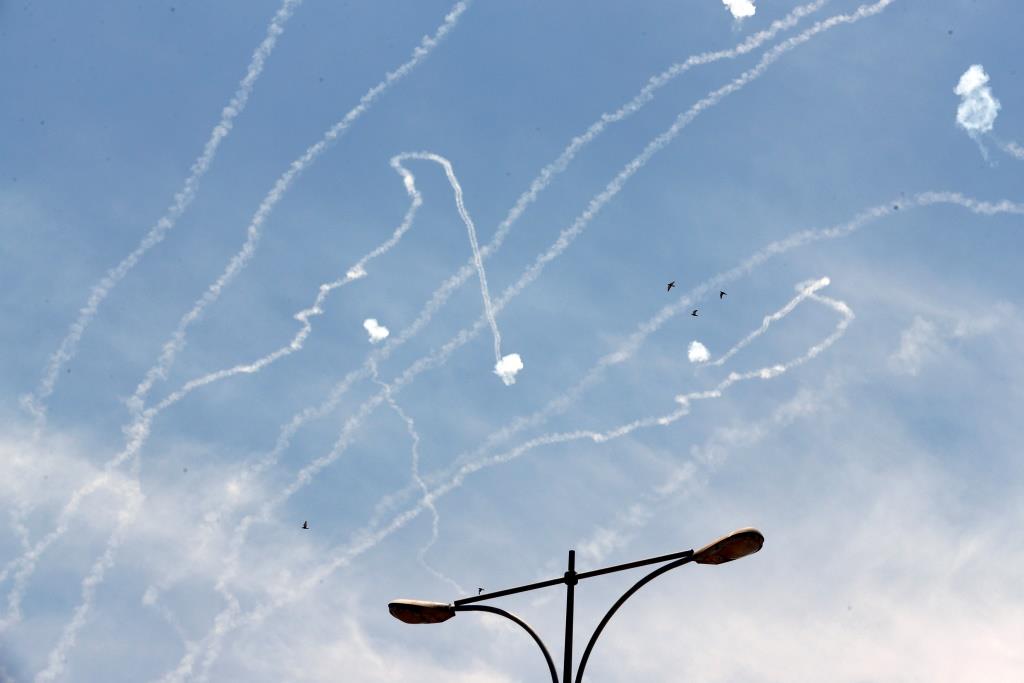
Both sides continue to cling to the concept of accommodation: security calm in exchange for improvements in the civilian situation and infrastructure in the Gaza Strip. The disagreement is over timetables for implementing the understandings achieved through Egyptian mediation. While Israel would prefer to prolong the process, Hamas seeks immediate, notable change that would be seen and felt in the Gaza Strip. This time, too, an escalation initiated by Islamic Jihad (for its own reasons) has been commandeered by Hamas and broadened into a confrontation involving the launching of hundreds of rockets, in a bid to make progress in implementing the understandings. All this has been done out of the perception that the timing is excellent to extract concessions from the Israeli government – given the convergence of Memorial Day, Independence Day, and the Eurovision. As with prior rounds, the risk of losing control over the escalation and the risk of the round expanding have grown.
The understandings between Israel and Hamas that were formulated after the March escalation include steps that were to be implemented immediately as well as understandings for the medium and long terms. The immediate steps, which might have seemed easy to implement, were delayed and schedules postponed: 1) The increase in Qatari funding and its extension to year's end was disrupted when Hamas failed to receive the funds for the month of May, as Ramadan neared; 2) The broadening of the fishing zone to 15 nautical miles was carried out only in part – while the zone was indeed broadened, it was narrowed after a rocket was launched toward Ashdod last week; 3) Israel finds it difficult to implement the understandings on expanding activity at the border crossings when it comes to reducing limitations on the entry of dual use materials.
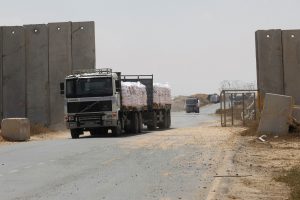
The mid to long term understandings include the creation of industrial zones at the Kerem Shalom and Karni crossings, the activation of the No. 161 power line from Israel to the Gaza Strip, and a gas pipeline from Israel to the Gaza power station. But no timetables were set, which makes it hard for Hamas to present concrete gains to its constituency.
Egypt has positioned itself as the exclusive mediator between Israel and Hamas. This status gives it prestige, making it favored by all sides. It has managed to sever Hamas from the Muslim Brotherhood parent movement and co-opt Hamas for the war on Salafi jihadist elements in Sinai. It aspires to increase Israel's and Hamas's dependency upon it but recoils from taking any responsibility for the situation in the Strip, and thus it does not evince sufficient forcefulness against the sides to hold them to their commitments as part of the understandings formulated.
The Hamas leader in the Gaza Strip, Yahya Sinwar, learned that Egyptian mediation does not deliver the goods without the leverage of violence against Israel. In the Hamas view, Egypt is not determined enough as a mediator to advance the understandings that were reached, and therefore there was good reason to prod it at the very moment Hamas and Islamic Jihad leaders were sitting in Cairo. This would appear to be supported by recent experience: the rounds of escalation of recent months led both to increased involvement by Qatar and the UN and to the inclusion of many countries in the circle of involvement in new understandings in the Gaza Strip.
In recent weeks, INSS has published articles and podcasts that relate to the situation in the Gaza Strip and analyze Israel's policy – the actual and the desired – in an effort to address the problem. Not much has changed. We invite you to peruse, listen, and get a sweeping picture of the southern arena; click on the text below each picture for more discussion.