


Publications
INSS Insight No. 681, April 2, 2015
Follow us on Google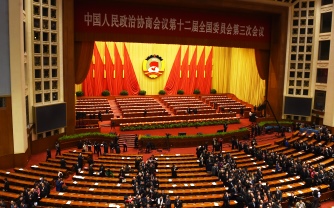
China faces significant economic challenges: a slowdown in growth, the real estate bubble, and government corruption are only some of the issues that concern the Chinese government, and the world is anxiously following the way Beijing is coping with them. Will Beijing manage to surmount the obstacles in its path and prevent an economic slowdown? While the task is formidable, China in the past has already proven its ability to act creatively and overcome complex obstacles. The pace of development in China over the last 30 years demonstrates clearly that China does not “go by the book” familiar to the Western world. The Chinese form of government does impose certain restrictions on the business sector, but in contrast, it allows for resolutely advancing processes. This ability, as well as access to an enormous amount of capital, is the key to the growth and innovation that are likely to continue moving China forward.
Part of the world in the throes of ongoing financial difficulties, China faces significant challenges that are destined to affect global handling of the crisis. A slowdown in growth, the real estate bubble, and government corruption are only some of the issues that concern the Chinese government, and the world is anxiously following the way Beijing is coping with them. Recently, China took two measures that heightened investors' fears that China could slide into a recession. One is lowering the growth target for 2015 to a level of 7 percent, as opposed to growth of 7.4 percent in 2014. The other is lowering interest for a second time in a short period. Many economists are pessimistic about meeting this year’s growth target of 7 percent and recommend encouragement of growth with the help of a relaxed monetary policy and a more proactive fiscal policy.
In response, China is sending calming messages. In early March 2015, some 3,000 delegates from throughout China attended the annual conference of China's legislative branch – the National People's Congress (NPC). They discussed the challenges facing the world's second largest economy and drafted the courses of action required to meet the targets set by the government. Addressing the Congress, Prime Minister Li Keqiang referred to the slowdown expected in the annual growth rate and emphasized that China's high growth in recent years is no longer suited to its continued development, since China is switching from an export-based economy to an economy emphasizing internal consumption. Therefore, the moderate growth is "the new normal" and the current standard, and within this framework, China will try to balance stable growth and economic reorganization. The growth should be more qualitative and sustainable, and the Chinese government has enough tools and room to maneuver to advance economic goals, since in recent years China has refrained from taking extreme measures over the short term. In addition to growth, the Prime Minister noted several other targets for 2015, including: the fiscal deficit target will be raised to 2.3 percent of the GDP (an increase of 0.2 percent over the previous year); the consumer price index will be maintained at 3 percent; unemployment will be maintained at a maximum of 4 percent; and the volume of imports and exports will be increased to approximately 6 percent. Furthermore, the government has set for itself a goal of reducing large pollutant emissions.
According to the Prime Minister, China must act in accordance with the principle of the "Four Comprehensives" demanded by China's President Xi Jinping. The term reflects the regime's commitment to the comprehensive building of a society that prospers in a recession, deepens reforms, promotes the rule of law, and guarantees strict control of the party. In order to ensure such moderate growth, the government intends to act on a number of planes. For example, the government will continue to encourage the private sector and local demand – as seen, for example, in the Prime Minister's reference to the government’s call to the public to purchase a home and even two homes, in the hope that the real estate market will see stable growth in the long term. In addition, the government will adopt a strategy of "opening up" whereby more free trade areas will be opened, such as the free trade area in Shanghai, and financial services will be provided to outside investors.
In the banking sector, despite China's vigorous denials, the Asian Infrastructure Investment Bank (AIIB) launched last year in Beijing, is considered to be a competitor of the World Bank and an alternative that threatens the status of the United States – up to now the only party that provides global financing. In spite of warnings issued by the United States to its allies, the Asian Bank has recently earned the support of countries such as Britain, France, Germany, and Italy. On March 31, 2015, Israel signed a letter of application to join the AIIB, and Australia is also examining the possibility of joining.
The Chinese government is likewise intent on promoting industry and agriculture by continuing and strengthening reforms. The "internet plus" program was launched with the goal of encouraging innovation and combining traditional industries with the internet in order to upgrade business models and stimulate growth. The Prime Minister also announced the "made in China" strategy, whereby a three-year plan will be established for encouraging competition and breakthroughs in advanced industries like robotics, equipment for trains and the sea, and vehicles with new energy. These two plans put a strong emphasis on the need for encouraging innovation and improving efficiency. To this end, the government intends to remove barriers and promote competition in the market. In addition, the Prime Minister promised to augment the protection of intellectual property rights (IPR); in the international sphere, the Chinese government intends to continue interregional economic development and strengthen its relations with the nations of the world by means of the "One Belt, One Road" initiative, which deals with establishing the overland and Maritime Silk Road. The initiative began in 2013, and its economic impact is estimated at USD 21 trillion, which covers a population of approximately 4.4 billion people in 26 countries and regions. The project is expected to greatly strengthen international trade and China's economic influence over countries in Asia, Europe, and even Africa.
The Prime Minister also told the Congress that stable economic growth will be achieved through strong support of policy, flexible monetary devices, and more job opportunities. In addition, he stated that the government must reduce bureaucratic red tape and continue implementing reform in taxation, financing, and investments in order to stimulate the market and clear the way for entrepreneurship. He concluded his remarks by saying that achieving the annual targets that China has set for itself will contribute greatly to reaching China's "two centenary goals”: one – establishing a prosperous society during a recession, until the 100th anniversary of the founding of the Communist Party in China, which will take place in 2021; the second – making China a socialist, modern, thriving, strong, democratic, and culturally and harmoniously developed country; and all this in time for the 100th anniversary celebration of the founding of the People's Republic of China in 2049.
Reacting to these statements by China's Prime Minister, the markets fell immediately upon the announcement of lowering the annual growth target to 7 percent, with the Hong Kong and Shanghai stock exchanges recording decreases of 0.95 percent and 1.3 percent, respectively. Following this initial reaction and in the wake of the Prime Minister's statements regarding China’s economic room for maneuver, the markets turned around, raising expectations for additional relaxation by the Central Bank of China. Analysts expect that the increases will continue during 2015, with continued governmental support and anticipated investment in infrastructures like the Silk Road.
Will Beijing manage to surmount the obstacles in its path and prevent a slowdown? While the task is formidable, China in the past has already proven its ability to act creatively and overcome complex obstacles. The pace of development in China over the last 30 years demonstrates clearly that China does not "go by the book" that the Western world knows. The Chinese form of government does impose certain restrictions on the business sector, but in contrast, it allows for resolutely advancing processes. This ability, as well as access to an enormous amount of capital, is the key to the growth and innovation that are likely to continue moving China forward.
The opinions expressed in INSS publications are the authors’ alone.
Publication Series INSS Insight