


Publications
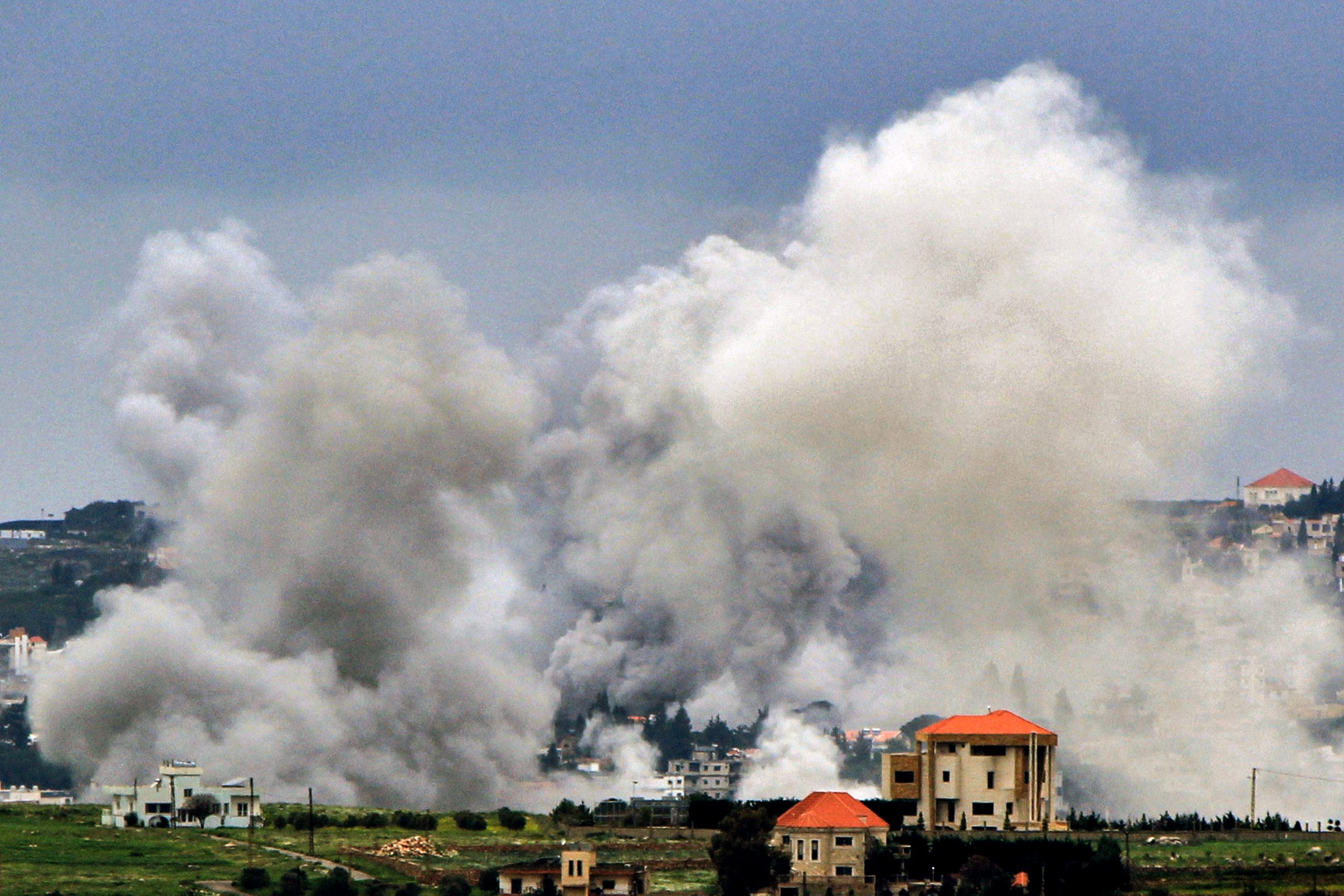
Why did the weakened organization decide to open a front against Israel following its strike in Iran, how does this campaign differ from previous campaigns in the north, and how should Israel respond?
INSS Insight No. 2118, March 24, 2026
Follow us on GoogleHezbollah’s decision to open an additional front against Israel after the attack on Iran was meant not only to relieve the military pressure on Iran but also to strengthen the organization’s own standing at a time when it has been weakened militarily and politically and is facing growing criticism at home and abroad. Hezbollah is now waging a war of survival, seeking to shift the balance of power with the IDF and improve its position within Lebanon. It is doing so by employing its full arsenal of missiles, rockets, and UAVs and by deploying the Radwan Unit against IDF forces in southern Lebanon. For Israel, whose stated objective is to completely disarm the organization, it is recommended to continue military operations while avoiding harm to civilian infrastructure and refraining from a broad, prolonged presence in Lebanon. At the same time, Israel should demonstrate readiness for a complementary diplomatic move with the Lebanese leadership and prepare for it.
On the eve of the war with Iran, it was uncertain whether Hezbollah would join the fighting. The organization publicly adopted an ambiguous policy, and its leadership, headed by Secretary-General Naim Qassem, emphasized full support for Iran but refrained from stating how it would act. Militarily weakened, politically isolated, and under growing pressure to disarm, Hezbollah debated whether to resume military activity after refraining from doing so during the 15 months since the ceasefire with Israel in November 2024, instead focusing on rebuilding its capabilities with increased Iranian assistance. Hezbollah’s decision on March 2 to open a front against Israel, despite knowing that this move would exact a heavy price, was intended to serve two objectives:
- Fulfilling its commitment to Iran by helping it in the war and drawing Israel into investing efforts on the Lebanese front—particularly after Hezbollah’s leadership defined the elimination of Ali Khamenei as a red line and out of concern that an Iranian defeat would lead to a halt or significant reduction in Iranian support for the organization.
- Improving the organization’s position by trying to halt negative trends, primarily Israel’s ongoing military operations against it, which had so far gone unanswered; efforts by the Lebanese leadership, as well as broad segments of the political system and public, to disarm Hezbollah and sever its ties with Iran; and criticism from within the Shiite community—especially among those harmed in the previous war, who were not compensated and are now once again homeless. According to sources in Lebanon and UN officials, the current war has displaced about one million people.
Hezbollah’s leadership has declared that it is prepared for a prolonged war aimed at halting IDF operations against the organization after the Lebanese leadership failed to achieve this through diplomatic means. The organization is operating in close coordination with Iran’s Islamic Revolutionary Guard Corps (IRGC) personnel in Lebanon, several of whose senior members were killed by the IDF during the war. Particularly notable is the difference between Hezbollah’s first statement announcing its entry into the war following Khamenei’s assassination on March 1—which had a religious tone and drew widespread criticism in Lebanon for allegedly serving foreign Iranian interests—and the statement issued the following day. In the later statement, Hezbollah claimed that it had launched its campaign against Israel on strategic grounds in response to the IDF’s ongoing attacks against it and portrayed the move as legitimate self-defense in light of Israel’s continued violations of the ceasefire agreement while continuing to emphasize its role as Lebanon’s defender. Similarly, in his first speech during the war on March 4, Secretary-General Naim Qassem did not mention Iran and stressed that Hezbollah had abandoned its policy of “containment” and no longer had the patience to rely on diplomatic efforts to halt IDF activity.
Unlike the limited campaign Hezbollah waged during the “Swords of Iron” war, from the very first days of the current war, the organization has used its entire arsenal, launching dozens to hundreds of missiles and UAVs daily, mainly at northern Israeli communities but also at targets at longer ranges, reaching the outskirts of Haifa. A small number of ballistic missiles (Fateh-110 and Qadr-1) were also launched toward central Israel, with one even reaching the Israeli communities around Gaza. For example, on March 11, the organization announced “Operation Eaten Straw,” in which it planned to launch about 600 missiles and rockets into Israeli territory in coordination with simultaneous Iranian attacks. However, roughly two-thirds of this massive barrage has been thwarted by the IDF, and most of the missiles that entered Israeli airspace have been intercepted.
Hezbollah’s current capabilities are based on the weapons that remained after its previous confrontation with the IDF (estimated by the IDF at about 20% of its pre-October 2023 firepower), in addition to weapons restored and accumulated after the November 2024 ceasefire. During that period, Hezbollah refrained from fighting and focused on accelerating its rebuilding, supported in part by financial and military assistance from Iran. This assistance has continued despite the weakening of Iran and its regional axis and despite Hezbollah’s need to establish alternative smuggling channels after previous ones were cut off, mainly because of regime change in Syria. On the eve of the current war, Hezbollah was estimated to possess approximately 20,000–25,000 missiles and rockets, most of them short-range, along with a smaller number of more advanced, medium-range missiles capable of reaching the entire Israeli home front, in addition to about 1,000–2,000 UAVs. As part of the reorganization of its military and political apparatus, the Radwan force had prepared in advance for the possibility of an IDF ground incursion into southern Lebanon, adopting a new structure of decentralized deployment and mobile operations in small groups. These steps were carried out alongside efforts to conceal new appointments in the organization’s political and military leadership and to reorganize forces in ways to avoid detection by Israeli intelligence.
In Lebanon’s domestic arena, pressure on Hezbollah from President Michel Aoun and Prime Minister Nawaf Salam’s government—especially following the Lebanese government’s decision in August 2025 to pursue the organization’s disarmament—intensified in parallel with rising tensions ahead of a potential US–Israeli strike on Iran. On the eve of Operation Roaring Lion, both the president and the government demanded that Hezbollah refrain from joining the war alongside Iran in the event of an attack. The Lebanese leadership claimed it had received assurances that Israel would avoid military action in Lebanon as long as Hezbollah did not open an additional front against it, and it expressed anger that the organization violated its commitment not to join the war.
Concerned about the implications of the war for Lebanon—already battered from the previous conflict, especially if the war is to be prolonged, as Israeli officials have stated—President Aoun quickly presented international actors with a framework for ending the war. Its main components include a demand for a full ceasefire; Israeli withdrawal from Lebanese territory; the strengthening of the Lebanese Armed Forces (LAF) and their deployment along the border; and unprecedented consent to open direct talks with Israel under international mediation. His initiative received wide attention (France even published a similar initiative), but it was categorically rejected by Hezbollah, which conditions any direct negotiations with Israel on a complete cessation of IDF activity and withdrawal from Lebanon. Hezbollah’s Shiite ally and Speaker of Parliament Nabih Berri, now at a decision point regarding continued support for the organization, also opposed negotiations under fire. Reports indicate that the Lebanese government is working to form a delegation for such talks at the ambassadorial level with representatives from all Lebanese sects but is struggling to find a Shiite representative.
In response to public anger over Hezbollah’s entry into the war alongside Iran, the Lebanese government adopted a series of dramatic decisions in the early days of the campaign, although it has faced great difficulty in implementing them:
- Ban on Hezbollah’s military activity—Following a cabinet meeting on March 2, Prime Minister Salam announced that the government opposes any military or security activity conducted from Lebanese territory outside official state institutions, which alone are authorized to decide on and implement matters of war and peace. This effectively constitutes a total ban on Hezbollah’s military activity, rendering it illegal and requiring the organization to hand over its weapons and limit its role to the political sphere. Lebanese media were instructed to avoid terms such as “the resistance” or “jihad fighters” in reference to Hezbollah operatives, and the government instructed the army and security agencies to prevent rocket or UAV launches toward Israel and to act against violations. In practice, however, implementation has been very limited. Lebanese media reported that the LAF commander had warned in advance that enforcing the policy would be difficult: Only a few Hezbollah operatives were arrested by the LAF, and they were quickly released by the judicial system.
- Reducing Iranian involvement in Lebanon—On March 4, following Israeli warnings that it would target IRGC personnel if they remained in Lebanon, the Lebanese government decided to take steps to reduce Iran’s presence in the country. These included canceling visa exemptions for Iranian citizens and requiring prior security clearance and visas (in practice, entry was denied to an Iranian delegation arriving via Turkey without the required approvals). More significantly, the government banned IRGC activity in Lebanon and demanded that they leave the country, even if they are posted as diplomats. Reports indicated that about 150 Iranians departed on a Russian flight (Iran claimed the passengers were diplomats, women, and children, likely to conceal the presence of IRGC personnel). Nevertheless, it is estimated that IRGC elements remain in Lebanon and continue to assist Hezbollah.
From Israel’s perspective, a war with Hezbollah alongside a war with Iran is not an optimal scenario. However, Hezbollah’s entry into the conflict has worked in Israel’s favor. Israel was prepared for another round in the north, based on the understanding that Hezbollah’s rate of recovery was faster and more substantial than the damage inflicted on it by the IDF, as well as the absence of a genuine effort by the LAF to implement the Lebanese government’s decision to disarm the organization. The January 2026 statement by the LAF commander that his forces had deployed across most of southern Lebanon up to the Litani River has proven disconnected from reality: In the current campaign, Hezbollah continues to operate in this area.
Israel now appears to view the situation as an opportunity to act against Hezbollah and has declared that its objective in Lebanon is to disarm the organization and eliminate the threat it poses. Although the Lebanese theater has been defined as a “secondary front” in the context of the war with Iran, it appears that military operations against Hezbollah will continue even after the war with Iran ends. At this stage, the campaign in Lebanon enjoys public legitimacy in Israel, including among residents of the north, who have been the primary targets of the attacks from Lebanon. The US administration, which shows only limited interest in the campaign against Hezbollah, has also granted it legitimacy. Accordingly, even if Hezbollah is not fully disarmed, the continuation of the campaign is expected to significantly degrade its capabilities, severely undermine its domestic standing, and reduce Iran’s ability to support it. The continuation of Israel’s military campaign against Hezbollah is therefore warranted, but it cannot stand alone; Israel should also capitalize on the Lebanese government’s willingness to advance diplomatic negotiations. Therefore:
- In fighting Hezbollah—The focus should remain on damaging the organization itself (capabilities, leadership, military operatives, and infrastructure), while avoiding harm to civilian infrastructure or the LAF. This is essential in order not to further weaken Lebanon’s already fragile leadership or undermine Israel’s legitimacy both within Lebanon and internationally.
- Regarding IDF presence in Lebanon—Israel should avoid a “creeping” territorial occupation that is difficult to reverse, as well as saturating the area with troops that could become targets for enemy guerrilla operations. Israel should not establish a “security zone” up to the Litani River and certainly not maintain such a presence over time. Rather, it should suffice with a narrow presence inside Lebanese territory sufficient to preserve tactical superiority over Hezbollah. At the same time, defensive measures for Israeli communities along the border (barriers, increased deployment of forces and assets) should be advanced.
- On the diplomatic level—Israel should respond positively to initiatives backed by the United States and involving international participation, to advance a diplomatic track toward a security understanding with Lebanon (and not necessarily a formal political agreement) that will consolidate the IDF’s achievements in the war. Such an arrangement should preserve the IDF’s freedom of action against emerging threats; create conditions for Lebanese and international steps to dismantle Hezbollah as a military organization; and include demands for reforms in the LAF and its strengthening so it can implement Lebanese government policy (see the details in the policy paper published March 15, 2026, “The Lebanese Army—The Challenge for Israel Given the Gap Between Vision and Reality.”
- Toward the Lebanese leadership—Alongside demonstrating an understanding of its weakness and a willingness to help strengthen it, Israel should demand that the Lebanese leadership adopt more decisive measures against Hezbollah in order to undermine its status and reduce its grip on state institutions. These measures should include shutting down its independent economic and social institutions; removing its members from positions in government, the judiciary, and control over infrastructure, airports, and seaports while at the same time stepping up the military effort to complete its disarmament.