



CV
Colonel (res.) Dr. Ofer Guterman is a senior researcher in the "From Conflict to Agreements" research program, at the Institute for National Security Studies (INSS). Concurrently, he serves as a senior researcher at the Institute for the Research of Methodology of Intelligence (IRMI). Ofer has served as a senior analyst within Israeli Defense Intelligence (IDI), including a role as the intelligence assistant to the military secretary to the Prime Minister. He holds a PhD from the Department of Middle Eastern Studies and the Department of Political Science at Ben-Gurion University, a master's degree in security studies and a bachelor's degree in Arabic Language and Literature, both from Tel Aviv University.
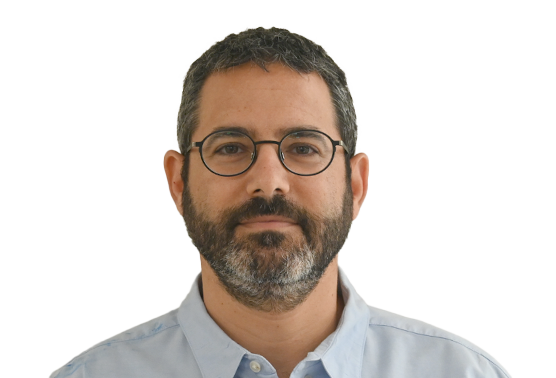
Ofer Guterman
Senior Researcher
Publications
All PublicationsThe 2006 Elections in the Palestinian Arena as a Warning Sign: An Expanded National List as a Pathway to Normalizing Hamas
The path to normalizing Hamas through the ballot box—and how to prevent it
31 August, 2026Alternatives for the Gaza Strip Following the Campaign Against Iran
As the campaign against Iran winds down, attention is expected to return to the Gaza Strip. In the meantime, Hamas is exploiting the strategic vacuum to rehabilitate its governance and military capabilities. Simultaneously, the Trump framework remains stalled, and the “Board of Peace” faces professional, operational, and budgetary difficulties in advancing its declared objectives. The issue of demilitarization remains trapped between Israel’s demand for the complete and immediate disarmament of Hamas and the organization’s stalling tactics.
Israel faces three main alternatives: (1) Renewal of efforts to fully implement the Trump framework across the Strip, a course that carries the risk of “mock demilitarization” and depends on Hamas’s consent; (2) Gradual stabilization and reconstruction of areas cleared of Hamas while continuing to erode its control in areas still under its rule. This option is vulnerable to violent disruption and could entrench the Strip’s division; (3) A return to war and the reoccupation of the Gaza Strip, which would entail extremely heavy military, economic, and diplomatic costs for Israel.
The key recommendation is to avoid perpetuating the status quo, which establishes Hamas’s rule, and instead adopt a proactive approach. Israel should allow the implementation of the Mladenov framework for gradual demilitarization, beginning with heavy weapons, while coordinating with the Trump administration regarding scenarios that would justify use of force. If Hamas obstructs the process, Israel should implement a differential alternative: the entry of a civilian committee and Palestinian police into “green zones” cleared of Hamas (alongside increasing Israeli security responsibility modeled on Judea and Samaria). Simultaneously, Hamas’s capabilities and governance in the “red zone” should be systematically degraded, including the gradual erosion of its territorial control. The alternative of returning to war and military occupation should remain a last-resort alternative, contingent on the formulation of an exit strategy and a designated body to assume civilian responsibility.
10 June, 2026The Long Road to Disarming Hezbollah—A DDR Model for Lebanon
Assuming that Operation Roaring Lion does not end in the complete defeat of Hezbollah, the issue of disarming Hezbollah will remain on the agenda at its conclusion—an interest shared by both Israel and the Lebanese state. This article proposes adopting the DDR model—Disarmament, Demobilization, and Reintegration—and advancing an L(ebanon)DDR process as an orderly framework for disarming Hezbollah and integrating it into Lebanon, alongside repairing, rebuilding, and strengthening the Lebanese state.
This framework offers an alternative to disarming Hezbollah through military force, which would require Israel to occupy all of Lebanon. Although it is clear that Hezbollah will not relinquish its weapons easily, the current circumstances present an opportunity to force this outcome through combined Lebanese–Israeli, regional, and international efforts. These circumstances include the willingness of Israel and Lebanon to enter into direct political negotiations; the military weakening of Hezbollah (and Iran) following the war; the IDF’s presence in southern Lebanon; and the growing support within Lebanon for disarming Hezbollah.
On April 9, Israel agreed to President Aoun’s proposal to open direct negotiations with Lebanon to promote a peace arrangement and disarm Hezbollah. This objective is the central challenge on the path to an agreement between the two states, which would establish the Lebanese government’s monopoly over the use of military force. Experience from DDR processes suggests that this model can help, as it offers a long-term, supervised, and gradual process that combines disarmament with civil, social, and economic rehabilitation, alongside international support and reciprocal incentives for all parties involved.
15 April, 2026De-Hamasification of the Gaza Strip: Learning from Western and Arab Models of Deradicalization
The radicalization of Palestinian society in the Gaza Strip is not a new phenomenon, but the process has accelerated and deepened dramatically since Hamas’ takeover of the territory in 2007. Under its rule, an extremist religious-nationalist ideology has been systematically embedded across all spheres of Gaza life—from education and religious institutions to welfare and the media—producing a profound “Hamasification” of public consciousness.
The war that erupted on October 7 brought unprecedented ruin to the Gaza Strip, both physically and institutionally, posing a monumental reconstruction challenge, but also a rare historic opportunity. This memorandum argues that military disarmament and physical rehabilitation alone will not ensure long-term security and stability, and that a far deeper process of “de-Hamasifcation” is required: dismantling Hamas’ ideological and institutional hegemony and replacing it with a more moderate civic and normative infrastructure.
The study presents a comparative analysis of Western and Arab deradicalization models and finds that Western approaches—such as those implemented in Germany and Japan—struggle to provide an adequate response to Gaza’s cultural and political context. Instead, we propose adopting operational principles drawn from contemporary Arab models, particularly the “civic-transformative” model applied in the Gulf states, which combines a firm crackdown on extremist actors with re-education toward religious tolerance and broad-based economic rehabilitation.
The paper outlines an integrative strategy encompassing sustained security demilitarization, the mobilization of an Arab coalition to provide religious and political legitimacy, and the establishment of a credible political horizon as a counterweight to the ethos of “resistance.” Only the combination of these elements can generate a viable governing and ideological alternative to Hamas and lead to a more stable long-term security environment for the State of Israel.
5 February, 2026The Gaza Strip: Strategic Alternatives for Israel
What options are available to Israel with regard to its conduct in the Gaza Strip in 2026—and how should it act?
13 January, 2026Regional Involvement in the Gaza Strip: Scenarios and Implications
The differing positions and interests of Saudi Arabia, the United Arab Emirates, Qatar, and Turkey regarding the shaping of the Gaza Strip—and their implications
4 November, 2025