


ABACA via REUTERS CONNECT
Map, February 11, 2026
Interactive Live Map: U.S. Forces Posture in the Middle East (CENTCOM)
Creator: Stephane Cohen | Advisory Team: Avishay Ben Sasson Gordis, Mora Deitch, Raz Zimmt, Hannah Bettan & Avihu Marom
Iran is under sustained internal and external pressure, marked by widespread protests, economic damage from sanctions, and repression. Despite this strain, the regime remains intact. The IRGC and Basij retain loyalty and operational effectiveness, and there are no indications of significant defections within the armed forces (the Artesh). Historical precedent suggests that mass protests alone are unlikely to produce regime collapse. Overall, barring external intervention, the regime is weakened but stable. Since the onset of the crisis, the United States has been explicit that it views Iranian repression and ongoing military and nuclear buildup efforts as potential casus belli, while encouraging public pressure on the regime.
Current dynamics are defined by two parallel tracks:
Diplomatic: From Tehran’s perspective, engagement in diplomatic talks with the United States appears driven by strategic opportunism and time-buying, rather than by a genuine effort at de-escalation. The United States has signaled openness to a diplomatic settlement around the nuclear issue, although it remains unclear whether this reflects a sustained or comprehensive approach.
Military: U.S. and Iranian force movements, intensified ISR activity, and psychological signaling point to preparations for a potential U.S. attack on Iranian assets, rather than purely symbolic posturing.
U.S.-Iran-Israel tensions remain elevated. Force posture and messaging reflect credible readiness for military action alongside continued efforts to keep diplomatic channels open. The operating environment is assessed as a pre-crisis shaping phase, with an increased risk of miscalculation or rapid escalation.
This interactive map highlights the deployment of U.S. military assets and other relevant actors in the region. The current U.S. posture signals deterrence and readiness for offensive military operations, while reflecting a strong preference to avoid a protracted conflict. Combined with intensified ISR activity and diplomatic signaling, this configuration supports coercive diplomacy but also increases the risk of escalation through miscalculation in an already volatile theater. The map is updated regularly and as accurately as possible, based on open-source intelligence assessments and media reporting.
US Force Disposition in the Region
- Estimated Personnel: ~40,000.
Naval Forces
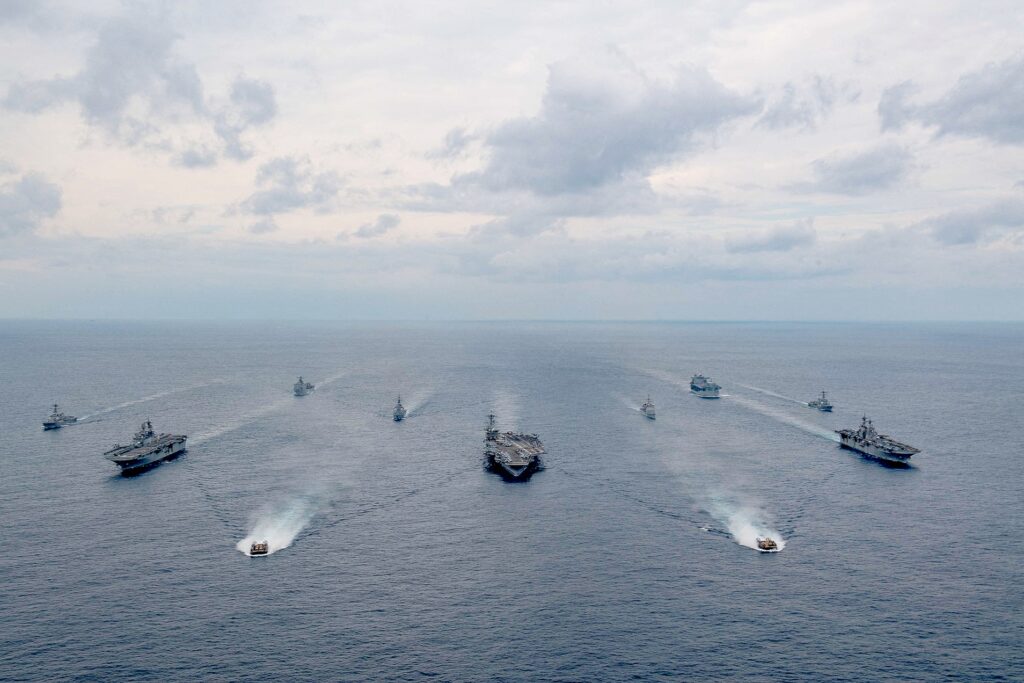
- Carrier Strike Group: USS Abraham Lincoln (CVN-72) operating off the coast of Oman with AIS disabled (CVW-9 fully embarked with F-35C, F/A-18E/F, EA-18G, E-2D).
- Surface Combatants: 8 × Arleigh Burke–class destroyers deployed across the Arabian Sea, Eastern Mediterranean, and the Red Sea.
Air Force
- Strike Assets: ~36 × F-15E Strike Eagles (primarily Jordan-based).
Reports indicate F-35 fighters converging on the region.
- ISR and Enablers: RC-135V, MQ-4C Triton, E-11A BACN.
Additional activity by MC-130J, KC-130J.
- Personnel Recovery: CSAR assets deployed (HC-130J, HH-60).
Missile Defense
- Reinforced Patriot and THAAD batteries across the region.
Logistics and Sustainment
- Elevated strategic and tactical airlift activity (C-5, C-17, KC-135, KC-46).
For additional details, please contact Stéphane Cohen at stephanec@inss.org.il