


Publications
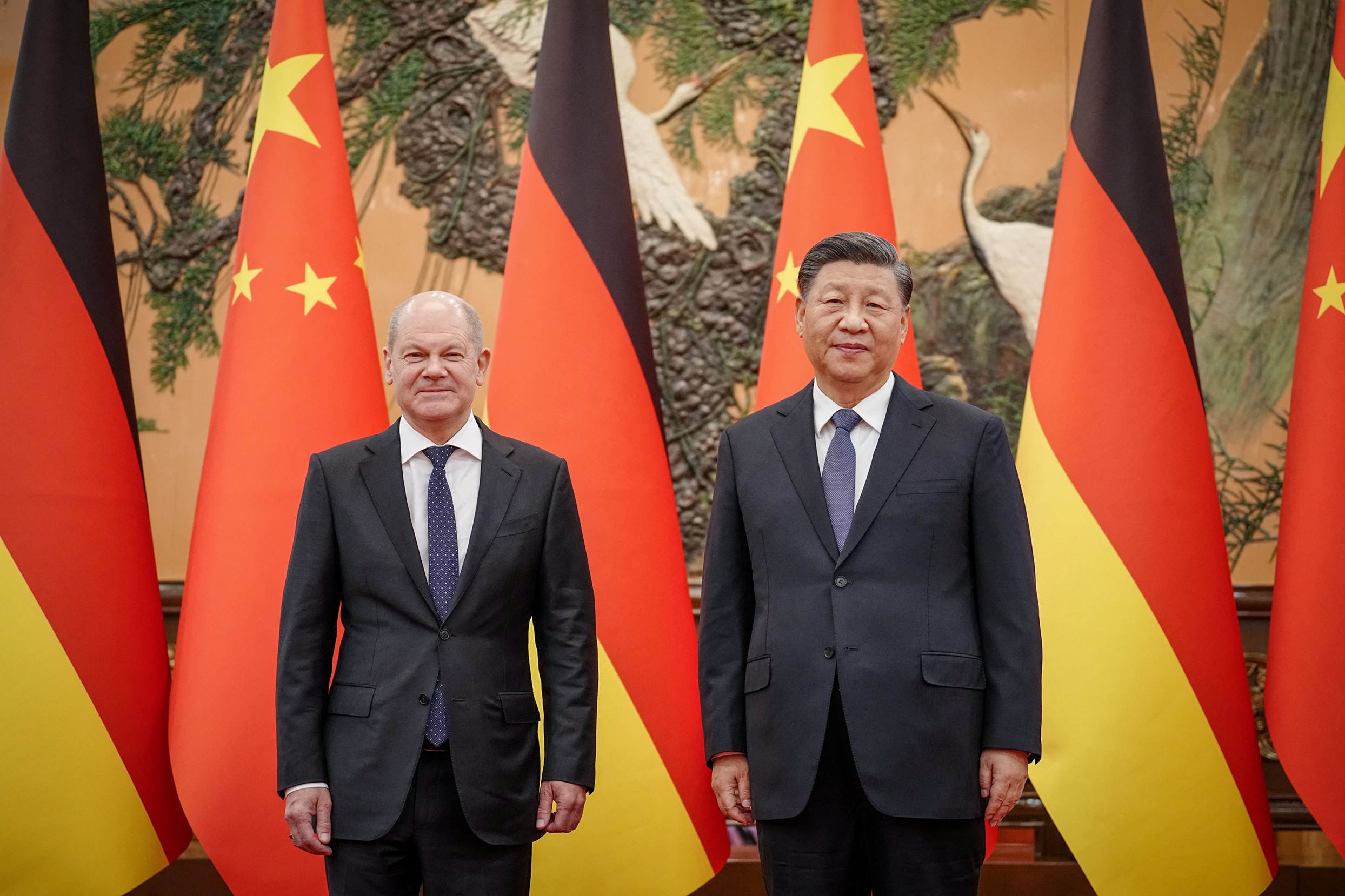
Against the backdrop of tensions between Beijing and the West, Chancellor Scholz visited China. What was the focus of this visit—and what are its effects?
INSS Insight No. 1858, May 30, 2024
The German chancellor’s trip to China in April focused primarily on business matters, taking place in the context of apparent tensions between China and the United States, Germany’s strategic partner. The pressure on the European Union to take action against Chinese companies regarding trade and dumping levies also dominated the agenda. In parallel to these talks, Germany was investigating a Chinese espionage affair. The chancellor aimed to foster German business with China and adopted a positive and conciliatory tone in his discussions, avoiding controversial issues, such as human rights and Taiwan. However, he was unsuccessful at persuading China to encourage Russia to engage in peace talks with Ukraine.
German Chancellor Olaf Scholz’s visit to China from April 13–16 marked a decade since the establishment of Germany’s comprehensive strategic partnership with China. The visit took place amid tensions between the United States, the European Union, Germany, and China on various issues, including trade, Taiwan, human rights, and China’s support for Russia in the war in Ukraine. During the visit, the chancellor discussed policies with President Xi Jinping and Premier Li Qiang, visited German companies operating in China and held meetings in Chongqing—a manufacturing center for vehicles and other industries—and Shanghai. Twelve representatives of Germany’s largest corporations, including Mercedes, BMW, and Siemens, as well as the ministers of Environment, Agriculture, Digital Affairs and Transport accompanied Chancellor Scholz on his visit.
China has been Germany’s top trading partner for the eighth consecutive year. In 2023, their trade in goods and services reached a total of $271 billion. Germany’s economy has benefited from the demand for investment and products in China, ranging from vehicles to chemicals. However, these benefits have been undermined by increased competition from Chinese companies and regulatory challenges. German companies have criticized the unfair market barriers they face in China, and the German government has been striving to implement a “risk reduction” policy that would reduce its dependence on the Chinese market and supplies.
Germany’s Publication—Strategy on China
Much has changed since Scholz’s previous visit to Beijing in November 2022. In 2023, the German government published its “Strategy on China,” for the first time. This publication defines China as a partner, competitor, and systemic rival. The document’s key strategy aims to limit Germany’s economic and trade exposure in the Chinese market by reducing the exposure of Germany’s economy to that of China.
The war in Ukraine has motivated Germany to reduce its dependence on foreign markets, as stated in its policy. Therefore, Germany has sought to decrease its reliance on Russian natural gas supplies. In line with this, the document highlights the German government’s commitment to ensure that economic “cooperation with China becomes fairer, more sustainable, and more reciprocal.” The strategy acknowledges that while China’s dependence on Europe is diminishing, Germany has become more reliant on China in recent years, making it all the more important to limit this dependence. The strategy also notes that Germany has no intention of obstructing China’s economic progress but suggests that Germany should urgently implement de-risking policies concerning China’s economy, without de-coupling the two countries.
In doing so, Germany is positioning itself alongside the European Union by seeking to reduce its risks from China, while leaving the door open for continued ties. Germany’s new strategy places a lot of responsibility on German companies operating in China. When the strategic document was published, the Chinese embassy in Berlin stated that China is not the cause of Germany’s difficulties and challenges, while perceiving China as a competitor and a systemic adversary does not fit reality and is not beneficial to the interests of either side.
The Focus of the Visit—“Business Above All”
Nonetheless, a year after the strategy was published, the German chancellor arrived in China again, leading a group of senior industrialists for a visit and signaling that Berlin intends to maintain bilateral trade ties with China. This stands in the face of the war in Ukraine and the tension in relations between China and the United States, Germany’s most important ally, which has been pressuring Germany and the European Union to mitigate risks in their relations with China.
In his three-hour meeting with the Chinese president, Chancellor Scholz expressed a desire to promote the interests of German companies while taking a positive (not to say conciliatory) tone and emphasizing the need to maintain a “delicate balance” between cultivating business ties with his country’s largest trading partner and concerns (that are shared by other European countries) about increasing China’s exports to Europe and its support for Russia in its war in Ukraine. In response to questions from students in Shanghai, the chancellor stated that Germany and the European Union are concerned about flooding European markets with Chinese goods, noting that “at some point there will also be Chinese cars in Germany and Europe.” He stressed that the competition must be fair, meaning without dumping, overproduction, and copyright infringement.
In his discussion with his German guest, the Chinese president noted that this year marked a decade since the two countries established their comprehensive strategic partnership. He emphasized that their bilateral cooperation is not a “risk” but rather a guarantee of steady bilateral growth and an opportunity for the future. The Chinese president added that the “export of electric vehicles, lithium batteries, and photovoltaic products has not only enriched global supply and eased global inflationary pressure but also made important contribution to the global response to climate change and the green and low-carbon transition.” He suggested that China and Germany approach the issues objectively and from a market perspective, and both should act against the rise of protectionism. However, China’s approach does not address the European/German request to stop flooding European markets with goods from China, as a result of its excess production.
Based on the numerous complaints of most German companies that they are met with unfair competition, Chancellor Scholz asked his host to allow increased (German) investment in China and enable fairer and improved conditions, with an emphasis on access to the Chinese market within the framework of fair competition and protection of intellectual property. Scholz’s conciliatory tone in his talks with Chinese government officials contrasted with the harsh tone of his government’s 2023 published strategy on China. The chancellor’s pacifying and cautious approach seems understandable as there are about 5,000 German companies active in the Chinese market. The issue of human rights (especially in the western province of Xinjiang), which is always high on Germany’s international agenda, was apparently not mentioned by the chancellor during the talks, causing the Human Rights Watch organization to call the trip a “wasted opportunity.”
According to official reports from the German delegation, the German chancellor told his host, the Chinese president, that Russia’s war in Ukraine directly affects Germany’s main interests and indirectly harms the entire international order. In this context, the German guest raised a sensitive and upsetting topic for the West that directly concerns the supply to Russia of Chinese dual-use goods, which can have both civilian and military purposes.
After the visit, Scholz tweeted on X that China’s statements are taken seriously by Russia and therefore asked the Chinese president to exert pressure on Russia “so that Putin finally calls off his senseless campaign, withdraws his troops and ends this terrible war.” However, the chancellor failed to enlist China to persuade Russia to draft a peace agreement with Ukraine. The Chinese president remains faithful to his country’s position not to get involved in international conflicts but is working in its own way to find a suitable solution. In the case of Ukraine, China supports convening a peace conference, with the consent of both hawkish sides, “in due course,” which will ensure equal participation for all parties and fair discussions on a peace plan.
Conclusion
The German chancellor’s second visit to China was marked by Germany’s maneuvering between promoting economic ties with China, the pressure on Berlin for closer cooperation with Washington and EU criticism that the trip reflected a preference for short-term financial gain over long-term economic and commercial security as well as Europe’s agenda of “risk reduction.” Undoubtedly, the trip’s effect on Germany and China’s trade will be assessed over time. Nevertheless, a week after the trip, two Chinese espionage scandals in Germany were made public, which the German authorities had already uncovered beforehand but refrained from publicizing, as this news could have disrupted the visit. The chancellor conceivably knew about the arrest of the three suspects before he left for China, and the timing of the publication after his trip was most likely intended to avoid embarrassing his hosts. Disrupting the trip would have also jeopardized the primary goal of promoting the German industry. When the Chinese and German ambassadors were summoned for clarification by the foreign ministries in Berlin and Beijing, the embarrassment was apparent, but the leaders were spared.
James Crabtree, a columnist at the online Foreign Policy journal summed up the trip well and wrote that it was “conciliatory in both tone and substance—an approach that leaves Germany, and by extension Europe, at risk of looking alarmingly naive in the face of the economic and security challenges posed by China.”