


Publications
INSS Insight No. 1084, August 13, 2018
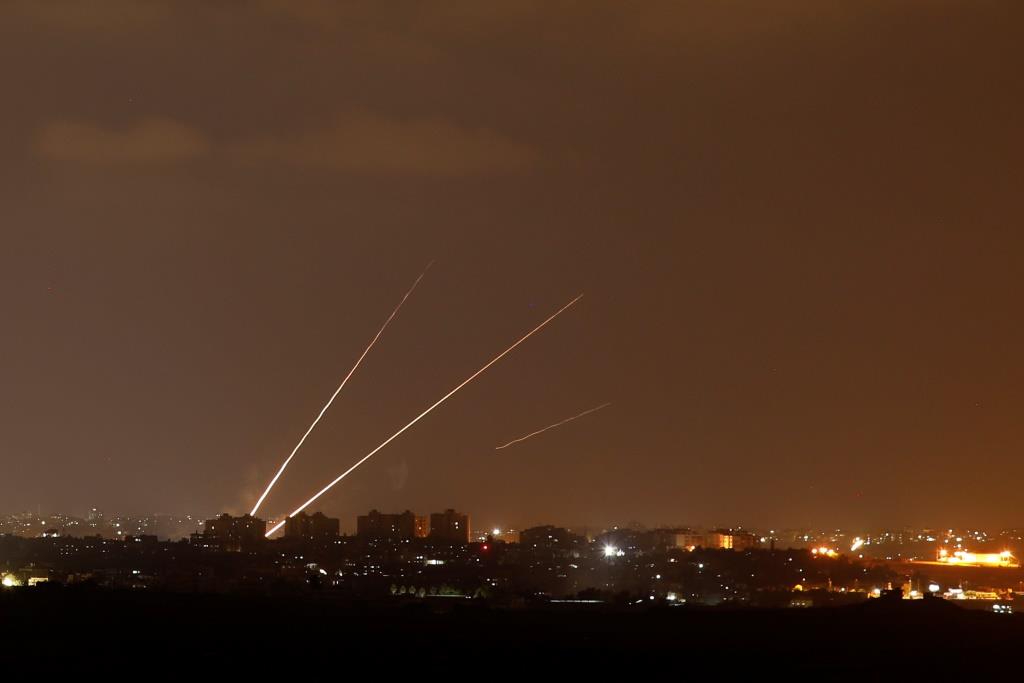
The recent escalation between Israel and Hamas took place in the context of the efforts to reach an arrangement on Gaza: what amounts to negotiations concomitant with fire, with Hamas demonstrating that it does not fear large scale escalation and is not under pressure to reach an arrangement with Israel at any price. For its part, Israel continues to convey that it does not seek escalation, but cannot exercise restraint in the face of Hamas’s aggression. The deep distrust between Israel and Hamas and the absence of a mechanism for preventing miscalculation, together with the readiness to use force, lessen the chances of an arrangement and increase the risk of escalation. It is difficult to believe that Hamas will achieve what it seeks – an ease of the closure on Gaza and economic and infrastructure projects in the area – without making the key concessions demanded of it: returning the Israeli prisoners and soldiers’ bodies that it holds, and implementing a mechanism that will prevent it from continuing its military buildup. At the same time, success by Hamas will strengthen its standing in the Palestinian arena, consolidate its sovereignty in the Gaza Strip, weaken the Palestinian Authority, and deepen the split between the West Bank and the Gaza Strip.
The cyclical dynamic in the Gaza Strip has once again reached the brink of conflict between Israel and Hamas. The fundamental situation in the Gaza Strip, which has not changed over the past decade, features ongoing and severe economic, infrastructure, and humanitarian distress that Hamas, with the help of international elements, seeks to escape, while saddling Israel with the responsibility. As for a long time these efforts produced no results, the situation propels Hamas and other terrorist groups in the Gaza Strip toward military escalation with Israel.
Several factors over the past year have contributed to the current round of conflict, thereby upsetting the relative security stability that prevailed in this area since Operation Protective Edge (2014). First, Hamas openly admitted its failure to manage civilian affairs in the Gaza Strip and turned to reconciliation with the Palestinian Authority (PA). Hamas was willing to entrust the PA with responsibility for management of the Strip, provided that Hamas would continue to maintain its military wing and thereby its monopoly over force in the Gaza Strip. For his part, PA President Mahmoud Abbas began a determined economic struggle against the Hamas regime in the Gaza Strip, cutting off salary payments to Gazan government officials and the transfer of funds for the supply of electricity and fuel to the area. These measures were designed to weaken Hamas, but in practice expedited the PA's separation from the Gaza Strip. In the reconciliation talks, Abbas made it unmistakably clear that he would agree to return to the Gaza Strip only if given full control – "one authority, one law, and one gun."
At the same time, Egypt changed its policy towards the Gaza Strip in two respects: (a) willingness to conduct a dialogue with Hamas, based on the organization's willingness to cooperate with Egypt in its war against Salafi jihadist groups in the Sinai Peninsula; and (b) willingness to deepen its involvement in the Gaza Strip and assume more responsibility to effect calm and stability, promote reconciliation between the PA and Hamas, ease the closure on the Gaza Strip, and promote economic projects for the benefit of the Gazan population. The international community, including the Trump administration, realized that addressing the humanitarian pressure cooker in the Gaza Strip was an essential first step for restarting a political process between Israel and the Palestinians. Results were slow in coming, however, and the internal pressure on Hamas grew. The "Marches of Return" initiative, which originated in Gaza Strip civil society, fell into Hamas's lap. Through mass demonstrations along the border fence with Israel and the incendiary kites and balloons offensive, Hamas was able to challenge Israel in both the security arena – particularly in the absence of a suitable solution for the new methods of terrorism – and in the diplomatic-image arena, following the deaths of Palestinians during clashes in the border area and military activity in the Gaza Strip.
Hamas has managed to leverage the events, gain momentum, and extricate itself, at least temporarily, from its weakened and deterred standing, and to influence the agenda while conducting talks in an effort to achieve gains on a number of fronts. Vis-a-vis Israel, Hamas seeks to advance a long term arrangement that includes removal of the blockade of the Gaza Strip and a prisoner release deal. Vis-à-vis Egypt, Hamas wants the Rafah border crossing opened, and seeks Egypt's willingness to promote economic projects in cooperation with the international community. In the Palestinian arena, Hamas seeks to disavow responsibility for civilian management of the Gaza Strip and transfer it to the PA, while paving the way for Hamas's inclusion in the Palestine Liberation Organization (PLO) and attaining institutionalized and recognized influence in the Palestinian political system.
Israeli Policy toward Hamas and the Gaza Strip
Israel is hard pressed to formulate an effective policy on the Gaza Strip. Since Hamas gained control of the Gaza Strip by force in 2007, Israel has faced three practical alternatives: dismantling Hamas regime; gradually weakening Hamas's rule in the Gaza Strip, combined with activity to renew the PA's control in the Gaza Strip; and recognizing Hamas’s rule in the Gaza Strip. In effect, Israel has chosen a combination of the second and third options: striving to weaken Hamas while at the same time granting de facto recognition of its sovereignty in the area and regarding it as responsible address for events in the Gaza Strip. Israel's policy in the past decade has not sought to achieve a broad and long term arrangement in the Gaza Strip; it has proclaimed "calm in return for calm, "while distinguishing between the Gaza Strip and the West Bank, in order to minimize the Gaza Strip's negative influence on the West Bank.
Among the considerations currently affecting Israel's policy:
- Hamas has been willing pay the price of escalation and sustain the consequences for the Gaza population and the organization itself. It is also willing to accept the price of the conflict for removal or at least a considerable easing of the blockade on the Gaza Strip (“closure,” in Israel’s terms). Israel's concessions to Hamas in order to achieve a lull prove (again) the effectiveness of Hamas's use of force.
- From one round of conflict to another, Israel has come to realize that the Hamas government bears sole responsibility for the Gaza Strip. This realization is reinforced by the PA's futile efforts to return to the Gaza Strip. Any arrangement with Hamas will accordingly weaken the PA and render the chances of its regaining control of the Gaza Strip more unlikely. This approach also serves the current Israeli contention that there is no partner on the Palestinian side capable of making decisions about a political agreement, let alone of implementing one.
- Israel's strategic coordination with Egypt is reflected in assistance in fighting against Salafi jihadist groups in Sinai and the key role assigned to Egypt in achieving an arrangement or prolonged ceasefire in the Gaza Strip. Egypt is willing to sponsor a ceasefire, while simultaneously working toward intra- Palestinian reconciliation between the Gaza Strip and Ramallah. In contrast to the past, Cairo no longer regards Palestinian reconciliation as an essential condition for improving the situation in the Gaza Strip, and is willing to reach an understanding with Hamas, while bypassing the PA. At the same time, Egypt realizes that it needs the PA for implementing civilian projects in the Gaza Strip, and thus tryies to promote internal Palestinian reconciliation. In any case, an arrangement between Israel and Hamas reached under Egyptian mediation and without the PA has implications for the possibility that the PA will re-run the Gaza Strip in the future.
- Since Operation Protective Edge, the Israeli government has been unwilling and/or unable for political and public reasons to reach a broad arrangement with Hamas before the civilians and bodies of Israeli soldiers held by the organization are returned.
Various reports of initiatives by Egypt and UN Special Coordinator Nikolay Mladenov toward an arrangement indicate that a multi-stage plan is being formulated, comprising: a ceasefire; cessation of the demonstrations along the fence and the incendiary kites and balloons in exchange for a reopening of the Kerem Shalom and Rafah border crossings to large scale entry of goods into the Gaza Strip; and an increase in the supply of electricity, fuel, and gas for the region. The plan also includes return of the civilians and soldiers' bodies in exchange for release of Palestinian prisoners. Egypt will continue to work toward reconciliation between the PA and Hamas and the formation of a Palestinian National Consensus Government that will take responsibility for civilian rule in the Gaza Strip; promote infrastructure projects for improving the standard of living in the Gaza Strip; and promote practical solutions in Sinai – a Palestinian seaport, desalination facilities, and a power station to improve the supply of electricity to the Gaza Strip. This will be combined with permits to residents of the Gaza Strip to work in these enterprises.
Israel has a number of demands as a condition for an arrangement. First, Israel demands a 5-10 year security calm, with a commitment by Hamas to honor it and halt its military buildup, while obtaining Egypt's help in stopping smuggling and infiltration from Sinai into the Gaza Strip. Second, Israel includes the return of civilians and the bodies of fallen soldiers in the plan. Third, Israel demands large scale regional and international involvement in reconstructing the Gaza Strip, raising the necessary resources, and establishing an international task force to manage the economic and infrastructure activity and supervise the arrival of the allocated resources at their destination. This mechanism is to also include an array of security checks and supervision to be placed at the sea and marine border crossings. The task force will be responsible for preventing smuggling of weapons and dual use (civilian and military) materials into the Gaza Strip. Israel apparently realizes that it is important to include the PA in this mechanism, together with elements from Western countries. This will have the added value of increasing the chances of convincing Hamas to allow the reconstruction project and refrain from violating the prolonged ceasefire and lull. For its part, Hamas opposes a halt in its military buildup and refuses to include the return of Israeli civilians and fallen soldiers in the ceasefire and the easing of the closure. Hamas contends that the exchange of missing persons and Palestinian prisoners, headed by those released in the Gilad Shalit deal and arrested again by Israel, is an issue for separate negotiations.
Conclusion
Until recently, it appeared that Hamas was in a trap preventing it from achieving any gains against Israel and the Palestinian Authority. However, following the events of recent months, it seems that talks aimed at reaching an arrangement have been stepped up. Proof lies in various economic measures taken by Israel and Egypt: Israel has allowed the entry of equipment to complete construction of a desalination facility, while Egypt is leaving the Rafah border crossing open and has begun sending cooking gas into the Gaza Strip. In addition, Israel and Egypt have allowed senior Hamas members from outside the Gaza Strip, including Saleh al-Arouri (thought to have planned the kidnapping of the three Israeli teenagers in the summer of 2014), to enter the Gaza Strip in order to participate in the decision making processes required for an arrangement. The recent escalation took place in the context of the efforts to reach an arrangement: what amounts to negotiations concomitant with fire, with Hamas demonstrating that it does not fear large scale escalation and is not under pressure to reach an arrangement with Israel at any price. For its part, Israel continues to convey that it does not seek escalation, but cannot exercise restraint in the face of Hamas's aggression. The deep distrust between Israel and Hamas and the absence of a mechanism for preventing miscalculation, together with the enthusiasm for using force, therefore lessen the chances of an arrangement and increase the risk of escalation.
In any case, the first stage is attaining a ceasefire and security calm. Progressing to the next stages of an arrangement requires removal of a steep obstacle – Israel waiving its demand that conditions progress on the return of its citizens and soldiers' bodies, and the creation of mechanisms for a flow of international money to the Gaza Strip that bypass the PA and Hamas. If Israel adheres to this stance and stops at the first step, i.e., a ceasefire in exchange for an ease of the closure, it is likely that Hamas will respond with military escalation. Israel can rely on the determination of Egypt and the international community to promote reconstruction in the Gaza Strip and find solutions for the existing barriers even without PA involvement, so that Hamas will have to choose between reconstruction measures and thwarting them if it causes escalation. In addition, success by Hamas in achieving the gains it seeks will strengthen its standing in the Palestinian arena, consolidate its sovereignty in the Gaza Strip, weaken the PA's rule, perpetuate the split between the West Bank and the Gaza Strip, and introduce new rules of the game in the Palestinian arena.
Allowing Hamas to achieve these gains, however, is incompatible with Israeli policy and the interests of the other actors involved in the attempt to promote internal Palestinian reconciliation, prior to an agreement in the Israeli-Palestinian arena. For this reason, it is difficult to believe that Hamas will succeed in its efforts without making the key concessions demanded of it: returning the Israeli prisoners and soldiers' bodies that it holds, accepting Abbas's terms in the Gaza Strip for reconciliation, and implementing a mechanism that will deny it the freedom to use force, plus a mechanism that will prevent it from continuing its military buildup.